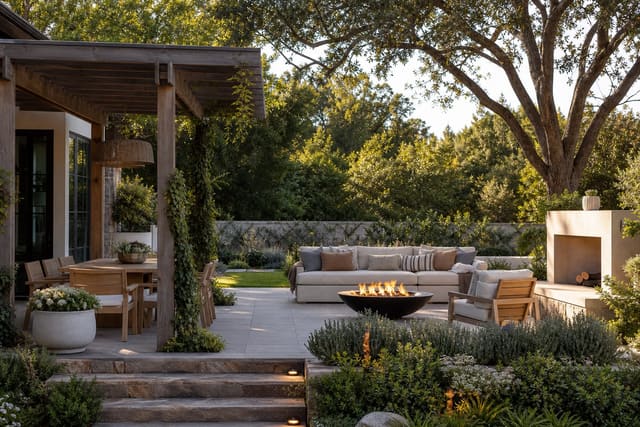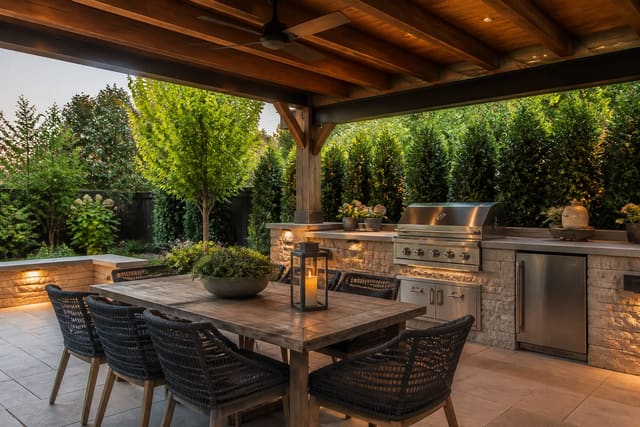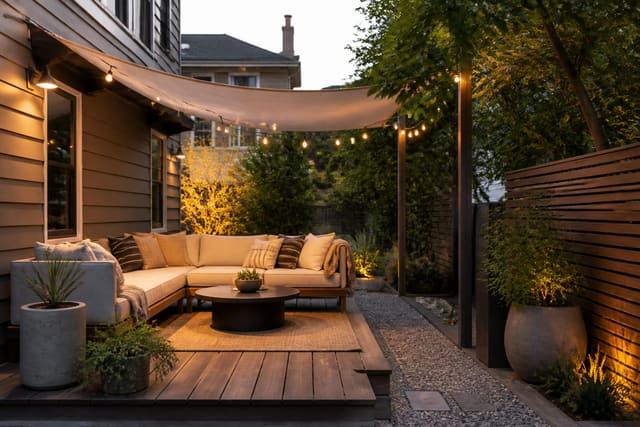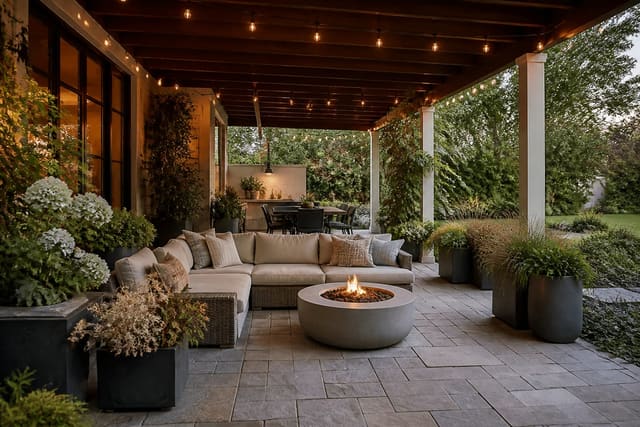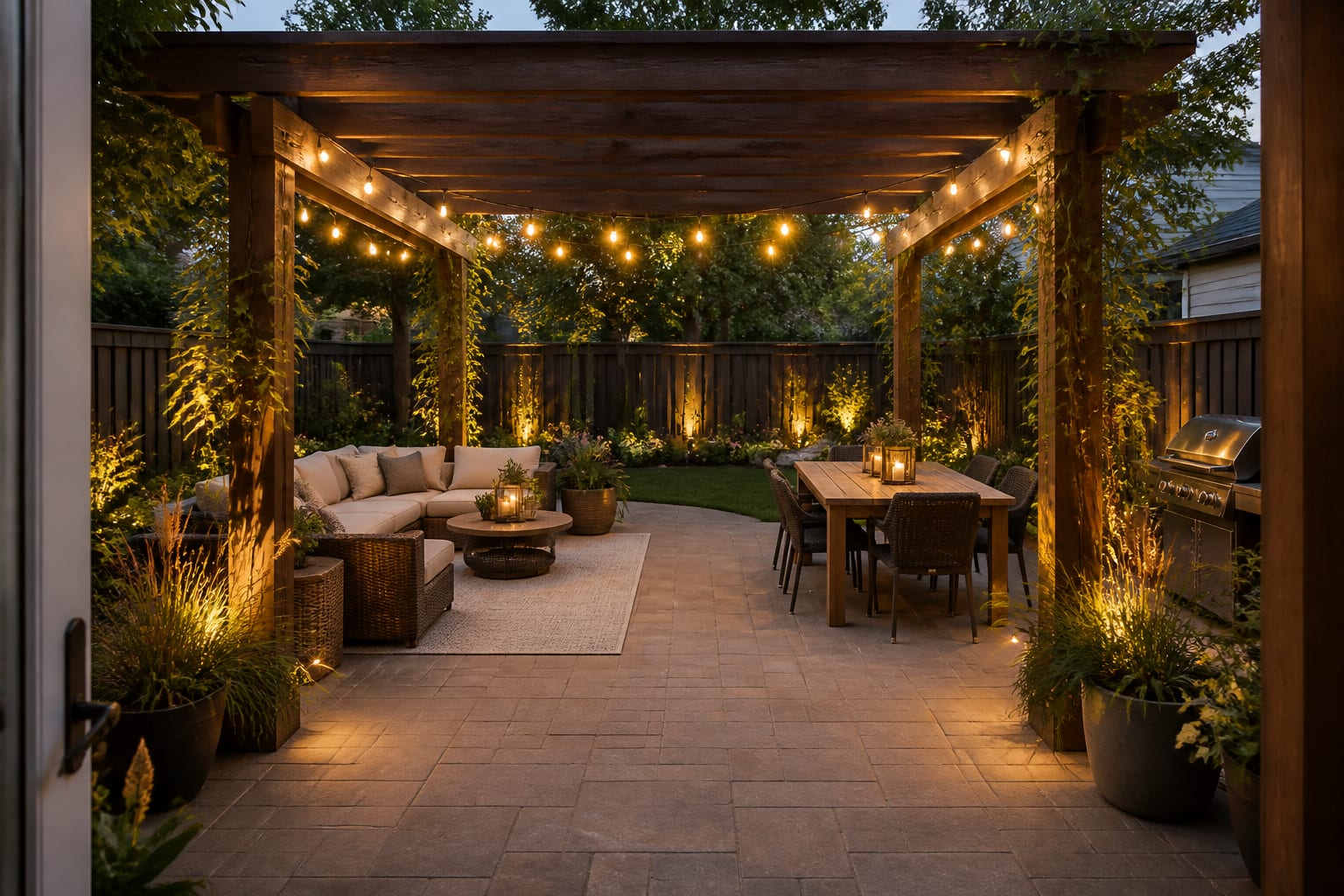
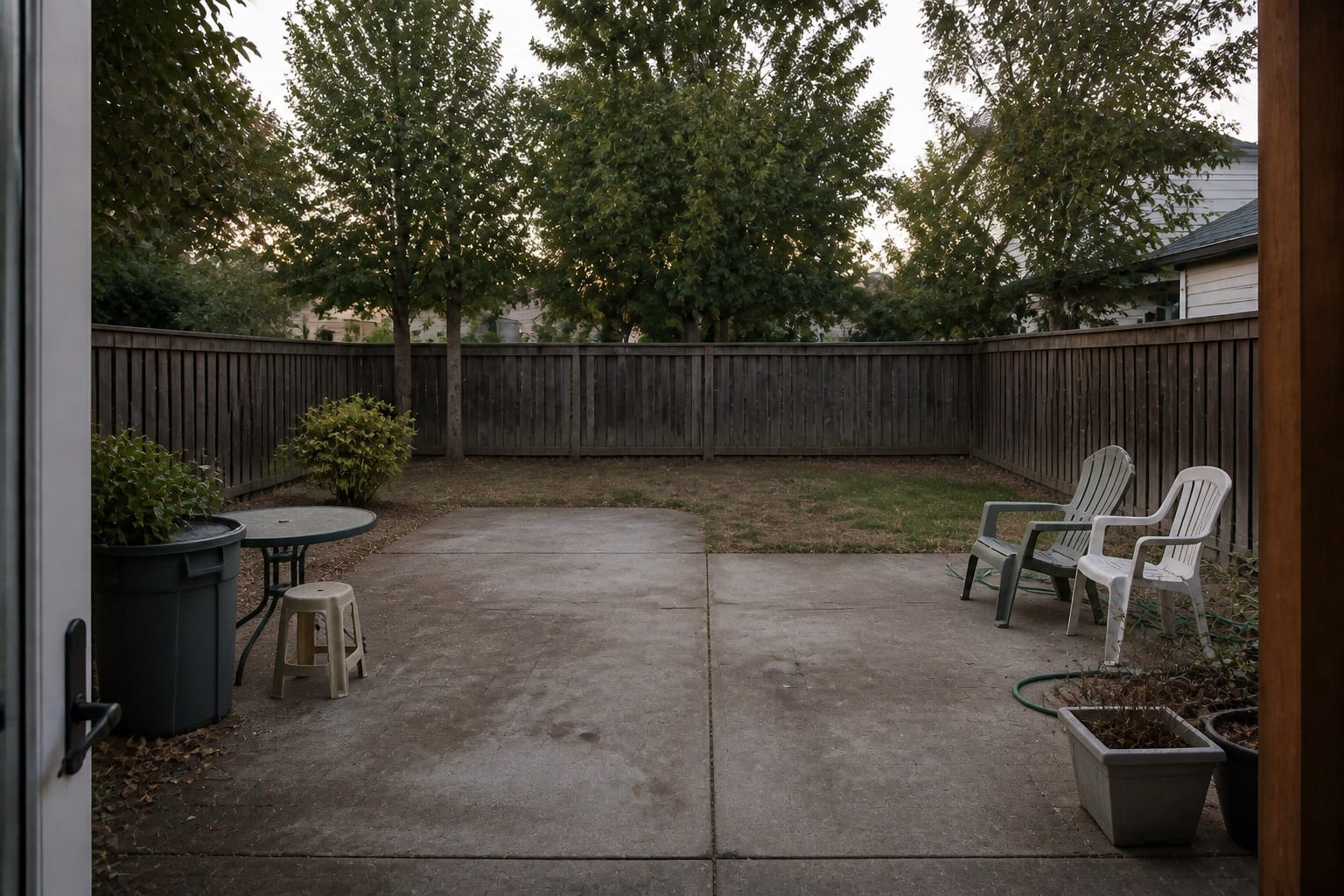
AI pergola design ideas let you preview roof styles, post locations, materials, and lighting on a photo of your patio before committing to a kit or contractor bid. The point isn't a fantasy render — it's checking whether the structure fits your slab, doors, fence, and traffic flow before lumber and permits become real costs.
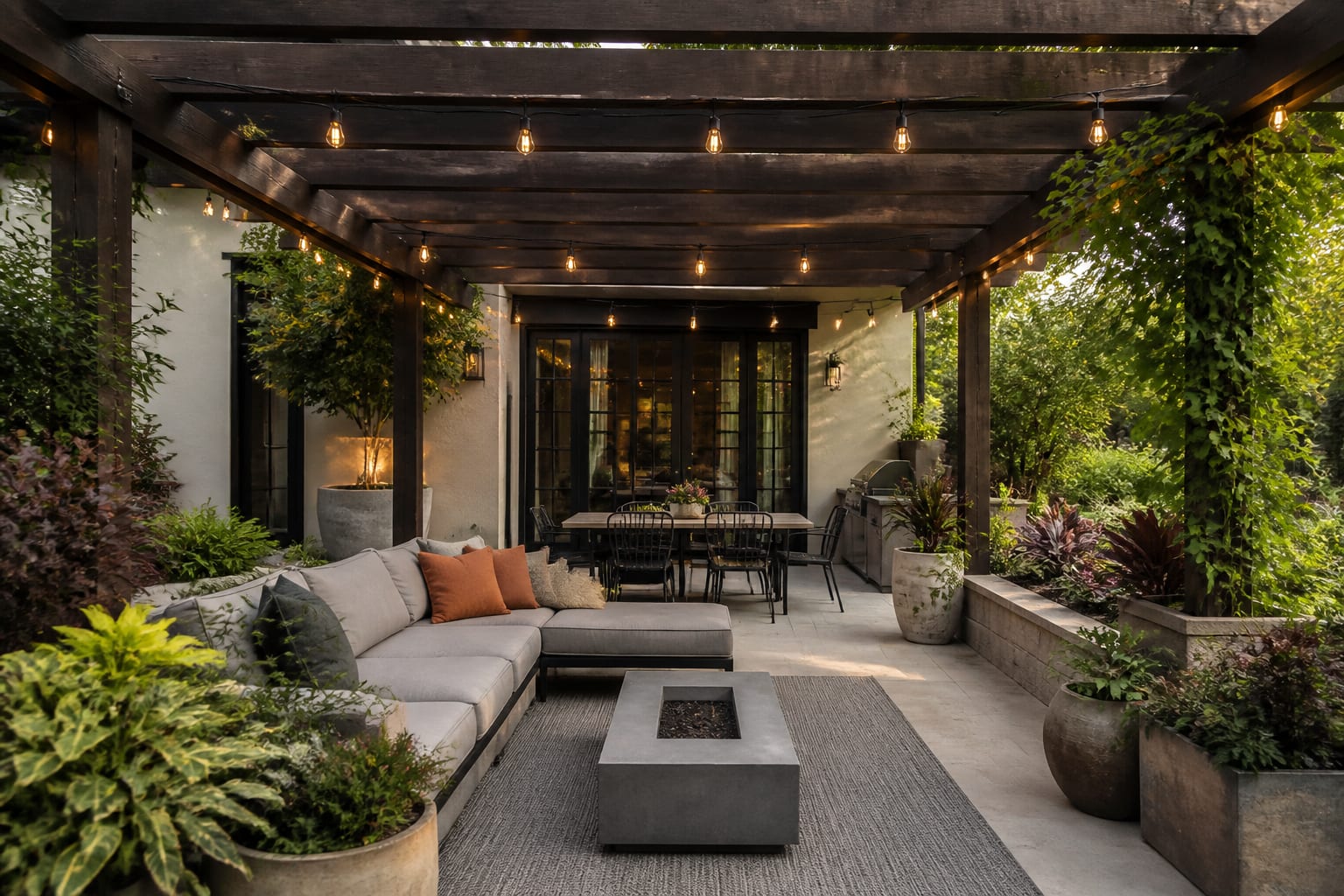
Can AI preview a pergola that fits your patio?
AI can preview a pergola by testing roof styles, post locations, materials, lighting, and furniture on your actual patio photo. A standard pergola runs 10' x 12' with 4x6 posts, 2x8 beams spanning 12 feet, and 2x6 rafters at 18-inch spacing — dimensions that hold shade cloth or string lights without triggering an engineering review in most areas.
Show the full patio: house wall, door swing, steps, grill, windows, fence, and the main walking path. A pergola that looks balanced cropped can still block the kitchen-to-table route or shade the wrong chair.
Think in outdoor-room terms: a lounge pergola might cover 8' x 10', while a dining pergola needs table space, chair pullback, and a 30" to 36" path on the busiest side. If shade connects to cooking, pair this with an AI outdoor kitchen design workflow.
Which pergola choices change the before and after most?
Test structure before decoration — cushions and lanterns won't fix a pergola in the wrong spot.
- Footprint follows use. A 60" round table needs pullback on all sides; a lounge setup can work under 8' x 12'.
- Place posts before choosing roof style. Keep them out of door swings, stairs, grill zones, and tray paths.
- Compare slats, canopy, and sail separately. Each filters light differently, and wind or local rules decide what survives outside.
- Match material to the house exterior. Cedar, aluminum, painted wood, or steel all read differently against brick, stucco, or siding.
- Add lighting to the plan. Warm 2700K string lights or shielded sconces extend use after dark.
Still deciding between lounge, dining, or a hybrid layout? Check AI patio design ideas before locking the pergola shape.
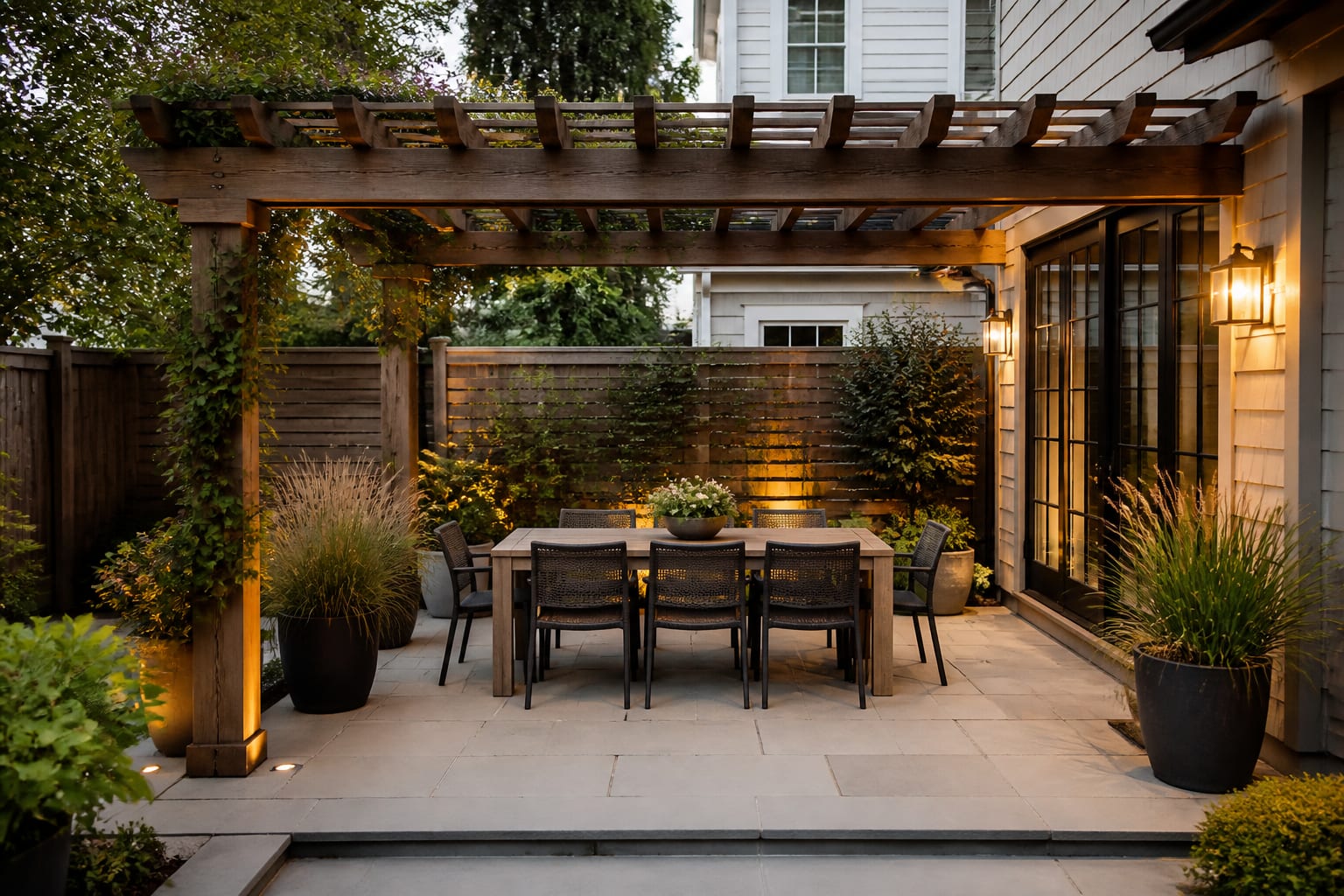
How do you use AI to preview shade before you commit?
Upload a straight daylight photo and generate controlled versions, keeping the camera angle, boundary, door, fence, and existing trees identical across each one. Try a freestanding pergola, a house-attached version if realistic, and a lighter option like a sail or large umbrella.
Compare what each does: Does it clarify the seating zone? Block the kitchen window? Crowd the path? A photo-based app keeps your real concrete, railing, and afternoon sun in frame instead of generating a fantasy terrace — see this best AI app for outdoor space design comparison first.
Once a version wins, turn it into a checklist: footprint, beam height, post spacing, furniture width, grill clearance, lighting, shade direction, and attachment method.
What pergola mistakes should you avoid?
Treating the after-image as proof of fit is the most common mistake — shade structures carry real weight, wind, and drainage demands.
- Sizing from a product photo. Measure your own slab and mark post corners with tape before ordering.
- Ignoring sun direction. Watch your actual use hours before choosing slat direction or coverage.
- Blocking the house. Keep the structure below window lines and never attach without checking framing and code.
- Relying on vines for instant shade. Pair young climbers with fabric panels or a temporary umbrella while they fill in.
- Skipping wet-rated lighting. Use outdoor-rated fixtures and keep light warm and shielded.
Sometimes a larger umbrella, shade sail, tree, or covered nook solves the problem better than a pergola.
What should you check before buying lumber or a contractor bid?
Slow down once a preview looks convincing. Mark post corners and the main path with tape, open the back door, pull out chairs, and lift the grill lid to test real clearance. Check whether beam height blocks a window view and whether shade actually covers the seat you use.
For footings, electrical work, structural loads, or permits, bring in a licensed professional before treating the render as a build order. Renters can test the idea lighter with freestanding screens, umbrellas, weighted planters, and plug-in lighting.
Frequently Asked Questions
Can AI actually design a pergola for my specific patio?
Yes. Upload a clear daylight photo showing your house wall, door, fence, grill, and walking paths, and AI can preview pergola styles, post placements, and materials directly on that image so you see how the structure fits your actual space rather than a generic showroom patio.
What size pergola do I need?
A standard pergola is about 10' x 12', but sizing depends on use: a lounge area can work under 8' x 10', while dining needs room for the table, chair pullback, and a 30" to 36" path around the busiest side.
Do I need a permit for a pergola?
Many freestanding pergolas built to standard dimensions fall under typical residential rules, but house-attached structures, electrical work, and larger footprints often require permits, so check with your local building department before construction begins.
Should I choose a solid roof, slats, or a shade sail?
It depends on light and budget: slatted wood filters light gradually, a solid canopy blocks the most sun, and a shade sail is lightest and most affordable but depends heavily on wind conditions and secure attachment points.
How do I know if an AI pergola render is realistic?
Check that the preview keeps your house wall, door, fence, and landscaping visible and unchanged, then verify the footprint, post spacing, and beam height against real tape-marked measurements on your patio before ordering materials.