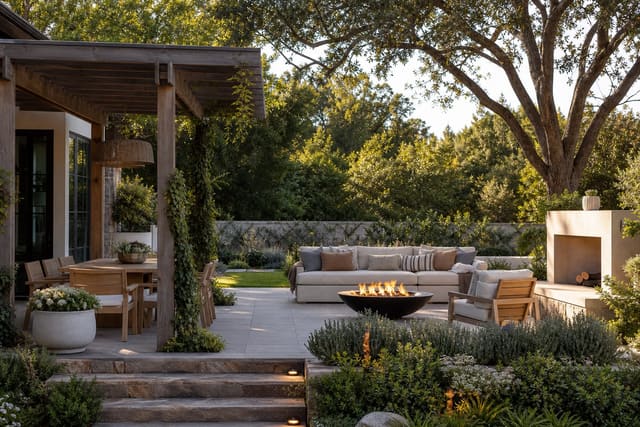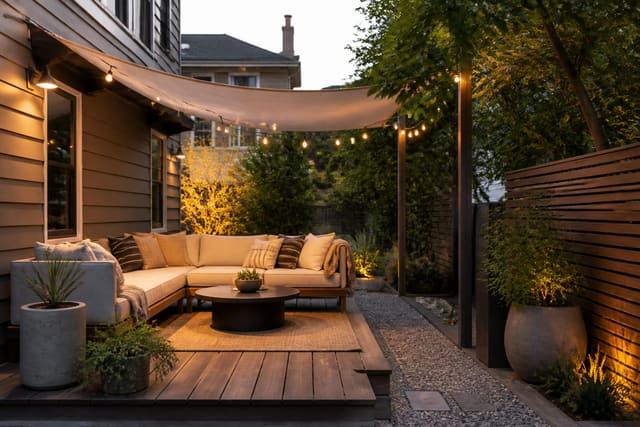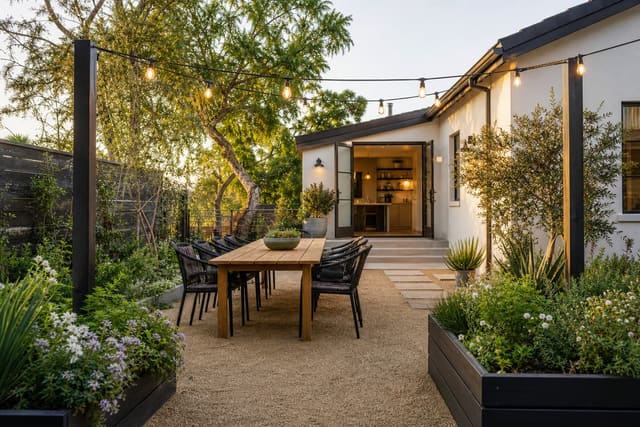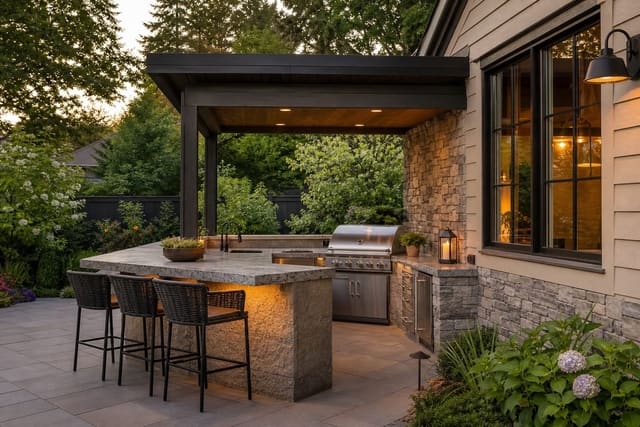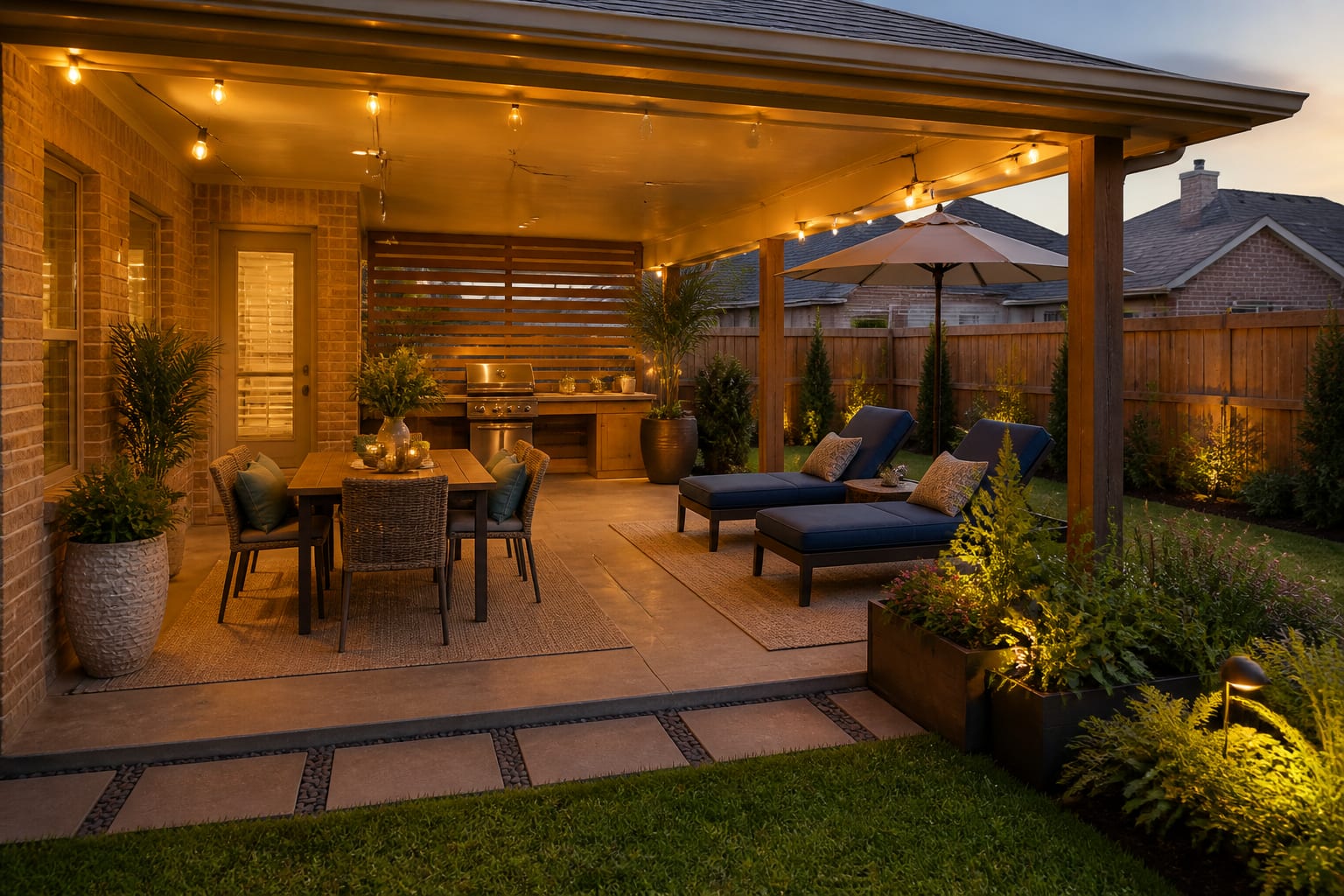
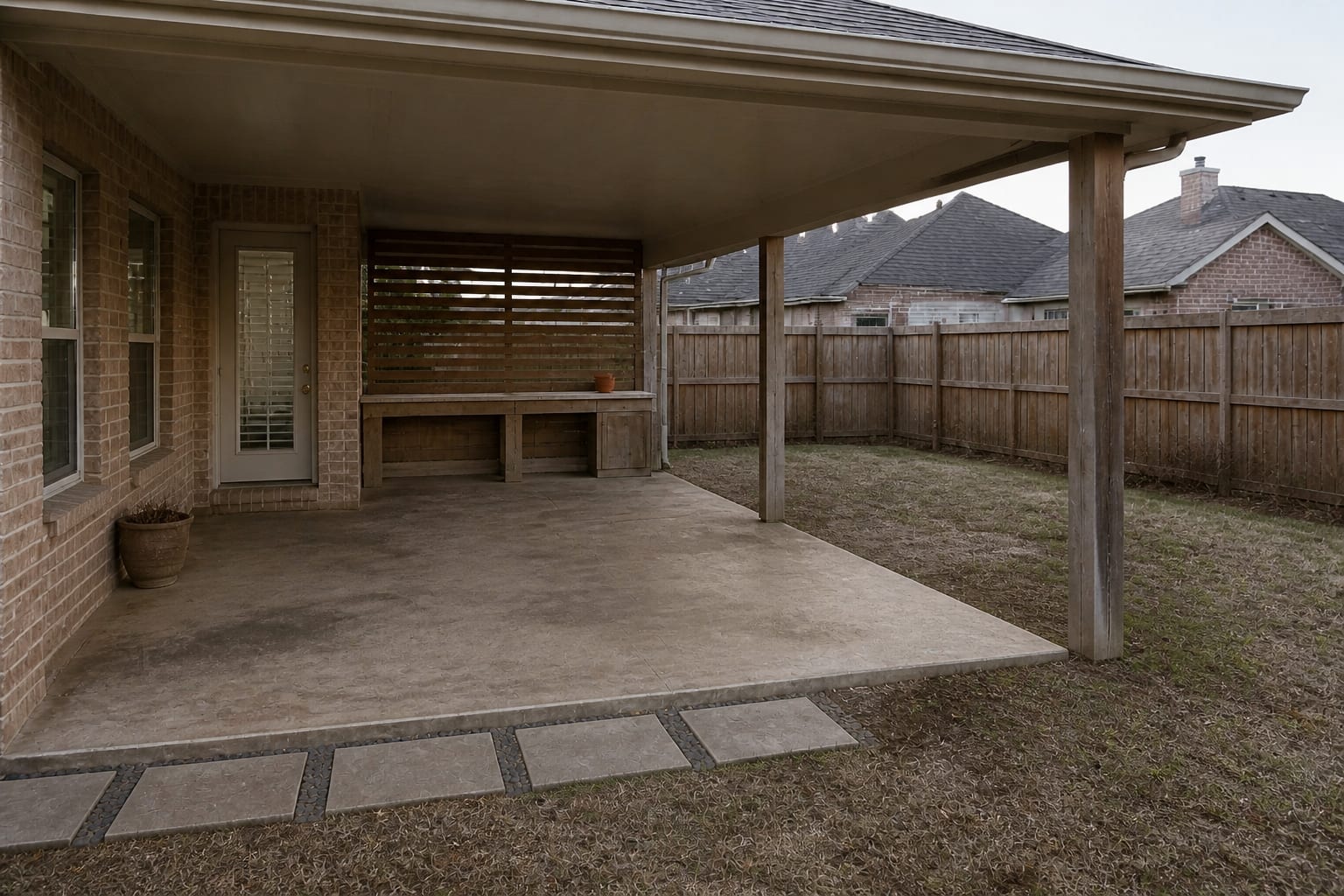
To use AI outdoor space design, upload a clear photo of your patio or backyard, prompt for a specific layout and materials, compare two or three previews, then verify the winning one against real measurements before ordering furniture, lighting, or plants. The image is a fast sketch, not a permit, so it still needs a tape measure and a sun check.
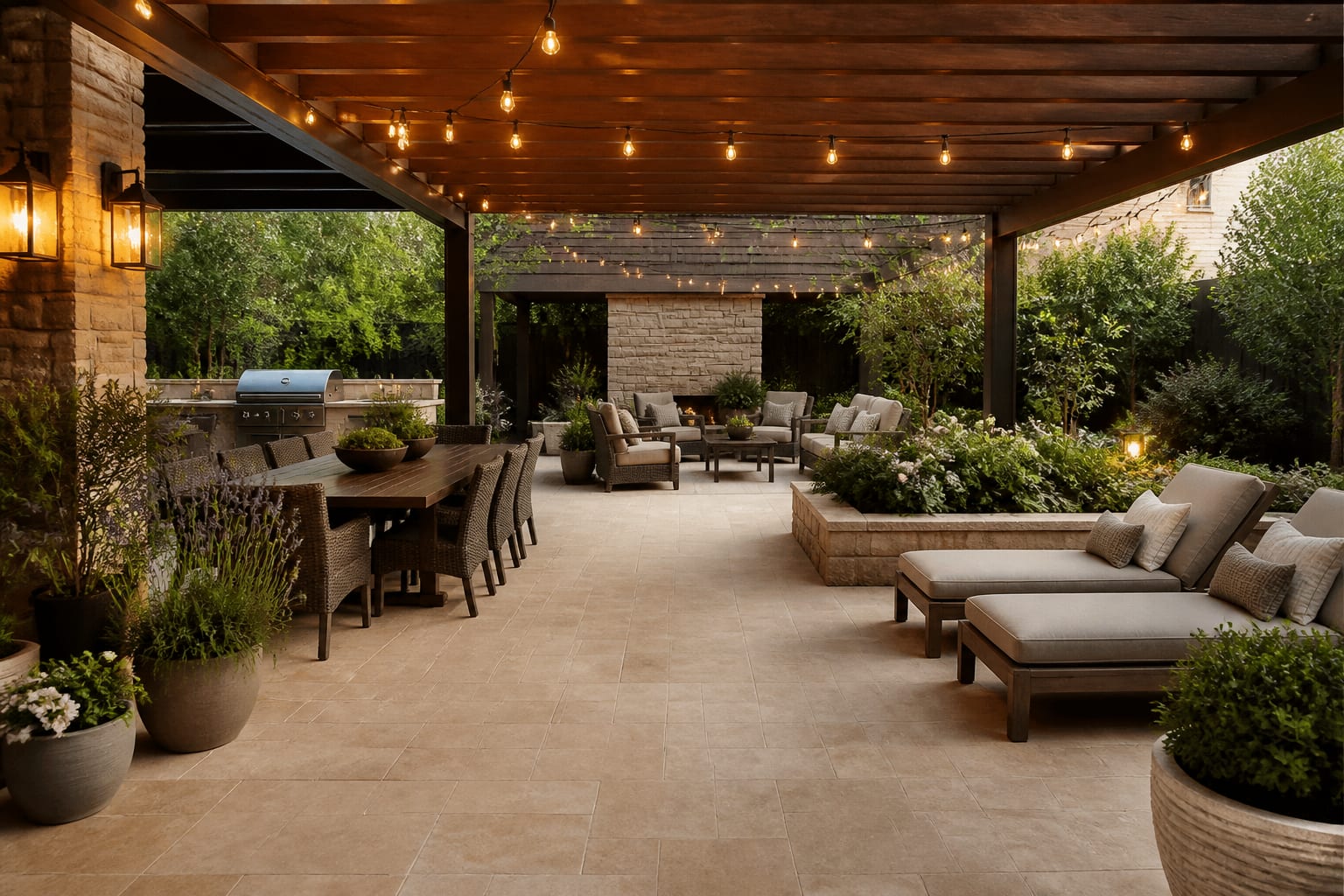
What makes an AI patio redesign useful?
Show the AI the house wall, door, steps, slab edge, fence, garden beds, tree canopy, grill, and any furniture that must stay. A 10 by 14 foot concrete pad needs different answers than a 24 foot deck or a narrow side yard. For more style directions once the layout is set, see AI patio design ideas.
How do I decide what the patio should be for?
Choose the dominant use before you generate: dining for six, morning coffee, grill-and-serve, quiet reading, fire pit evenings, or a poolside landing zone. A pretty all-purpose backyard often becomes storage overflow because no single activity has priority.
Measure the hard edges first: patio length and depth, stair width, door swing, fence height, planter depth, and grade changes. A 12-foot-deep slab may not fit a full dining table plus a lounge chair unless the table is compact and chairs tuck in cleanly.
Sun direction matters as much as square footage. Photograph the patio in the morning and again in late afternoon if light changes sharply, and tell the AI where the harshest sun lands so it doesn't invent shade that doesn't exist on your west-facing wall.
What sizes and specs should guide the layout?
Use these reference points when writing prompts or checking a preview against reality:
| Element | Typical spec | Why it matters |
|---|---|---|
| Main walking path | 30-36 inches | Keeps door-to-yard traffic clear of chairs |
| Bistro rug | 6 x 9 ft | Fits a compact two-seat setup |
| Lounge rug | 8 x 10 or 9 x 12 ft | Anchors a real seating group |
| Umbrella | 7-9 ft diameter | Covers a table or lounge cluster |
| Small planters | 12-18 in | Layered edging around seating |
| Anchor planter | 20-24 in | Visual weight, mixed with smaller pots |
| Lighting color temp | ~2700K | Warm light for string lights and path lights |
What's the framework for fixing a confusing backyard layout?
Use the preview to separate the patio into zones with edges and clearances, not furniture orbiting the perimeter.
- Anchor with the largest piece first. The sofa, dining table, or kitchen run controls every walkway, so place it before adding chairs.
- Match rug size to the furniture group. A tiny mat makes adult seating look temporary.
- Add shade before adding chairs. An umbrella, pergola, or shade sail changes comfort more than another accent table, especially west-facing.
- Layer lighting at human height. One porch light makes faces harsh; use warm string lights, lanterns, or path lights instead. See patio string lights ideas once the layout is set.
- Use planters as architecture. Group odd-numbered clusters and keep them clear of chair pullback and door swings.
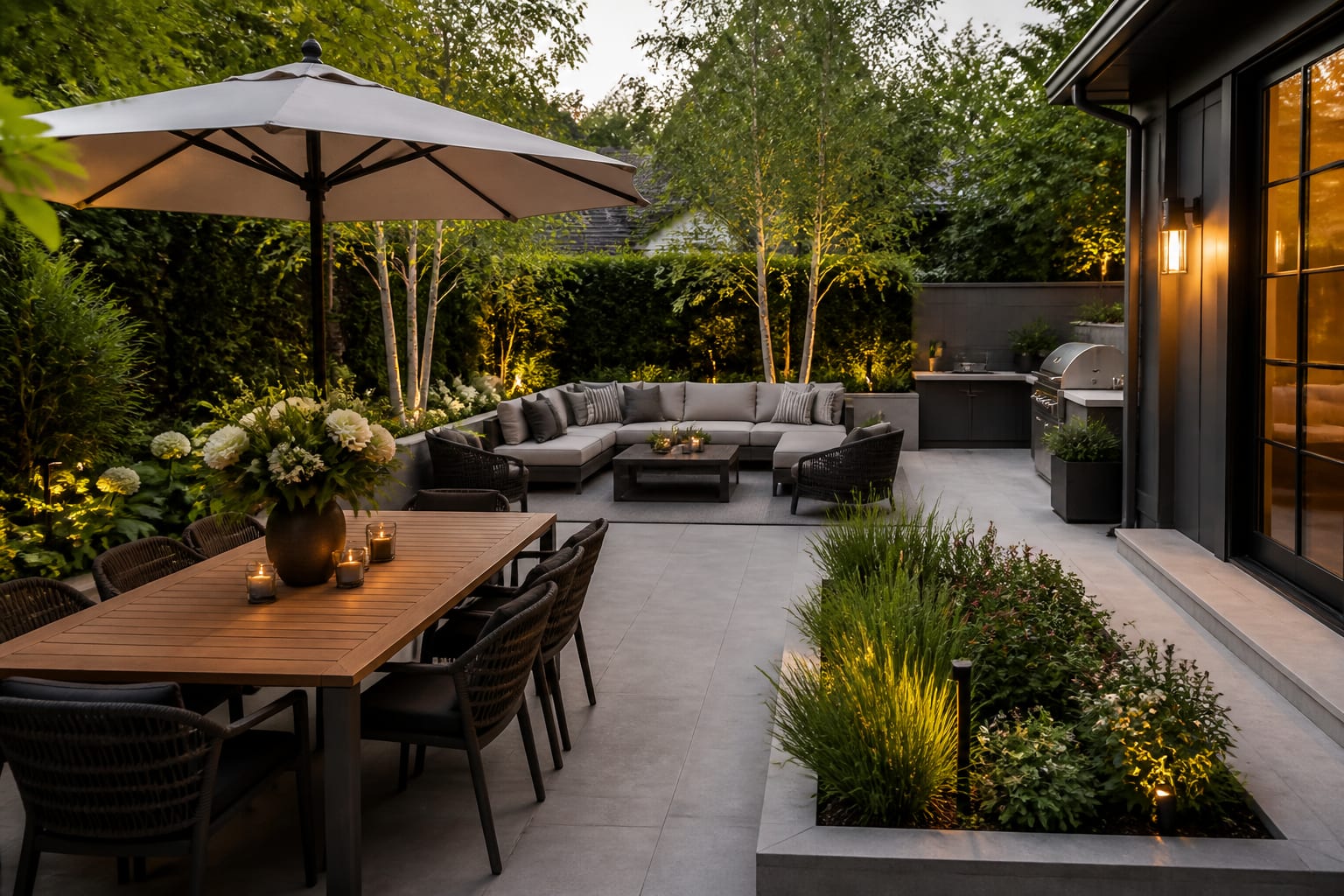
What patio mistakes should I avoid with AI previews?
The most common mistake is letting AI render a finished-looking yard while ignoring heat, drainage, storage, and movement. Outdoor spaces expose weak decisions faster than indoor rooms.
- Buying a full matching set. A sofa, two chairs, coffee table, and dining set can consume a small slab; choose 2-4 pieces that solve the dominant use.
- Ignoring the grill zone. Keep it out of the main chair path with a landing surface nearby, away from smoke and flare-ups.
- Treating plants as an instant privacy wall. Small pots won't screen a second-floor window, and oversized planters can overload a deck. Verify mature width and container weight.
- Copying indoor lighting outdoors. Use fixtures rated for outdoor use, route cords away from walking paths, and skip harsh single security lights.
For larger cooking setups, treat the preview as a planning draft. The outdoor kitchen ideas worth copying still need clearance around counters, heat-safe surfaces, and a route that doesn't cut through the lounge.
How do I turn a preview into a real purchase plan?
Upload a straight photo from standing height (about 48-60 inches) that keeps the house wall, slab edge, doors, fence, trees, and existing furniture in frame. A cropped photo hides the problem the AI needs to solve.
Write the prompt like a brief: "Redesign this 12 by 16 foot patio, keep the existing slab, back door, fence, and grill, create a shaded lounge for four, leave a 36 inch path to the yard, use weather-resistant neutral furniture, layered planters, warm 2700K lighting, no built-in construction."
Generate two or three previews instead of twenty: one dining-first, one lounge-first, one hybrid with a compact bistro table. The strongest version should tell you what to verify physically, such as taping the sofa footprint, marking the umbrella diameter, and checking whether planters block the hose or gate.
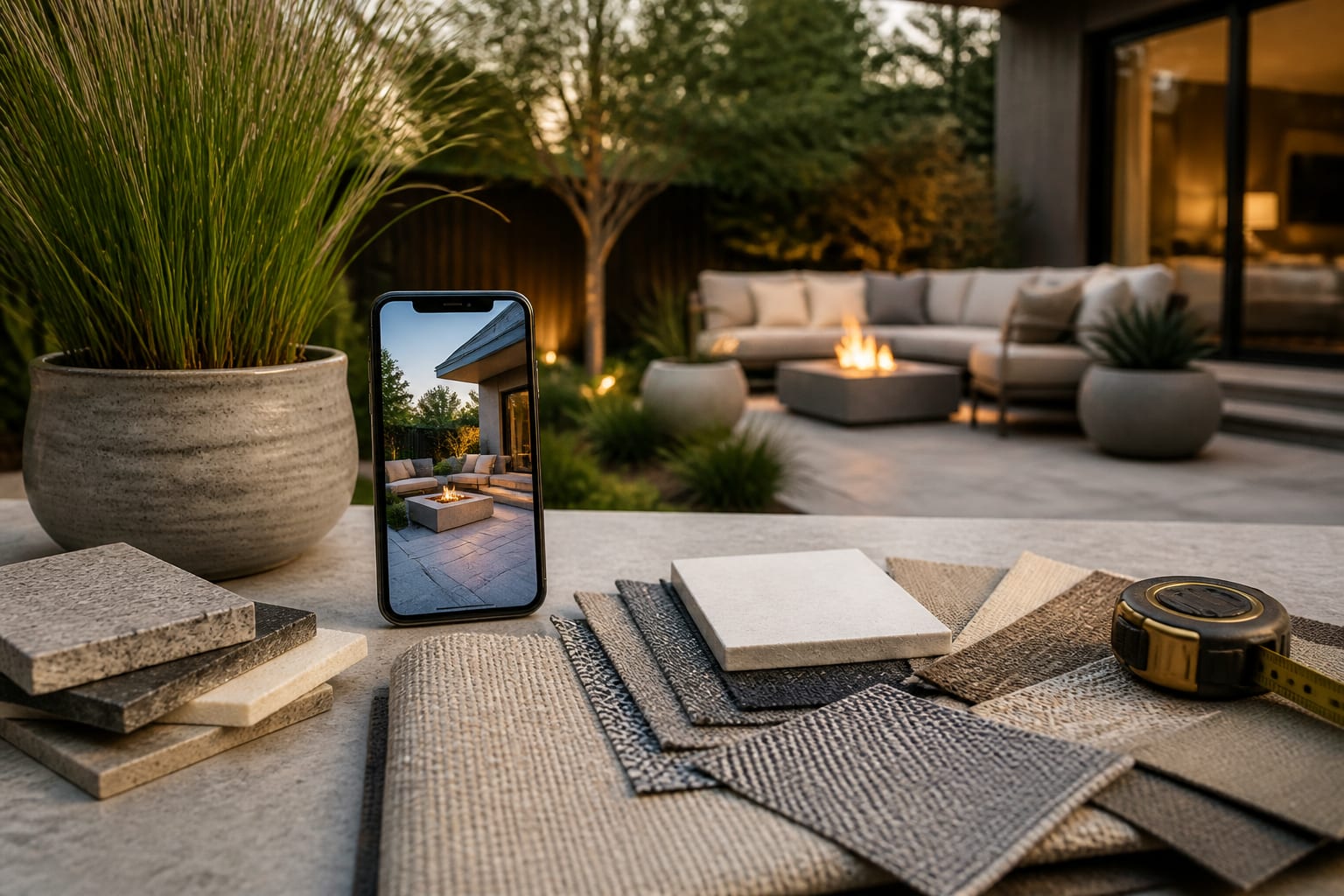
Before ordering, translate the winning image into a measured sentence: "8 by 10 outdoor rug, 82 inch sofa, two lounge chairs, 36 inch round coffee table, 9 foot umbrella, three large planters, warm string lights, 32 inches clear from the door to the lawn." If the description collapses into "cozy modern patio," keep refining.
Frequently Asked Questions
How accurate is an AI patio preview?
An AI preview is accurate about mood, color, and rough layout, but not about exact dimensions. Always verify furniture footprints, path widths, and shade coverage with a tape measure before ordering anything.
What photo works best for an AI backyard redesign?
A straight-on shot taken from standing height (48-60 inches) that includes the full slab, house wall, doors, fence, trees, and any furniture that must stay. Cropping out awkward areas just hides the problems you need solved.
How wide should patio walkways be?
Keep main paths 30-36 inches wide so people can move between the door, seating, grill, and yard without squeezing past chairs. Narrower paths work only for rarely used secondary routes.
Can AI tell me what plants to use?
AI can suggest planting styles and layouts, but it won't know your climate zone, sun exposure, or maintenance tolerance. Confirm mature plant width, water needs, and container weight before buying.
Should I buy a full outdoor furniture set based on one preview?
No. Choose 2-4 pieces that solve the patio's main use first, since a full matching set often overwhelms a small slab. Test the winning layout physically before committing to a full order.