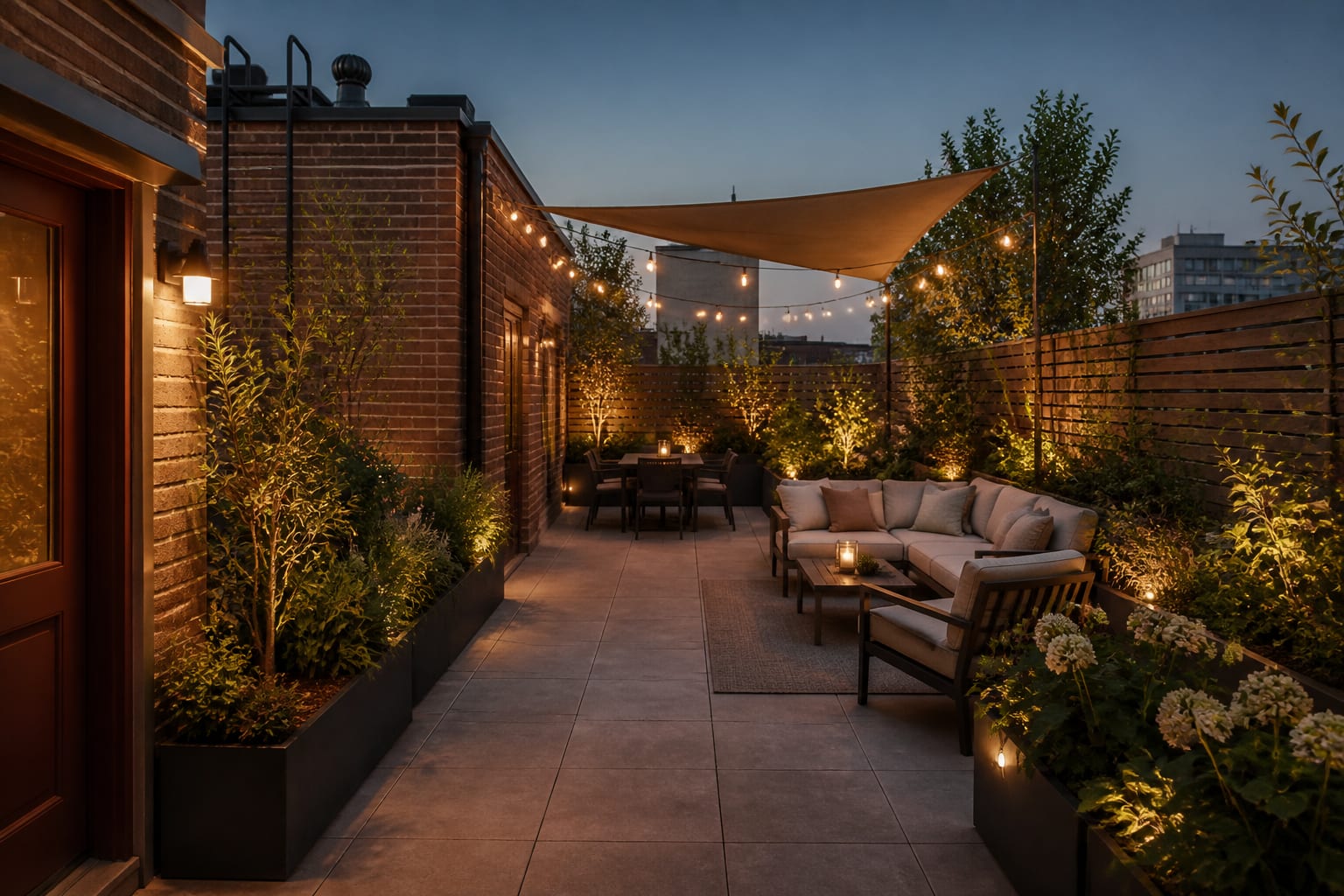
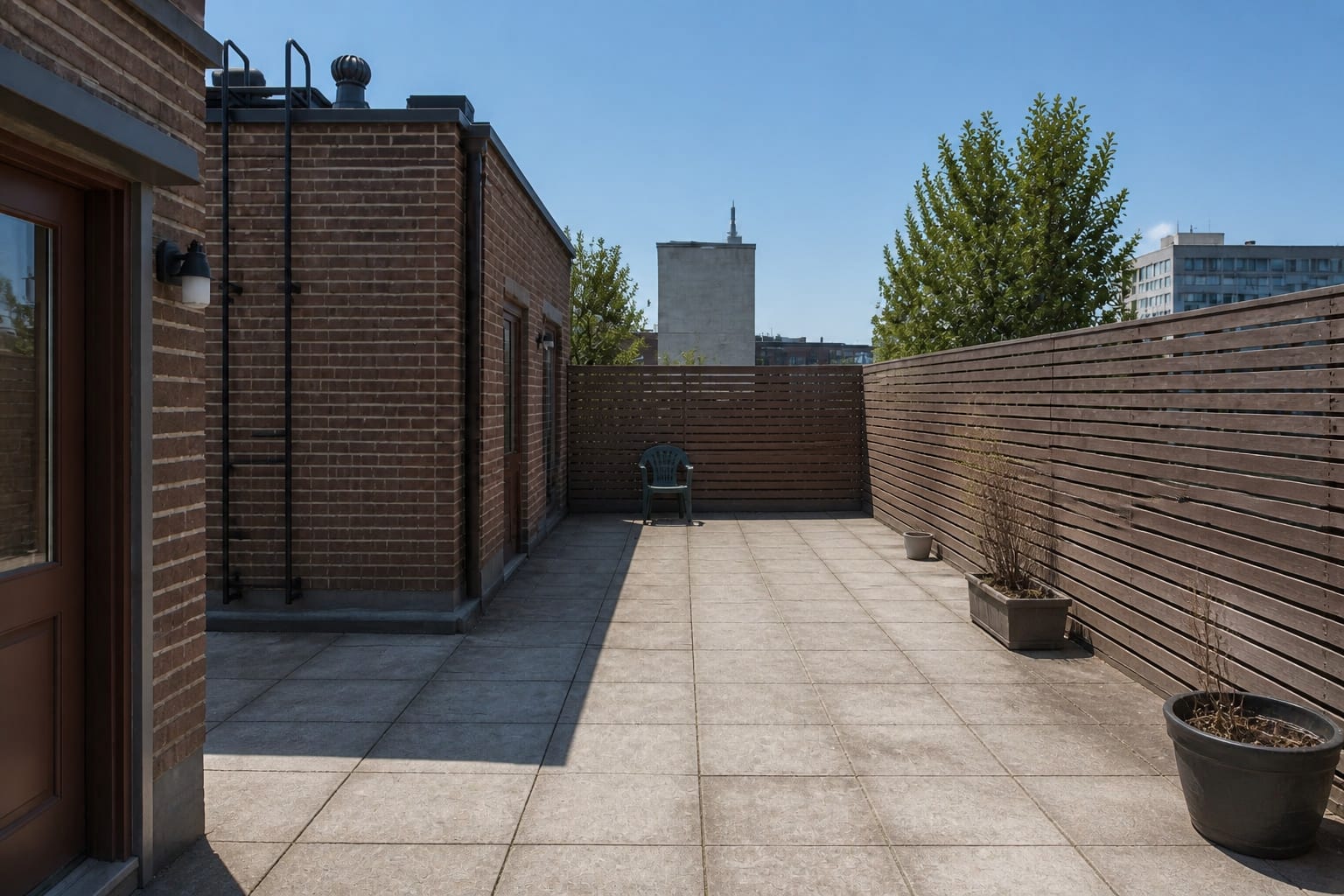
AI roof terrace design uses a photo of your rooftop to preview seating zones, shade, planting, privacy screens, and lighting before you buy anything. It tests layout and furniture scale against your actual parapet, door, and roof edge, but it cannot confirm structural load, drainage, or fire code, so those decisions still belong to your building manager or engineer.
What can AI redesign on a roof terrace?
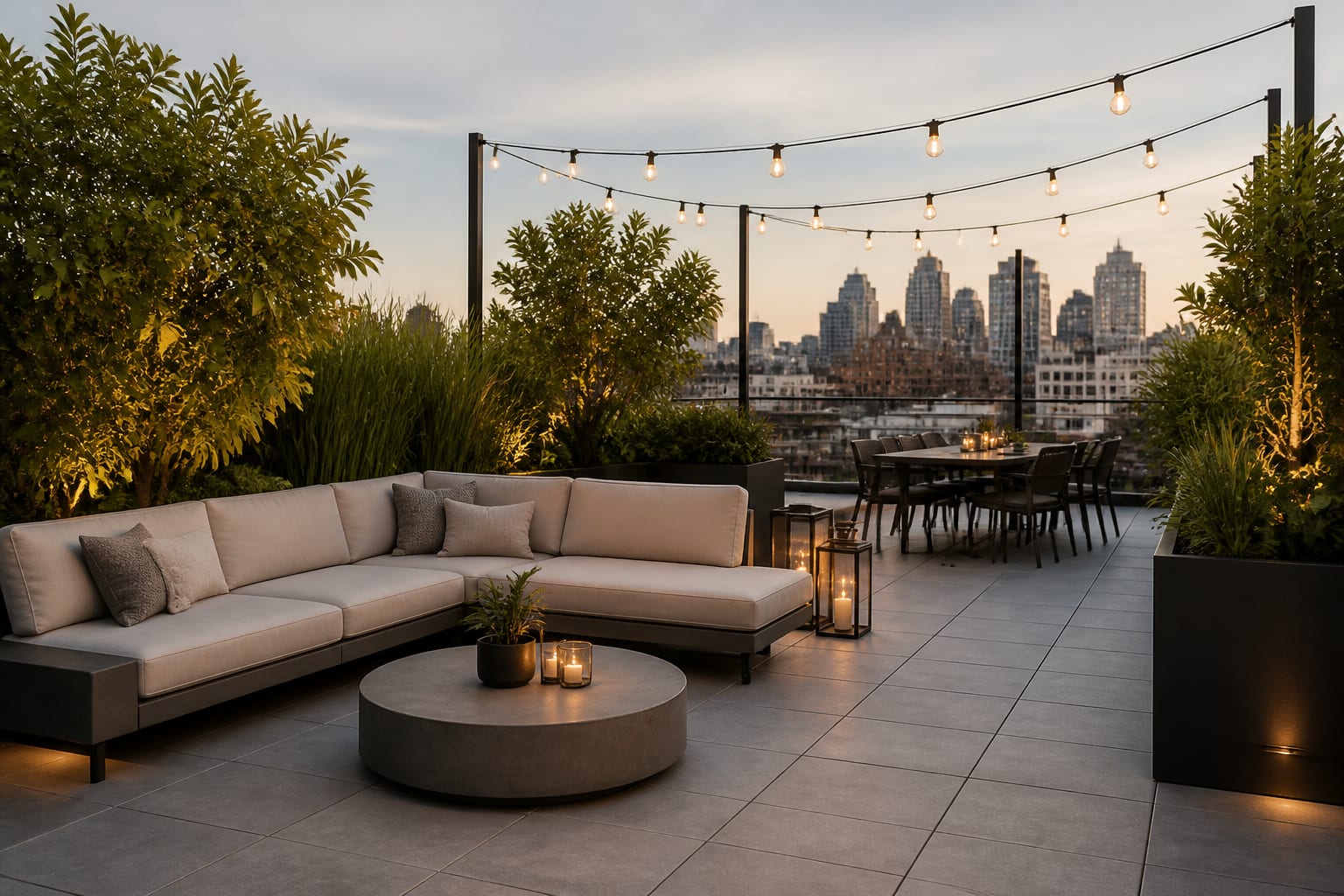
AI can redesign a roof terrace by using your photo to preview seating zones, planting, shade, privacy screens, lighting, and furniture scale. It shows whether the terrace wants a lounge-first plan, a dining-first plan, a planted retreat, or a flexible entertaining layout. It cannot confirm structural load, waterproofing, fire codes, or building rules — keep those with your building manager, contractor, or engineer.
Start with a straight photo from the main access point: the door from the stair, elevator lobby, or apartment. Include parapet walls, drains, mechanical equipment, railings, neighboring windows, vents, roof hatches, and existing pavers. If your roof is closer to a generous balcony, compare the plan against a focused AI balcony design workflow so the preview respects narrow clearances.
What makes a roof terrace feel like an outdoor room?
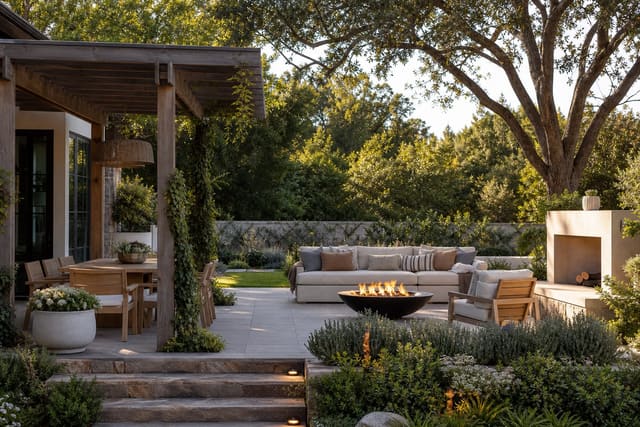
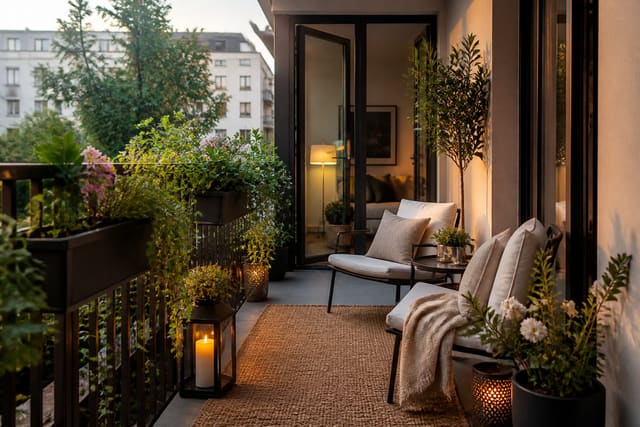
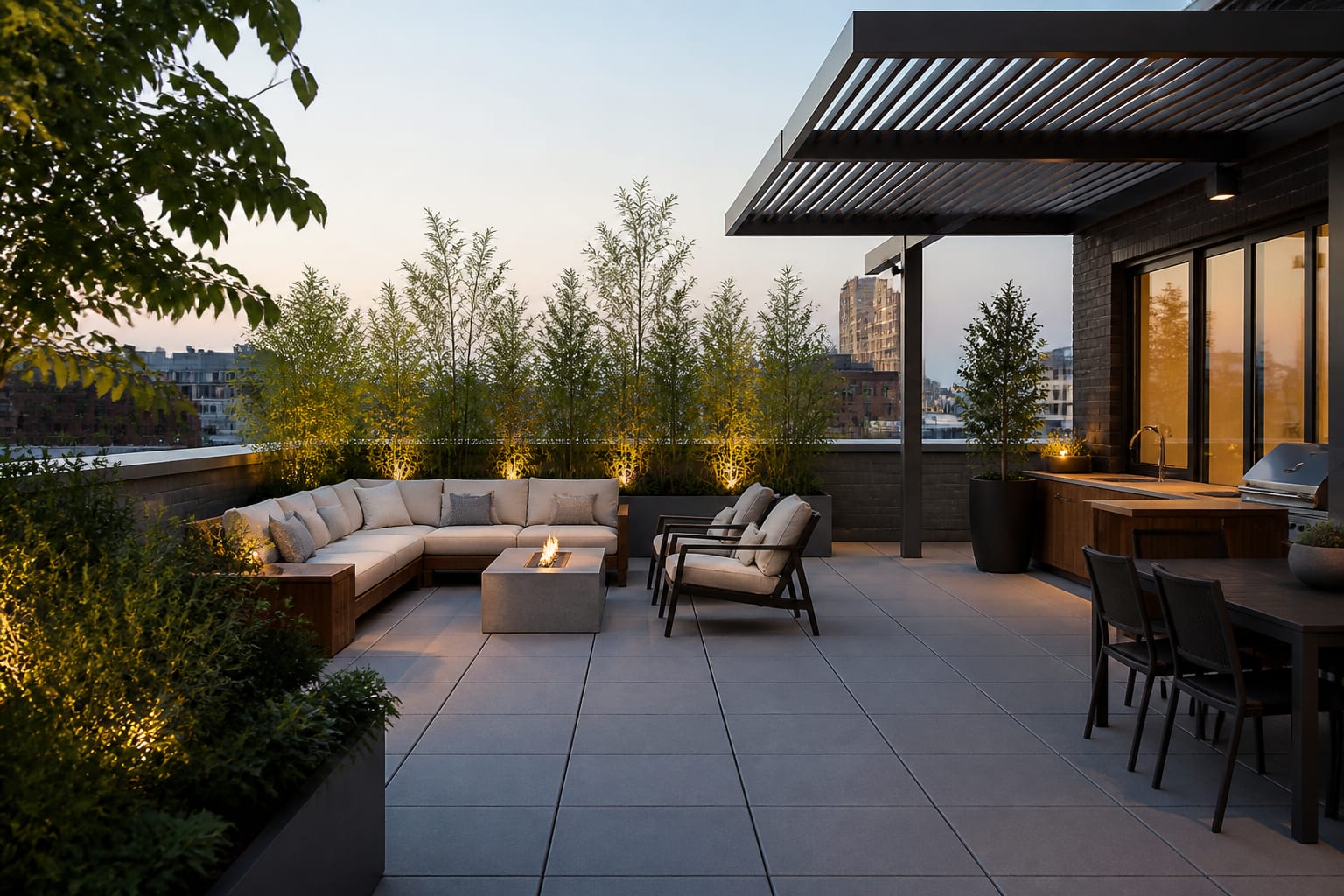
A roof terrace feels like an outdoor room when the edges are controlled, the center has a job, and the view is edited rather than exposed from every chair. Give the space a foreground, middle, and perimeter instead of scattering furniture against open sightlines.
- Set the walking route first. Keep the line from door to seating, grill, or stair near 36 inches wide; a secondary path can drop to 30 inches without forcing guests around planters.
- Decide which edge needs privacy. A parapet facing another apartment may need tall fiberglass planters with grasses or evergreen shrubs reaching 4 to 6 feet in their containers.
- Keep skyline-facing edges lower so the view survives while the terrace still feels furnished.
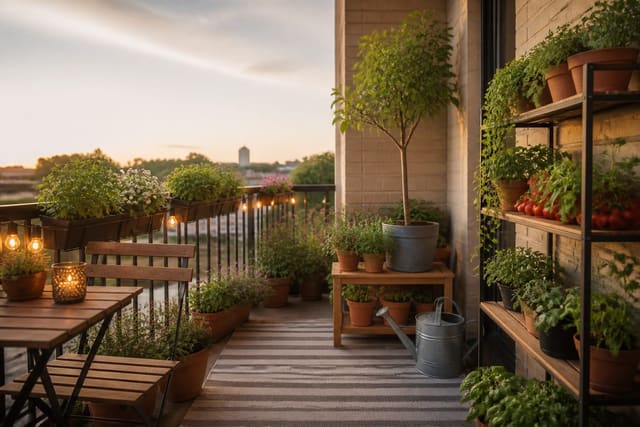
For planting mood and container composition, balcony garden ideas for small outdoor spaces translate well once you scale up pots and account for wind.
Which before-and-after moves change a rooftop first?
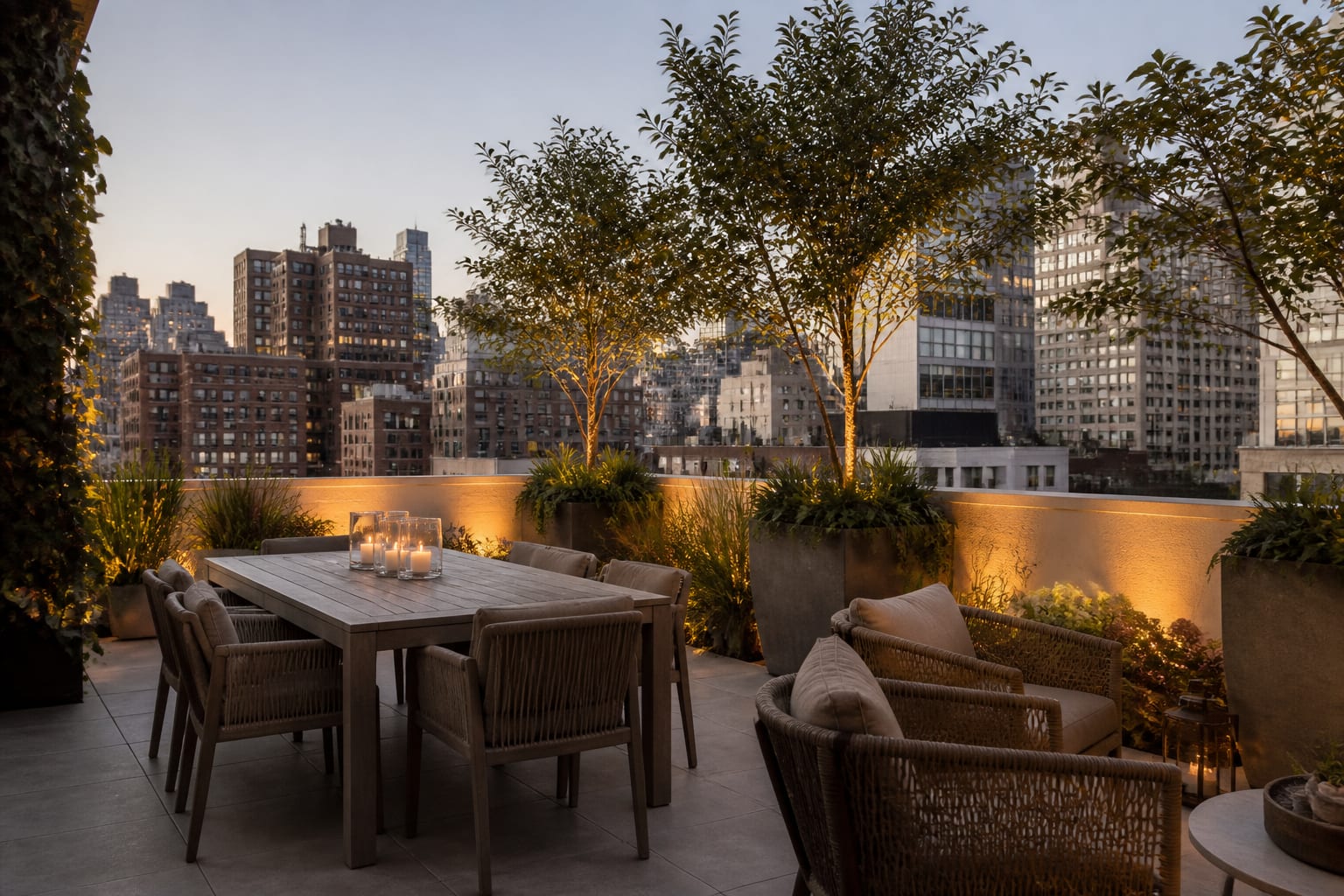
The most convincing rooftop transformations start with fixed outdoor decisions, not cushions.
- One circulation spine. Keep the route from door to main seat, table, or grill about 36 inches wide, and avoid planters where door swing or hatch clearance already steals space.
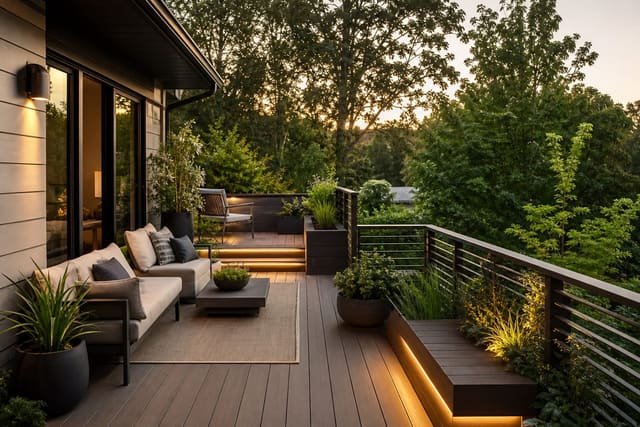
- A real lounge footprint. A compact outdoor sofa around 72 to 84 inches long, paired with an 8 by 10 foot rug or paver field, reads as a room instead of storage clutter.
- Tall planters as architecture. Choose containers at least 18 to 24 inches deep and repeat the same planter family along one or two edges.
- Zoned shade. A pergola bay, wall-mounted sail, cantilever umbrella, or retractable awning should shade one zone with a purpose, not fight the wind trying to cover the whole roof.
- Low evening light. Use 2700K exterior-rated lamps, step lights, or shielded sconces so faces and plants glow without blasting neighboring windows.
Ground material matters too: an outdoor rug can define the lounge on membrane-safe pavers if it drains well, but decking tiles, pedestal pavers, or gravel trays need confirmed compatibility with the roof assembly and drainage before you commit.
How do you use AI to preview your roof terrace?
Use AI as a visual rehearsal for the concept, not permission to skip building rules. Upload a clear photo and test one direction at a time: planted lounge terrace, dining roof garden, minimalist city deck, family-friendly outdoor room, or rental-friendly setup. Keep the same parapet, door, roof edge, and mechanical equipment in the preview instead of erasing every awkward fact.
A strong prompt gives guardrails: "design an urban roof terrace with a 36 inch clear path from the door, a 72 inch modular outdoor sofa, two lounge chairs, 24 inch deep planters along the privacy edge, a 4 by 6 foot dining area, 2700K low lighting, no built-in kitchen, no changes to railings, and no blocked drains."
If your space is narrower, the logic from small balcony design ideas helps keep furniture shallow, folding, and multi-use before the roof feels overfilled.
What mistakes make rooftop space harder to use?
- Designing for the photo, not the weather. Lightweight umbrellas, tiny tables, and delicate potted trees fail fast in wind, glare, and summer heat.
- Buying furniture before deciding zones. A table for six sounds generous until it blocks the stair route or leaves no room to lounge.
- Using pots that are too small. A 10 inch pot dries out fast on an exposed roof; go 18 inches wide or more for shrubs and grasses that hold soil and resist tipping.
- Skipping storage. Cushions, lanterns, tools, and grill covers need a weatherproof bench or cabinet, or the terrace turns into a pile of accessories after one rainy week.
- Forgetting the neighbors. Lighting, music, smoke, and reflective surfaces affect other apartments; use shielded fixtures and lower furniture near view edges.
Before furnishing, check the AI preview against a measured plan: clear paths, door swings, drain access, planter size, furniture depth, shade clearance, and whether every item can reach the roof by elevator, stair, or hatch.
Frequently Asked Questions
Can AI tell me if my roof can hold furniture and planters?
No. AI design tools preview layout, style, and scale from a photo, but they cannot calculate structural load. Confirm weight limits for furniture, soil-filled planters, and paver systems with your building manager or a structural engineer before installing anything heavy.
How wide should the main path be on a roof terrace?
Aim for at least 36 inches on the primary route from the door to seating, dining, or the grill. A secondary path can narrow to 30 inches, but avoid forcing guests to twist around planters or furniture to reach the main zone.
What size planters work best on a windy rooftop?
Choose containers at least 18 to 24 inches deep for shrubs and grasses that need to anchor a privacy edge. Small 10 inch pots dry out quickly and tip over in wind, making the terrace look unfinished even with good plants inside them.
Do I need permission before redesigning a shared roof terrace?
Likely yes. Shared or building-owned roof terraces usually fall under condo, co-op, or landlord rules covering furniture weight, drainage, fire access, and railing changes. Use the AI preview to agree on a direction, then confirm it against your building's actual requirements.
What lighting works best for rooftop evenings?
Low, shielded lighting around 2700K works best: step lights, lanterns, or wall sconces rather than harsh overhead fixtures. This keeps faces and plants glowing without spilling glare into neighboring windows or making the terrace feel like a service deck.