How do I attract birds to my garden? The honest answer is that you give them three things in one place: food, fresh water, and cover to hide in. Birds rarely commit to a yard that offers only a feeder hanging in the open, because a feeder without nearby shrubs feels like a trap to them.
I think most people overspend on hardware and underspend on planting. A $15 bag of black-oil sunflower seed and a single fruiting native shrub will pull in more species over a season than the fanciest squirrel-proof feeder bought in isolation. Start with the habitat, then add the gear.
Build the habitat before you hang a feeder
Birds read a garden in layers. A yard with a tall tree, a few mid-height shrubs, and a band of perennials gives them perches, nest sites, and a buffet at three different heights. A flat lawn with one pole feeder gives them almost nothing, which is why it stays empty for weeks.
Native plants do the heavy lifting. Coneflowers, black-eyed Susans, and sunflowers hold seed heads into winter, and serviceberry, elderberry, and dogwood drop fruit that thrushes and waxwings strip in days. Leave the seed heads standing through fall instead of cutting them down, because that dried structure is the actual food. If you already plan to fill beds, my garden design ideas notes pair well with a bird-first plant list.
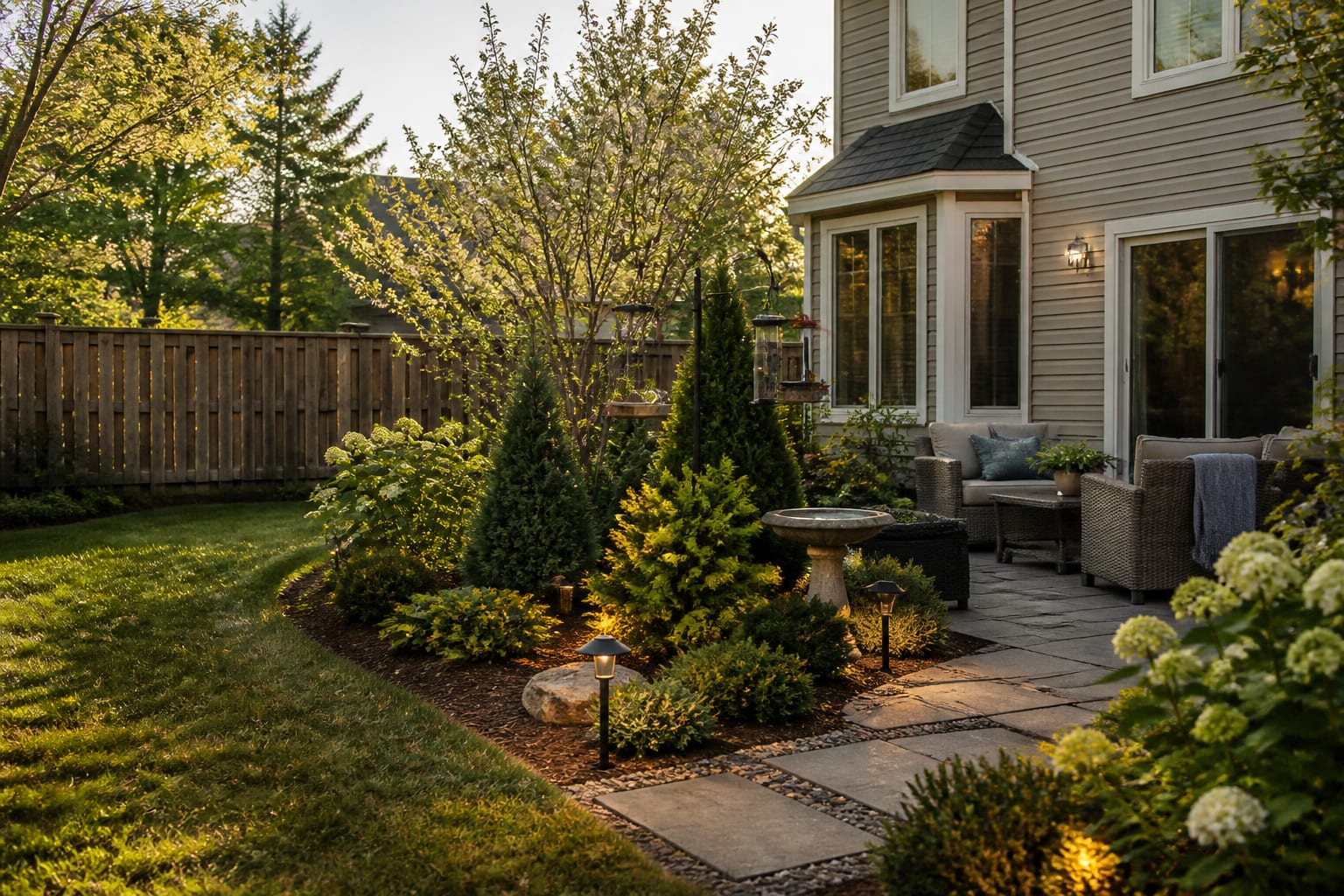
Water matters more than people expect. A shallow basin no deeper than 2 inches, set in dappled shade, draws birds that would never touch a feeder. Add a dripper or a small solar fountain and the movement triples your visitors, because birds find water by sound as much as by sight. Set the bath on the ground or a low pedestal near, but not directly under, a shrub, so a startled bird has somewhere to bolt without sitting fully exposed while it drinks.
Think in terms of bloom and fruit across the calendar too. Early-spring nectar sources, summer seed, and late-fall berries keep different species cycling through the same beds, so a garden that feeds birds in March looks very different from one that feeds them in October. A spread of plants that mature at staggered times means you are never relying on a feeder alone to carry the yard through a lean week.
Choose feeders and seed that match your visitors
Different birds eat differently, so one feeder style will always leave species out. Match the hardware to the menu rather than buying the biggest unit on the shelf.
- Tube feeders with small ports suit finches and chickadees feeding on nyjer or sunflower hearts.
- Hopper or platform feeders hold mixed seed for cardinals, jays, and sparrows that like a flat surface.
- Suet cages feed woodpeckers and nuthatches, especially below 45 degrees Fahrenheit when birds need fat.
- Hummingbird feeders take a 1-part-sugar to 4-parts-water mix, with no dye, changed every 2 to 3 days.
Hang feeders 5 to 6 feet off the ground and at least 5 feet from a launch point a squirrel can jump from. Clean them every 2 weeks with a 1-part-bleach to 9-parts-water rinse to stop disease spreading at a crowded port. Skip cheap mixes heavy on red milo, since most desirable birds toss those seeds aside and you end up feeding the rats under the feeder rather than the cardinals on it.
Start with one or two feeder types rather than a wall of them. A tube of sunflower hearts plus a suet cage covers a surprising range of species, and once those are busy you can add a platform or a finch sock to widen the crowd. Place each feeder where you can see it from a window you use daily, because a feeder you never watch is a feeder you forget to refill. If a low-water yard is your starting point, the choices in my drought-tolerant landscaping ideas guide still leave plenty of room for seed-bearing natives.
Give birds cover, and grow some of their food
Cover is the piece most empty yards are missing. A bird wants a shrub or brush pile within a short hop of every feeder, so a hawk overhead means a half-second escape rather than a clean kill. Plant evergreens or dense deciduous shrubs in a loose cluster 6 to 10 feet from the feeding zone.
You can also grow part of the diet directly. A patch of sunflowers and millet doubles as cut flowers and a standing seed source, and many edible beds overlap neatly with bird forage. My vegetable garden design ideas walk through bed layouts that leave a strip for pollinator and bird plants along the edge. Skip pesticides where you can, since caterpillars and beetles are the protein that parent birds carry to their chicks all spring.
Dead wood and mess have a place in a bird garden, even if they offend a tidy eye. A loose brush pile in a back corner gives wrens and sparrows instant cover and shelters the insects that feed everyone else. A standing dead branch makes a natural perch where a bird can scan before dropping to the feeder. Leaving leaf litter under shrubs over winter holds overwintering insects that ground-feeders scratch through in early spring, so resist the urge to rake every bed bare in fall.
Nest sites turn visitors into residents. A few well-placed nest boxes, sized and mounted for the species you actually have, can hold birds through the breeding season rather than just the cold months. Mount boxes 5 to 10 feet up, facing away from prevailing wind and afternoon sun, with a clear flight path in. Once birds nest in your garden they treat the whole plot as home turf and work it for insects all summer, which is the point where a bird-friendly yard starts to feel genuinely alive.
Common mistakes to avoid
The most common mistakes to avoid are easy to fix once you see them. People place a feeder in the open middle of a lawn, then wonder why birds stay nervous and scarce. They let a birdbath go green and stagnant for weeks, which spreads disease instead of drawing visitors. They buy cheap mixed seed full of red milo that most birds kick to the ground, where it rots and attracts rats.
Glass is another quiet killer. Feeders placed 3 to 10 feet from a window create the exact distance where a startled bird builds enough speed to die on the glass, so keep feeders either closer than 3 feet or farther than 10. And free-roaming cats undo all of it, so place feeders away from low cover a cat can crouch in and keep pets indoors at dawn when birds feed hardest.
Use AI design to preview your bird-friendly garden before you commit
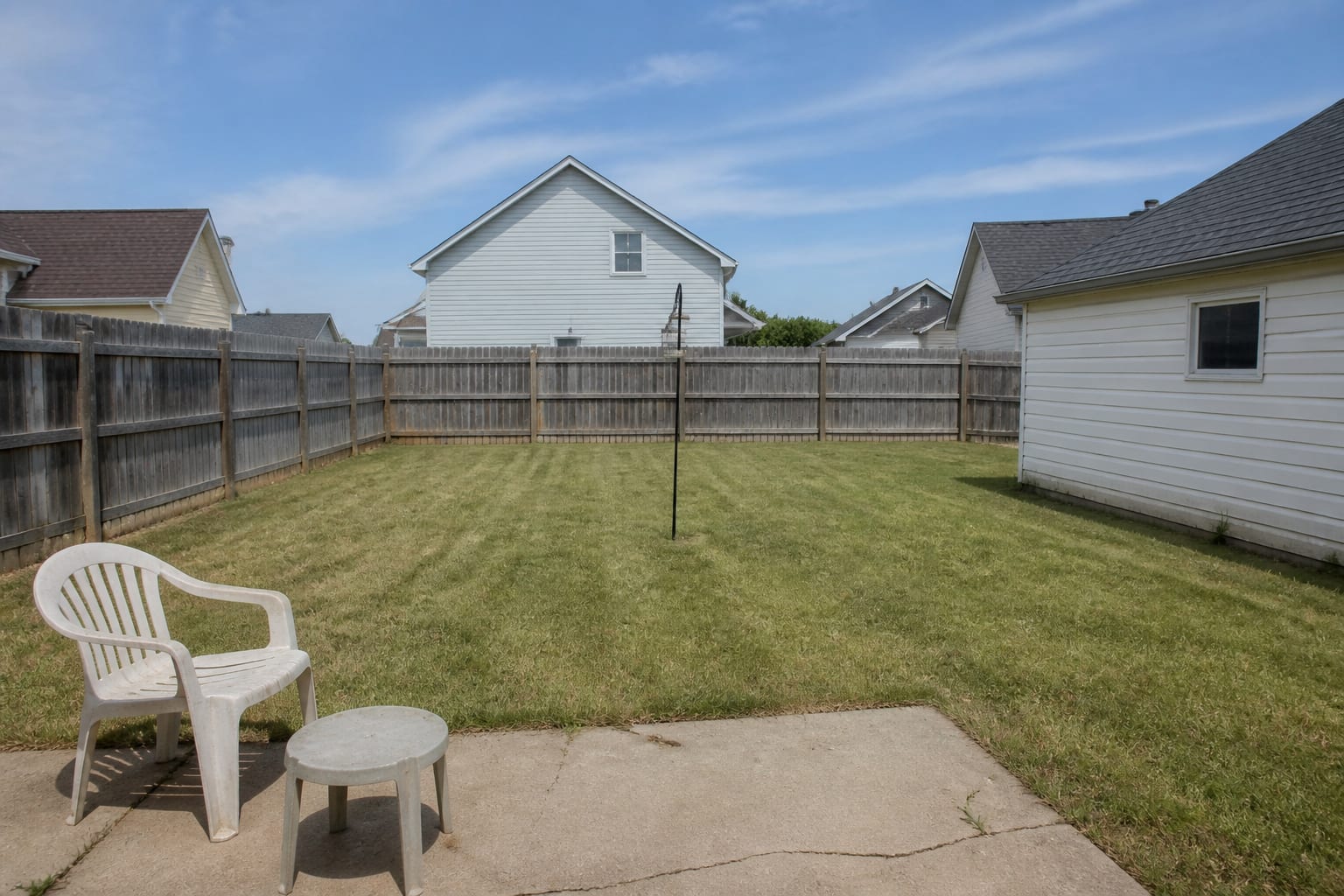
It is hard to picture how a cluster of serviceberry, a brush pile, and a shaded birdbath will sit together until you see it in your own yard. With Re-Design you upload a photo of your existing garden or a bare corner of lawn, then ask the AI to add layered native shrubs, a shallow water feature, and feeder placement that keeps cover close.
Try a few versions before you dig: a dense evergreen screen along one fence, a loose perennial border holding seed heads, or a small fountain set under a tree. Seeing the heights and spacing rendered on your real space makes it obvious where birds will feel safe enough to land, long before you spend a weekend planting.