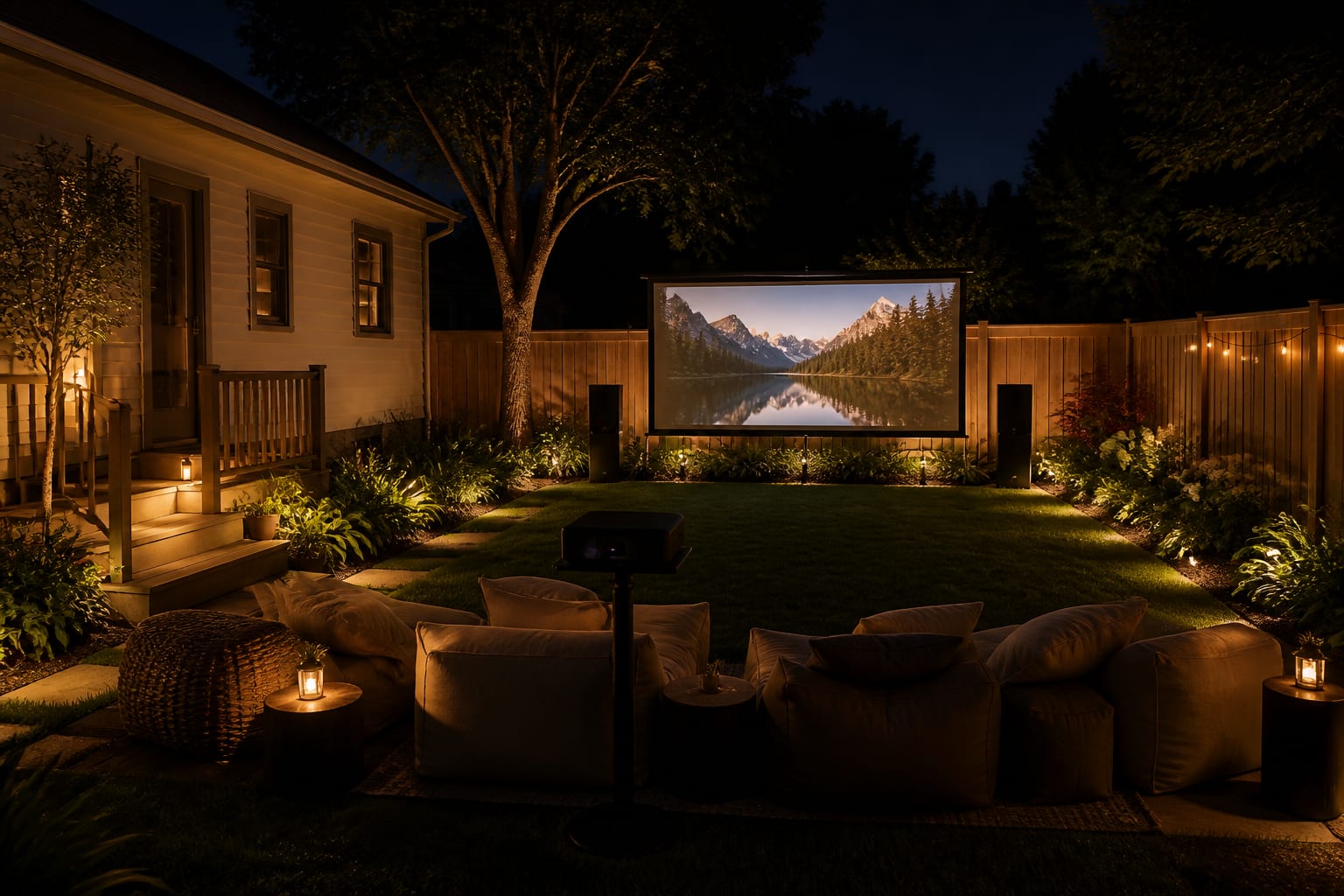
Start with darkness and throw distance, because the fanciest screen looks washed out if the projector cannot beat the ambient light. To set up a backyard cinema, size the screen to your space, match the projector's lumens and throw to that screen, add real sound, and only run it once full dark sets in. My read is that brightness, not screen quality, is where most home setups fall apart, since a dim projector turns a crisp film into a gray smear.
I think the budget should follow the eyes and ears, not the gadgets. A modest projector on a proper screen with decent speakers beats an expensive one fired at a bedsheet that ripples in the wind every time someone walks past.
Get the screen and projector matched
The screen and projector are one system, so size them together. A 100-inch diagonal screen is the sweet spot for most yards and seats 6 to 10 people comfortably; go to 120 inches only if your closest chairs sit beyond 12 feet, or faces in the front row look soft. Whatever the size, use a framed or tab-tensioned screen rather than a hung sheet, because any ripple shows up as a wobble across the whole picture.
Brightness is the spec to obsess over. Projector light is rated in lumens, and outdoors you fight residual glow even after sunset. I would not run anything under 2,500 lumens, and if a neighbor's porch light or a streetlamp reaches the yard, push to 3,000 or more. Wait for genuine full dark, usually 30 to 45 minutes after sunset, before the first frame. The same after-dark planning that makes outdoor lighting flatter a yard works against a screen, so kill or dim every fixture near the viewing wall.
Throw distance ties it all together. Every projector lists a throw ratio; multiply it by the screen width in feet to find how far back to place the unit. A 1.5 throw ratio aimed at a 100-inch screen (about 87 inches, or 7.3 feet, wide) needs roughly 12.5 feet of clearance. Measure that gap before you commit to a spot, and keep the projector on a stable table or stand so nobody jostles the image mid-film.
Resolution and contrast matter less than people fear at backyard sizes. A 1080p projector is plenty for a 100-inch screen viewed from 11 feet or more, and spending the difference on lumens or a flatter screen buys a better picture than chasing 4K. Keep the projector lens level with the top third of the screen and use its keystone correction only as a last resort, since heavy keystoning softens the image. A short HDMI run to a streaming stick powered off the projector's USB port keeps the cable clutter down and avoids a laptop dying halfway through the film.
Build the sound, seating, and screen wall
A backyard swallows sound, so a projector's tinny built-in speaker will not carry past the front row. Add a portable Bluetooth speaker of 30 watts or more, or a small soundbar, and place it beside or just in front of the screen, not behind the crowd, so dialogue arrives with the picture. For a larger lawn, two speakers flanking the screen at ear height beat one loud box in the middle.
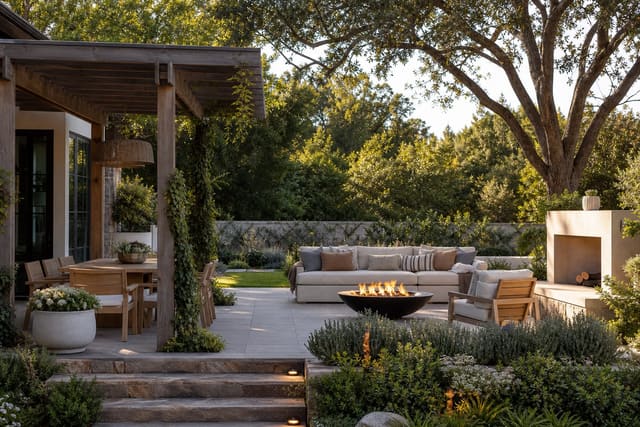
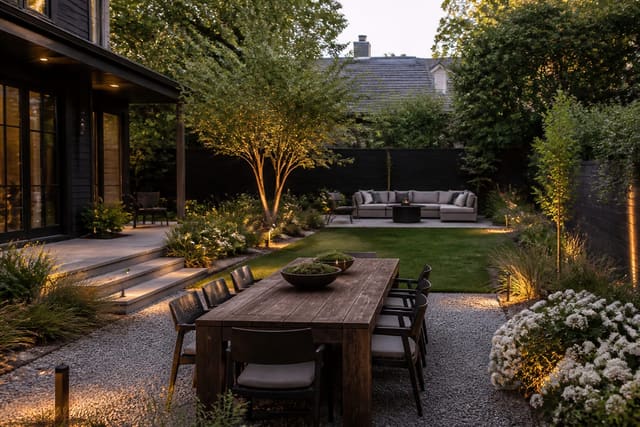
Seating decides who actually enjoys the film. Put the front row 1.5 to 2 screen-widths back, then arrange the rest in a shallow arc rather than straight rows so nobody stares through a head. Here is the layout I use:
- Front row at 1.5 screen-widths: floor cushions and low loungers for kids who like to sprawl.
- Middle zone at 2 to 2.5 widths: folding chairs and a couple of bean bags for the main crowd.
- Back edge: a bench or sofa raised a few inches so the late arrivals still clear the heads in front.
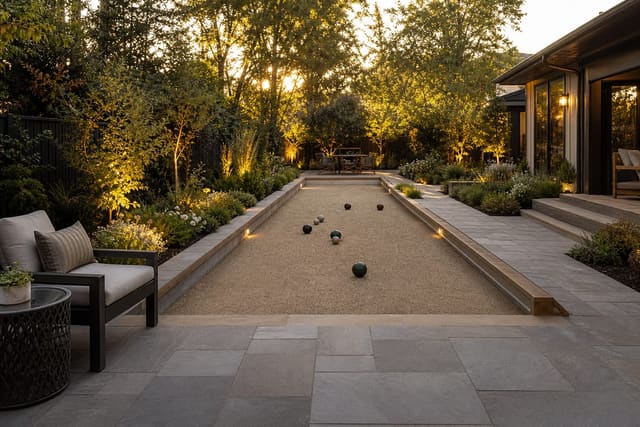
The screen wall itself can be permanent or packed away. A fixed screen on a fence or a garage wall is ready every weekend and ties into the rest of the yard, while a freestanding frame stores in a garage between movie nights. If you are building seating and a screen wall anyway, the same dimensions that govern a bocce ball court layout help you carve a flat, defined zone out of an irregular lawn so the projector and chairs sit square to the screen.
Comfort details decide whether people stay for the whole feature. Keep a basket of throw blankets and a bug-repelling plan, whether that is a fan moving air across the seating or citronella at the edges, because nothing ends a movie night faster than mosquitoes. Run a short extension to a single power strip near the projector so the speaker, the streaming stick, and a phone charger all share one weatherproof feed rather than trailing cords across the lawn. A small side table by the front row for drinks keeps people from getting up and crossing the beam, which throws a shadow across the screen every time someone walks past.
Common mistakes to avoid
The most common mistakes to avoid start with brightness and a bedsheet. A sub-2,000-lumen projector fired at dusk produces a washed-out gray rectangle, and a hung sheet ripples enough to ruin the picture; spend on lumens and a flat screen before anything else. Starting before full dark is the same error in another form, so hold the first frame until 30 to 45 minutes after sunset.
The other repeat mistakes are about sound and placement. Relying on the projector's built-in speaker leaves the back rows guessing at dialogue, and putting the one speaker behind the crowd throws the audio out of sync with the picture. People also forget the throw math and shove the projector wherever there is a table, then wonder why the image overshoots the screen. Measure the throw distance, run the speaker up front, and keep a power plan, since most projectors will not last a full feature on battery alone.
Use AI design to preview your backyard cinema
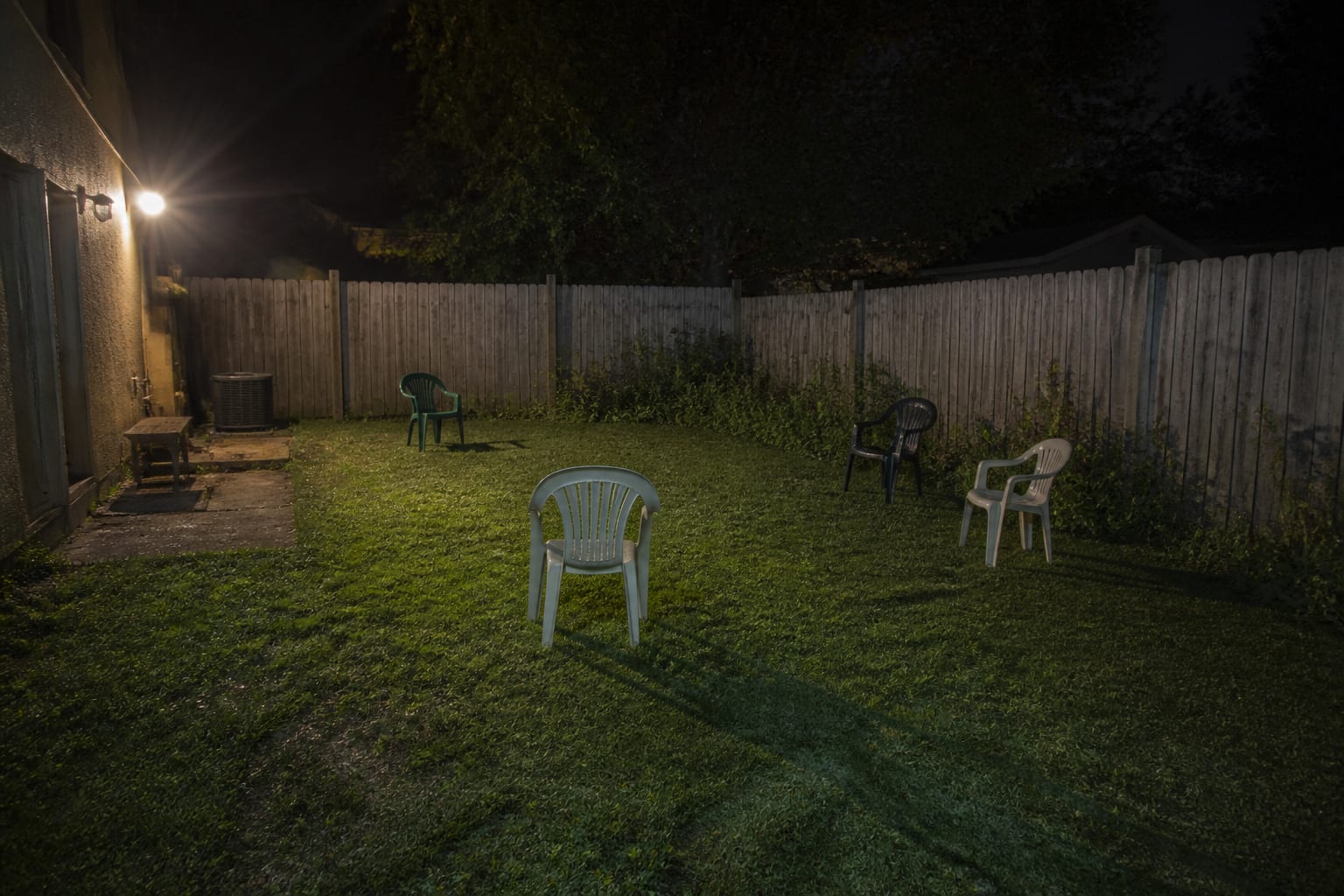
It is hard to picture a screen and seating in a yard you only ever see in daylight. Re-Design helps here: upload a photo of the lawn or patio and the AI design tool re-renders the same space as a movie setup, so you can test whether a fence-mounted screen or a freestanding frame in the corner reads better before you buy the gear.
Try both layouts on the one photo. Upload it, ask the AI to add a 100-inch screen on the garage wall with a low arc of loungers, then compare it against a freestanding screen at the far end of the lawn with string-light borders dimmed for contrast. Seeing the seating arc and screen placement against your real yard makes the spacing obvious and saves a frustrating first movie night spent dragging chairs around in the dark.