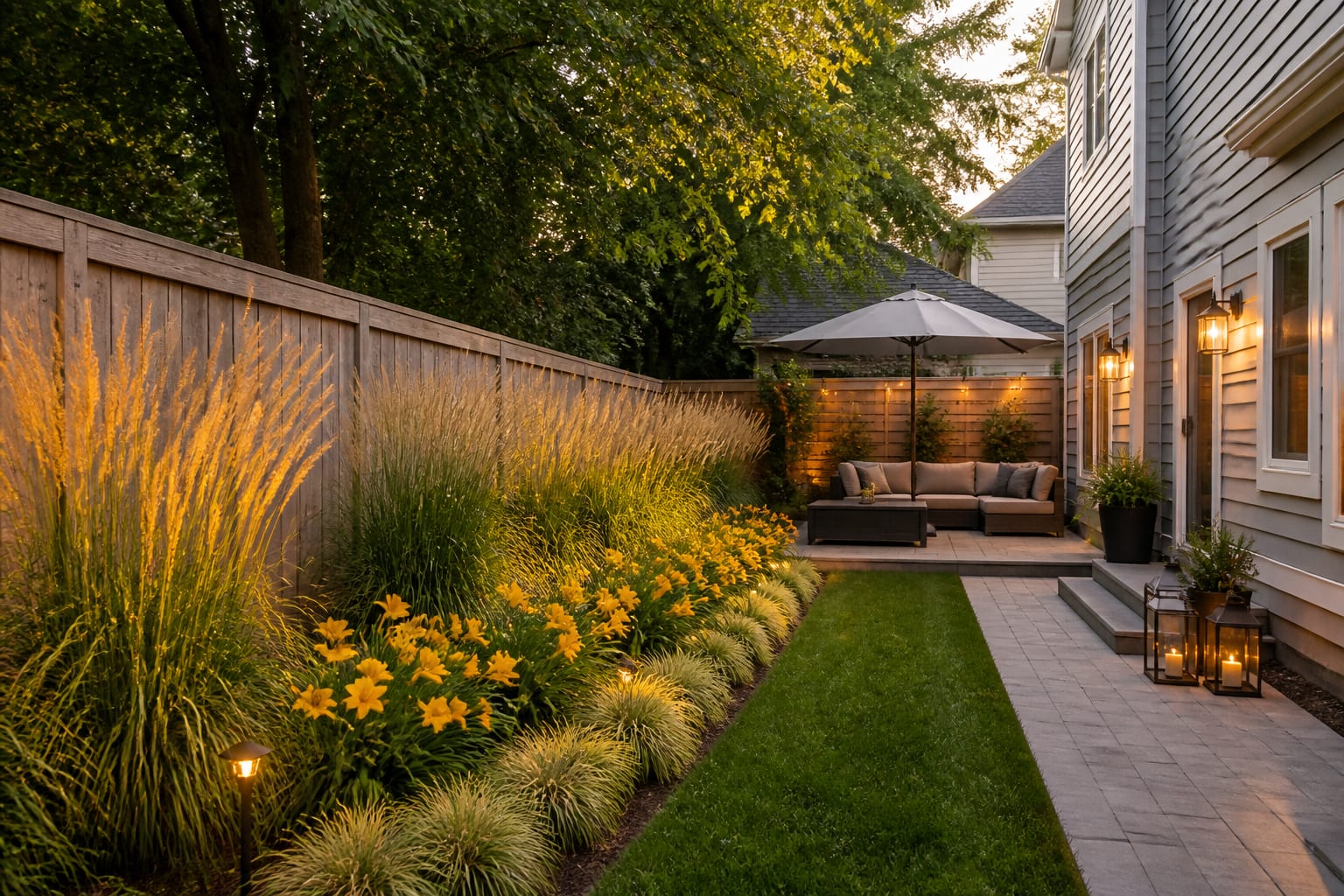
If you want a summer border that flowers for months and barely asks anything of you, pair reblooming daylilies with ornamental grasses and you are most of the way there. They are the best low-maintenance plants for summer borders because both shrug off heat, drought, and poor soil while giving you flower and movement. My read is that this single pairing solves more tired borders than any other.
I think the magic is the contrast: daylilies bring solid color and bold strappy leaves, grasses bring airy height and motion. One grounds the bed, the other lifts it. Get the ratio right and the border looks designed from June until the first hard frost.
Build the border in three layers
A border reads as full when it has a back, a middle, and a front. Grasses handle the back, daylilies fill the middle, and a low edging plant finishes the front. Layering this way means you never see bare soil or a flat single-height row, which is what makes most beginner borders look thin.
Here are pairings and layouts worth stealing:
- Back the bed with 4-foot Karl Foerster feather reed grass, upright and tidy, then run a ribbon of golden Stella d'Oro daylilies in front at 18 inches apart.
- For a softer, prairie feel, set Northwind switchgrass at 5 feet behind peachy Happy Returns daylilies and a haze of purple Verbena bonariensis.
- Use blue-gray Little Bluestem with deep-red Chicago Apache daylilies for a high-contrast late-summer combination that glows at sunset.
- Edge the front with low Hameln fountain grass at 18 inches and repeat a single daylily color behind it for a calm, rhythmic look.
- Drift Pennisetum and pale-yellow daylilies along a path so the grass brushes your legs and the flowers sit at hand height.
- In a hot, dry strip, combine drought-tough Panicum with reblooming daylilies and skip irrigation entirely once they root in.
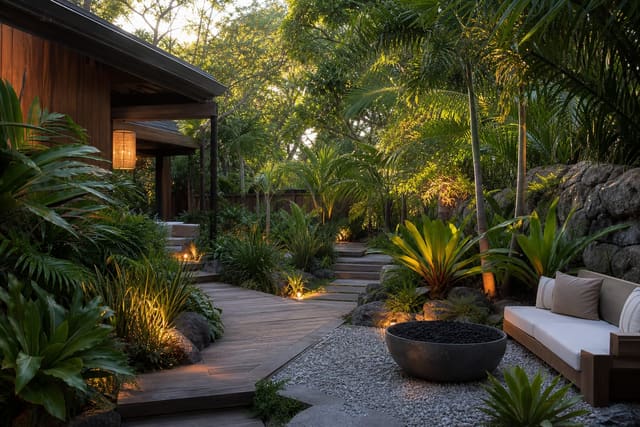
Repeat one or two daylily colors down the run rather than planting a different shade every few feet. Repetition is what turns a plant collection into a border. The same restraint shows up in these tropical garden ideas, where bold foliage carries the design instead of a scatter of unrelated blooms.
Get spacing and color right
Spacing decides whether the bed fills in or sulks. Plant daylilies 18 to 24 inches on center and grasses 24 to 36 inches, depending on mature width, and resist crowding them; both bulk up fast and a tight bed just means dividing sooner. A drift of three to five of the same plant reads far better than singles dotted around.
Color wants a plan too. Pick a daylily palette of two or three shades that sit near each other, golds and peaches, or reds and bronzes, and let the green and silver of the grasses act as the neutral between them. A border that tries to hold every daylily color at once reads as confetti; two repeated shades read as a design. Grasses also carry the border into fall and winter with tan seed heads, so the bed earns its space long after the daylilies finish.
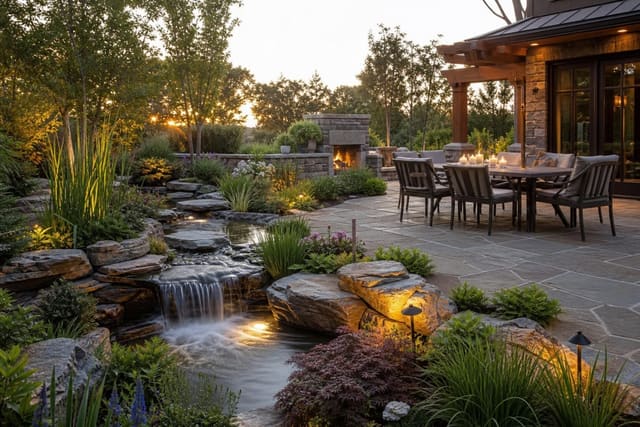
Texture is the quiet third lever. Daylilies give you flat, arching, strap-like leaves; grasses give you fine, upright blades; set them side by side and each makes the other look sharper. Add one bold-leaved anchor every few feet, a clump of Siberian iris or a low sedum, and the eye gets a place to rest between the fine textures. For a quiet contrast, a water feature set near a grass drift doubles the sense of movement as the blades catch the breeze and the surface ripples.
Keep it nearly maintenance-free
This is the part that sells the combination. Reblooming daylilies need no staking and little deadheading; snapping off a spent scape now and then keeps them tidy but is optional. Ornamental grasses ask for exactly one real job a year: a hard cut to 4 to 6 inches in late winter or early spring before new growth pushes up. That is it for an established bed.
Water deeply for the first season to root them in, then back off; both are genuinely drought-tolerant after year one. Divide daylilies every 3 to 4 years and grasses every 4 to 5 to keep them vigorous, which also hands you free plants to extend the border or feed a neighbor's garden. Skip the fertilizer and you will get sturdier, less floppy growth that holds up to summer storms. If you grow edibles too, the easy-care rhythm here slots beside these herb garden ideas for a low-effort, high-yield planting season.
Plan for movement and seasons
The quality people remember in these borders is motion. Grasses turn a still bed into a moving one, swaying in wind that daylilies barely register, so site them where you will catch the light through the blades, against a low sun in the morning or evening. Backlight makes feather reed and switchgrass almost glow.
Think across the year, not just July. Daylilies carry early and midsummer, grasses peak in late summer and fall, and the dried grass plumes hold structure through winter snow. Leave them standing until spring rather than cutting in autumn; they look intentional and they shelter overwintering insects and seed-eating birds. Tuck a few spring bulbs like alliums and daffodils among the clumps and the border wakes up in color weeks before the daylilies stir, stretching the show from March to the first frost. A border planned this way never has a dead month, and it asks for a single spring cleanup to reset. That is a remarkable amount of color and structure for one hard cut and a season of watering, which is exactly why this pairing keeps showing up in low-effort gardens that still look composed and intentional all summer long.
Use AI design to preview your border
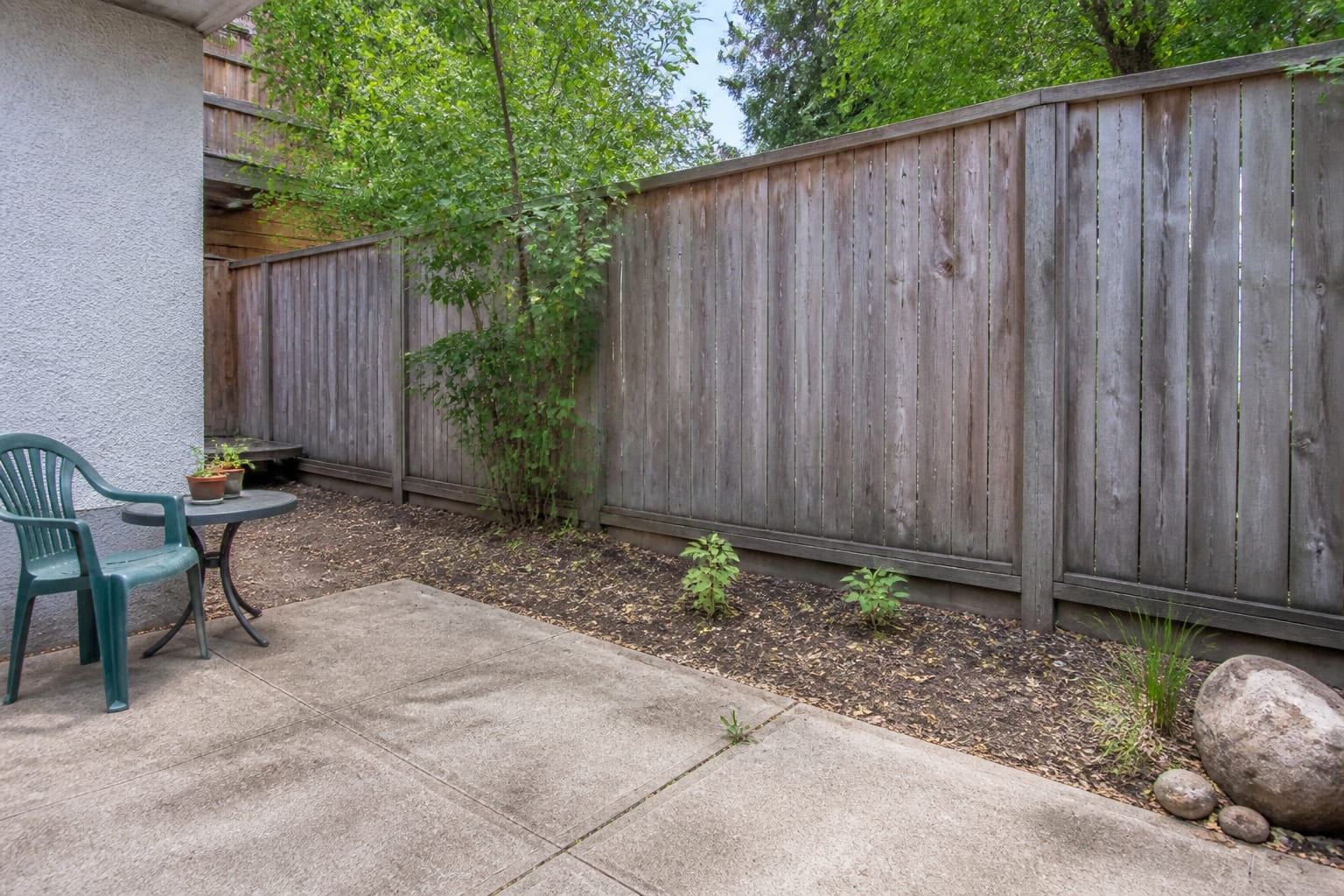
It is hard to picture a young border at maturity, when the grasses are 4 feet tall and the daylilies have filled their drifts. Re-Design lets you upload a photo of your bed or fence line and re-render the same strip planted with feather reed grass behind golden daylilies, so you see the finished height, color, and rhythm before you buy a single plant.
Test your combinations on the actual site. Upload the photo, ask the AI design tool to show a switchgrass-and-peach-daylily border, then compare it against a Little Bluestem and red-daylily scheme. Seeing both against your house and lawn makes the spacing and color call easy, and it saves you from planting a row that fights the wall behind it.