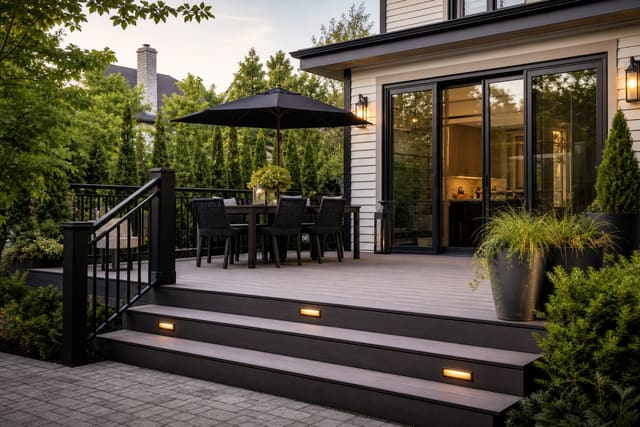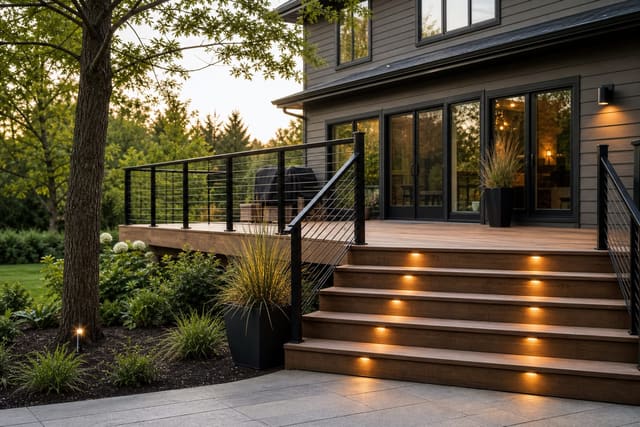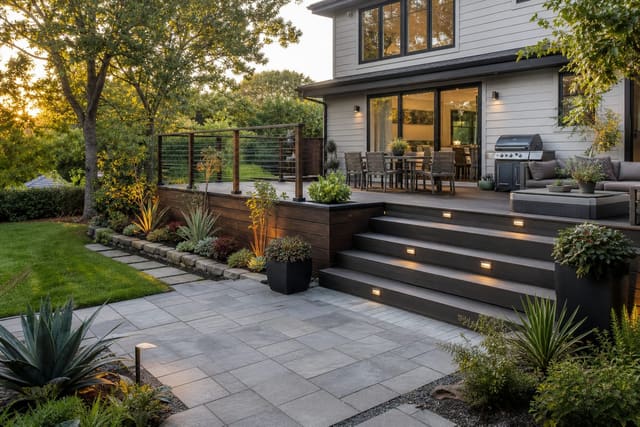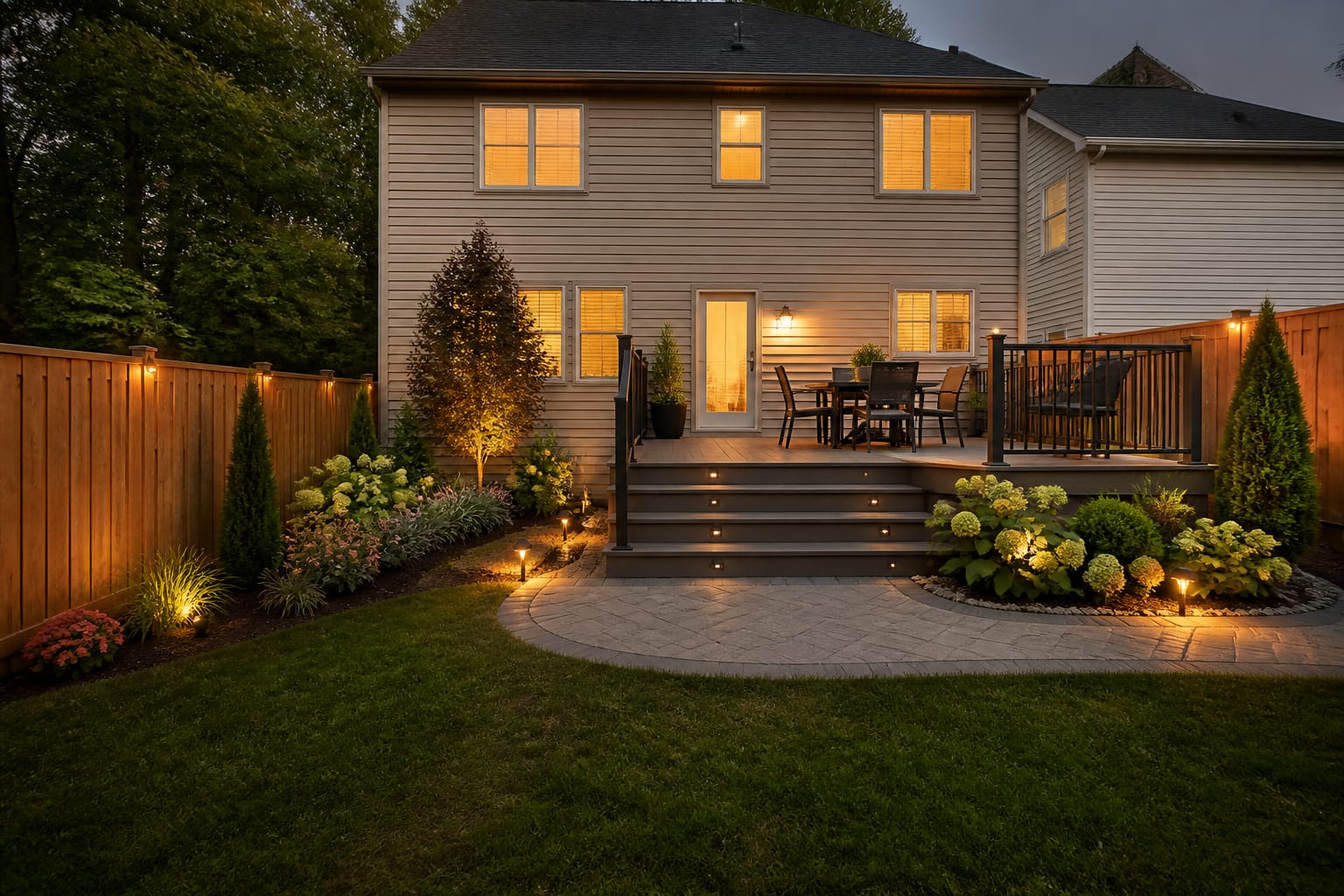
The number that decides your deck budget is not size—it is the decking material, and the gap between options is wider than most homeowners expect. Pressure-treated pine and capped composite can differ by three times per square foot, and the material you pick also dictates the railing, the fasteners, and how much you will spend maintaining it for the next twenty years. A basic ground-level deck runs $15 to $35 per square foot installed; a composite deck with quality railing runs $35 to $70 per square foot.
What drives deck building cost
Price a deck per square foot and the material choice swings the total more than anything else. Pressure-treated pine is the budget baseline at $15 to $25 per square foot installed. Cedar and redwood run $25 to $40. Capped composite—the low-maintenance favorite—runs $35 to $60, and tropical hardwoods like ipe push $40 to $70. For a 300-square-foot deck, that range alone spans $4,500 to $21,000 before railings and stairs.
Height is the second driver. A ground-level deck needs minimal framing, but anything you step up to requires concrete footings below the frost line, taller posts, and code-compliant stairs and railing, which can add $3,000 to $8,000. The design choices in the deck design ideas guide—single level versus multi-tier, attached versus freestanding—change the framing complexity and therefore the labor.
Railings are the line item people forget. Pressure-treated wood railing runs $20 to $35 per linear foot, while aluminum or cable rail runs $40 to $60. A 300-square-foot deck often has 40 to 50 linear feet of railing, so the choice is a $1,000 to $3,000 swing. The options in the deck railing ideas guide affect both cost and how open the finished deck feels.
Labor is roughly a third of most deck budgets, and it scales with complexity more than with raw size. A simple rectangular deck on flat ground is fast to frame, while angled corners, multiple levels, picture-frame borders, and built-in benches each add hours. Where you live matters too: labor rates and the depth a footing must reach below the frost line both vary by region, so the same plan can cost meaningfully more in a cold-climate market than a mild one. Get the framing labor quoted against your actual site, not a generic per-square-foot figure.
Maintenance is the cost that only shows up after the build, and it is where the wood-versus-composite math actually gets decided. A pressure-treated or cedar deck needs cleaning and re-staining every 2 to 3 years at $200 to $500 each time, which adds up to several thousand dollars over a twenty-year life. Capped composite needs only an occasional wash, so its higher upfront price often evens out. Run the numbers across the time you actually plan to own the house, not just the day you build, before you assume wood is the cheaper option.
A line-item deck budget
Here is a realistic mid-range composite deck, 300 square feet at ground level with stairs:
- Capped composite decking, 300 square feet: $5,400.
- Pressure-treated framing, joists, and ledger: $2,400.
- Concrete footings and posts: $1,200.
- Aluminum railing, 45 linear feet: $2,250.
- Stairs, four steps with railing: $1,200.
- Fasteners, flashing, and hardware: $600.
- Labor, framing through finish: $6,000.
That totals about $19,000, with decking and labor each near a third. Swap composite for pressure-treated pine and the same deck drops to roughly $11,000. If you are building above a walkout basement or sloped yard, the raised deck ideas guide covers the added footing depth and structural requirements that drive raised-deck budgets higher.
Size the deck to how you will actually use it before you let the per-square-foot number tempt you bigger. A 300-square-foot deck comfortably seats a six-person dining set plus a small lounge zone, and every additional 100 square feet adds $1,500 to $7,000 depending on material. Homeowners routinely overbuild, paying for square footage that becomes a place to store the grill rather than a place anyone sits. Map the furniture you own onto the plan first, then add a four-foot circulation margin, and let that define the size.
The accessories quietly inflate the final number. Built-in lighting runs $400 to $1,500, a privacy screen or pergola adds $1,000 to $5,000, and a built-in bench or planter adds $500 to $2,000 in labor and material. None of these are wrong, but they belong in the budget from the start rather than as surprises after the framing is up. Decide which extras are must-haves and rough them into the plan early, because retrofitting wiring or footings for a pergola after the deck is finished costs far more than building it in.
Common mistakes to avoid
The most expensive mistake is skipping the permit. A deck is a structural element attached to your house, and an unpermitted deck can fail inspection at resale, void insurance after a collapse, and force a teardown. Pull the permit even when it adds a few weeks.
A second mistake is comparing only the upfront price of wood versus composite. Pressure-treated wood needs cleaning and re-staining every 2 to 3 years at $200 to $500 a time, so its twenty-year cost often meets or exceeds composite. The third mistake is undersizing the footings—footings that do not reach below the frost line heave and rack the whole frame. The fourth is buying cheap fasteners; uncoated screws rust and streak both wood and composite within a season.
Preview your deck before you build in Re-Design
Frequently Asked Questions
How much does it cost to build a deck? A basic pressure-treated deck runs $15 to $35 per square foot installed, and a composite deck with quality railing runs $35 to $70. For an average 300-square-foot deck, that is roughly $4,500 to $10,500 in wood or $10,000 to $21,000 in composite.
Is composite or wood decking cheaper? Wood is cheaper up front—pressure-treated pine starts around $15 per square foot versus $35 or more for composite. But wood needs staining and sealing every 2 to 3 years, so over twenty years composite often costs the same or less while needing almost no maintenance.
Do I need a permit to build a deck? Almost always, especially for any deck attached to the house or raised above ground level. A deck is a structural element, so building permits and inspections apply. Unpermitted decks create problems at resale and can void insurance after a failure.