If your yard is flat and you want a hard surface that lasts decades with little fuss, a patio usually wins; if the ground drops away from the house, a raised deck is the smarter answer. That is the short version of the deck versus patio question, and most homeowners overthink it. My read is that the slope of your yard decides this far more often than taste does.
I think the second deciding factor is honesty about maintenance. A deck is a structure you will re-seal and inspect; a patio is a surface you will mostly sweep. Pick the one whose chores you will actually do, not the one that looks best in a single sunny photo.
How they are built changes everything
A deck is a framed structure: posts on concrete footings dug below the frost line, beams, joists at 16 inches on center, then a walking surface of wood or composite boards. That framing is what lets a deck float over a slope or wrap around a walkout basement without moving a cubic yard of soil. It is also why a deck is a permitted build in most towns and why railings become mandatory once the surface sits more than 30 inches above grade.
A patio is the opposite philosophy. You excavate a few inches, compact a gravel base, add bedding sand, and set pavers, flagstone, or pour concrete right on the ground. There is no air underneath, so a patio can carry a 700-pound hot tub or a stone fire pit that a deck would need extra blocking to support. The tradeoff is grade: a patio wants land within roughly 6 inches of level, or you are into retaining walls. If your lot fights you here, the screening and grading logic in these backyard fence ideas pairs well with planning where a patio can sit.
Cost, lifespan, and upkeep side by side
Numbers make this concrete. Here is how the common surfaces stack up:
| Surface | Installed cost / sq ft | Lifespan | Upkeep | |---|---|---|---| | Pressure-treated wood deck | $15 to $25 | 15 to 20 years | Re-seal every 2 to 3 years | | Composite deck | $25 to $35 | 25 to 30 years | Wash twice a year | | Poured concrete patio | $6 to $12 | 25 to 40 years | Seal every 3 to 5 years | | Paver patio | $12 to $25 | 30-plus years | Re-sand joints, pull weeds | | Natural stone patio | $20 to $30 | 50-plus years | Sweep, occasional reset |
The pattern is clear. Decks cost more up front and ask for ongoing attention, but they buy you a level platform over difficult ground. Patios cost less, last longer, and demand almost nothing once set, provided the base was compacted correctly. A patio that heaves and tilts almost always traces back to a skimped gravel base, not the paver itself, so a contractor who wants to dig 8 inches and compact in layers is worth paying for.
Material choice within each camp matters as much as the deck-or-patio call. A composite board at $25 to $35 costs more than pressure-treated wood but skips the staining ritual, so over 20 years the composite often wins on total spend. On the patio side, poured concrete is cheapest but cracks; pavers cost more yet let you lift and reset a single stone if a root or a freeze shifts it. Pick the version whose failure mode you can live with.
Resale follows use, not price. A deck off a kitchen door that gets used every evening adds more felt value than a grand patio at the back of a lot nobody walks to. A real-estate agent will tell you a tired, peeling deck can actually count against a sale, while a clean stone patio almost never does. Put the surface where the door and the view already pull people, and keep whichever you choose looking maintained.
Match the surface to how you live
Think about what happens on the surface before you choose the material. A few honest questions sort most people quickly:
- Do you want to step straight out from a raised kitchen or living floor? That favors a deck flush with the threshold.
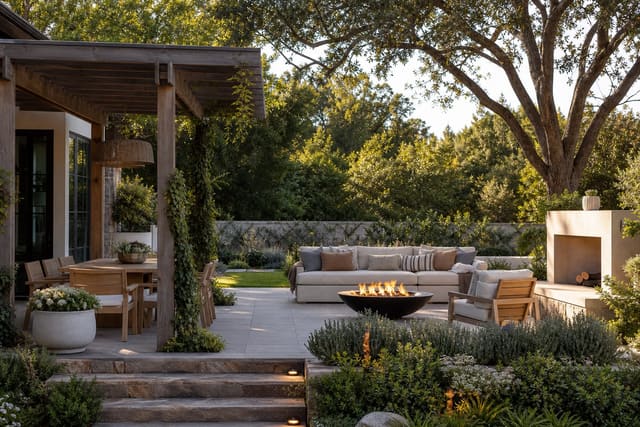
- Is your yard flat and sunny with a spot for a fire pit or outdoor kitchen? A patio handles open flame and weight better.
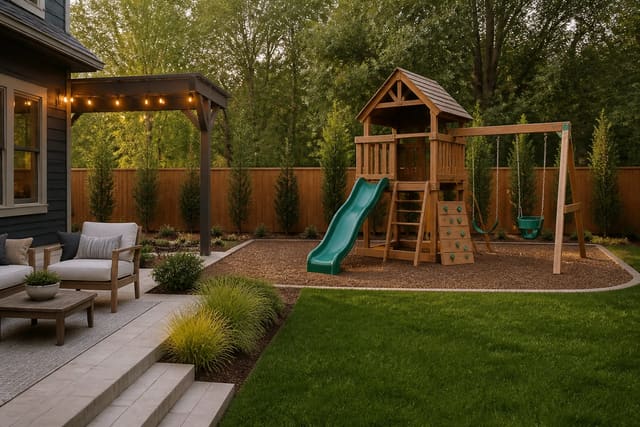
- Will kids and pets pour onto it from a play zone? A patio gives a stable, splinter-free landing, and the layouts in these outdoor play equipment ideas show how a hard surface anchors a play area.
- Do you crave shade trees nearby? Patios coexist with roots; deck footings can clash with them.
- Is your budget tight this season? Poured concrete at $6 to $12 per square foot is the lowest-cost path to a usable outdoor room.
You are not forbidden from having both. A common and genuinely good plan is a small deck off the door for grilling, stepping down to a larger stone patio for dining and a fire pit. The deck solves the threshold; the patio solves the gathering space.
A simple way to decide this weekend
Walk to your back door with a level and a tape measure. Measure how far the ground drops over the first 10 feet. Under 6 inches, default to a patio and spend the savings on better stone. Over 6 inches, price a deck, because the cost of retaining walls to flatten a slope often erases the patio's price advantage anyway.
Then mark the footprint with stakes and string at the size you actually need, something like 12 by 16 feet for dining. Live with that outline for a few days. Seeing the real dimensions in your yard tells you more than any spec sheet, and it keeps you from building something either cramped or wastefully huge.
Use AI design to preview deck and patio options
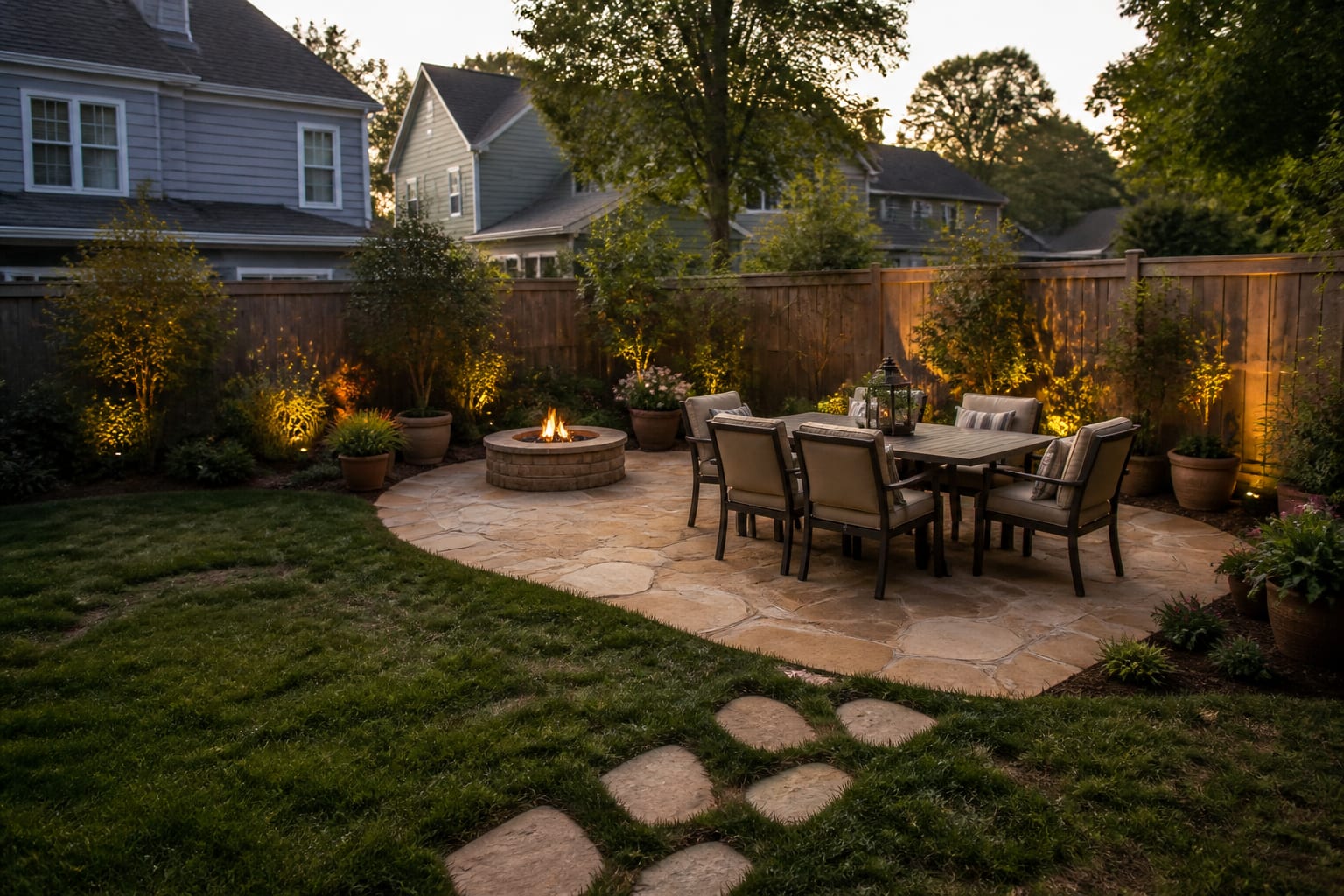
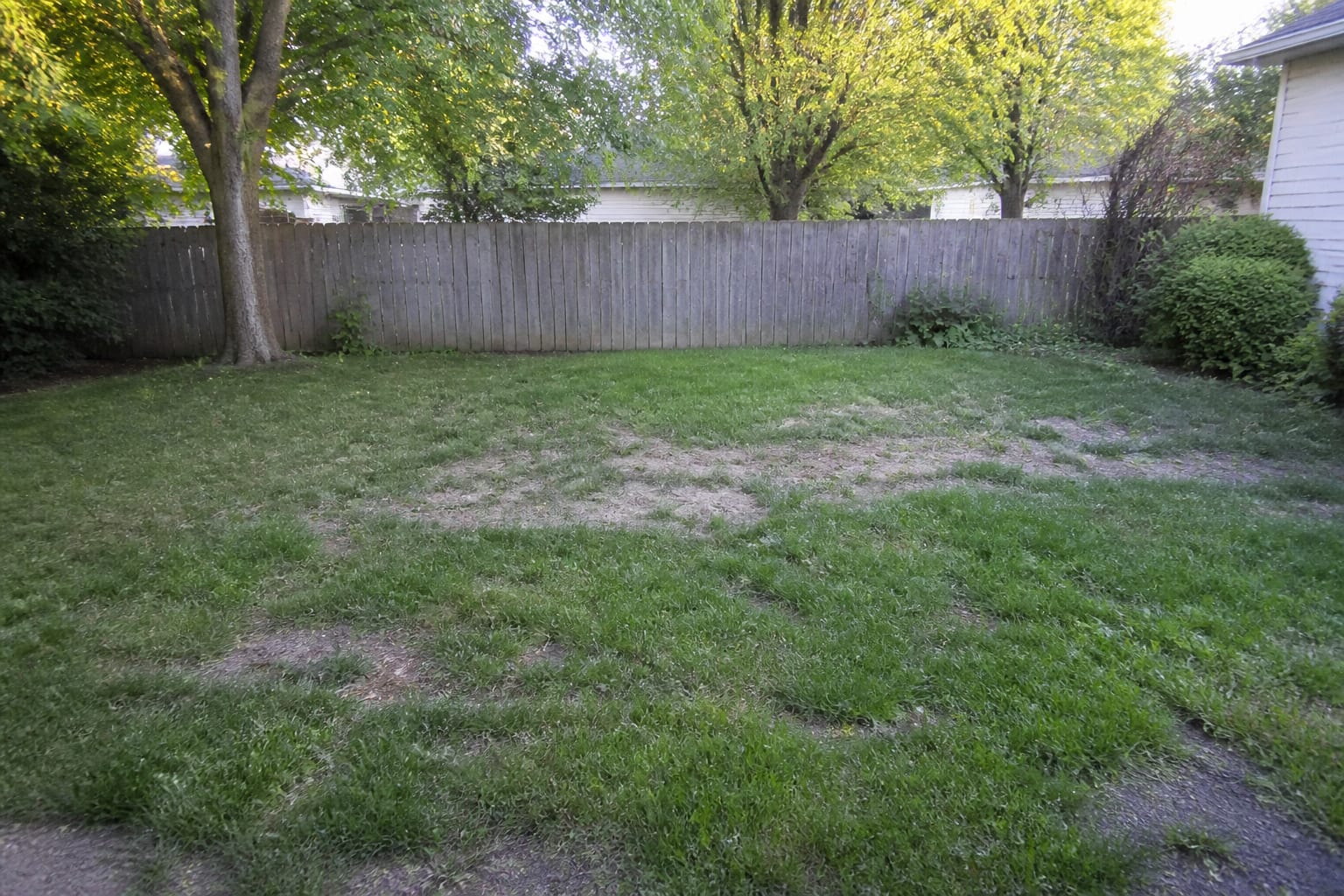
The hardest part of this choice is picturing a surface that does not exist yet. Re-Design closes that gap: upload a photo of your backyard and the AI re-renders the same space first as a cedar deck off the door, then as a flagstone patio with a fire pit. You see both options on your actual lot, with your fence and trees in frame, instead of guessing from a catalog.
Try it before you commit a dollar. Upload the shot, ask the AI design tool to show a composite deck in a gray tone, then a paver patio in warm sandstone, and compare them side by side. That preview often settles the deck versus patio debate in ten minutes, and it shows you the material color that flatters your siding before the order goes in. For broader yard planning, the AI backyard design ideas walk through the same upload-and-compare workflow.