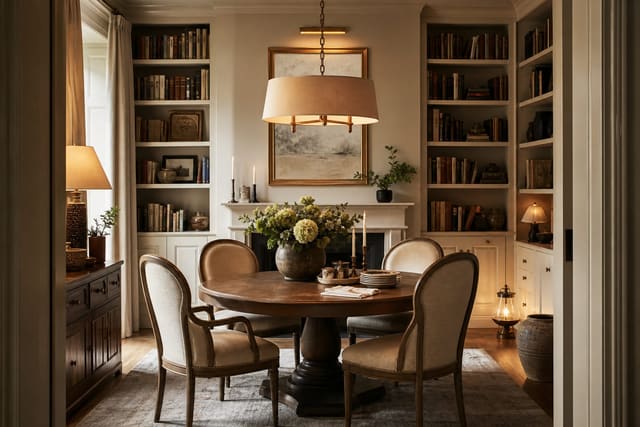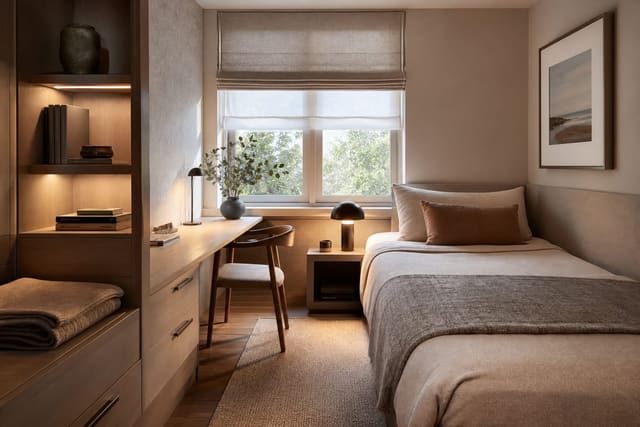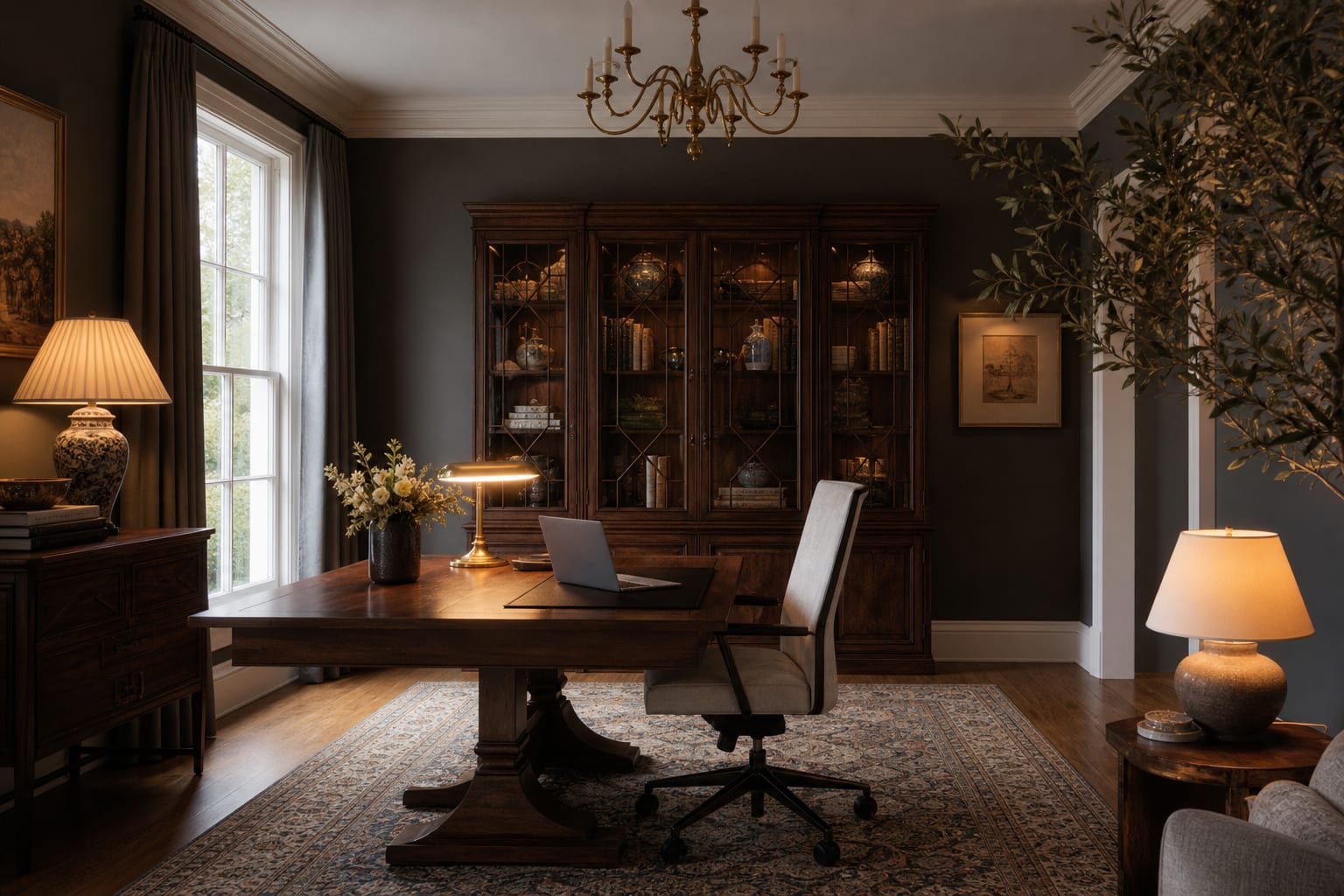
A dining room becomes a real home office when the table is the desk, one chair earns the work seat, the sideboard hides cables and files, and the room can reset for dinner in under 10 minutes. A rarely used dining room is usually the easiest home office hiding in plain sight. My opinion is direct: do not buy a desk until you have proved the dining table cannot do the job. Most dining rooms already have the three things a work zone needs: a broad surface, real chairs, and a door-adjacent location that is not your bed. The challenge is making the room feel like an office from Monday to Friday without making dinner feel like it happens inside a paperwork spill.
What makes a dining room work as a real office?
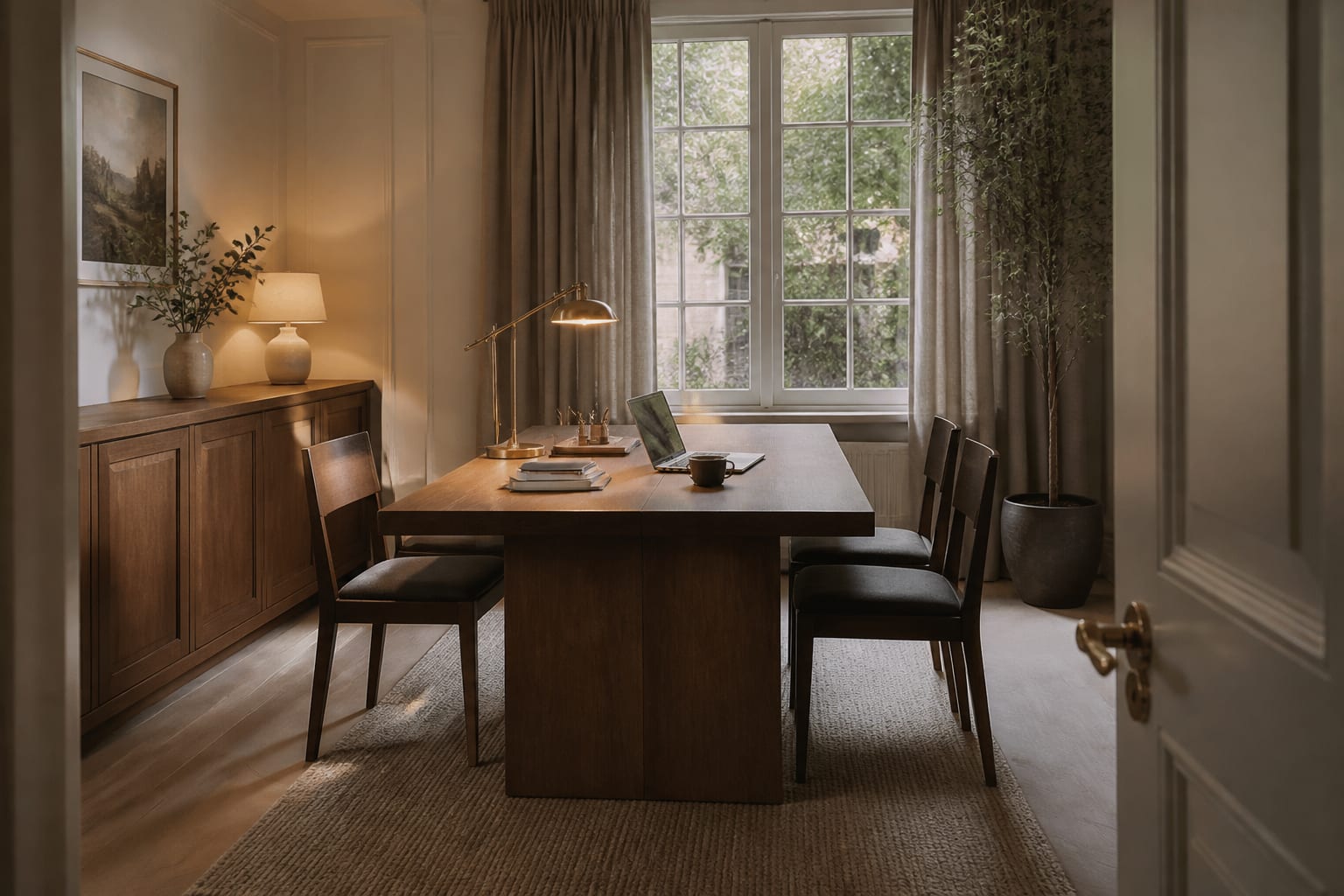
You convert a dining room into a home office by assigning the table as the main desk, choosing one storage zone for work supplies, improving task lighting, and preserving a quick path back to meals. The dining room office conversion works best when the room has one daily work setup, not six temporary piles.
Start with the table because it is already the dominant object. A dining table that is 36 to 42 inches deep can usually hold a laptop, monitor, notebook, and lamp without feeling cramped. If the table is narrower than 32 inches, keep the monitor on one short side and use the rest of the surface for writing, sorting, or meals. Leave at least 30 inches behind the chair you use most often so it can slide back without hitting a wall, buffet, or cabinet.
Keep the table centered only if it helps circulation. In many rectangular dining rooms, shifting the table 6 to 12 inches toward the less-used wall creates a better chair path and gives the work seat more breathing room. The goal is not symmetry for guests who rarely arrive; it is a room that works at 10 a.m. on a Tuesday.
If this room has already been sitting empty, compare the plan with broader ideas for an unused formal dining room repurpose. A dining room office is strongest when you are honest about how often you host, how often you work, and which function deserves the best light.
The no-new-furniture layout decision that matters most
The fastest way to repurpose dining room workspace is to choose a work seat and stop moving the laptop around the table every day. Pick the chair with the best daylight, the least glare, and the cleanest background. That chair becomes the office position; the other chairs become guest seating, overflow surfaces, or visual balance.
If the table sits under a chandelier, do not assume the light is useful for work. A chandelier is often centered for dining drama, not keyboard visibility. Pull an existing floor lamp from another room, use a shaded table lamp on the sideboard, or place a plug-in sconce on the wall if you already own one. For screens and paperwork, 3000K light usually feels clearer than a warm 2700K dining lamp, while the warmer bulb can stay for evening meals.
Use the sideboard, china cabinet, bar cart, or bookcase as the office storage wall. One drawer should hold the laptop charger, mouse, pens, sticky notes, headset, and stamps. One cabinet shelf should hold paper, files, and the printer if it fits. A shelf that is 12 to 15 inches deep is enough for most office categories; deeper storage often becomes a hiding place for things you never meant to keep.
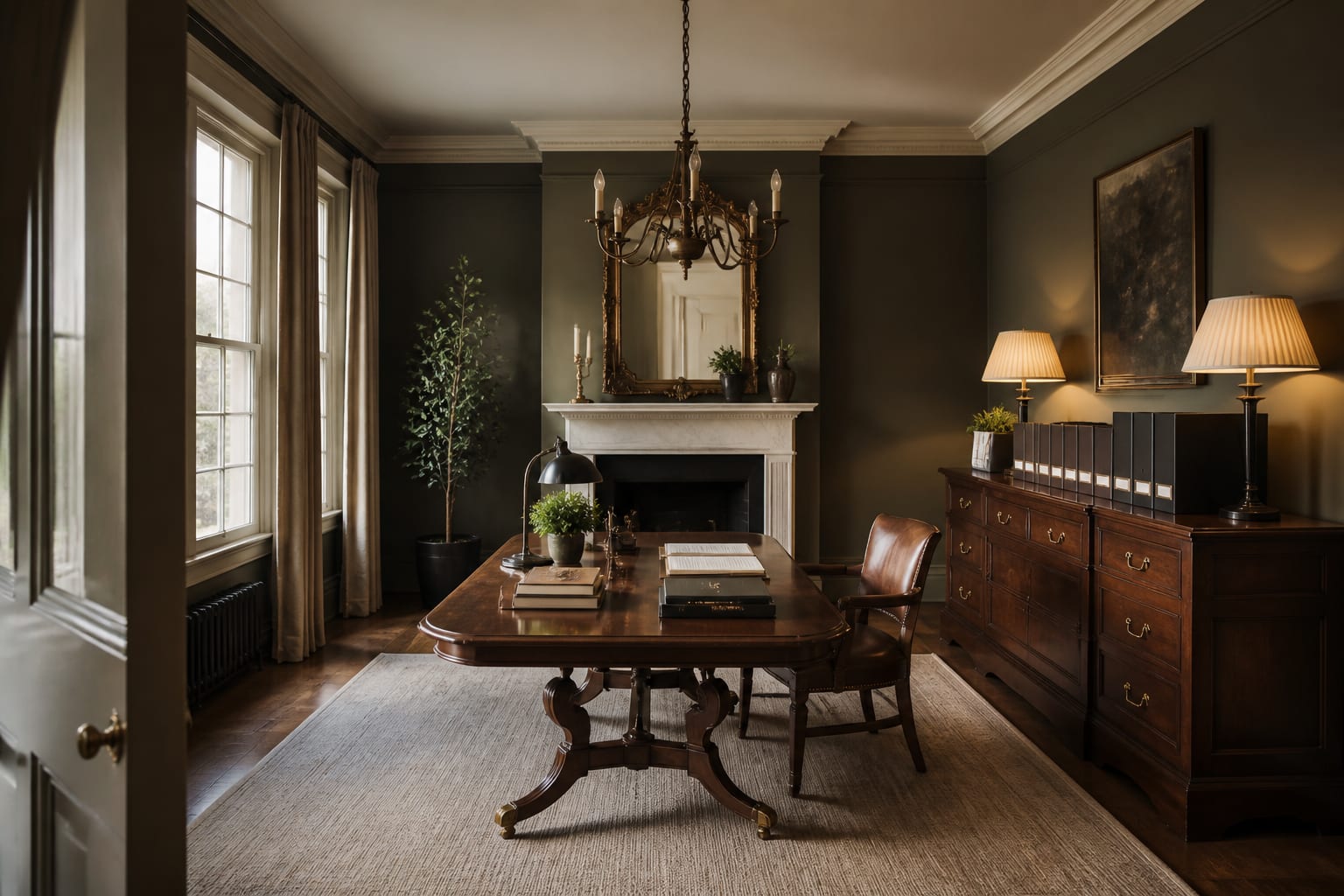
If you have a hutch with glass doors, edit what shows. Pretty glassware and a few books can stay visible, but tax folders, printer paper, and cords should move behind solid doors or into lidded boxes. The room should not announce every administrative task while you eat.
Test this on your own room photo with ReDesign before you choose the final layout; keep the room structure, daylight, ceiling line, and main path visible so the preview solves the space you actually have.
How should light, storage, and video calls work at the table?
Treat the dining table like a conference table with a closing ritual. Work can spread during office hours, but it needs a place to disappear in less than five minutes. A tray is useful here: laptop, notebook, mouse, and pen cup go onto the tray at the end of the day, then the tray slides into the sideboard or onto a lower shelf.
For video calls, face the chair toward the calmest wall, not necessarily the window. Side light from a window is flattering; a window directly behind you makes your face dark. If the only good background is the china cabinet, simplify the shelves behind your head so the camera sees shapes and depth, not a cluttered inventory. A small lamp near the background can make the room look intentional after sunset.
Cable control is the difference between “clever office” and “temporary command center.” Run a power strip along the table leg closest to the outlet, secure the cord with removable clips if the finish allows it, and use one basket or box for charging pieces. Do not snake a cord across a walkway; a 36 inch main path from the entry to the table edge is worth protecting, and 30 inches is the minimum I would tolerate in a tight room.
If guests stay over often or the dining room sometimes becomes a second sleeping zone, borrow the same priority thinking from a guest room home office combo. The daily function gets the cleanest setup, and the occasional function gets a fast reset instead of permanent control.
Common dining room office conversion mistakes
The first mistake is treating every dining chair as an office chair. A beautiful side chair can be fine for short sessions, but a full workday needs back support, the right seat height, and feet flat on the floor. If the existing chair is too low, try a firm cushion you already own before shopping. If your elbows cannot sit close to 90 degrees at the keyboard, the table-chair relationship is the problem.
The second mistake is letting paper colonize the table. Dining rooms have wide surfaces, which makes them dangerous. Give active work one tray, pending work one folder, and archived work one closed cabinet location. Anything that does not fit those three categories probably belongs in a real file box, recycling bin, or another room.
The third mistake is leaving the chandelier as the only light. Overhead sparkle can make dinner flattering and spreadsheets miserable. Add a task layer on the side where you work, and keep the shade low enough that the bulb does not glare into your eyes. A lamp around 18 to 24 inches tall works on many sideboards; a taller floor lamp should cast light onto the table, not into the camera.
The fourth mistake is pretending meals no longer matter. Even if you eat at the island most nights, the dining room should be able to host a real dinner without a weekend excavation. Keep placemats, napkins, and serving pieces in their original storage if possible, then confine work supplies to one sideboard bay or cabinet. A conversion fails when the room forgets its first language completely.
The fifth mistake is buying office furniture too soon. A new desk, rolling chair, or filing cabinet can make the room feel like two mismatched rooms fighting. Use the table for two weeks, note what annoys you, then decide whether the missing piece is lighting, storage, chair comfort, or privacy.
A 10-minute dinner reset list
- Roll the monitor cart to a 24-inch wall slot or closet.
- Stack the keyboard, mouse, and webcam into one labeled basket.
- Wipe the table with a 70 percent isopropyl pass to clear smudges.
- Swap the desk chair for a dining chair stored in the sideboard.
Use AI to preview your dining room office before you commit
Use AI design to preview the dining room office because the room’s success depends on proportion more than novelty. A table can be a generous desk, or it can become a giant island of clutter. A sideboard can hide files, or it can look overloaded once books, printer paper, and chargers join the dishes.
Photograph the room from a corner so the table, chairs, window, chandelier, sideboard, doorway, and any cabinet or hutch are visible. Leave the real objects in the frame: placemats, lamp, papers, printer, dog bowl, kids’ homework stack, or the extra chair that always drifts into the path. A cleared dining room will produce a prettier preview, but not a trustworthy one.
Ask for three controlled versions. In the first, keep the table centered and make one chair the work seat with a sideboard office drawer. In the second, shift the table slightly toward one wall to create a stronger desk side and wider walkway. In the third, treat the sideboard wall as the office backdrop with lamp light, closed storage, and a simplified camera view. Keep the wall color, table, and chairs consistent at first so you are judging layout rather than a fantasy makeover.
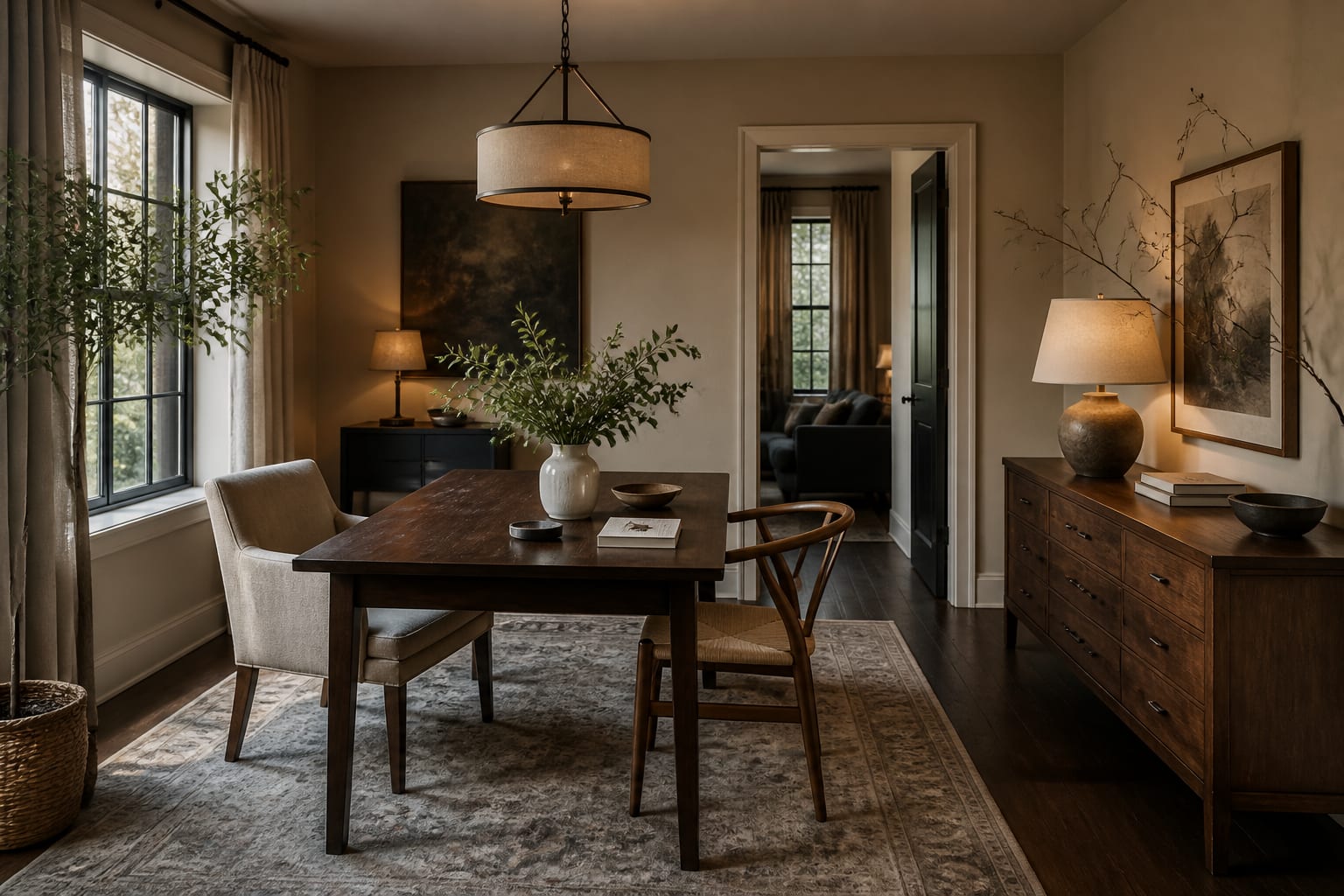
When using AI dining room design, prompt for practical constraints: existing table as desk, 30 inches behind the work chair, 36 inch preferred walkway, closed sideboard storage, 3000K task light, warm dining light, hidden cords, and a five minute reset for meals. The winning version should make work easier without making the dining room feel evicted.
A dining room can become a serious home office without a single new piece if the existing furniture gets stricter jobs. Give the table one work seat, give supplies one closed home, fix the light, and protect the room’s ability to return to dinner. That is how the conversion feels deliberate instead of like the laptop won an argument.
For the broader upload workflow, use the AI design complete guide as the parent checklist, then return to this room-specific pass for scale, light, and layout choices.
Frequently Asked Questions
Can a dining table really work as a daily desk?
Yes — a 36 to 42-inch deep dining table holds a laptop, monitor, notebook, and lamp comfortably; keep at least 30 inches behind the work chair and a 24-inch monitor riser so the screen meets eye line. Use the room photo to compare the visible layout and fixed constraints before committing, because doors, windows, storage, outlets, and traffic paths decide whether the idea survives daily use.
How do I hide the office gear from dinner guests?
Use one closed sideboard or china cabinet bay for the laptop charger, mouse, headset, paper, and printer, and use a single tray that slides into the bay during a 10-minute dinner reset. Keep the preview honest by leaving the problem area visible in the frame, then compare one conservative version against one bolder version before you buy materials or furniture.
Will a chandelier work for video calls and screens?
Usually no — a dining chandelier is centered for atmosphere, not keyboard visibility; add a 3000K task lamp on the sideboard or a plug-in sconce on the wall while keeping the chandelier for evening meals. Check the result against ordinary movement first: chair pullout, walkway width, door swing, glare, storage reach, and evening light matter more than a perfect catalog angle.
How do I keep paper from taking over the table?
Limit work to one tray, one folder for pending items, and one closed sideboard shelf for archives; anything that does not fit those three categories belongs in a file box or another room. Use the image to narrow priorities and measurements before ordering anything custom; final purchases still need real dimensions, code checks, outlet locations, and product clearances.
Do I need a separate office chair?
Not if a dining chair already holds a 90-degree elbow angle with feet flat; otherwise add a firm cushion before buying, and only swap in a task chair if the daily back support fails after two weeks of real use. If the preview invents architecture or hides the awkward feature you need solved, rerun it with stricter instructions so the result remains tied to your actual room.
> Try this: Ready to see this on your own room? Open ReDesign and run the preview before you buy, paint, drill, or move furniture.
Three transformations to try
1. Centered table with sideboard office storage and 3000K task lamp
2. Table shifted toward the wall to widen the work chair path
3. Sideboard wall as office backdrop with closed storage and lamp light