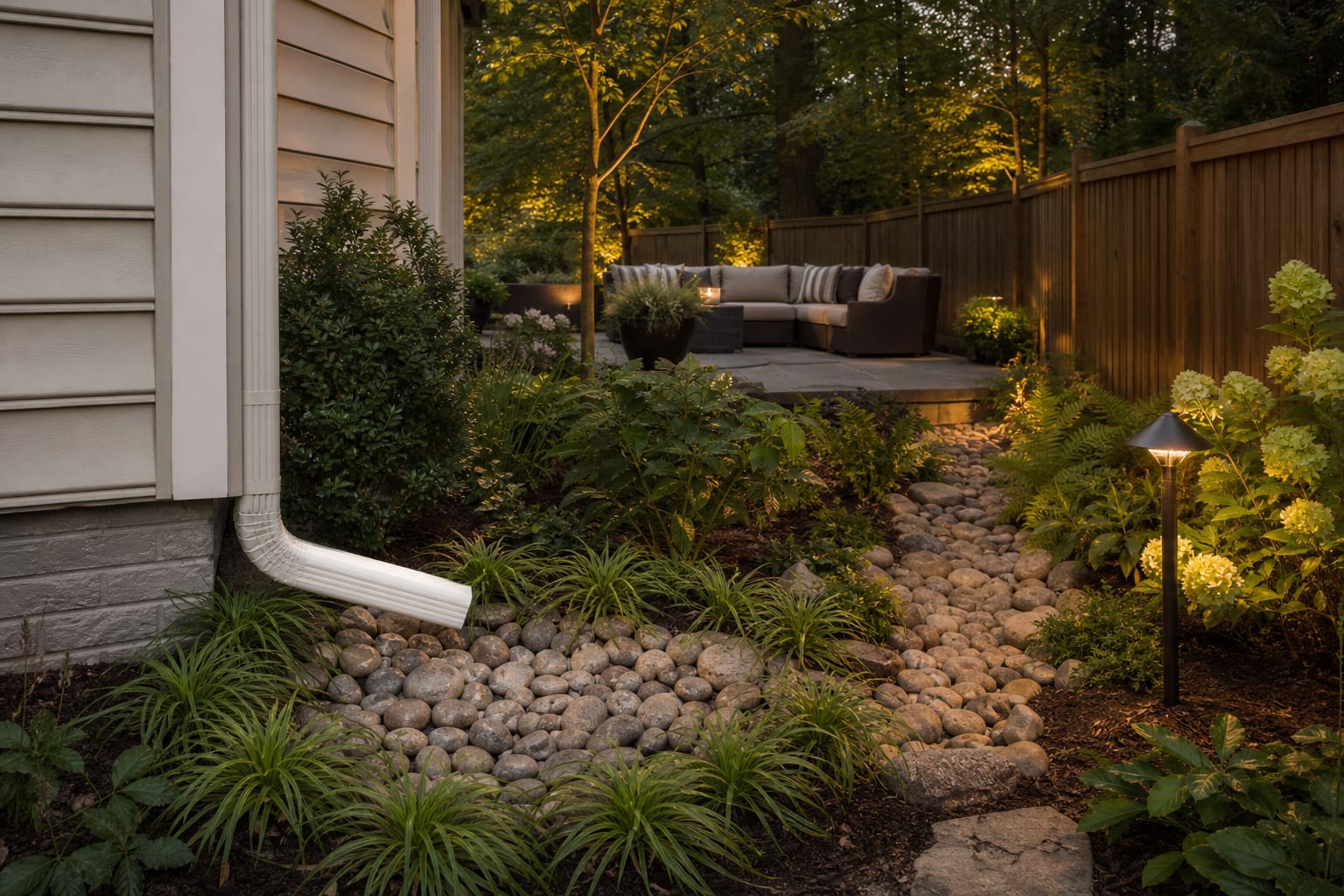
Downspout landscaping works when you give the water somewhere to go — a dry-creek bed, a rain garden, or a daylighted outlet 10ft from the house — then dress the outlet with stone, grasses, a rain chain, or a rain barrel so it reads as a feature, not a leak. Fix drainage first; design follows.
How do I landscape around a downspout without making a wet mess?
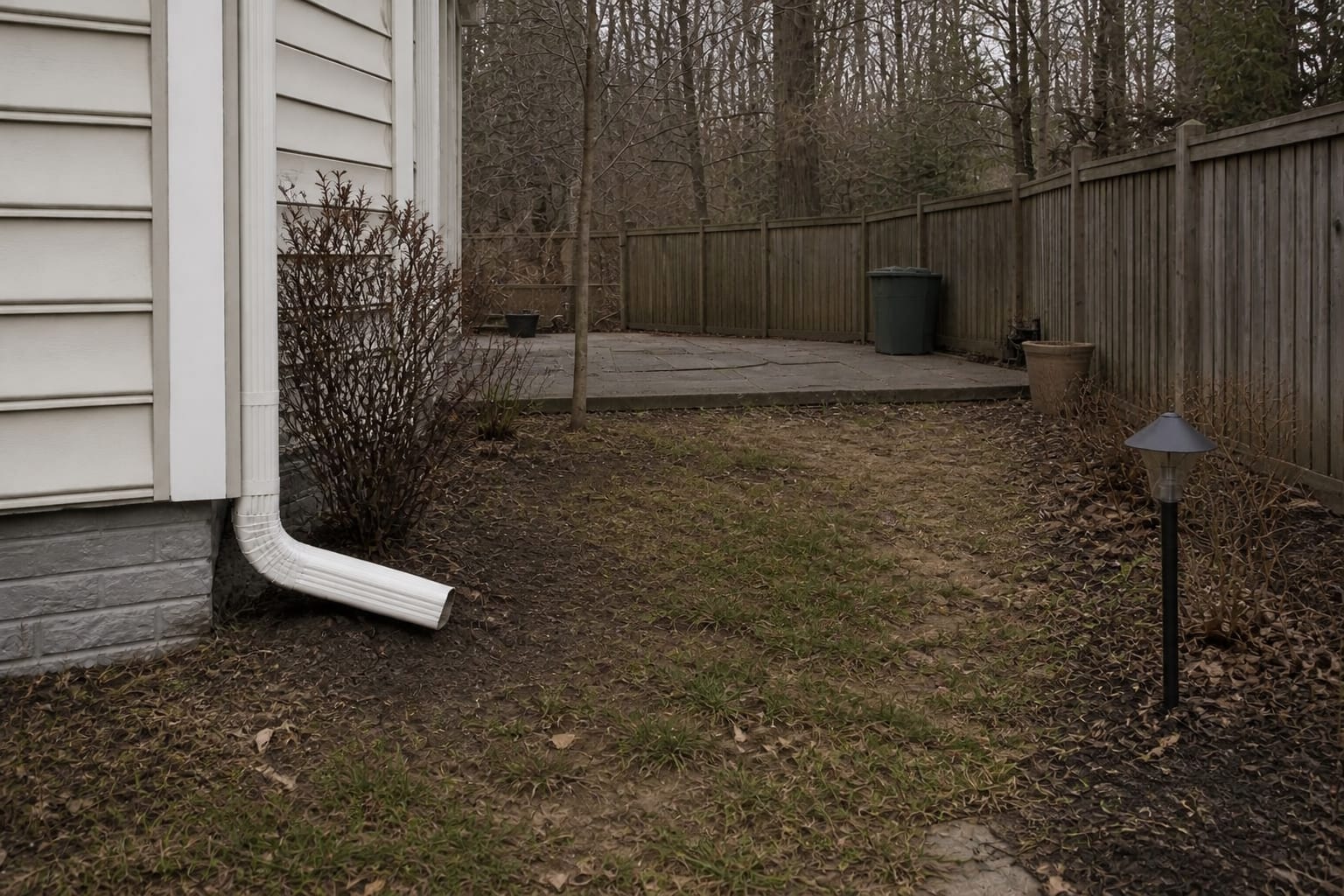
Start by watching the next storm for five minutes: does water shoot forward, curl back toward the wall, or dig a rut? That answer decides whether you need an extension, a stone apron, a rain barrel, or a full drainage fix.
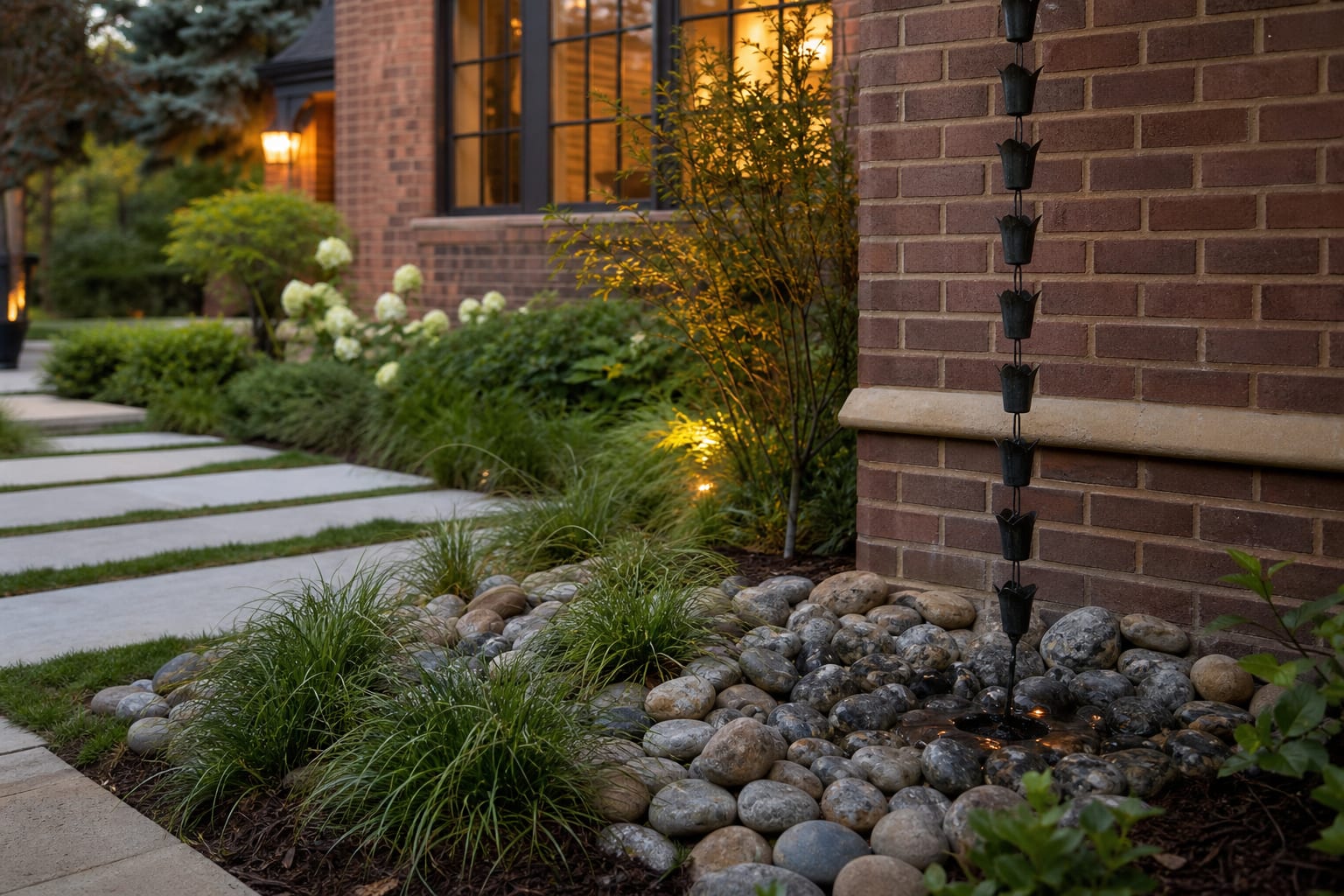
Move water at least 4–6ft from the foundation before it spreads into a bed, lawn, or rain garden. A splash pad should be wider than the water stream — 12–18in across — and heavy enough to survive a hard storm. Choose 1–3in river rock over pea gravel, which scatters and collects grit.
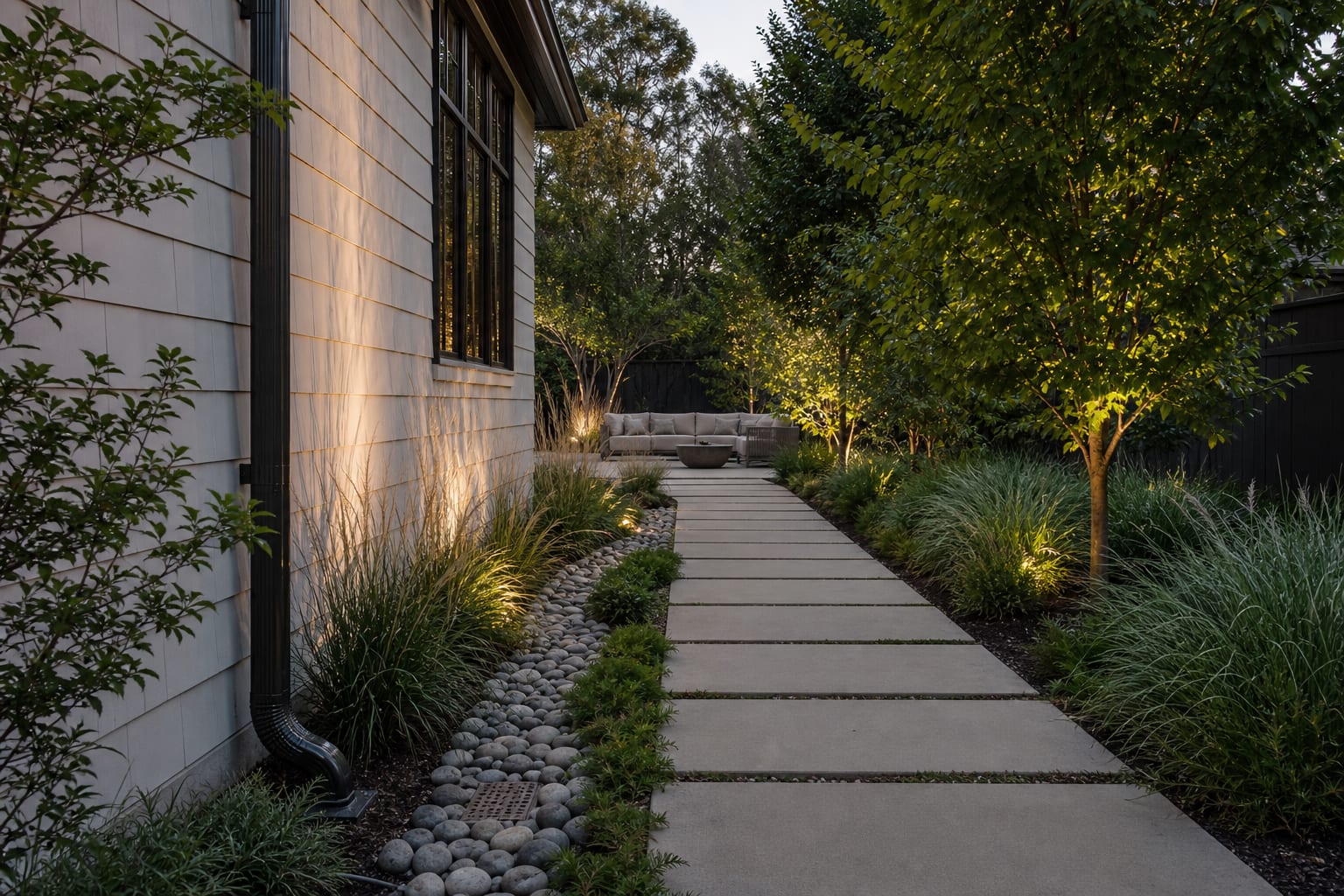
For a shallow swale, drop the grade only 1–2in below surrounding soil; keep a dry-creek path at least 24in wide so it doesn't look like a spill. Near a walkway, leave 30–36in of clear passage. Skip raised berms near property lines — they push water sideways or under siding — and use a flush stone edge or open steel edging instead.
Give the pipe visual weight with a stone basin, planted collar, or rain chain so it reads as part of the garden, not an accident. Keep dense planting a few inches back for leaf and joint access, and let low plants soften the hard material at the outer edge — the same erosion-minded logic behind low maintenance ground cover ideas. Where the corner also needs privacy, a loose hedge helps; see living fence and hedge ideas for spacing that won't dam the flow.
Which downspout landscape ideas actually look designed?
Pick one main move based on water volume and visibility, then build the bed around it instead of stacking every drainage accessory available.
- Stone landing basin — for outlets close to a bed edge; make it 18–30in long, slope slightly away from the wall, and use larger stones at the impact point.
- Rain chain — for downspouts visible from a porch or window; hang it plumb over a 16–24in gravel catch basin so wind doesn't spray the siding.
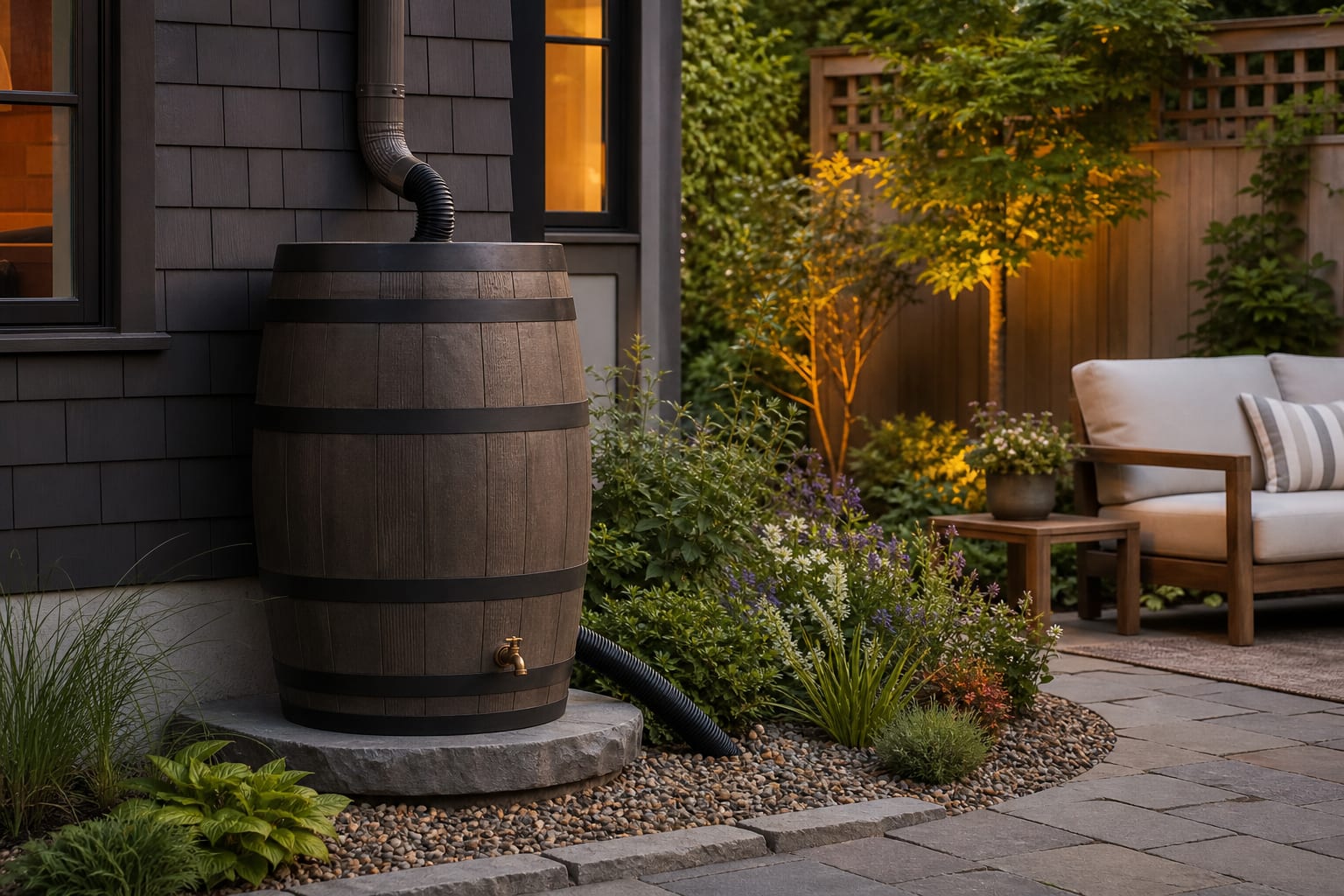
- Rain barrel — when the garden needs stored water; set it on a level, raised base (12–18in) and run overflow to the same safe route the downspout used.
- Dry-creek ribbon — for a long discharge path; vary stone 1–5in and bury a few larger pieces so it doesn't look poured from a bag.
- Moisture-tolerant plant collar — to hide elbows; keep mature height at 12–24in so the pipe stays serviceable.
| Choice | Best use | Spec to copy |
|---|---|---|
| Rain chain | Visible porch or garden wall | 16–24in catch basin below the chain |
| Rain barrel | Vegetable beds or thirsty containers | 12–18in raised base plus overflow hose |
| Stone channel | Erosion-prone discharge path | 24in minimum width for a dry-creek look |
A rain chain works best against a simple wall — add shutters, lights, and hose reels and it becomes clutter. A rain barrel needs a small pad, a flat back, and side planting so it looks placed, not parked. Depth before decoration, repetition before variety, maintenance before novelty.
What mistakes should I avoid?
- Hiding the discharge under mulch. Mulch floats and clogs elbows; use stone, turf, or a planted basin where water actually lands.
- Aiming an extension into a bed without checking grade. Keep soil below siding and weep holes, and route overflow away from walls, steps, and crawl-space vents.
- Adding a rain chain with no bottom detail. A chain ending on bare soil is just a prettier splash problem — give it a basin or a shallow stone path.
- Planting shrubs too close to the pipe. Leave a hand-width gap and keep woody stems 18–24in from fittings you may need to open.
- Ignoring sound. Chains, barrels, and water on thin pavers can be loud near a patio; pair stone with grasses and layered planting, similar to the softening approach in sound barrier garden design.
Should I preview the design with AI before I dig?
Yes — a downspout fix changes both the wall and the ground plane, so it's worth seeing before you buy rock or cut edging. Upload a straight-on photo showing the gutter outlet, foundation, path, and bed, then preview a stone landing basin, a rain chain with planting, and a rain barrel with a screened overflow route.
Use the preview to check scale, not to approve drainage. If the outlet looks fussy, simplify the palette; if a stone channel looks thin, widen it before installing; if a barrel dominates the wall, try a darker color or a planted side screen. For active leaks, pooling, or runoff crossing property lines, bring in a drainage professional first — then let planting make the fix look deliberate.
Frequently Asked Questions
Should I bury my downspout?
Yes, if water pools at the foundation. Bury a corrugated or PVC line that daylights at least 10ft from the house, slopes downhill, and ends in a splash zone of cobble or a rain garden.
What plants survive at the bottom of a downspout?
Plants that handle wet-and-dry swings work best: switchgrass, sedge, joe-pye weed, swamp milkweed, inkberry, and red-twig dogwood. Avoid drought-only species like lavender or sedum directly under the spout.
Can a downspout feed a rain barrel?
Yes. A 50–55 gal rain barrel collects from a typical residential roof in a single 1in storm. Install an overflow line to a dry-creek bed or garden so the barrel doesn't back up to the gutter.
How do I hide an ugly downspout outlet?
Use a planted bowl of stones, a cedar splash-block enclosure, or a 3x3ft dry-creek bed with cobbles ending at an ornamental boulder. The goal is making the outlet look intentional, not accidental.
Is a rain garden the same as a downspout drainage area?
No. A rain garden is a specific design — a shallow basin 6–12in deep filled with absorbent soil and rain-tolerant plants that holds water for 24–48 hours. Not every downspout outlet needs to become a full rain garden.