The best drainage swale design ideas treat the channel as a planted landscape feature, not a ditch: build it 18–36 inches wide, 6–12 inches deep, sloped 1–2% toward a safe outlet, and line it with turf, cobble, or moisture-tolerant plants so it manages runoff while looking intentional.
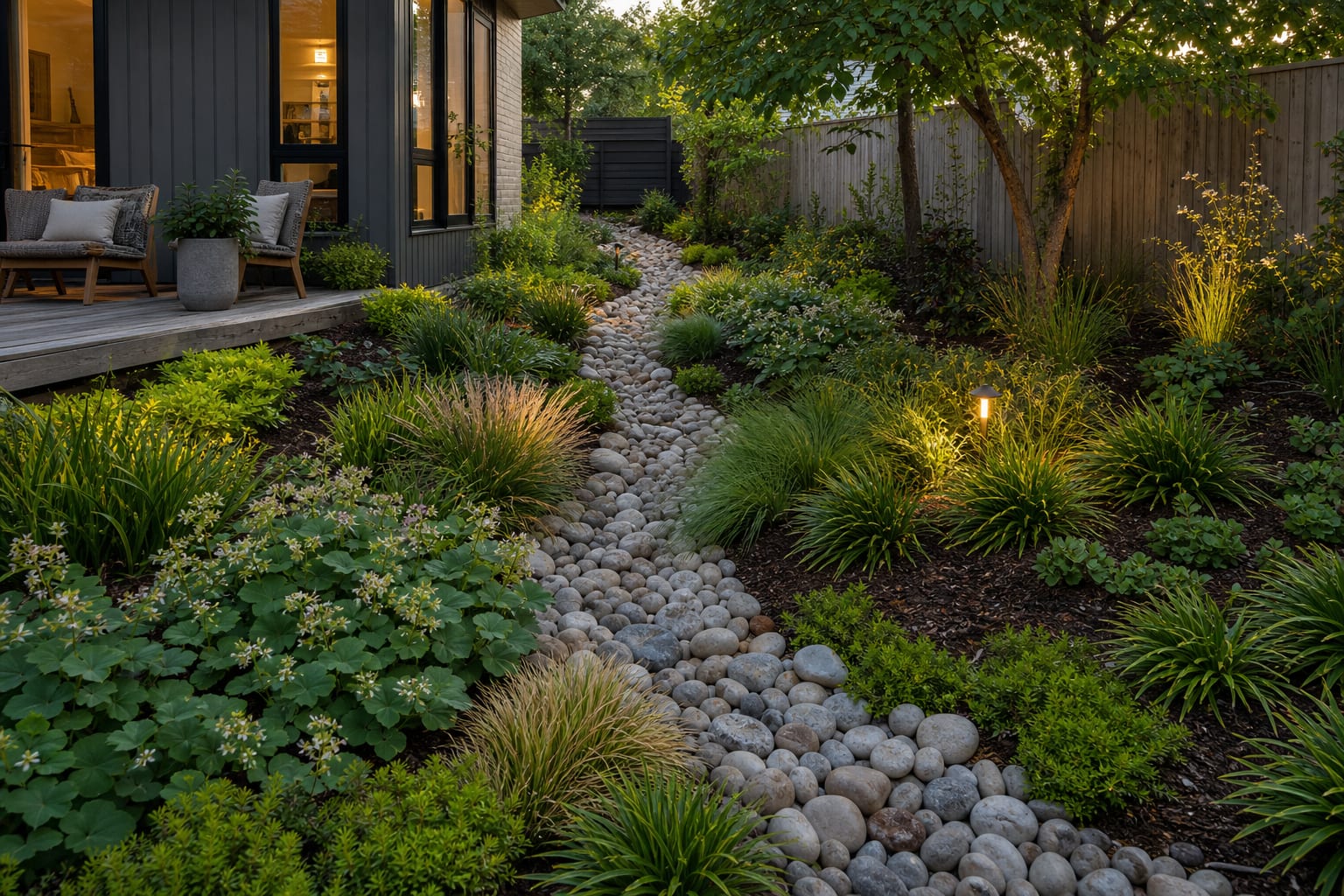
What is a drainage swale in landscaping?
A drainage swale is a shallow, gently sloped channel that collects stormwater and moves it to a safe outlet — essentially a landscaped gutter that doesn't have to look like infrastructure. Start from the existing grade: if water runs toward the foundation, garage, patio, or a fence line, the swale should intercept it before that point and carry it across the slope at a steady 1–2% pitch. Most residential swales run 18–48 inches wide and 6–12 inches deep; steeper yards may need check dams, rock breaks, or professional grading to keep water from carving a rut.
A bioswale adds engineered soil, plants, and sometimes a stone reservoir to filter and infiltrate runoff, but most yards just need a simpler garden swale — something that moves roof and slope water away from the house without looking like a ditch.
How should the swale shape fit the yard?
A shallow crescent reads as a garden feature; a straight trench reads as utility work. Curve the swale around a patio, lawn edge, or planting bed, and keep the bottom at least 24–36 inches wide — anything under 12 inches looks accidental.
For a grassy swale, keep side slopes near 3:1 (3 horizontal feet per 1 foot of drop) so it stays safe to mow. Leave 30–36 inches of clear walking width beside any path, and cross driveways or gates with flat stone, a culvert, or a narrow bridge rather than asking people to step over wet ground.
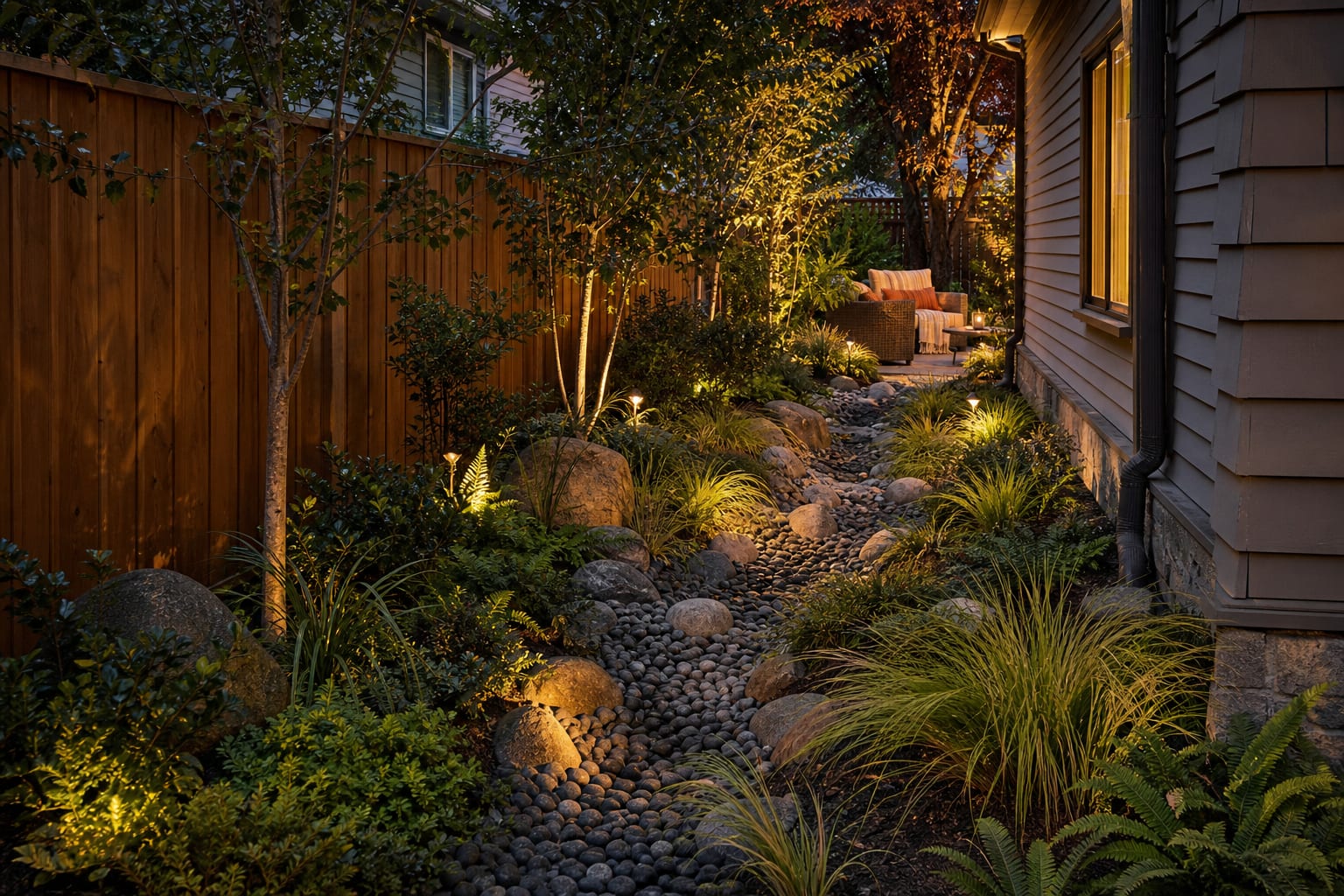
Stone can turn a swale into a dry creek bed, but size it to the water: pea gravel migrates on a slope, while 1–3 inch river stone stays put. Use larger anchor stones at bends, partly buried, where flow pushes hardest.
Planting does the rest of the work. Ground covers soften the shoulders where the swale meets lawn or paving — see low-maintenance ground cover ideas for options — but skip mulch in the flow line, since water carries it straight to the drain or a neighbor's yard.
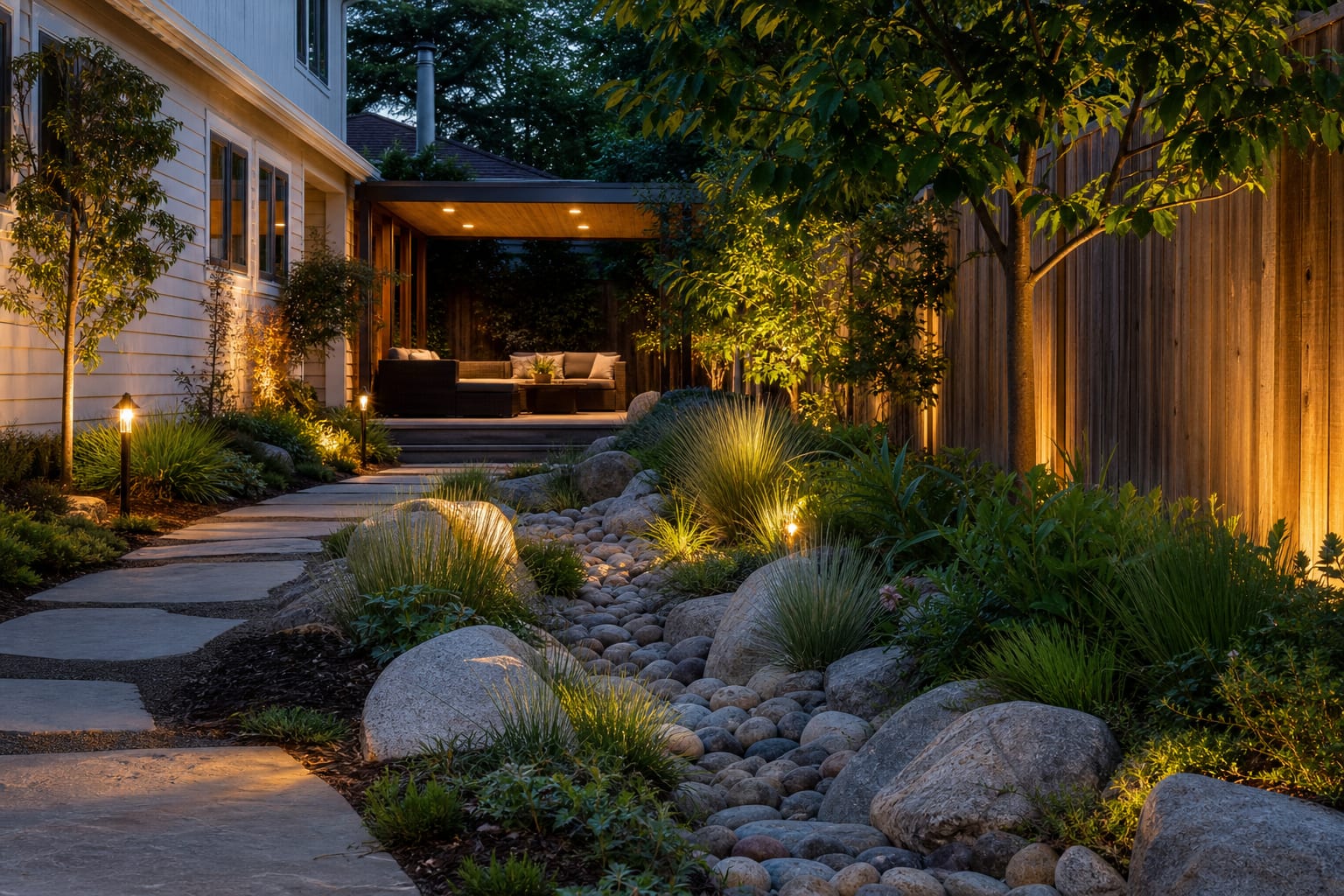
Which planting ideas make a swale look intentional?
Layer plantings by wetness: the lowest strip should survive brief flooding, and the shoulders should look good when the channel is dry, which is most of the time.
- Bottom third: Moisture-tolerant grasses or sedges, planted 12–18 inches apart, hold soil during runoff.
- Upper banks: Perennials and low shrubs, 18–30 inches tall, frame the channel without blocking flow.
- Turns and drops: Boulders explain the water path here — bury one-third of each stone for a settled look.
- Property line: A loose hedge or mixed screen (see living fence and hedge ideas) hides utilities without damming water.
- Outlet zone: Keep the last 2–3 feet open and reachable so discharge never gets blocked.
Don't build a berm that pushes extra water onto a neighbor's lot, and don't bury the low point under dense planting where overflow can't be seen. Where drainage, privacy, and noise all meet at one boundary, combine grading with layered shrubs using the approach in sound barrier garden design.
Design-check shorthand: depth before decoration, repetition before variety, maintenance before novelty.
Common drainage swale mistakes to avoid
- Too narrow and deep. A sharp 14-inch cut speeds up water and complicates mowing; a broad 6–8 inch depression handles runoff more gracefully.
- Mulch in the flow line. It floats and dams within one storm — use turf, ground cover, fabric-backed stone, or planted plugs instead.
- No real outlet. Ending in the middle of the lawn just relocates the puddle; route water to a safe low area, rain garden, or approved drain, and bring in a professional if it affects a foundation or neighboring property.
- One species, one zone. Monoculture looks flat and can fail all at once; use three zones — wet-foot plants low, transitional grasses on the banks, tougher shrubs at the rim.
- No maintenance access. Leaves and grit collect in low spots; keep a clear cleanout zone near the inlet and outlet, free of thorny shrubs.
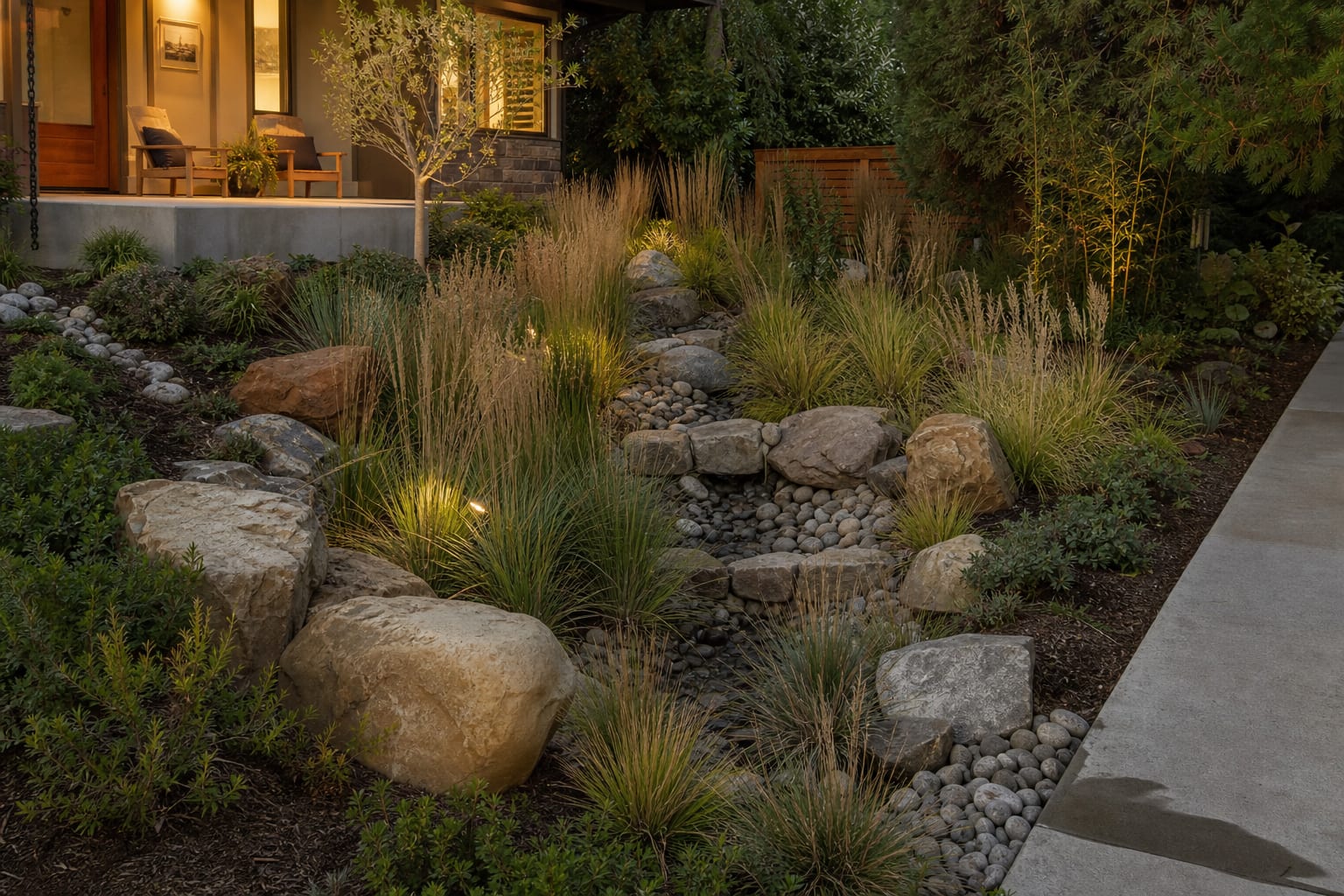
How AI design helps you see the fix before digging
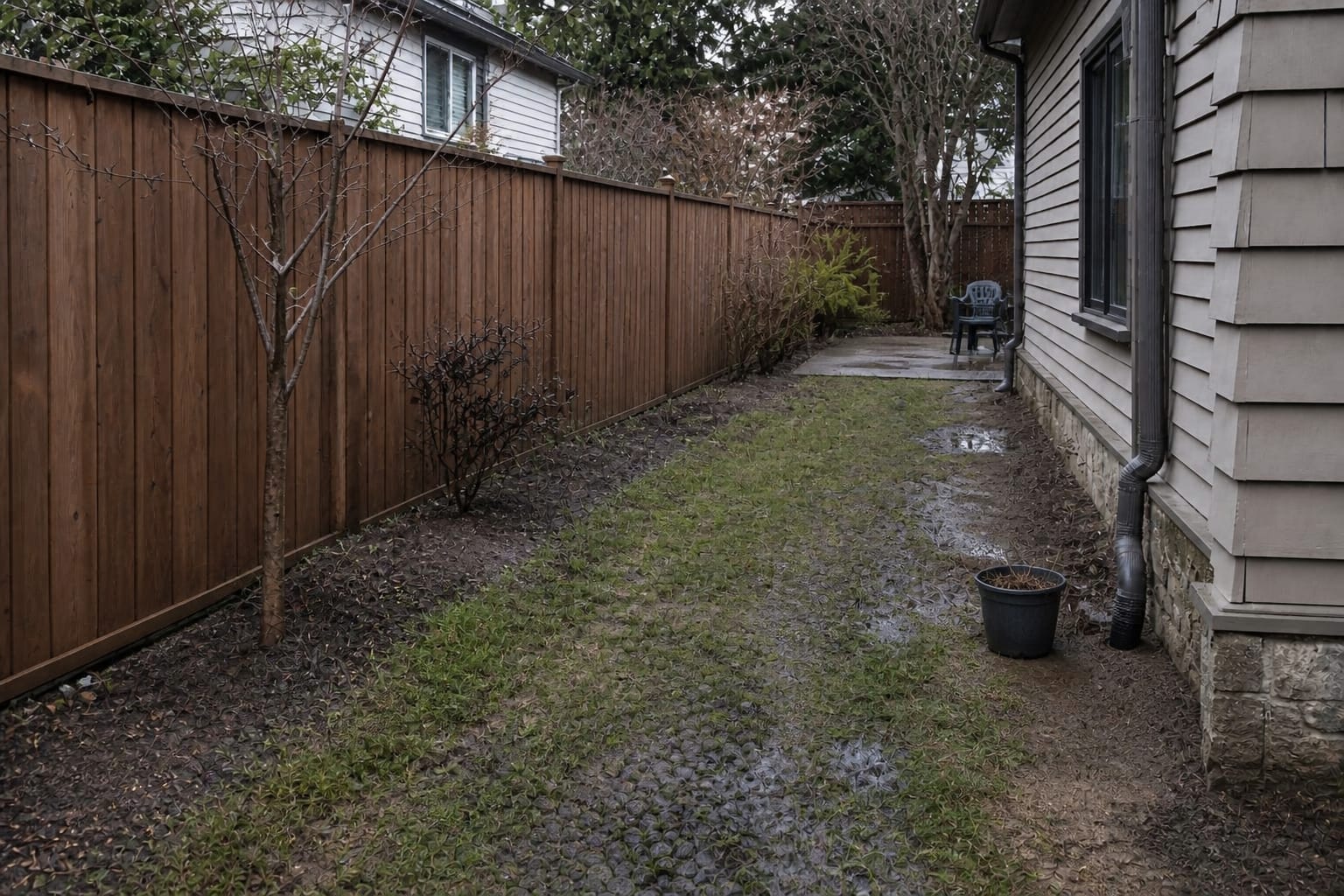
Drainage lines are hard to picture from a flat yard photo, which is where AI design helps. Upload a straight-on shot of the wet area and test three versions: a grassy swale, a stone dry creek bed, and a planted bioswale with taller grasses. The goal isn't engineering — it's checking whether the curve, plant height, and stone color look natural beside your house, fence, and lawn.
Shoot the photo from your everyday angle, ideally after light rain when the water path shows, and include the downspout, patio edge, and any low spot. Compare options before buying rock by the pallet or removing healthy turf; if the preview looks like a scar, widen the bed, soften the bank, or match the stone to your house masonry.
Visual planning doesn't replace grading judgment. If water is entering the house, undermining paving, crossing a property line, or moving fast enough to erode soil, get professional help first — then use the preview to make the fix look like a garden feature instead of an apology.
Frequently Asked Questions
How wide should a drainage swale be?
18–24 inches handles roof and patio runoff on most lots; 30–36 inches handles street or driveway runoff and bigger storms. Below 18 inches, a swale tends to clog with debris within a year.
How deep should a drainage swale be?
6–12 inches at the center is typical for a residential swale. Deeper than 12 inches starts to look like a ditch unless it's widened and planted to soften the slope.
Can a drainage swale have grass?
Yes. Sod-lined swales are common and low-maintenance — choose drought-and-flood-tolerant grass blends, mow at 3 inches or taller to protect the soil, and expect occasional bare spots after major storms.
Do I need a permit to build a drainage swale?
Most residential swales on private property don't require a permit. Swales that affect property-line drainage, redirect storm flow, or tie into a municipal storm sewer usually do need approval.
How is a swale different from a French drain?
A swale is an open, shallow channel that moves surface water; a French drain is a buried, perforated pipe in gravel that moves subsurface water. Many yards need both, placed in different locations.
Three transformations to try
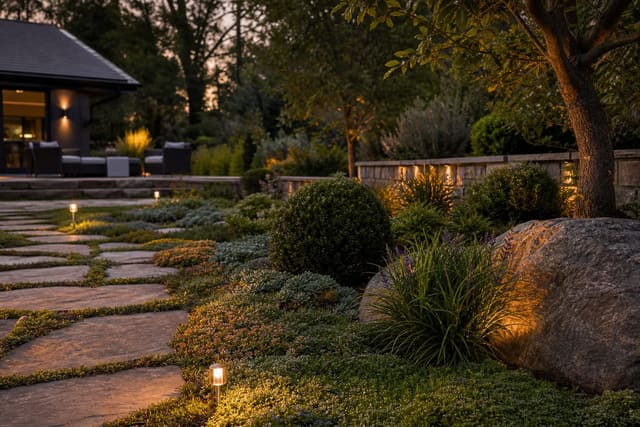
- Grass-lined drainage swale
- Planted drainage swale with sedges and iris
- Cobble drainage swale with dry-creek look