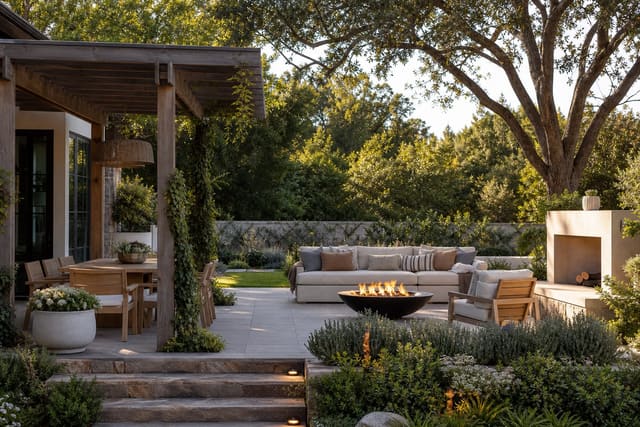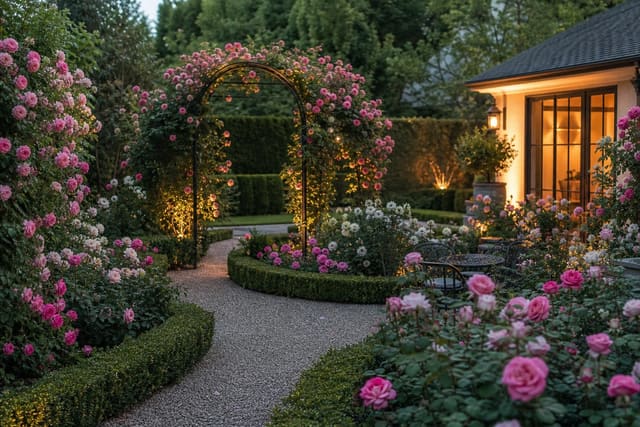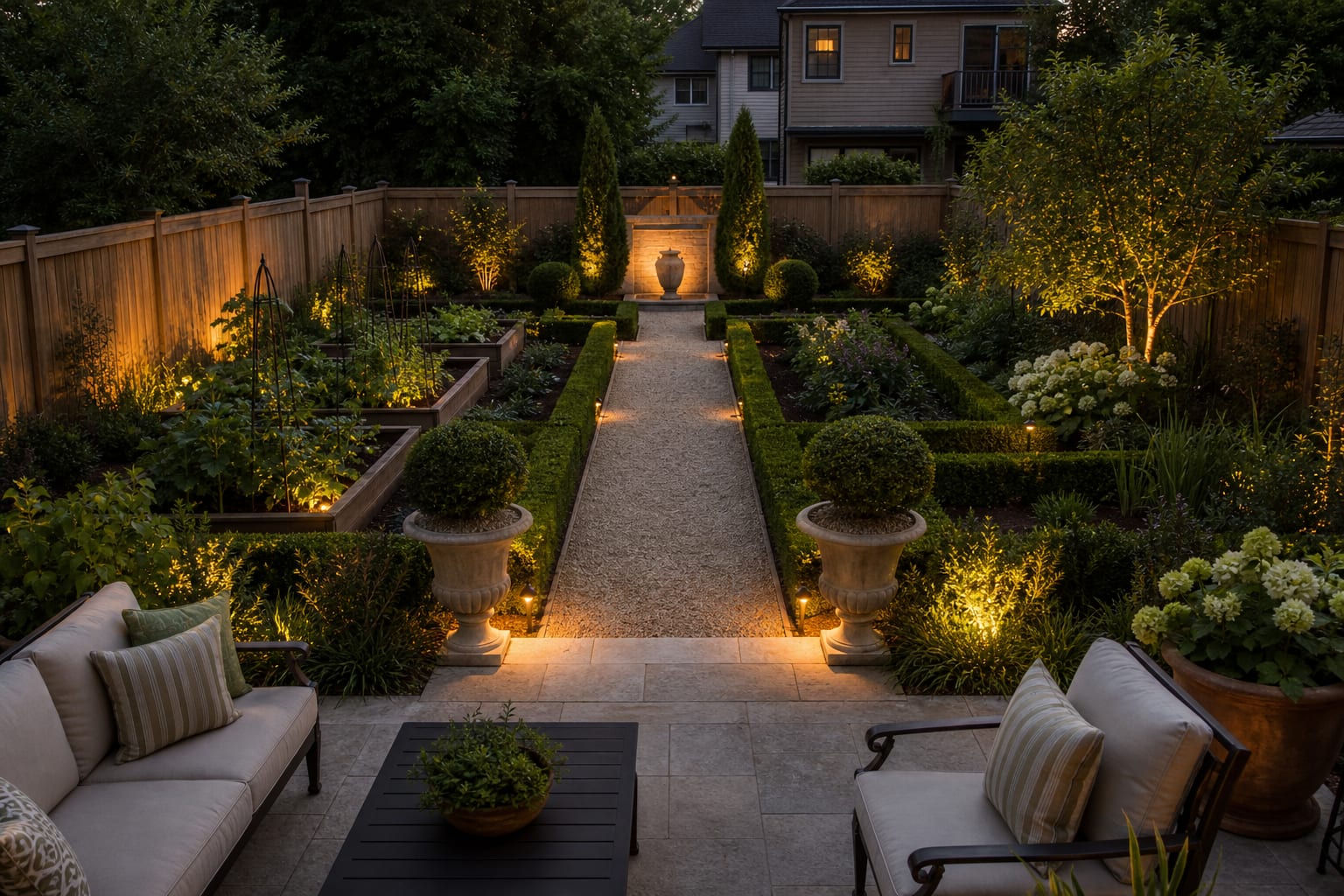
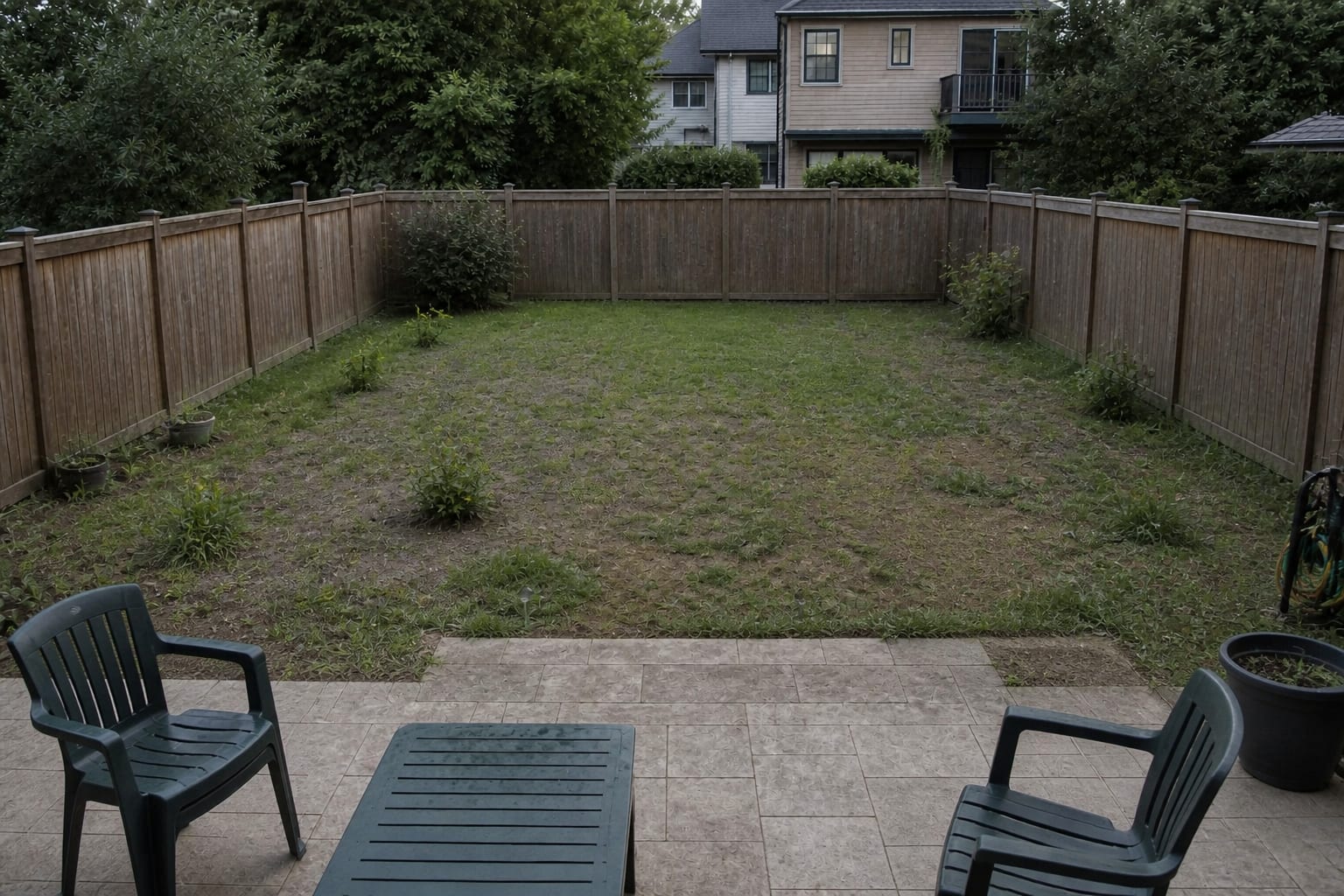
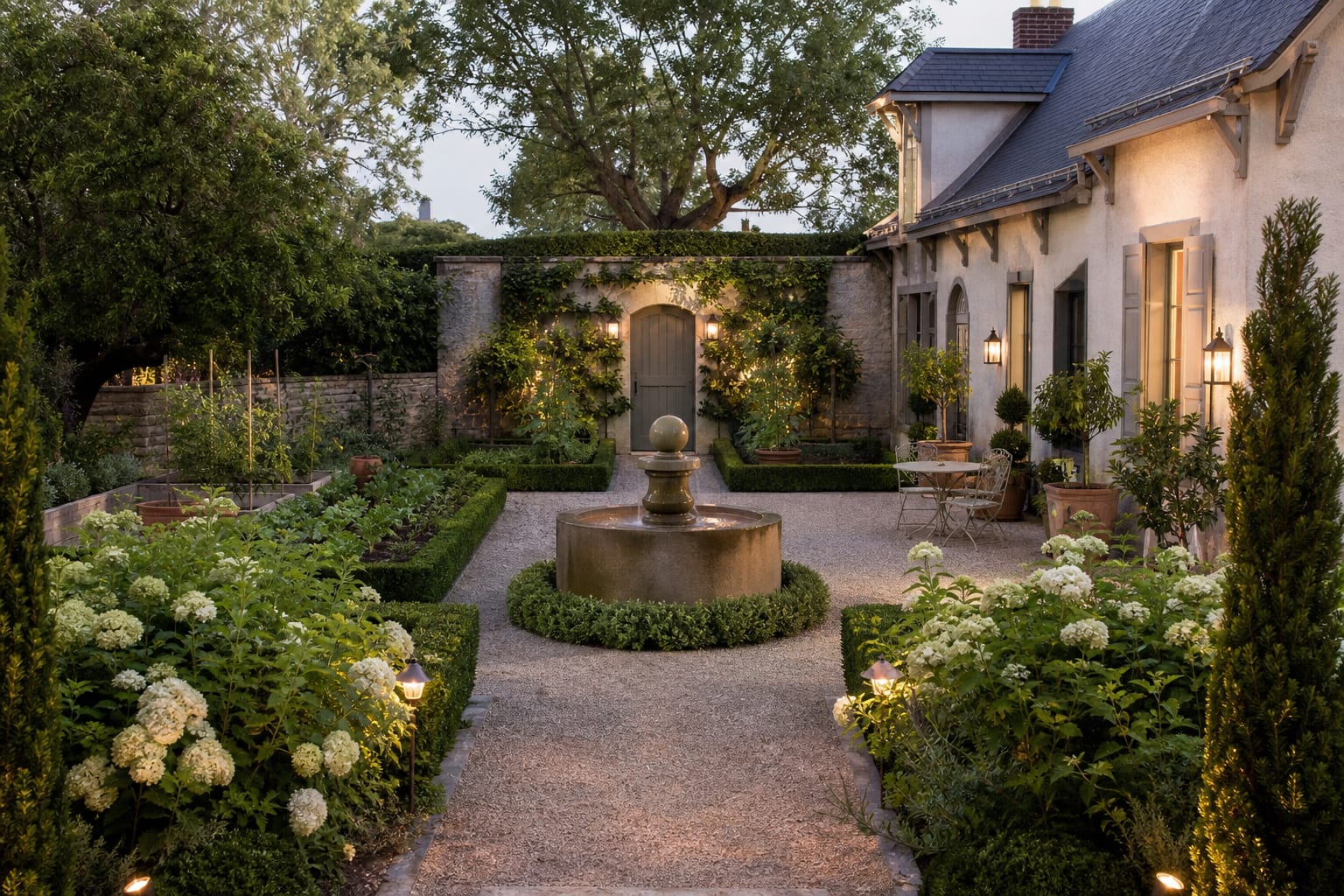
French garden design is a structured landscape style built on symmetry, axial paths, clipped hedges, geometric beds, and restrained planting. The strongest approach for a real backyard is disciplined, not ornamental: pick one axis and one excellent hedge before buying a single urn. Done well, French garden design ideas bring order to a shapeless or visually noisy yard while still leaving room for kids, weather, and weekend use.
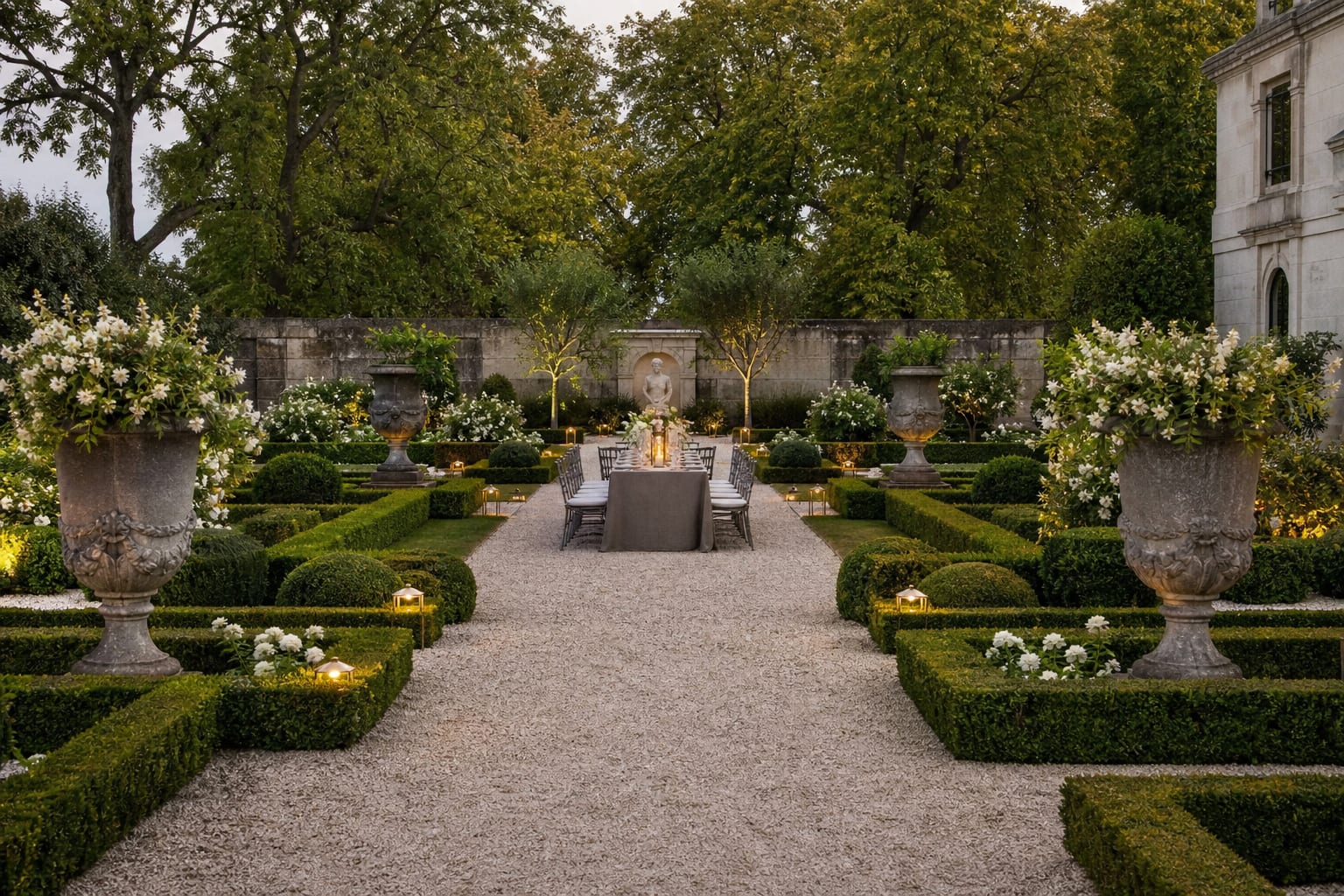
What makes a garden feel French rather than just formal?
A French garden feels convincing when it has a visible axis, mirrored masses, clipped outlines, and plants placed in relation to a path, terrace, or view. Formality alone can be stiff; the French version softens through herbs, roses, espalier, fruit trees, gravel crunch, and seasonal planting held inside a strong frame.
Start with the central line. Stand where you most often see the yard: kitchen sink, patio door, bedroom window, or dining spot. If that view has no destination, create one with a stone trough, clipped cone, small tree, bench, or urn — it just needs to be aligned.
Parterres work best when the pattern is simple enough to maintain. A small yard may need four rectangular beds divided by a cross path rather than an elaborate scroll requiring weekly clipping. For a modest French parterre design, use beds 4 to 8 feet wide, keep gravel paths 30 to 36 inches clear, and let low hedging carry the geometry. If you already lean toward romantic planting, the spacing discipline in rose garden design ideas helps keep roses from swallowing the structure.
| French move that works | Version that looks strained |
|---|---|
| One straight gravel axis from terrace to focal point | Several tiny paths with no obvious destination |
| Low clipped edging around generous beds | Mini hedges wrapped around every plant |
| Repeated urns, topiary, or obelisks in pairs | Random ornaments placed wherever a gap appears |
| Soft planting contained by geometry | Loose borders pretending to be formal without structure |
Which French garden design ideas should you copy first?
Copy the ideas that create order from the main viewpoint before adding flourishes. A French garden can handle romance, but only after the bones are disciplined.
- Build a straight gravel walk from house to focal point: compacted base, 2 inch gravel layer, edging set slightly proud of the surface, and a 42 to 48 inch width near a terrace.
- Frame the dining area with clipped green mass instead of loose beds. A 10 by 12 foot gravel pad fits a table and four chairs with 30 inches behind each; paired boxwood balls or bay standards add intent.
- Use a French parterre design where it's visible from above or a main door — four beds around a central pot, sundial, or basin read strongly from 20 to 30 feet away and stay easy to maintain.
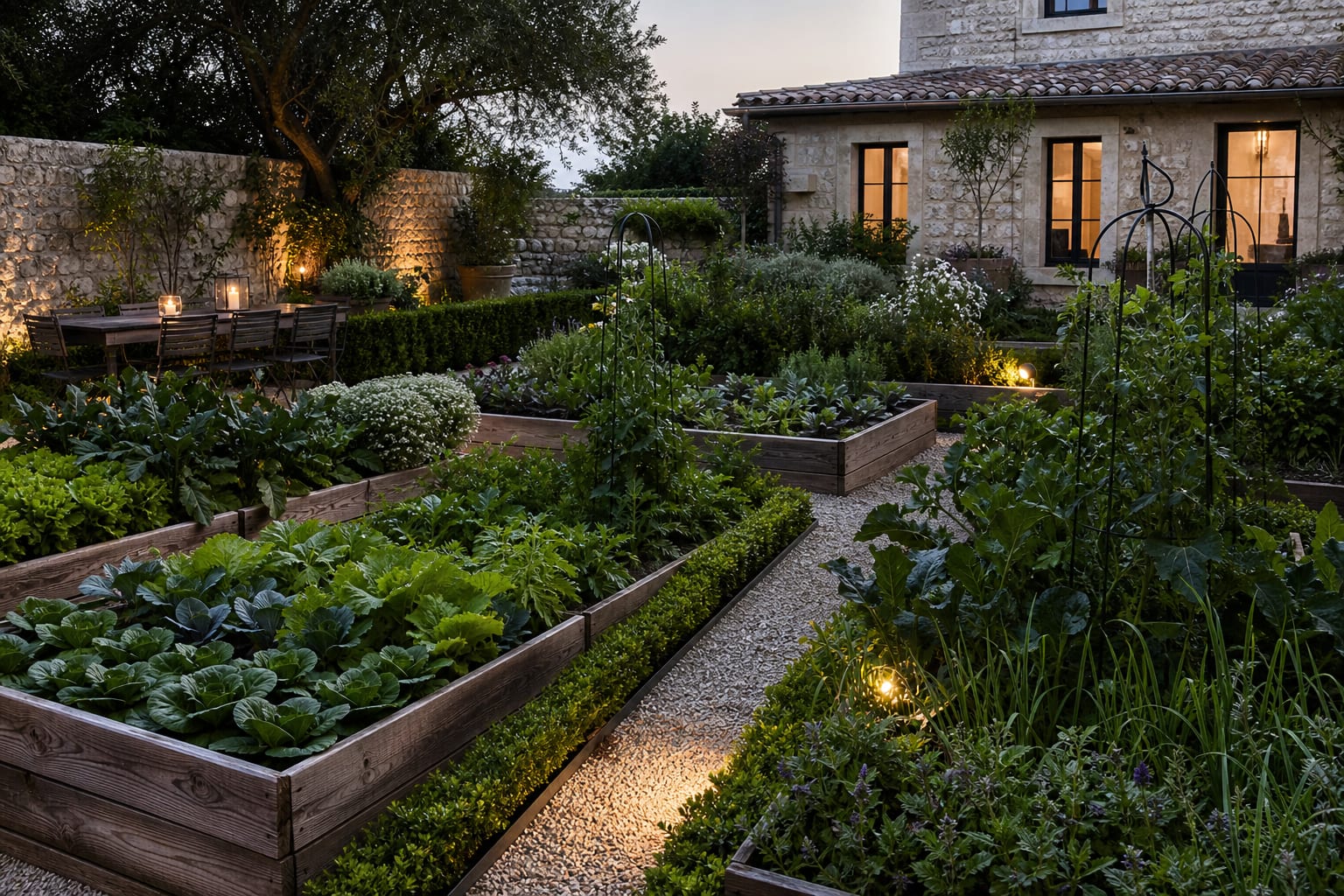
- Make the potager handsome enough to sit near the house. Raised beds 16 to 24 inches high, pea gravel paths, matching metal obelisks, and repeated crops make food growing look composed.
- Add water only if the geometry supports it. A round basin 30 to 48 inches across can anchor a path crossing; a large irregular pond usually fights the French language.
- Light the structure, not every flower. Warm 2700K path lights set low and symmetrical, shielded uplights on two topiary forms, and fixtures in dark bronze, black, or aged brass that disappear by day.
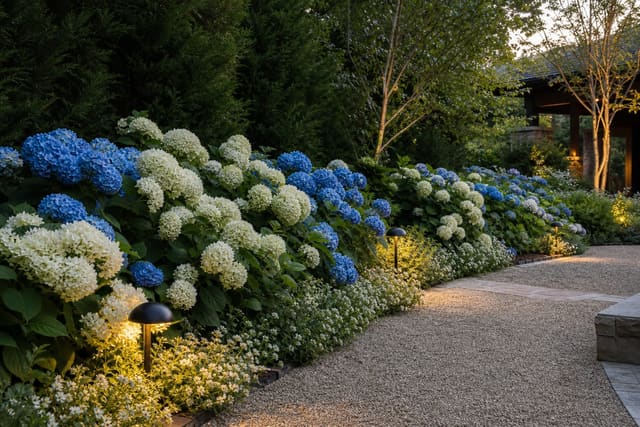
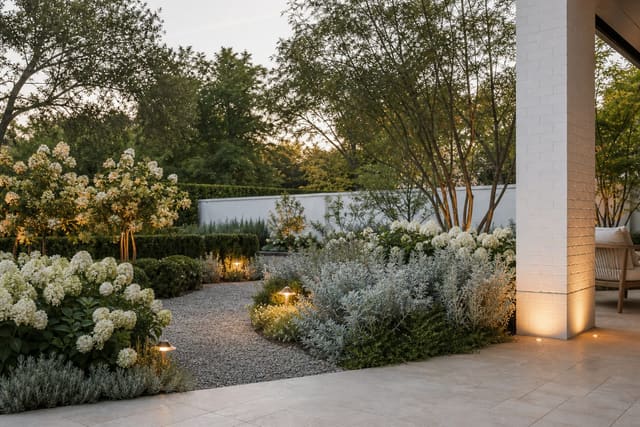
Planting should be controlled, not dead. Hydrangeas work at the edges of a French garden when the parterre itself stays clipped; see hydrangea garden design ideas for keeping big blooms from reading as a hedge accident. For evening structure near gravel paths, pale flowers and silver foliage can borrow from moon garden ideas.
What are the most common French garden mistakes?
- Symmetrical everywhere except what matters. Matching planters can't fix a path that misses the door by 14 inches. Snap a string line from the threshold to the intended destination first, then build around it.
- Hedging that outgrows its maintenance budget. A hedge that wants to be 5 feet tall will punish you at a 16 inch target. Confirm mature size and allow for hedge width before planting.
- Too many flower colors inside the formal frame. White, blush, lavender, deep green, and soft blue sit better with gravel and stone than a scattered mix of red, orange, purple, and yellow.
- Ignoring daily access. Keep working paths at least 18 inches wide, reserve one 30 inch route for a wheelbarrow, and place edible beds where watering is convenient.
- Over-decorating a quiet garden. Pick one lead object on the main axis, then use paired or repeated pieces only where they reinforce the geometry.
How can you test a French garden layout before building it?
The costly decisions in French garden design are spatial: axis, bed proportions, path widths, hedge height, and how much symmetry the yard can hold. Upload a straight photo from the house or terrace to Re-Design and test the big composition before ordering stone, edging, or plants.
Try one version with a central gravel walk, one with a cross-axis parterre, and one with the potager closer to the kitchen door. Compare how clipped beds relate to your fence, windows, patio slab, and existing trees — if a quieter version with fewer ornaments looks better, trust it. Still measure real drainage, sun exposure, gate width, hose access, and root competition before committing to hedges or gravel.
Test a parterre layout on your yard photo with Re-Design
Frequently Asked Questions
What is the smallest parterre size that still reads as French?
A parterre can read convincingly French at about 12 by 12 feet, with four beds around a central focal point and a clear cross-axis. Below that footprint, drop to two beds flanking a single straight path. Symmetry plus clipped edges carries the style more than square footage does.
What is the best low hedge for a French parterre?
Dwarf boxwood (Buxus sempervirens 'Suffruticosa' or 'Green Velvet') is the traditional choice, holding a tight 12 to 18 inch line with one or two clips a year. Where boxwood blight is a concern, substitute Japanese holly (Ilex crenata 'Soft Touch'), dwarf yew, or teucrium. Lavender gives a looser, scented edge but holds its line for fewer years.
How do you maintain a parterre without a daily gardener?
A small parterre needs about two clipping passes per year for boxwood (late spring and early fall), one gravel top-up every 2 to 3 years, and seasonal mulching. Keep bed widths under 4 feet so you can reach the center without stepping on plants, and avoid filling the interior with high-maintenance annuals. A disciplined 30-minute weekly walk-through is usually enough.
Can you build a French garden in a hot or dry climate?
Yes — keep the geometry and swap the plant palette. Use germander, rosemary, santolina, or dwarf myrtle for clipped edges, gravel instead of turf between beds, and drought-tolerant interior plants like lavender, salvia, or ornamental alliums. The axial layout and parterre structure are climate-neutral; only the species need to change.
Gravel paths or grass paths between French garden beds?
Gravel is the better choice for most home French gardens: it stays crisp year-round, defines the geometry visibly from above, and tolerates foot traffic without wear patterns. Use 3/8 inch crushed limestone or pea gravel over a compacted base, with edging set slightly proud of the surface. Reserve grass paths for larger formal gardens where mowing every two weeks is realistic.