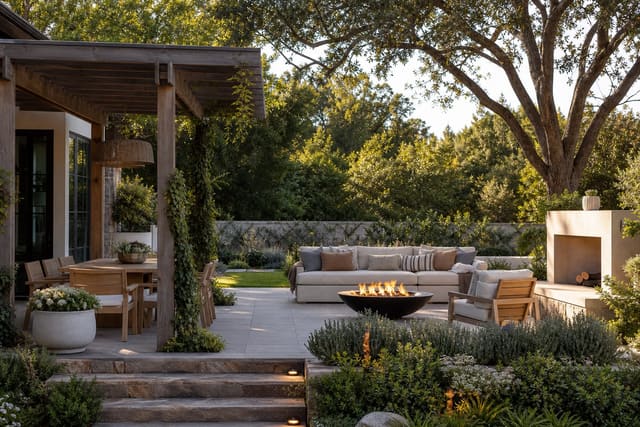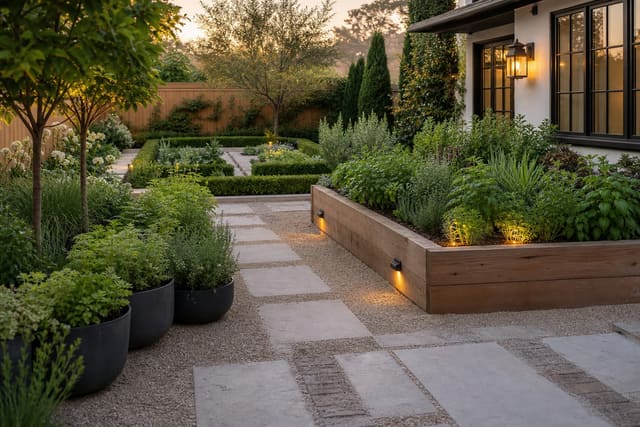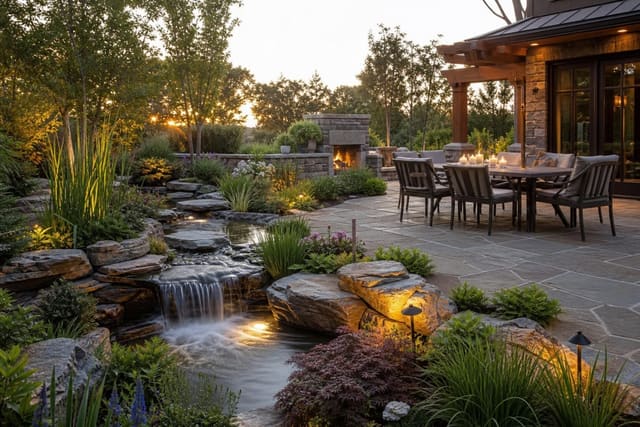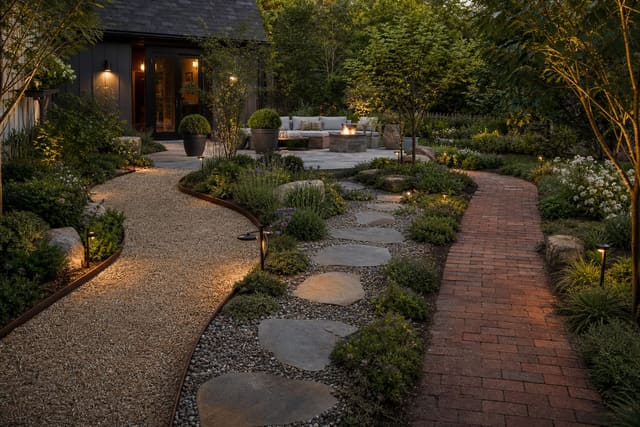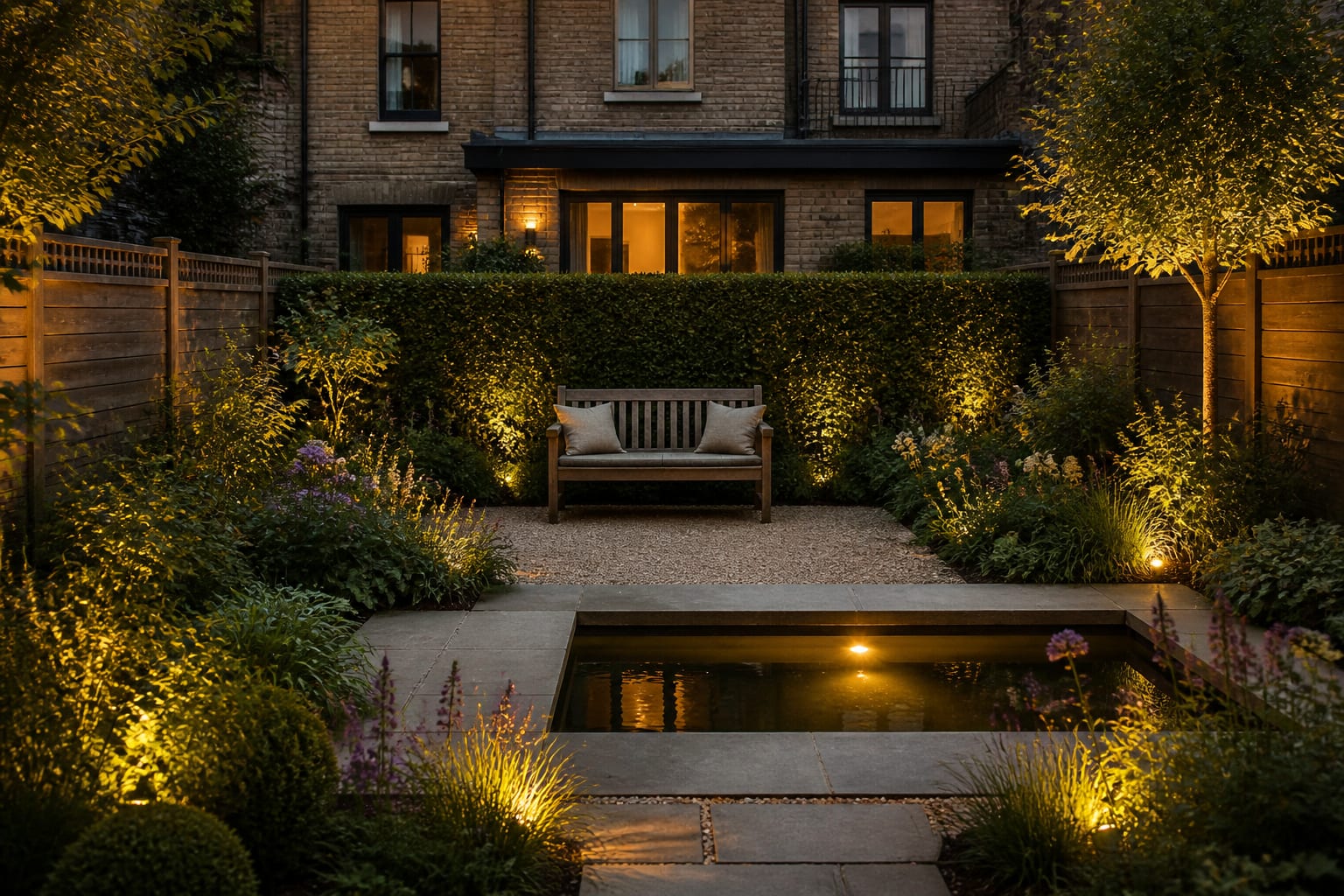
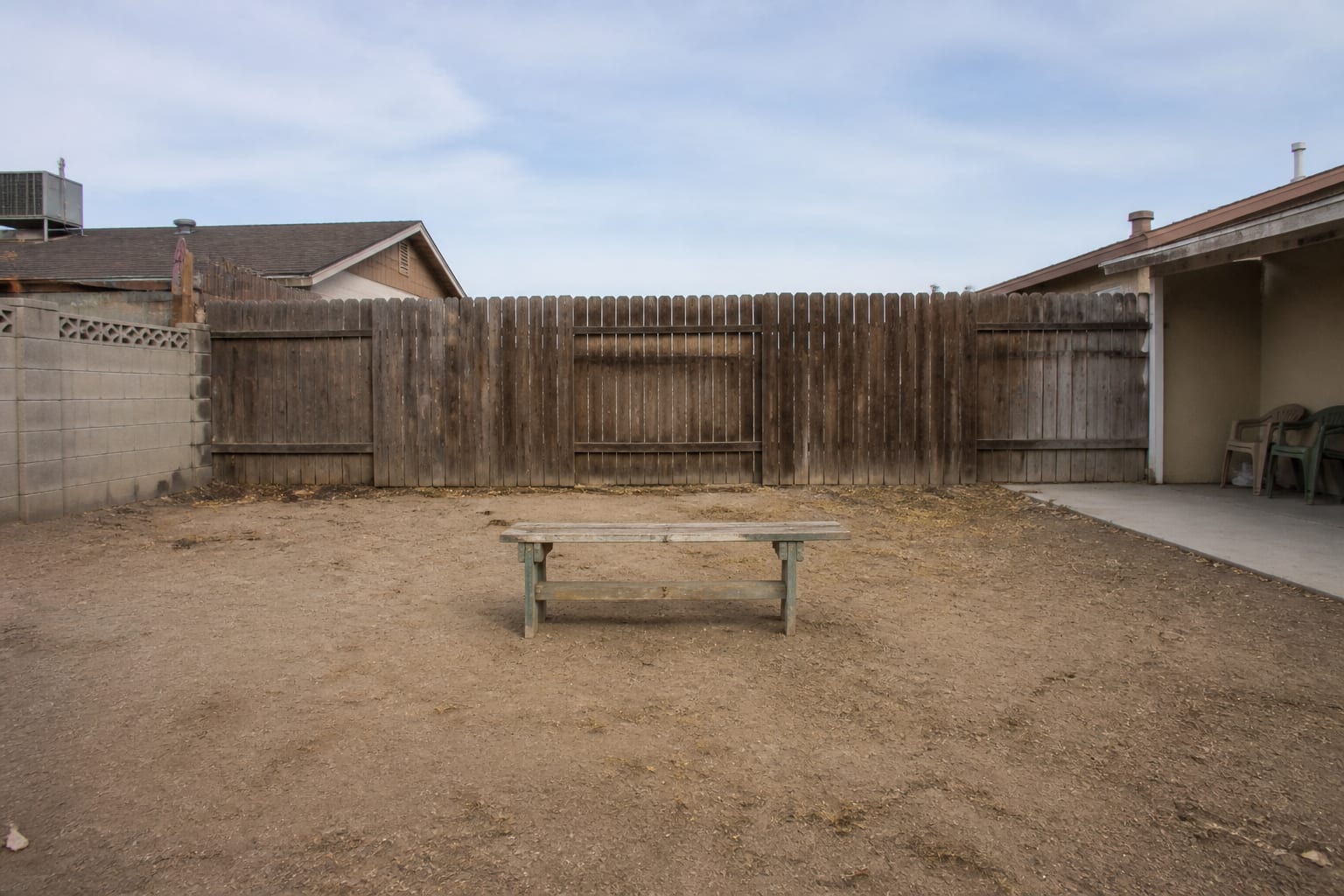
How do I place garden seating? My read is that a bench works when it gives you a reason to sit and something solid behind your back. Drop a bench in the open middle of a lawn and it becomes a place to set down a watering can, never a place anyone actually rests.
I think the best seats are destinations. You should want to walk to them, settle in, and look at something worth looking at, whether that is a flowering border, a water feature, or just the low evening sun. Get the location right and the bench itself can be cheap; get it wrong and the prettiest teak in the world stays empty.
Where a bench actually earns its keep
The spot matters more than the style. A seat with its back to a hedge or fence triggers the same instinct that makes us pick the corner table in a cafe: protected behind, open in front. That single rule explains why benches against a boundary get used daily while benches stranded in open grass collect dust.
Orientation does the rest. Aim the seat at something with depth, then think about light through the day. Here are placements that consistently work:
- At the end of a path, so the bench becomes the destination you were walking toward.
- Against a warm south- or west-facing wall that holds heat into a cool evening.
- Under a tree canopy for shade you will want by mid-afternoon in summer.
- Beside water, where the sound and reflection do the relaxing for you.
- In a far corner angled back at the house, giving you a fresh view of your own garden.
- Tucked into a planting pocket so foliage frames the seat and softens its edges.
If you are pairing seating with running water, my water feature ideas cover scale and sound levels that suit a quiet sitting spot rather than overpowering it.
Light is the variable people forget. A seat that bakes in full afternoon sun goes unused from June through August, while the same bench shifted 8 feet under a tree gets claimed every evening. Walk your garden at the times you would actually sit, usually morning coffee and after dinner, and notice where the sun and shade fall then rather than at noon when you happen to be planning. The bench belongs where the light is kind at the hours you use it.
Choosing materials and getting the dimensions right
Material decides how often a bench gets cleaned and how long it lasts outdoors. Teak and other dense hardwoods weather to a soft grey and shrug off rain for decades with almost no care. Powder-coated steel and cast aluminum stay slim and modern but heat up in direct sun. Concrete and stone never move in wind and read as permanent, though they stay cold and need a cushion to be comfortable past ten minutes. Softwoods like pine cost the least up front but want sealing or painting every year or two, so the savings often vanish in upkeep over a decade.
Let the setting steer the style as much as your taste does. A clean-lined metal or slatted bench suits a modern courtyard, while a chunky reclaimed-timber seat looks at home against a cottage border. The material also sets the weight, which decides whether the bench is a movable piece you reposition with the seasons or a fixed anchor you commit to. Heavy stone and concrete are best placed once and left, so be confident in the spot before you wrestle a 200-pound seat into a far corner.
Dimensions are where comfort is won or lost. Aim for a seat 17 to 19 inches off the ground, a seat depth of 18 to 20 inches, and a back angle leaned slightly past vertical so you sink in rather than perch. Allow 24 inches of width per adult, so a two-seat bench wants to be at least 48 inches long. A built-in seat wall along a patio works at the same 18-inch height and doubles as overflow seating when guests arrive.
Maintenance is part of the material choice, not an afterthought. Teak asks for nothing but the occasional rinse and an optional oiling once a year if you want to keep its honey color rather than letting it silver. Metal benefits from a touch-up on any chip in the powder coat before rust gets a foothold. Anything with a fabric cushion needs a dry place to live through winter, so budget for storage or pick a frame that looks finished bare. Match the upkeep to how much weekend time you actually want to spend, because a high-maintenance seat tends to become a neglected one.
Seating ideas beyond the single bench
One bench is a start, but a garden reads better with a few different ways to sit. A pair of seats facing each other across a path invites conversation. A curved bench wrapping a fire bowl or a tree trunk turns a feature into a gathering spot. Movable bistro chairs let you chase the sun or shade across the day, which a fixed bench never can.
Vary the mood of each spot rather than repeating the same seat. One destination might be social and open, set for two by the water; another might be a single tucked chair in a quiet corner where you read alone. A swing seat or hammock adds a third register again, somewhere to lie back rather than sit upright. Spreading a handful of small seating moments through the garden makes even a modest plot feel like it has rooms, and it gives you a reason to walk the whole space rather than parking in one chair by the back door.
Think about the surface underfoot too, since a seat over mud or uneven grass goes unused. A small paved or gravel pad keeps chair legs level and feet clean. My garden path ideas show how to lead people toward a seat so arriving feels deliberate, and a tucked-away bench near a productive bed, like the ones in my herb garden ideas, gives you somewhere to sit while you pinch basil and plan dinner.
Use AI design to preview your garden seating before you commit
Picturing where a bench belongs is hard from the ground, because you cannot see the sightlines until something is physically there. With Re-Design you upload a photo of your garden, patio, or that awkward unused corner, then ask the AI design to drop in a bench against the hedge, a curved seat around a tree, or a pair of chairs at the end of the path.
Test the orientation cheaply. Render the seat facing the water feature, then facing the house, then under the tree, and you will see in seconds which view actually pays off. Trying three placements on your real space beats hauling a heavy teak bench around the yard to find the spot that finally feels right.