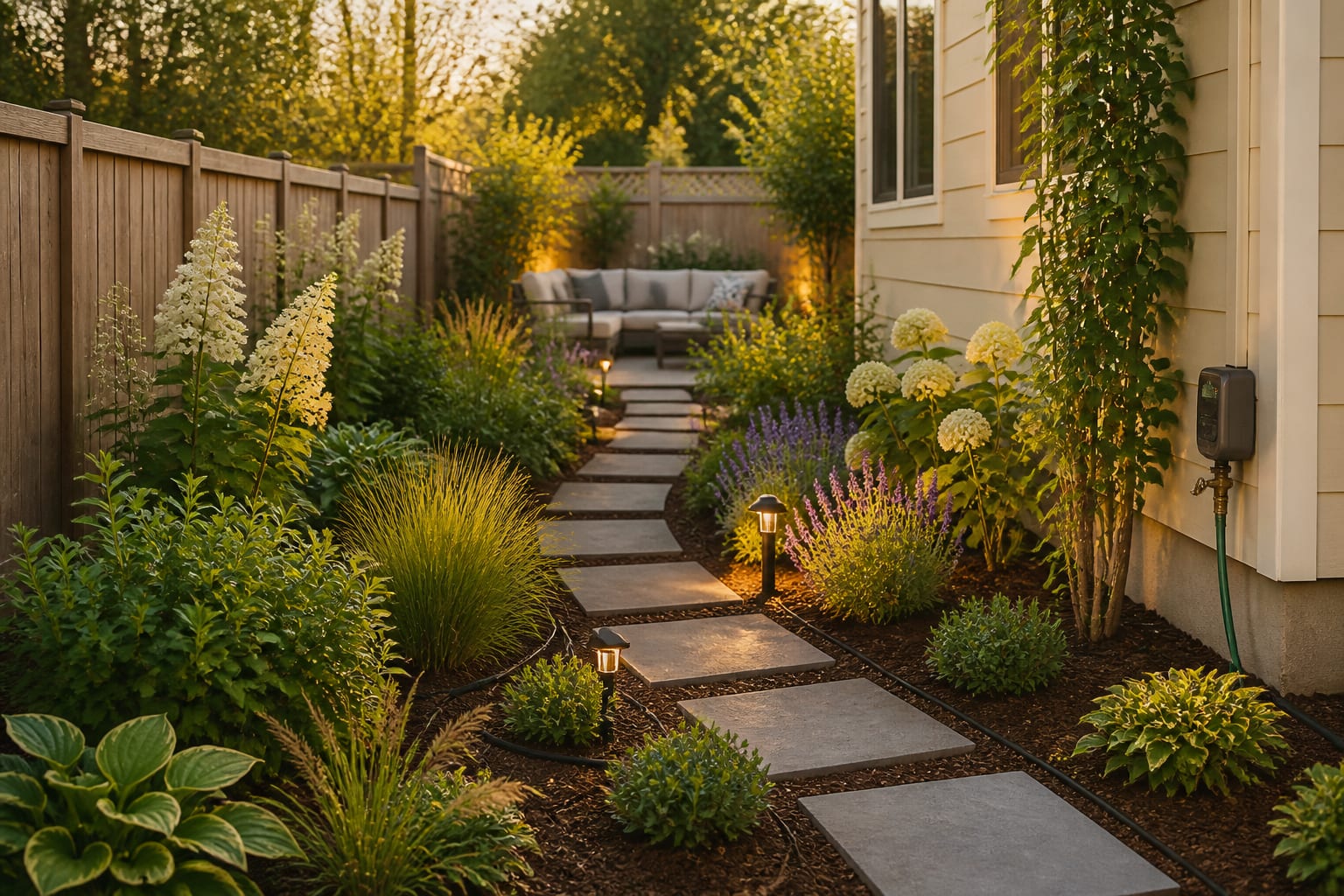
The honest answer to "what is the best irrigation system for a garden" is drip irrigation for planted beds, full stop. It delivers water straight to the root zone, wastes almost nothing to evaporation, and once it is laid out you mostly forget it exists. Soaker hoses and smart controllers earn their place, but they solve narrower problems.
I think most people overcomplicate this. You do not need a contractor or a trenched mainline to stop hand-watering every evening. A length of poly tubing, a few emitters, and a $30 hose-bib timer will cover a typical bed, and you can expand from there. Below I compare the realistic options so you can match the system to your beds rather than buying whatever the big-box aisle pushes.
How the main systems compare
Each approach trades cost against precision and lifespan. Here is the quick side-by-side I use when planning a bed:
| Factor | Drip irrigation | Soaker hose | Smart controller add-on | | --- | --- | --- | --- | | Upfront cost (one bed) | $30 to $80 | $15 to $40 | $80 to $200 | | Water efficiency | ~90% | ~80% | Depends on base system | | Lifespan | 5 to 10 years | 2 to 4 years | 5+ years | | Best for | Mixed beds, rows, containers | Dense, evenly spaced plantings | Automating any existing line | | Upkeep | Flush emitters yearly | Replace as it clogs | Update schedule by season |
Drip wins on control and longevity. Soaker hose is the cheapest way to get water off your hands, but the porous wall clogs with minerals and the whole hose degrades in a few seasons. A smart controller is not a watering method at all, it is a brain you bolt onto drip or sprinklers to skip cycles when rain is forecast and shift run times by season.
There is a fourth option worth naming so you can rule it out: overhead sprinklers. They are fine for open lawn but a poor fit for planted beds, because they soak foliage as much as soil, invite fungal disease on leaves, and lose a chunk of every cycle to wind drift and midday evaporation. For anything with defined beds and mixed plant heights, the targeted systems in the table beat a sprinkler on both water bills and plant health. I only reach for sprinklers where turf is the whole point.
Matching the system to your garden
Layout drives the choice more than budget does. For a mixed border with plants of different sizes, drip with adjustable emitters lets a thirsty hydrangea get 2 gallons per hour while a nearby sedum sips half a gallon. For a tidy vegetable row where everything wants the same water, a soaker hose snaked down the row is fast and forgiving. Raised beds love drip because you can run a clean grid and tuck it under mulch.
Think about how the planting will change over a few seasons too. Drip tubing with inline emitters spaced every 12 to 18 inches gives you a flexible grid you can add to as beds fill in, while point-source emitters on stake spikes suit widely spaced shrubs that each want their own drink. The mistake I see most is buying a fixed-pattern kit for a bed that will look completely different in two years, then fighting it. Lay a slightly oversized mainline now and you can splice in new branches with a punch tool in minutes rather than tearing the whole run out.
A few things to sort before you buy any of it:
- Check your hose-bib pressure; most drip systems want a pressure regulator set around 25 to 30 PSI to avoid blowing emitters off the line.
- Map your beds and total the plants so you can size tubing length and emitter count instead of guessing.
- Decide where the controller or timer lives so the wiring and the hose bib are within reach.
If you are still designing the beds themselves, it pays to plan watering and edges together. Crisp borders from garden bed edging ideas give you a clean line to run tubing along, and rethinking thirsty turf using lawn alternative ideas can shrink how much you need to irrigate in the first place. Drought-tolerant ground covers and gravel zones simply need less plumbing.
Containers and slopes deserve their own thought. Pots dry out fast and benefit from a single 1-gallon-per-hour emitter each on a short branch line, which beats remembering to water them by hand in a heat wave. On a slope, pressure-compensating emitters keep the flow even from the top of the run to the bottom, so the uphill plants do not starve while the downhill ones drown. Group everything by zone: shady moisture-holding beds want shorter, less frequent runs than a baking south-facing border, and putting them on separate valves lets a controller treat each correctly.
Automation and water savings worth the money
The upgrade that actually changes your summer is automation. A simple battery timer that opens the valve at 6 a.m. for 20 minutes beats any manual routine because the garden gets watered before the heat, every day, whether or not you are home. Step up to a smart controller and it pulls local weather to skip watering after rain, which on its own can cut outdoor water use by 20 to 30 percent.
Pair that with watering deeply and less often. Short daily sprinkles train roots to stay shallow; a longer soak every two or three days pushes roots down and builds drought resilience. Tools like AI garden design tools can help you plan zones and plant groupings so plants with similar water needs share a line, which makes any controller far more efficient.
Maintenance keeps any system honest, and drip rewards a few minutes a year. Flush the lines each spring by opening the end caps and letting debris blow out before you reinstall the emitters, and check a sample emitter for the steady drip it should produce. Add an inline filter at the hose bib if your water carries grit, since clogged emitters are the number-one reason drip systems get blamed for dead plants. Before the first hard frost, drain the lines or blow them out so trapped water does not split the tubing over winter. None of this takes long, and a system you service lasts the full 5 to 10 years instead of failing in two.
Use AI design to preview your irrigated garden before you commit
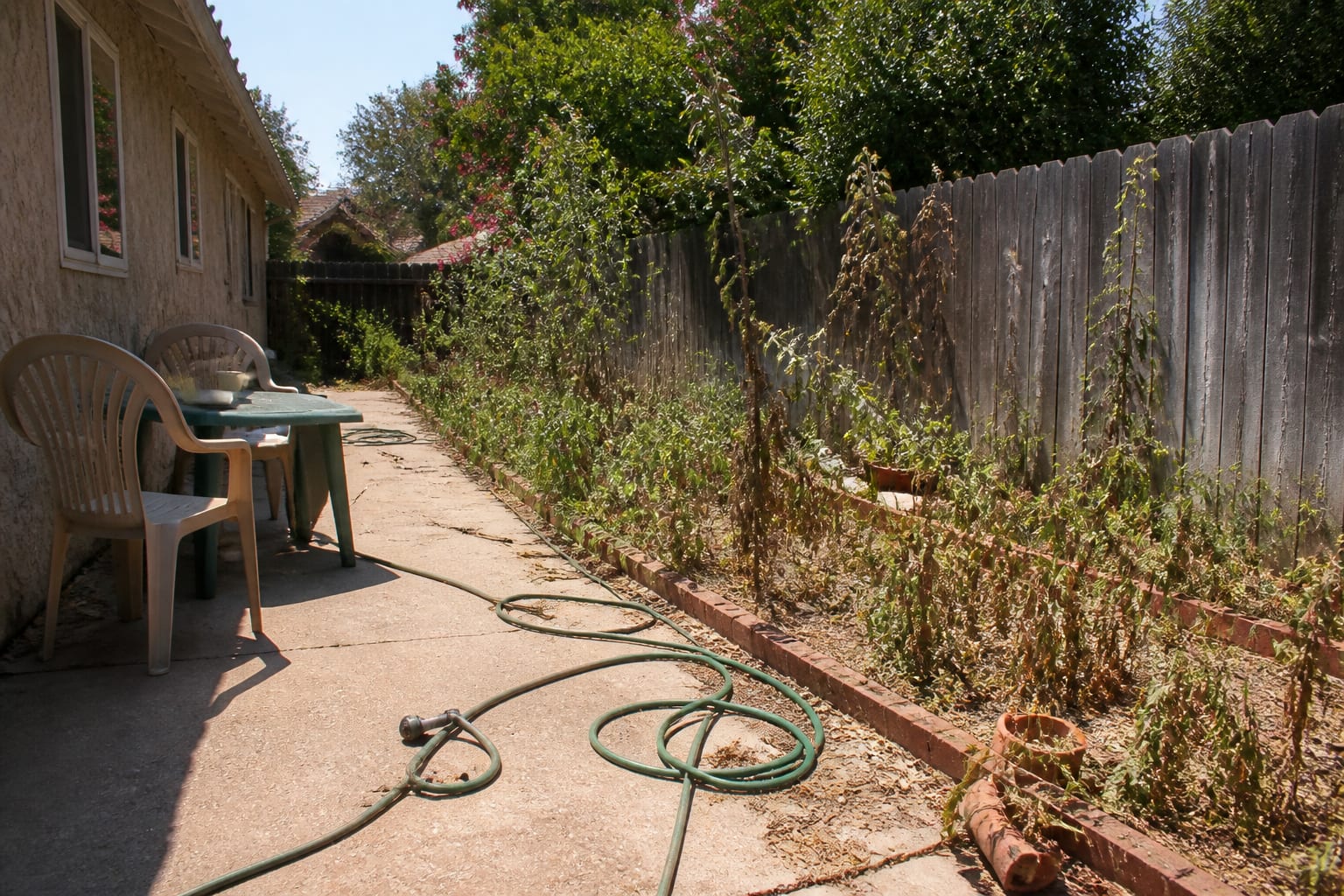
It is hard to picture how a drip grid and a re-grouped planting plan will read once the tubing disappears under mulch. With Re-Design you upload a photo of your existing beds and the AI re-renders them as a finished, well-watered garden, so you can see the mulched rows and tidy ground covers before you cut a single length of poly tubing.
Test the water-wise version against your current layout. Upload the same shot and ask the AI design tool to swap a thirsty lawn strip for a gravel-and-grasses bed, or to show your border replanted in tight hydration zones. Seeing your own fence line and beds reworked makes it obvious where to run lines and where to cut watering entirely.