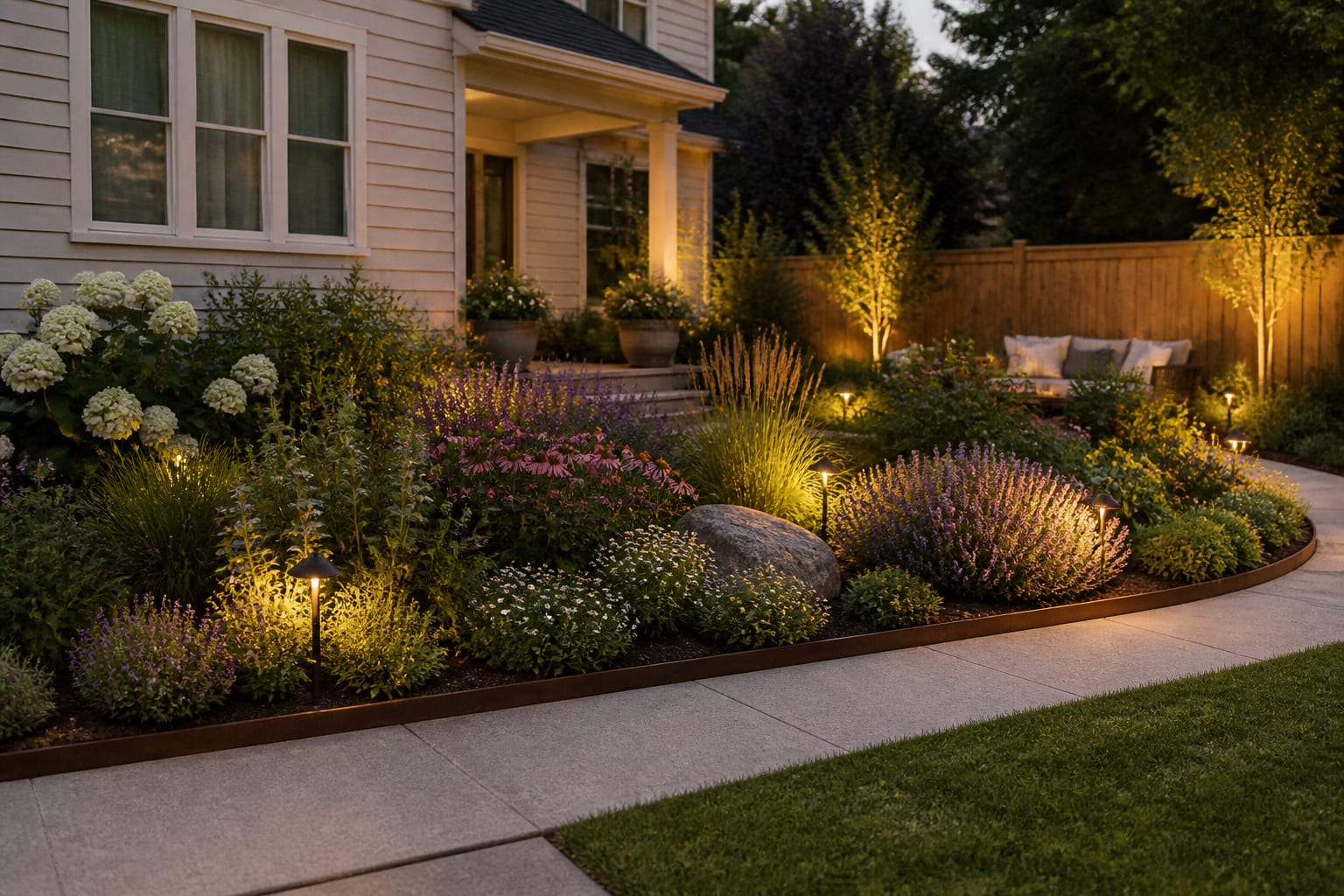
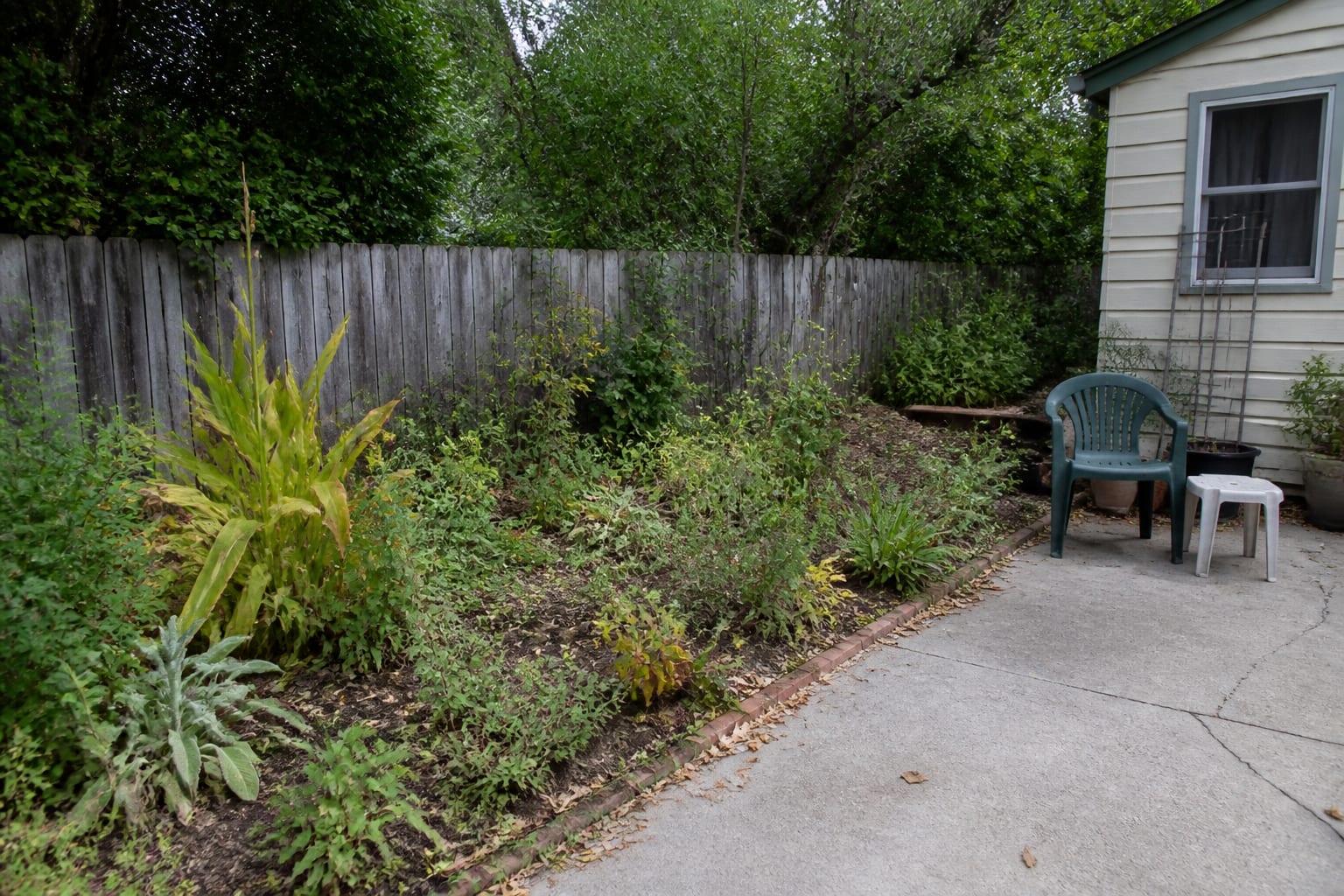
Choose the spot's conditions first, then choose the plant. To pick the right plants for your garden, measure how many hours of direct sun the bed gets, check your soil and drainage, find your USDA hardiness zone, and only then shop for plants that suit all three. My read is that beginners buy plants for their flowers and discover the conditions afterward, which is exactly backwards and why so many plants sulk or die.
I think "right plant, right place" is the whole game. A sun-loving plant in shade will never thrive no matter how well you treat it, and a thirsty plant in dry soil is a chore forever. Match the plant to the site and most of the work disappears.
Read the site before you read the labels
Every good plant choice starts with three readings: light, soil, and climate. Light is the big one. Watch a bed across a full day and tally the hours of direct sun, because the difference between a spot that gets 6 hours and one that gets 3 changes the entire plant list. Plant tags use full sun, part sun, and shade, and those words map to real hour counts you can measure with nothing but attention.
Soil and drainage come next. Squeeze a handful: if it ribbons and stays slick it leans clay, if it crumbles and falls apart it leans sandy. Most plants want the middle, a loam that holds moisture but drains. This site-first thinking underpins all good garden design, where the conditions of each bed, not the catalog, set what can go there.
Climate is the third reading, and the USDA hardiness zone is the shorthand for it. The zone tells you the average coldest winter temperature, which decides whether a perennial survives or is really an annual in disguise where you live. Buy for your zone and you stop replacing plants every spring.
There is a fourth reading worth taking: your microclimates. A single yard rarely has one set of conditions. A south-facing wall stores heat and can run a half-zone warmer, letting you push a slightly tender plant. A low corner that collects cold air and water sits a notch colder and wetter than the rest. The strip under a roof overhang stays bone dry even in a rainy week, while a downspout outlet floods. Walk your yard after rain and on a frosty morning and you will see these pockets, and matching plants to them, rather than treating the whole garden as uniform, is what separates a thriving bed from a struggling one a few feet away.
Match plants to conditions, not wishes
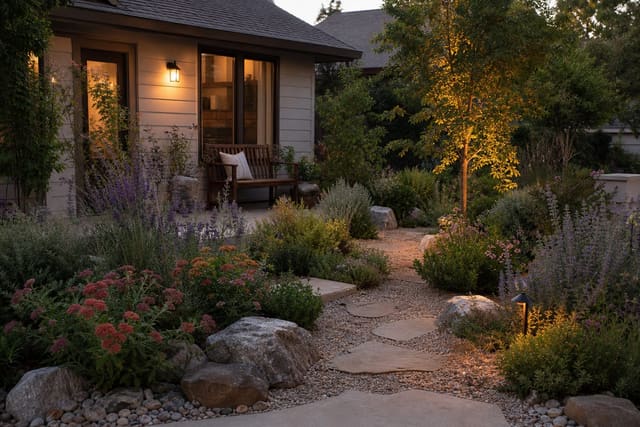
Once you know the site, choosing gets faster. For a hot, dry bed against a south wall, lean into plants that want exactly that rather than fighting to keep a moisture-lover alive. The species in these drought-tolerant landscaping ideas are built for spots where water is scarce, and choosing for the condition instead of against it turns a problem bed into an easy one. Here is what to check for every plant before it comes home:
- Sun requirement matched to the bed's actual measured hours.
- A hardiness zone rating at or below your own zone number.
- Mature height and spread that fit the space without crowding.
- Water needs that match how much you will realistically water.
- Soil preference, sharp-draining or moisture-retentive, matched to your bed.
Size is where wishes cause the most trouble. A shrub tagged for an 8-foot spread will reach 8 feet no matter how small it looks in the pot, so plan for mature size, not nursery size.
Choose for purpose and upkeep
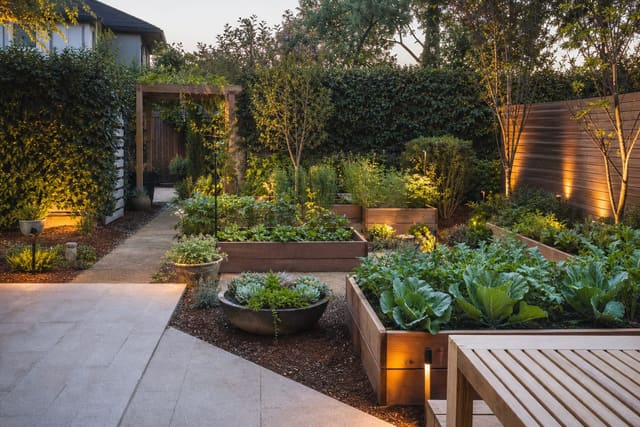
Plants are not only decoration; deciding what a plant is for narrows the list fast. Some earn their place as structure, some as food, some as pollinator support. If you want the garden to feed you, the layout and selection thinking in these vegetable garden design ideas helps you pick productive plants that also fit your sun and space, instead of squeezing tomatoes into a shady corner where they will never ripen.
Upkeep is the honest filter most beginners skip. Be truthful about your time: a low-maintenance garden of tough, well-matched perennials suits a busy life, while a cottage border of fussy bloomers wants weekly attention. Choose plants whose care matches the hours you will actually give them, and the garden stays a pleasure instead of a guilt.
There is also a case for buying mostly proven plants and only a few experiments. A good ratio for a beginner is roughly 80 percent reliable, well-adapted species that you know will succeed in your conditions, and 20 percent stretches that might or might not work. That way a failed gamble is a small disappointment in a bed that still looks full, not a wholesale loss. Lean on what already thrives nearby: a quick walk around the neighborhood tells you which plants shrug off your local soil, sun, and winters, and those are the safest bets for the backbone of a first garden. Native and well-naturalized species usually top that list because they evolved with your conditions and ask for the least once established.
Common mistakes to avoid
The common mistakes to avoid when choosing plants nearly all come from buying with the eyes instead of the conditions. Impulse buying at the nursery is the classic: a plant in flower is hard to resist, but if it wants full sun and your bed gets three hours, it is doomed before you pay. Read the site first, then shop.
Ignoring the hardiness zone is the next error, and it shows up the following spring as a bed of dead perennials that were never rated for your winter. Overplanting is just as common: cramming young plants in for instant fullness leads to crowding, poor airflow, and disease by year two, so space for mature size. Finally, beginners often buy one of everything, which gives a scattered look and a long list of different needs to juggle; a few proven species repeated is far easier to keep alive.
Use AI design to preview your planting before you commit
Choosing plants on paper is abstract because you cannot picture how a species will look in your specific bed at full size. Re-Design bridges that: upload a photo of the bed or border you are planning and the AI re-renders it filled with planting, so you can judge color, height, and density against your own fence, wall, or path before you buy anything.
Use it to test your shortlist. Upload the bed photo and ask the AI design tool to show a low-maintenance scheme of grasses and tough perennials, then a lusher mixed planting, and see which suits your light and your patience. Seeing the choices rendered in place keeps you from the impulse buy that looked perfect at the nursery and wrong in your garden, and it makes the right-plant, right-place rule something you can actually see.