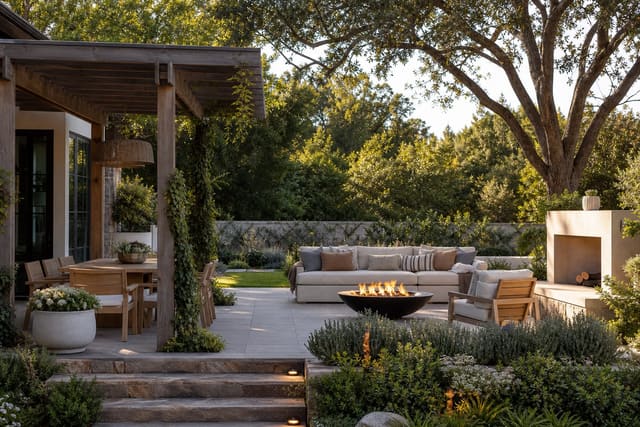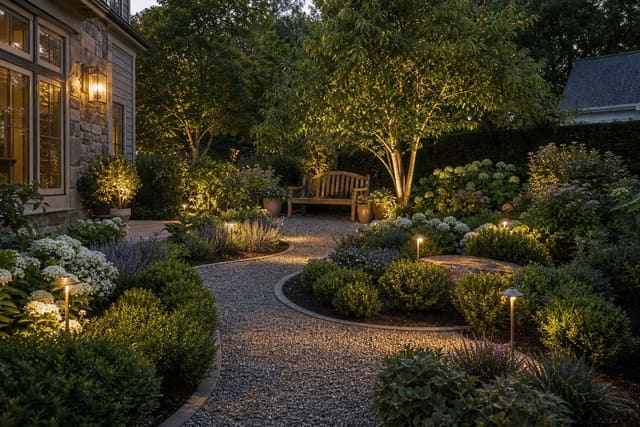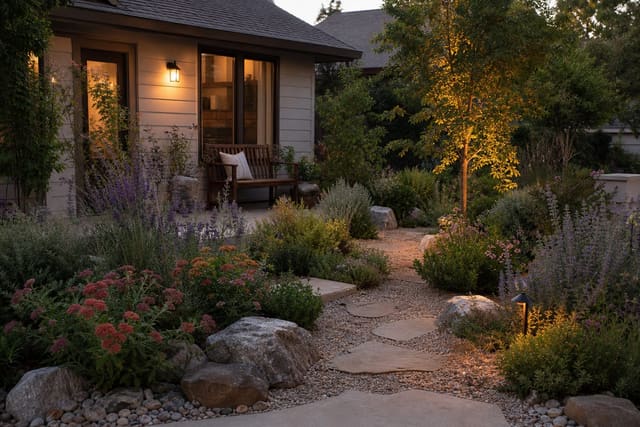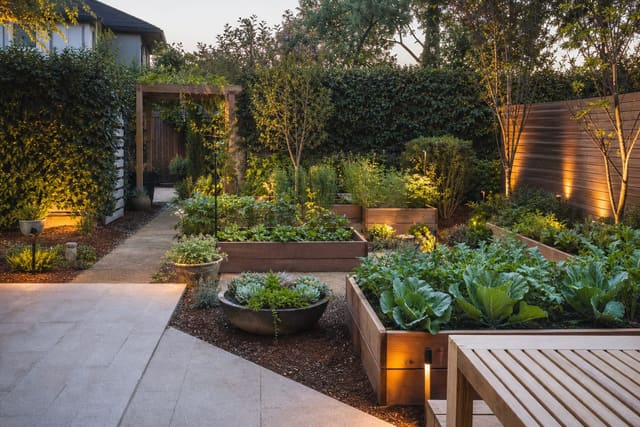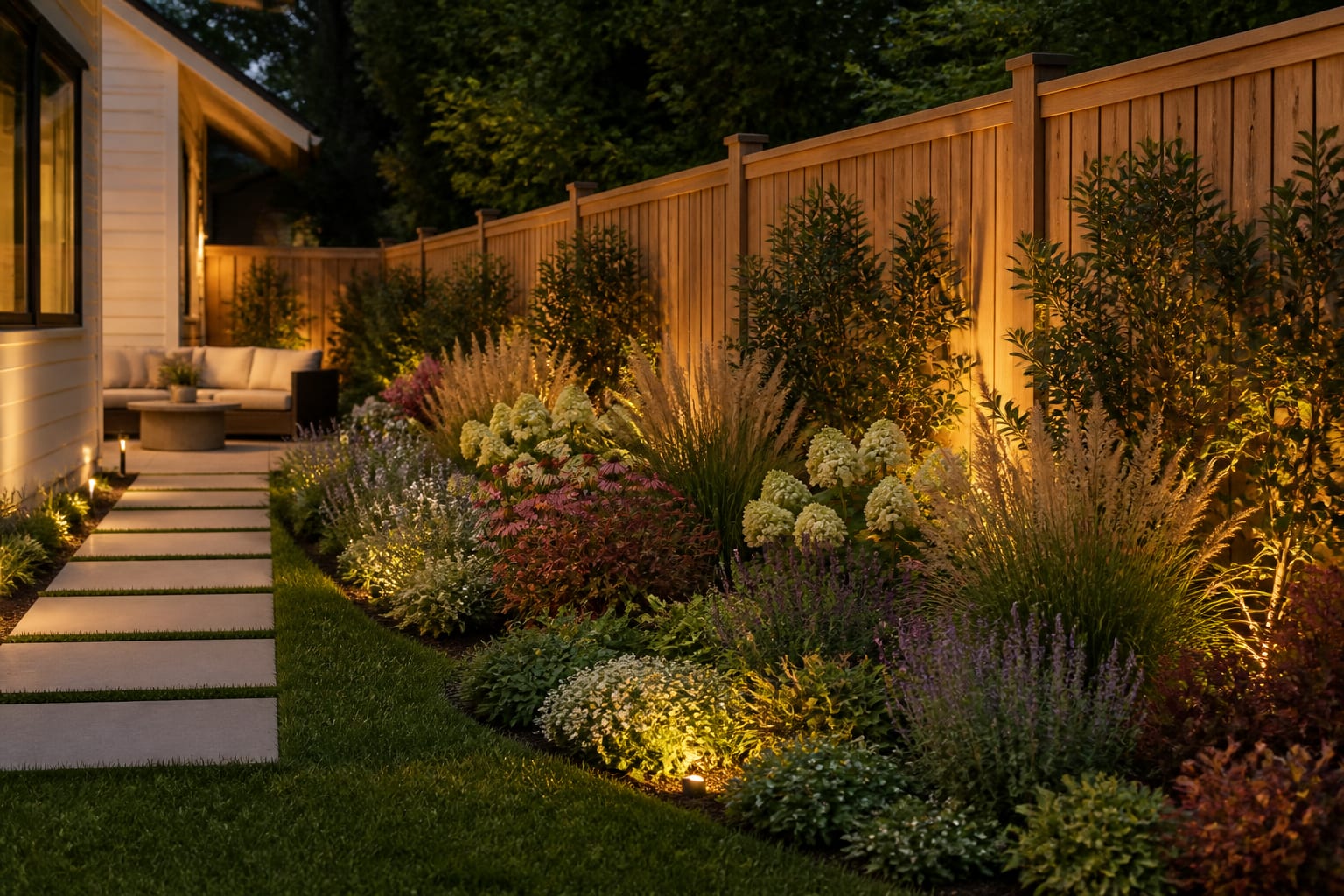
A mixed border works when you plant in layers and repeat a palette. To design a mixed planting border, set a backbone of shrubs at the back, fill the middle with perennials and grasses, edge the front with low plants and bulbs, and repeat a few key species along the run so it reads as one composition. My read is that the borders that fail are the ones planted as a row of singletons, one of each, with no repetition and no layering.
I think of a border as a small grandstand. Tall things at the back, medium in the middle, low at the front, so nothing hides behind anything else. Get the layering and the spacing right and the border looks full in its first full season instead of patchy and gapped.
Build the border in layers
Depth is what lets a mixed border layer properly. A bed 5 or 6 feet deep gives you room for a back row of structural shrubs, a generous middle band of perennials and ornamental grasses, and a front edge of low, spreading plants. Try to layer in a 3-foot strip and everything fights for the same space.
Start at the back with the woody backbone: a few shrubs that hold the bed in winter and set the maximum height. The middle is where most of the color lives, in drifts of perennials repeated down the run. The front edge softens the line between bed and lawn or path. This layering logic is core to good garden design, and a border is really that whole-garden thinking compressed into a single bed.
Stagger heights so each layer steps down toward the viewer. As a rule, the back layer is roughly twice the height of the front, with the middle bridging between them. That gradient is what makes a border read as a wall of plants rather than a flat patch.
Where the border sits changes the rules slightly. A border seen from one side, backed by a fence or hedge, runs tallest at the back and lowest at the front, the classic grandstand. An island bed viewed from all sides puts the tallest plants in the center and steps down in every direction, so you never look at a bald back row. Either way, leave a strip of about 18 inches between the tallest shrubs and a fence so air moves behind them and you can reach in to prune. I also like to break the height gradient on purpose once or twice along a long border, letting a tall accent come forward toward the front edge, because a perfectly even slope can look mechanical.
Choose a palette and repeat it
A mixed border needs discipline in its plant list. Pick three to five middle-layer perennials, two or three grasses, and a small set of bulbs, then repeat them rather than buying one of everything. Repetition in groups of odd numbers, threes and fives and sevens, is what turns a plant list into rhythm.
Matching plants to your conditions keeps that palette alive with less work. If your site bakes in summer or you water by hand, leaning on tough species from these drought-tolerant landscaping ideas lets you repeat plants confidently without losing half of them in a dry August. Here is the order I plant a new border in:
- Set the back shrubs first and stand back to check the height and spacing.
- Place the middle perennials in odd-numbered drifts, repeating the palette down the run.
- Tuck grasses between drifts to bridge colors and add winter movement.
- Edge the front with low spreaders, spaced to knit together by year two.
- Plant bulbs last, in the gaps, for early-season color before the perennials wake.
Plant for year-round interest
The goal is a border that never goes fully blank. Plan for succession: early bulbs and spring perennials, a summer peak, then late-season asters, sedums, and grasses that carry color into fall. Leave the seed heads and grass plumes standing through winter for structure and for the birds, cutting back in late winter before new growth.
Edibles can join the mix too. Tucking a few productive plants into the front and middle layers blurs the line between ornamental and useful, and ideas from these vegetable garden design ideas show how chard, kale, and herbs earn a place in a border on looks alone. Aim for at least one plant doing something in every season, and the border stays worth looking at twelve months a year.
Foliage carries far more of the season than flowers do. Any single perennial might bloom for two or three weeks, but its leaves are on stage for six months, so I weight a border toward good foliage and treat flowers as the bonus. Mix leaf shapes and tones deliberately: a few bold, broad leaves to anchor the eye, fine and feathery textures to lighten the spaces between, and one or two silvery or dark-leaved plants to make the greens read as a range rather than a wall of the same color. Grasses are the workhorses here, holding texture from June well into winter and moving in the wind when everything else is still. Get the foliage right and the border looks composed even in the weeks when nothing is in bloom.
Common mistakes to avoid
The common mistakes to avoid in a mixed border start with making it too shallow. A 2-foot strip cannot hold three layers, so it always looks thin; give the border at least 4 feet of depth. The second mistake is the singleton habit, planting one of everything, which produces a muddle with no rhythm. Buy in threes and fives instead.
Spacing trips people up in both directions. Plant too far apart and the bed gapes with bare soil for years; cram too tight and the plants smother each other by year two. Space at about two-thirds of mature spread for a bed that fills in cleanly. Finally, ignoring succession leaves a border that explodes in June and dies for the rest of the year, so check bloom times and deliberately spread them across the seasons.
Use AI design to preview your border before you commit
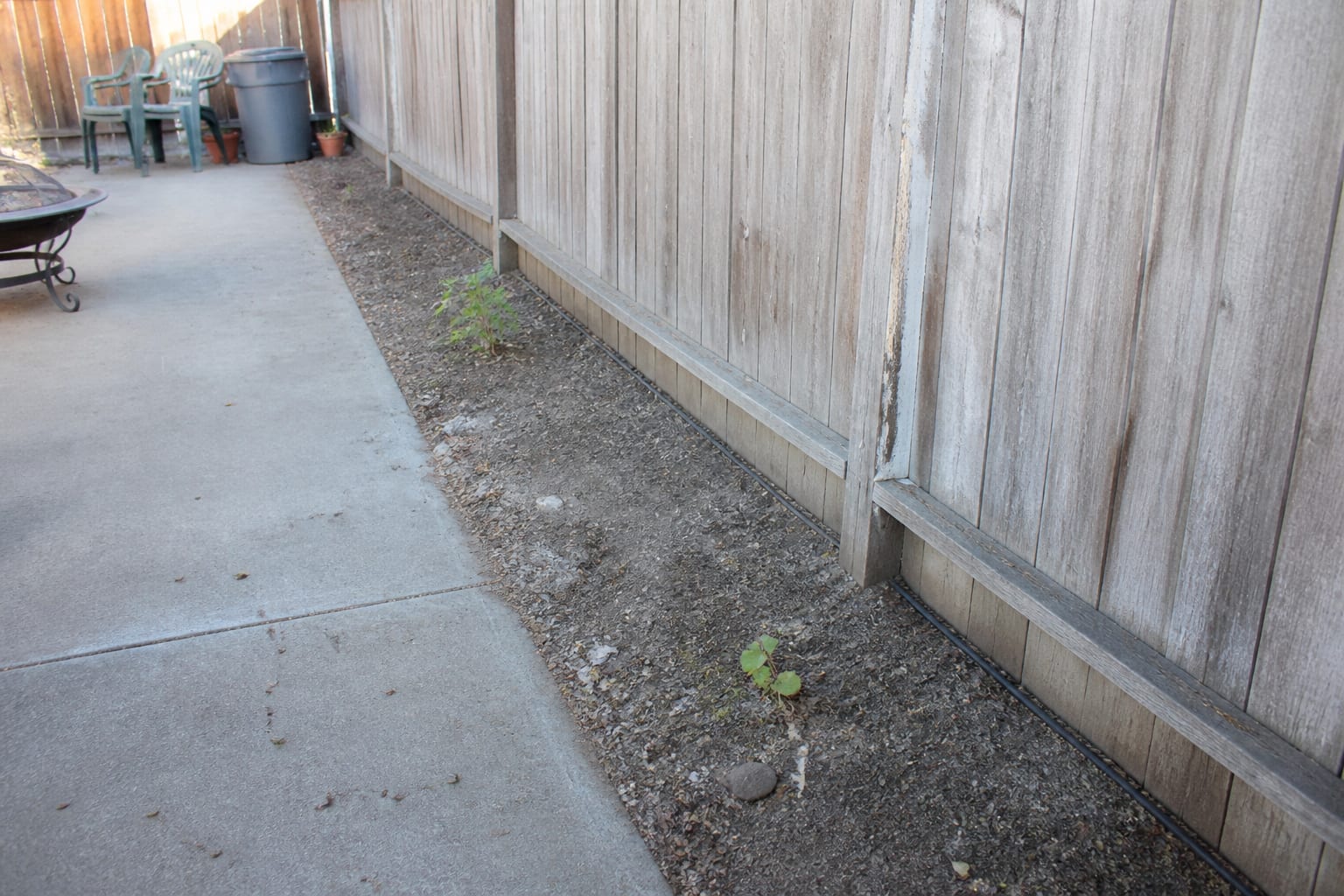
A mixed border is hard to visualize because you are imagining three layers of plants at heights and seasons that do not yet exist. Re-Design makes it concrete: upload a photo of the empty bed along your fence or path and the AI re-renders it as a planted border, with the shrub backbone, the perennial drifts, and the soft front edge in place. You see the layers before you buy a single plant.
Test a couple of palettes on the same bed. Upload the photo and ask the AI design tool to show a hot scheme of reds and golds against a cool one of blues and silvers, then picture each in summer fullness. Seeing the layered border rendered against your real fence helps you commit to a palette and a depth before you are kneeling in the dirt with a flat of plants you guessed at.