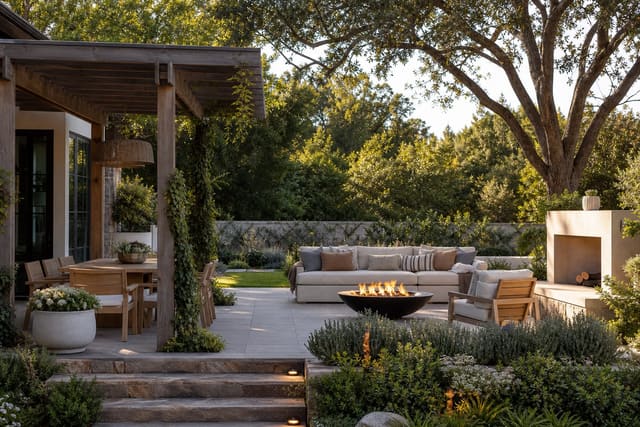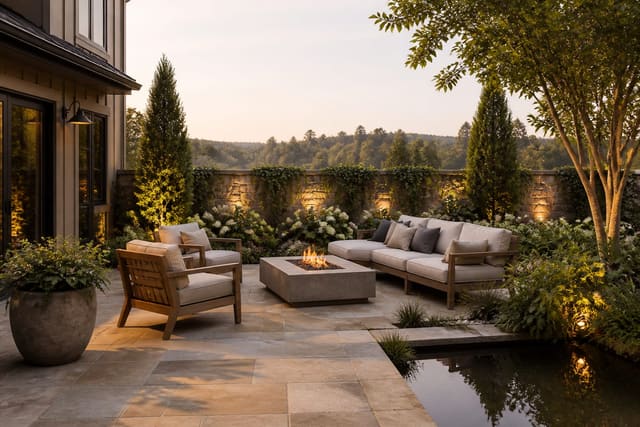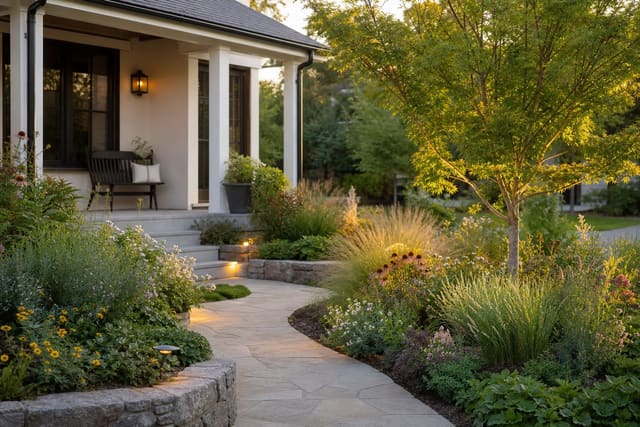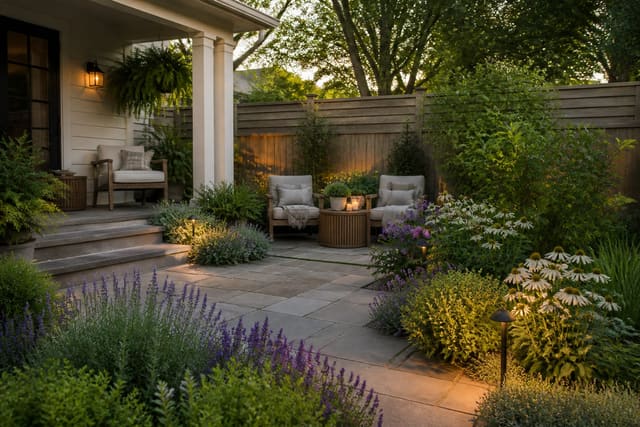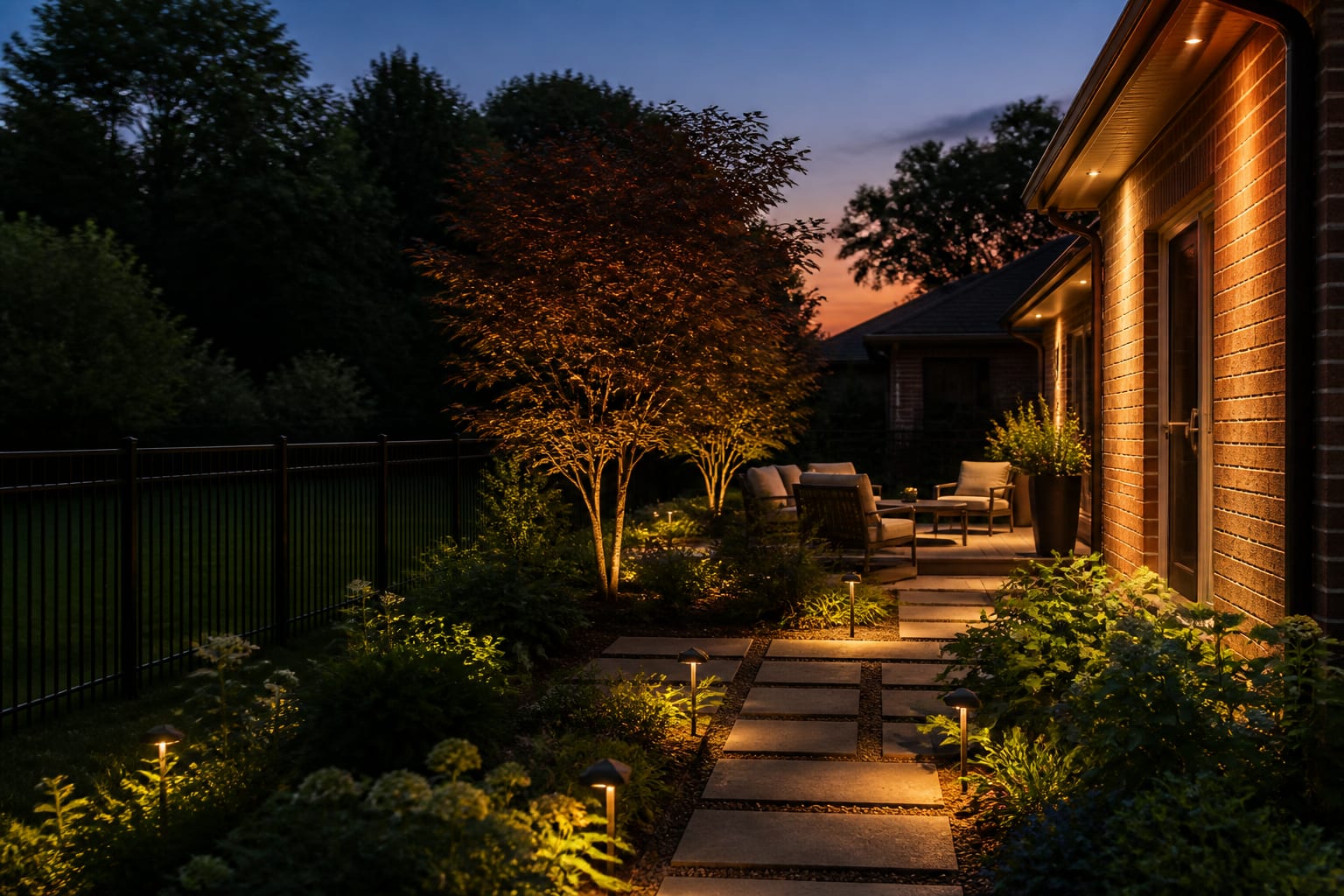
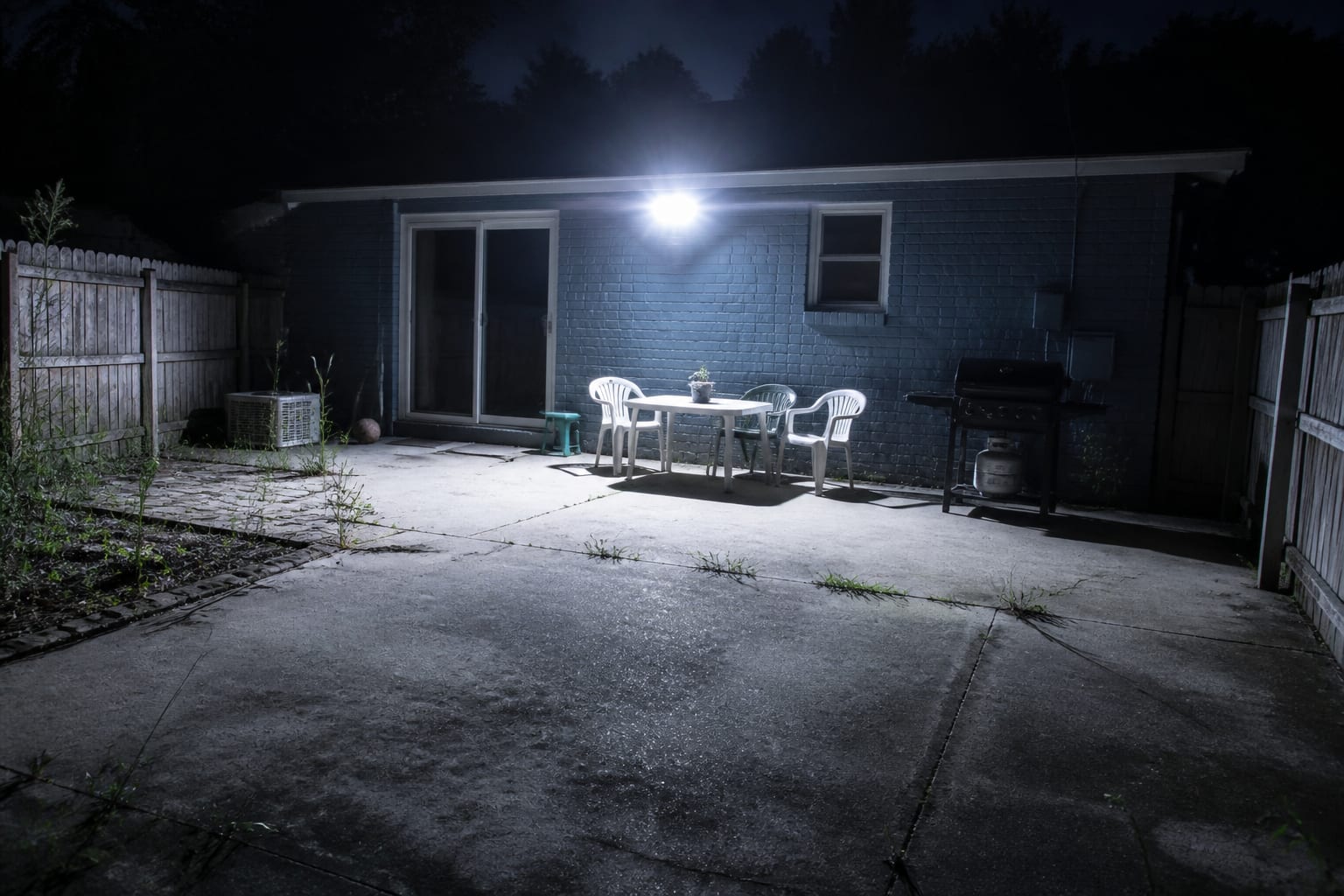
Pick the warmth before you pick the fixtures. The best color temperature for outdoor lighting is 2700K to 3000K, a warm white that flatters brick, wood, and plants and makes a yard feel like an extension of the house rather than a parking lot. My read is that the single biggest mistake in landscape lighting is not too few fixtures or too little brightness, it is buying cool 5000K bulbs that turn a warm garden into a gas station overnight.
I think Kelvin matters more than lumens outdoors, and almost nobody checks it. Two yards with identical fixtures can look completely different depending on the warmth of the light, and the warm one wins nearly every time. Get the temperature right first and even budget fixtures look intentional.
What Kelvin actually does to a yard
Color temperature, measured in Kelvin, describes whether white light leans warm and amber or cool and blue. Low numbers are warm: a candle is about 1800K, a cozy incandescent lamp around 2700K. High numbers are cool: midday daylight is roughly 5500K, and a hardware-store floodlight can hit 6500K. The number has nothing to do with brightness, which trips people up constantly, since a dim bulb can be ice-blue and a bright one can be warm.
Outdoors at night, your eyes are dark-adapted and crave warmth. A 2700K source makes a brick facade glow the way it does at golden hour, while the same wall under 5000K light looks gray and flat. Warm light also reads as safe and residential; cool light reads as institutional. The same warmth-first logic in these landscape design principles carries straight into lighting, because the goal is a yard that feels designed, not floodlit.
There is a narrow case for cooler light. Crisp 4000K can make sense on a security floodlight over a driveway, where you want sharp visibility over mood. But that is the exception. For paths, patios, uplit trees, and entries, anything near the warm end almost always looks better, and stepping above 3500K in those spots is where gardens start to look clinical.
Warmth also affects how brightness reads. A warm 2700K source at a modest 100 to 200 lumens feels plenty bright outdoors because your dark-adapted eyes are sensitive to it, while a cool 5000K bulb of the same output looks harsher and more glaring. That is part of why warm light lets you use fewer, lower-wattage fixtures and still light a yard well, which saves both money and the over-lit look that flattens a garden after dark.
Match the temperature to the job
Different parts of a yard want slightly different warmth, all within a tight range. Path and step lights look best at a cozy 2700K, low and inviting. Uplighting on a tree or a wall holds up well from 2700K to 3000K, where the cooler edge of that range can make green foliage read a touch crisper without going cold. Water features shimmer nicely around 3000K.
Here is a quick map of where each temperature belongs:
- 2700K: path lights, step lights, patios, entries, and anywhere people gather.
- 3000K: tree uplighting, wall washing, and water features that benefit from slight crispness.
- 3500K: a reasonable ceiling for foliage if you want greens to pop without going clinical.
- 4000K: security and task light only, like a driveway floodlight or a work zone.
- 5000K and up: skip it outdoors entirely; it reads cold and commercial in a garden.
CRI, the color rendering index, is the spec people forget once they have sorted Kelvin. A warm bulb with a poor CRI still makes plants look muddy. Aim for CRI 80 or higher, ideally 90, so a green hedge stays green and brick stays warm instead of sliding toward gray. Pairing this with the right plants matters too, since the foliage colors in these native plant landscaping ideas only show at night under light that renders color honestly.
Buy bulbs that hold their warmth and rating
Not every 2700K bulb is created equal, and the cheap ones drift or die. Check three numbers on the box before it goes in the cart: the Kelvin rating, the CRI, and the IP rating for weather resistance. Outdoors you want at least IP65 so rain and sprinklers do not kill the fixture in a season. A quality LED rated for 25,000 hours or more will hold its warmth for years; bargain bulbs often shift cooler and dimmer as they age.
Buy all your bulbs from one product line in one warmth so they match, and buy a spare or two from the same batch. LED color can vary slightly even within a single Kelvin rating between manufacturers, so a replacement from a different brand two years later can stick out as a mismatched note in an otherwise warm scene. Consistency is what makes a lighting scheme look professional rather than patched together over time.
Common mistakes to avoid
The most common color-temperature mistake is buying daylight 5000K bulbs because they are bright and cheap, then wondering why the yard looks like a parking lot. Bright is not the goal outdoors; warm and controlled is. Drop to 2700K and the same fixtures suddenly look expensive.
The second mistake is mixing temperatures in one scene, putting a 2700K path light next to a 4000K floodlight so the yard reads as two clashing colors. Pick one warmth and commit. A third mistake is ignoring CRI, where a technically warm bulb with poor color rendering still makes greens go gray and brick go muddy, so the planting you lit disappears at night. Finally, do not over-light to compensate for cool color; the fix for a yard that feels cold is warmer light, not more of it, and piling on brightness only flattens the shadows that gave the garden depth.
Use AI design to preview your lighting color before you buy
Color temperature is almost impossible to imagine in advance, because you are picturing your daytime yard in the dark. Re-Design closes that gap: upload a daytime photo of your patio, entry, or a favorite tree and the AI design tool re-renders the same space at dusk under warm 2700K light, so you can see whether warm white flatters your brick before you buy a single fixture.
Try it both ways. Upload the photo, ask for a warm 2700K scheme with uplit trees and soft path lights, then ask for a cooler version to see the difference for yourself. Putting the warm and cool renders side by side makes the case better than any spec sheet, and it saves you from returning a box of bulbs that looked fine on the shelf and wrong against your house.