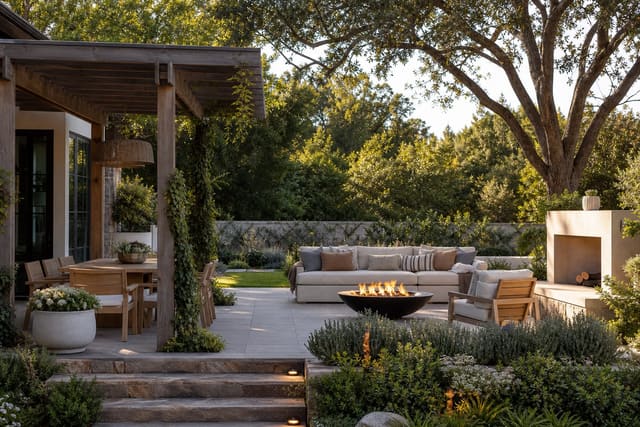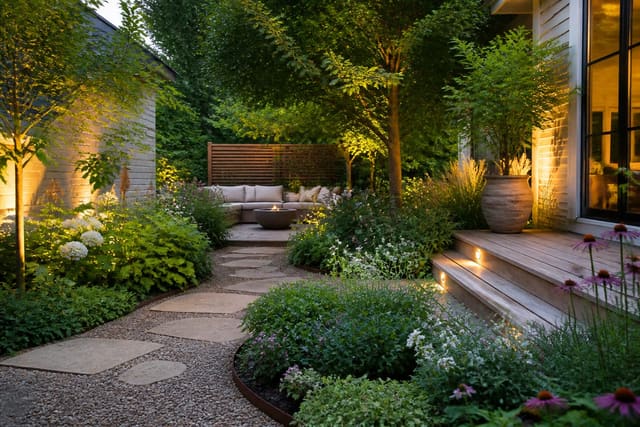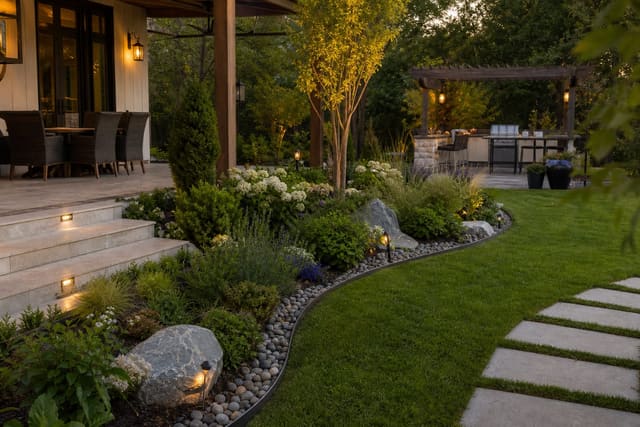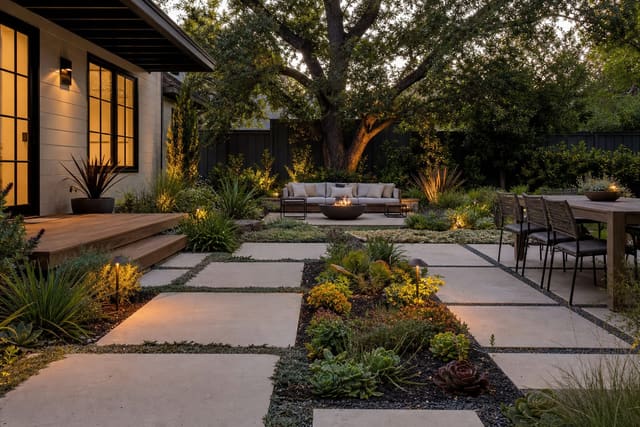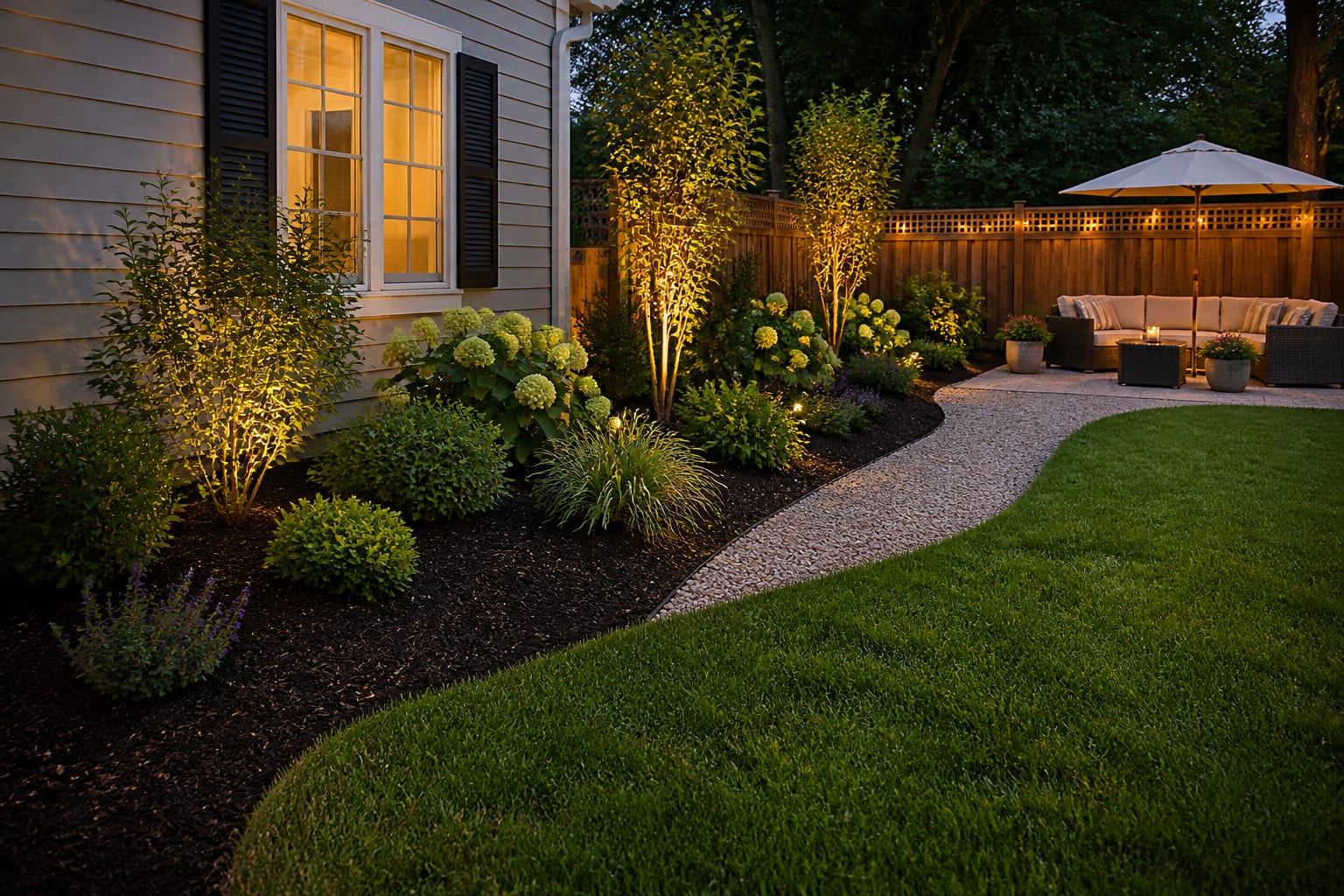
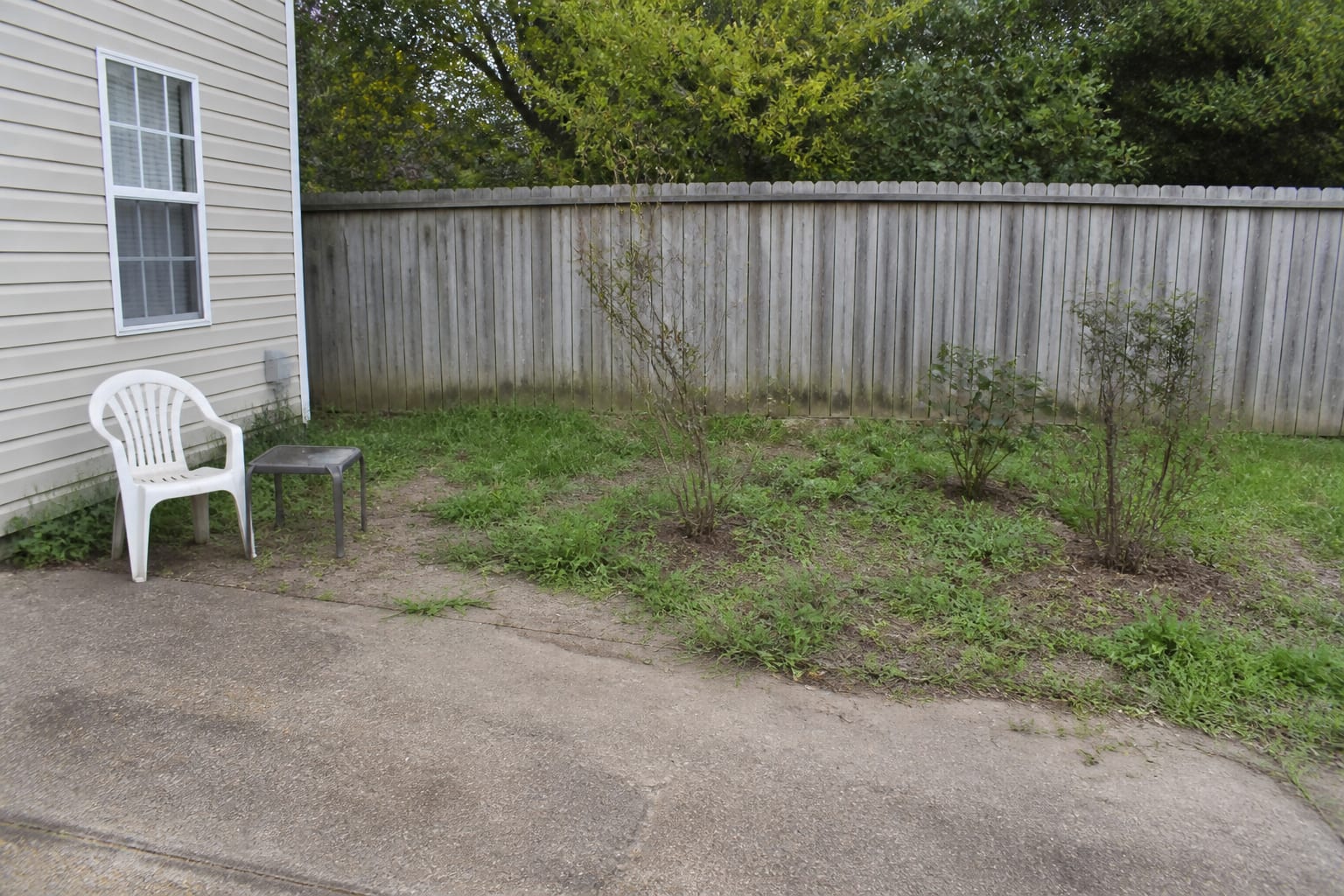
The best mulch for garden beds is shredded hardwood bark for most planted areas, with gravel reserved for paths and dry zones. I think that covers 90 percent of yards. Organic mulch feeds the soil as it breaks down, holds moisture, and looks settled rather than dumped, which is exactly what a planted bed wants.
That said, mulch is not one product, and the wrong pick looks cheap or fights your plants. Rubber and dyed wood get oversold, gravel is fantastic in the right spot and a mistake in the wrong one, and the differences come down to cost, lifespan, and the look you are after. Here is how the main options compare so you can match each one to the right part of the garden.
How the main mulch types compare
The split that matters is organic versus inorganic. Organic mulch decomposes and improves soil but needs topping up; inorganic lasts but does nothing for fertility. Here is the side-by-side I keep in mind at the garden center:
| Factor | Hardwood bark | Wood chips | Gravel / stone | Rubber mulch | | --- | --- | --- | --- | --- | | Cost per cubic yard | $30 to $40 | Often free to $25 | $40 to $80 | $$$ highest | | Lifespan | 1 to 2 years | 2 to 3 years | 5+ years | 10+ years | | Feeds soil | Yes | Yes | No | No | | Best for | Mixed beds, borders | Paths, tree rings | Dry beds, paths | Play areas only | | Look | Tidy, dark | Rustic, chunky | Clean, modern | Flat, artificial |
Hardwood bark is the all-rounder. Wood chips are cheaper or free from arborists and great around trees, but they are coarse for a tidy front border. Gravel shines in xeriscape and Mediterranean beds where you want sharp drainage. Rubber I would skip in planted beds entirely; it adds no nutrients, traps heat, and can leach as it ages, so its only honest home is under playground equipment.
A couple of specialty options round out the menu. Straw and pine needles are cheap, light mulches that suit vegetable gardens and acid-loving plants like blueberries and azaleas, though they look rustic rather than refined. Cocoa hulls smell wonderful and look rich but cost more and can be toxic to dogs, so I steer pet owners away from them. Cedar and cypress resist decay longer than generic hardwood and carry a natural insect-repelling scent, which is why they cost a little more per bag. None of these change the core rule, though: organic materials feed the soil and need topping up, while stone is a one-time buy that does nothing for fertility.
Matching mulch to the bed
Color and texture should follow the architecture of the house and the plants, not just personal taste. Fine, dark mulch recedes and lets foliage and blooms carry the bed, which is why I default to it in formal front yards. Chunky natural chips advance and add their own rustic texture, so they suit woodland and cottage plantings where a little mess looks right. Pale gravel reads crisp and modern and reflects light into a bed, but it bounces heat onto plants nearby, so reserve it for sun-lovers that can take the extra warmth.
Different parts of the yard want different ground cover. A few quick rules I follow:
- Use fine, dark hardwood bark in front borders and foundation beds where you want a clean, finished line.
- Run coarse wood chips on informal paths and around tree trunks where rustic texture reads as intentional.
- Choose 3/8-inch gravel for drought beds, succulents, and Mediterranean plantings that hate wet feet.
- Pick a stable, edged material near patios so it does not migrate onto the paving every time it rains.
The edge is half the battle. Mulch only looks deliberate when a crisp border holds it in place, which is why the moves in garden bed edging ideas pair so naturally with any mulch choice. If you are trying to shrink thirsty lawn, gravel and bark zones from lawn alternative ideas replace turf with low-water ground cover that never needs mowing.
Landscape fabric is the trap I warn people about most. It sounds tidy under any mulch, but under organic bark it blocks the very decomposition that should be feeding your soil, and within a year or two fine debris settles on top and weeds root into that layer anyway. Under gravel it makes more sense, since stone is not meant to break down, but even there I prefer a thick stone layer over a clean, well-edged base. For weed suppression under bark, depth does the work: a full 3 inches smothers most seedlings without choking off the soil life you want to keep.
Color, refresh, and longevity
Color is where people go wrong. Dyed black and red mulch fade to a flat gray within a season and the dye can mask cheap wood waste underneath, so I prefer natural-aged hardwood that mellows to a soft brown. Whatever you pick, a yearly top-up of an inch keeps organic mulch looking fresh, since it thins as it breaks down into the soil.
Longevity is the trade you are really making. Gravel and stone are buy-once materials that hold for 5-plus years, while bark asks for an annual refresh but builds your soil in return. Plan zones with similar refresh needs together so maintenance stays simple. Tools like AI garden design tools help you map which beds get organic mulch and which get stone before you order a single yard.
Ordering the right amount saves a second trip and wasted money. One cubic yard of mulch covers roughly 100 square feet at 3 inches deep, so measure your beds, multiply length by width, and divide by 100 to get yards before you call the supplier. Bulk delivery almost always beats bagged once you pass three or four cubic yards on price. Spread it on a dry day, rake it to an even depth, and water it lightly afterward to settle fresh bark so the first breeze does not scatter it across the lawn. Time the refresh for spring after the soil warms, since mulching too early over cold wet ground can slow plants waking up.
Use AI design to preview your mulched beds before you order
Mulch color and texture change a bed more than people expect, and a yard of the wrong stuff is a chore to remove. Upload a photo of your beds into Re-Design and the AI re-renders them with different ground covers, so you can compare dark hardwood against pale gravel against rustic chips on your own plants and edging.
Test the combinations that are hard to picture. Upload the same bed and ask the AI design tool for fine black bark in the front border, then a gravel-and-succulent treatment, then wood chips around the trees. Seeing your real foundation line and shrubs under each option makes the decision obvious before a delivery truck shows up.