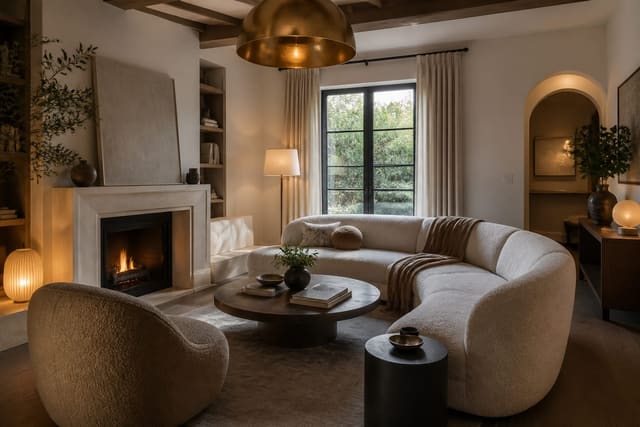
An organic modern dining room combines a sculptural table, softened silhouettes, and natural materials such as live-edge wood, oval travertine, cast stone, linen, leather, cane, white oak, and walnut, all anchored by one bold pendant light. The result feels warm, grounded, and quietly dramatic rather than sparse or cold.
Which Dining Table Shape and Material Work Best?
The table carries the room. If it's weak, everything else reads as a collection of beige objects; if it has presence, the rest of the space can stay quiet.
The strongest materials are live-edge wood, oval travertine, and cast stone. Live-edge wood adds movement and imperfection, travertine adds softness through veining, and cast stone brings calm weight to plaster walls or pale floors. The oval stone dining table, especially in travertine or honed limestone-look finishes, has been a dominant trend since 2023 because the surface itself becomes the sculpture, no extra decoration needed.
Oval and round shapes also suit this style better than sharp rectangles. Round tables work best in square rooms or breakfast nooks, making every seat feel equal. Oval tables keep a rectangle's length while losing its severity, which makes them ideal for longer rooms. If you already like curved sofas or arched mirrors, an oval table will feel consistent rather than trendy — see Curved Furniture Ideas for more.
For sizing, allow 24 inches of table width per seat:
- A 72-inch oval seats six comfortably.
- An 84-inch oval seats eight comfortably.
Don't size by seat count alone. Leave room for chairs to pull out and for people to pass behind them — a slightly smaller table with good circulation looks more expensive than a large one jammed against the wall.
How High Should the Pendant Light Hang?
Pendant lighting is the most important decision after the table. It anchors the room, adds texture at eye level, and a dining room without a strong fixture often feels unfinished even with great furniture.
The best choices are oversized rattan, ceramic, matte plaster, paper, linen, or softly ribbed forms — tactile finishes, not shiny chrome, unless the room is deliberately high-contrast. Hang the bottom of the pendant 28 to 32 inches above the tabletop, adjusting up slightly for very large fixtures so they don't block sightlines across the table.
Center the ceiling canopy over the table, not over the geometric center of the room, unless the two points align. For long oval tables, use one oversized pendant or two smaller ones spaced evenly — keep the look generous, not busy.
How Do You Choose Dining Chairs?
The safest approach is a full set of linen upholstered chairs in oatmeal, warm white, mushroom, greige, or taupe. Linen adds texture without noise and pairs well with wood and stone.
A more interesting move is mixing materials: linen chairs along the sides, with one or two contrasting leather or wood armchairs at the heads. Some pairings that work:
- Oval travertine table + linen side chairs + caramel leather end chairs: warm and grounded.
- Live-edge wood table + upholstered sides + blackened wood armchairs: architectural.
- Cast stone table + pale oak chairs + woven seats: soft and coastal.
If using bouclé or nubby upholstery, keep the chair shape simple — texture plus complex form gets fussy. See the Bouclé Fabric Guide for comparisons. Check how chairs look from the back and how they tuck under the table, since that's often the view from the entry.
What Sideboard Fits an Organic Modern Dining Room?
A sideboard reinforces the material palette, not just storage. White oak feels lighter and more relaxed; walnut feels richer and more formal. Cane fronts add breathability, and fluted or reeded panels add shadow and rhythm without pattern.
Match the finish to what the room needs: a white oak sideboard lightens a room with a heavy stone table, while walnut adds depth to a room built around pale wood. Keep the top edited — a large ceramic vessel, a low bowl, a sculptural lamp, and one piece of art is enough.
Tie the sideboard to nearby spaces: repeat white oak from kitchen cabinets or walnut from living room furniture. See Organic Modern Kitchen Ideas for a whole-home approach.
Quick Ideas to Try
- Swap a rectangular table for a 72-inch oval to seat six without hard corners.
- Choose an 84-inch oval for eight seats in open-plan dining rooms.
- Hang the pendant 28 to 32 inches above the tabletop, centered on the table.
- Pair linen side chairs with leather or wood armchairs at the heads.
- Add a white oak sideboard with cane doors for texture, or walnut if the room feels washed out.
- Style the table with one oversized bowl instead of several small objects.
- Add a wool or jute-blend rug only if chairs can still slide fully in and out.
What Palette and Pitfalls Should You Watch For?
Use a restrained but warm palette: warm white, sand, bone, oatmeal, clay, camel, walnut, oak, stone grey, and soft black. Walls can be warm white, limewash, or soft greige; flooring can be oak, limestone, or concrete-look tile; window treatments should stay natural — linen curtains or woven shades. For a softer, related direction, see Warm Minimalist Interior Design.
The biggest mistake is confusing organic modern with beige repetition — beige walls, chairs, rug, and ceramics create blur, not depth. Add at least one grounding element: walnut, blackened wood, dark bronze, or caramel leather. Also avoid tiny pendants over large tables, glossy surfaces with no matte balance, and over-styled tabletops; one branch arrangement or ceramic bowl is usually enough.
Bring the Look Home with Re-Design
If you're unsure whether your room needs a stone table, a warmer pendant, different chairs, or a better sideboard, Re-Design lets you preview the change before buying anything. Upload a photo of your dining room and see an organic modern version with rounded furniture, natural textures, and sculptural lighting in seconds — a fast way to test travertine, white oak, linen, leather, or cane against your actual space.
Frequently Asked Questions
What does an organic modern dining room look like?
It looks warm, sculptural, and uncluttered, usually built around a rounded or sculptural table in wood, travertine, or cast stone, paired with linen, leather, or wood chairs, an oversized textured pendant, and a simple white oak or walnut sideboard.
Are oval dining tables better for organic modern style?
Often yes. Oval tables soften the room, remove hard corners, and encourage conversation better than rectangles. A 72-inch oval typically seats six, while an 84-inch oval seats eight comfortably.
How high should a pendant hang over a dining table?
Hang the bottom of the pendant 28 to 32 inches above the tabletop, adjusting slightly for ceiling height, fixture size, and sightlines across the table.
Can I mix dining chair styles?
Yes. Use linen upholstered chairs on the sides and contrasting leather or wood armchairs at the heads. Keep the color palette consistent so the mix reads as intentional rather than mismatched.
What sideboard works best in an organic modern dining room?
Choose white oak or walnut with cane, fluted, reeded, or textured front panels. It should provide storage while reinforcing the room's natural material palette, matching lighter or darker wood tones to the rest of the room.