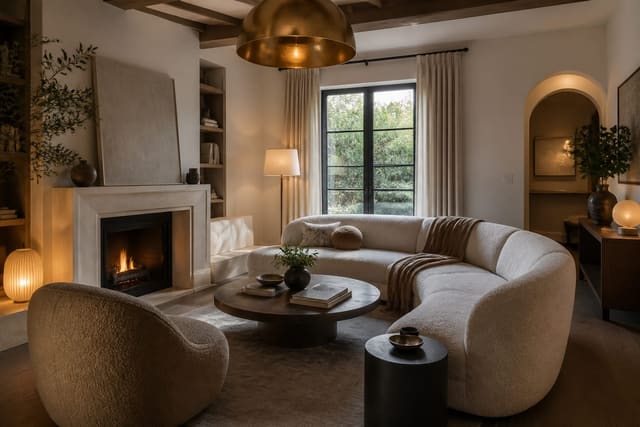
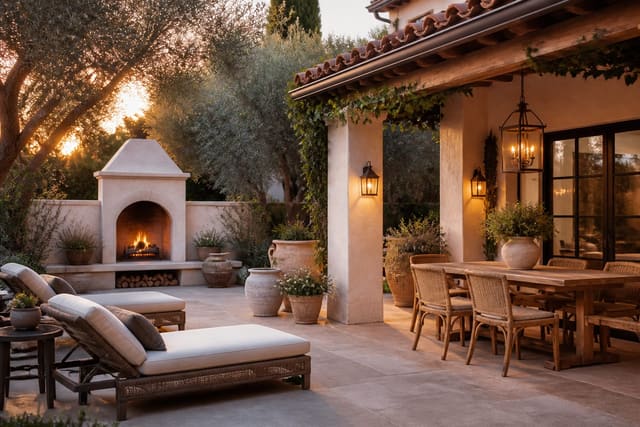
An organic modern patio softens a hard rectangle of paving into a calm outdoor room by combining curved edges, natural stone or concrete, warm neutral furniture, textured rugs, and sculptural planting. The best versions feel composed but relaxed: soft geometry, honest materials, and planting that has shape rather than clutter.
How Do You Make a Patio Shape Feel Organic?
The fastest way to get an organic modern patio is to stop treating it as a perfect rectangle. A curved poured-concrete edge or a natural stone perimeter turns the patio from a separate slab into a threshold between house and garden.
The style borrows from interiors — curved sofas, limewashed walls, tactile fabrics — and translates them outdoors. A curved edge does outside what a rounded sofa does inside: it removes harshness.
For poured concrete, aim for at least 100mm (4 inches) thickness with wire mesh reinforcement and control joints roughly every 10 feet to manage cracking. If you prefer stone, choose irregular or softly cut limestone, sandstone, travertine, or warm-toned pavers rather than a rigid grid. The goal is controlled softness, not rustic chaos.
Ways to soften shape:
- Replace a square corner with a rounded planting bed.
- Use a kidney-shaped or oval seating zone instead of a rectangle.
- Let gravel or low planting blur the patio-to-lawn edge.
- Add a curved path from the back door to the seating area.
- Offset large-format pavers with loose planting at the perimeter.
An existing rectangular patio doesn't need demolishing — curved planters, a round rug, and rounded furniture can blur the geometry. The same logic behind curved furniture ideas applies outdoors with weatherproof materials.
What Furniture Suits an Organic Modern Patio?
Organic modern furniture should look relaxed but be built to survive rain, UV, and daily use. Powder-coated aluminium frames are a strong base: light, clean-lined, and rust-resistant. Pair them with teak arms, woven rattan, rope detailing, or canvas-style upholstery for the mix of structure and texture this style needs.
Teak grade matters. Grade A teak, often Javanese plantation teak, comes from dense heartwood with high natural oil content, making it the most durable option. Oil it annually to keep a golden-brown tone, or leave it untreated to weather to silver-grey — both suit this look.
Be uncompromising on upholstery. Cushions left outside permanently need solution-dyed acrylic fabric; Sunbrella is the industry standard because color runs through the fibre, resisting fade, moisture, and mildew. Linen-look cushions that aren't outdoor-rated belong in a covered basket, not on an exposed patio.
Strong combinations:
- Low powder-coated aluminium sofa with teak side rails.
- Woven rattan lounge chairs with cream cushions.
- Round concrete coffee table between canvas sling chairs.
- Teak dining chairs around a stone or microcement-style table.
- Natural rope lounge seating with solution-dyed acrylic upholstery.
Keep silhouettes low, deep, and generous. For tactile inspiration, see the Bouclé Fabric Guide, but always choose proper exterior fabrics outdoors.
What Rug Works Best on an Organic Modern Patio?
A rug turns a patio into an outdoor room by anchoring the seating zone. For this style, look for warm, textured, quiet tones: jute, sisal, sandy stripes, oatmeal weaves, and taupe patterns.
Real jute and sisal deteriorate quickly in wet climates. For UK and northern European patios, woven polypropylene in a natural texture gives the same look without absorbing water, and it handles rain and cleaning far better.
Size the rug as you would indoors: at minimum, front seating legs should sit on it; for a fuller look, place all legs on it. Round rugs pair especially well with curved edges, circular tables, and informal lounge zones. Keep colors earthy — sand, stone, flax, warm grey, muted clay — and avoid high-contrast patterns.
Bring the Look Home With Re-Design
If your patio feels too square, bare, or disconnected from the garden, upload a photo to Re-Design and preview an organic modern transformation before buying anything. Test curved edges, teak seating, terracotta pots, outdoor rugs, and planting in seconds, then compare versions until it feels right.
How Should You Plant an Organic Modern Patio?
Planting makes or breaks this style. Too little and the space feels like a furniture showroom; too much and the clean architectural feel disappears. Aim for fewer species, repeated well, with contrast in height and texture.
Ornamental grasses are a natural fit — Pennisetum for soft, fountain-like movement, Miscanthus for height and vertical rhythm — both look great against pale concrete, stone, or timber. For sculptural structure, use agaves, aloes, or succulents where drainage allows, keeping them potted in cooler, wetter regions. Olive trees in large terracotta pots add classic Mediterranean character.
Favor a few large planters over many small ones: a cluster of three oversized terracotta pots reads calmer than ten mismatched containers. Mix heights — one olive tree, one grass, one low succulent — and let negative space do some of the work.
Planting ideas:
- Repeat one ornamental grass along a curved edge.
- Place a single olive tree in a large terracotta pot by the lounge area.
- Use agaves as sculptural accents near steps or walls.
- Add creeping thyme between stone edges.
- Combine gravel mulch with oversized pots for a dry, architectural feel.
- Keep flowers muted: white, cream, pale lilac, dusty pink, soft yellow.
For a warmer, holiday mood, this style overlaps with Mediterranean outdoor patio ideas: terracotta, olive trees, and relaxed outdoor dining all fit together.
What Colors and Materials Belong in the Palette?
The organic modern palette is a controlled range of warm, natural tones: limestone, sand, clay, chalk, taupe, ivory, weathered timber, blackened bronze, and grey-green planting. Restraint is what makes it feel expensive.
Start with the largest fixed material, the patio surface. Pale poured concrete gives a minimal architectural base; warm limestone or travertine feels softer and more Mediterranean. Layer furniture and textiles in related tones rather than adding more colors.
A strong palette:
- Pale concrete patio surface.
- Teak furniture allowed to silver naturally.
- Cream solution-dyed acrylic cushions.
- Natural-look polypropylene rug.
- Terracotta pots.
- Grey-green olive trees and grasses.
- One or two charcoal accents in lighting or metal frames.
Use black sparingly — a thin aluminium frame or dark bronze wall light adds definition without tipping into industrial territory. Keep lighting low and warm: wall washers, path lights, lanterns, and discreet uplights on olive trees or grasses. Avoid cold white light; the patio should glow after sunset, not glare.
Frequently Asked Questions
What does an organic modern patio look like?
An organic modern patio has curved or softened edges, natural materials, warm neutral colors, sculptural planting, and simple outdoor furniture. It typically combines poured concrete or stone with teak, rattan, terracotta, textured rugs, ornamental grasses, succulents, and olive trees.
Are jute and sisal rugs good for outdoor patios?
They look beautiful but deteriorate in wet climates because they absorb moisture. For UK and northern European patios, a woven polypropylene rug with a natural jute or sisal texture is more durable and easier to maintain.
How thick should a poured concrete patio be?
A residential poured concrete patio should be at least 100mm, or 4 inches, thick, with wire mesh reinforcement and control joints roughly every 10 feet to help manage cracking over time.
What is the best outdoor fabric for patio cushions?
Solution-dyed acrylic is best for cushions left outdoors permanently. Sunbrella is the industry standard because the color runs through the fibre, resisting fading, moisture, and mildew far better than indoor or decorative fabrics.
Is teak worth it for outdoor furniture?
Yes, especially Grade A teak, the most durable grade due to its dense heartwood and high natural oil content. It can be oiled annually to keep its golden tone or left to weather to silver-grey, and suits organic modern patios either way.