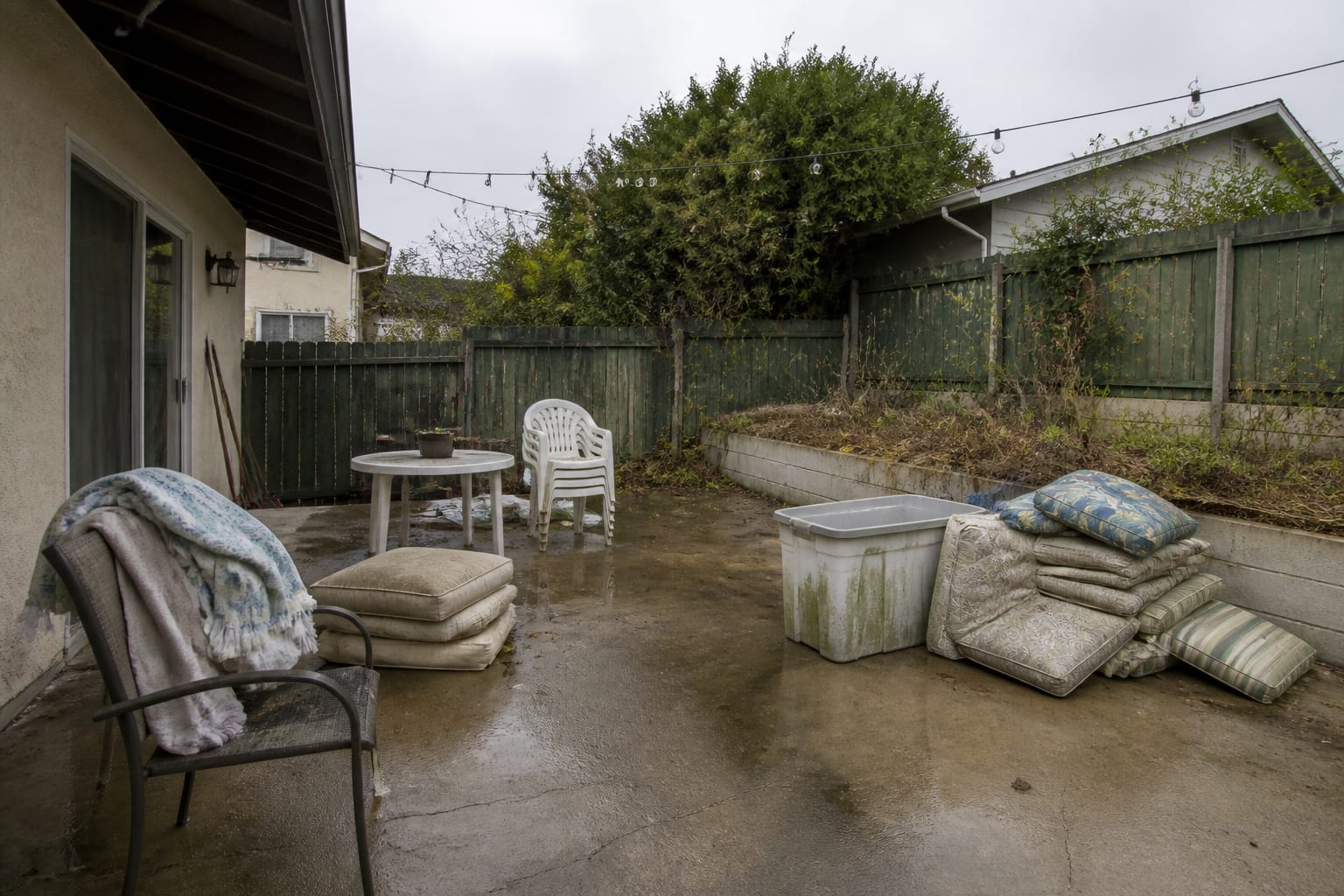
How do I store outdoor cushions? The short answer: keep them dry, off the ground, and able to breathe. Cushions rarely fail from sun alone; they fail because they sit damp in a sealed box and grow mildew that no amount of scrubbing fully removes.
My read is that storage is the cheapest insurance you can buy for outdoor textiles. A good set of patio cushions can run $40 to $80 each, so a $150 deck box that doubles their lifespan pays for itself in a single season. I think the trick is choosing storage that vents, drains, and sits close to where you actually use the cushions.
Why damp, not sun, is the real enemy
Most people blame fading for worn-out cushions, but the bigger killer is moisture. A cushion left in a closed bin after a rain stays wet for days, and that warm damp foam is exactly where mildew thrives. Once it takes hold in the filling, the smell and staining usually win.
The fix is airflow and drainage. A storage box with small vents or gaps lets humidity escape instead of condensing inside. Drainage holes in the base, or a box raised on feet, stop a puddle from forming under the cushions after a storm. If you have to choose, a slightly leaky, breathable box beats a perfectly sealed one every time, because the sealed box traps the very moisture you are trying to avoid.
Habit matters as much as hardware. Cushions stuffed away still damp from morning dew will sour no matter how good the box is, so give them an hour to dry on a sunny rail before they go in. A quick wipe of the box interior a couple of times a season clears any spores before they spread, and leaving the lid cracked open on a dry afternoon airs the whole thing out. None of this takes more than a few minutes, and it is the difference between cushions that last three seasons and cushions that smell musty by August.
Match the storage to your space
The right solution depends on how much room you have and how often you need the cushions. A few options, from smallest footprint to largest:
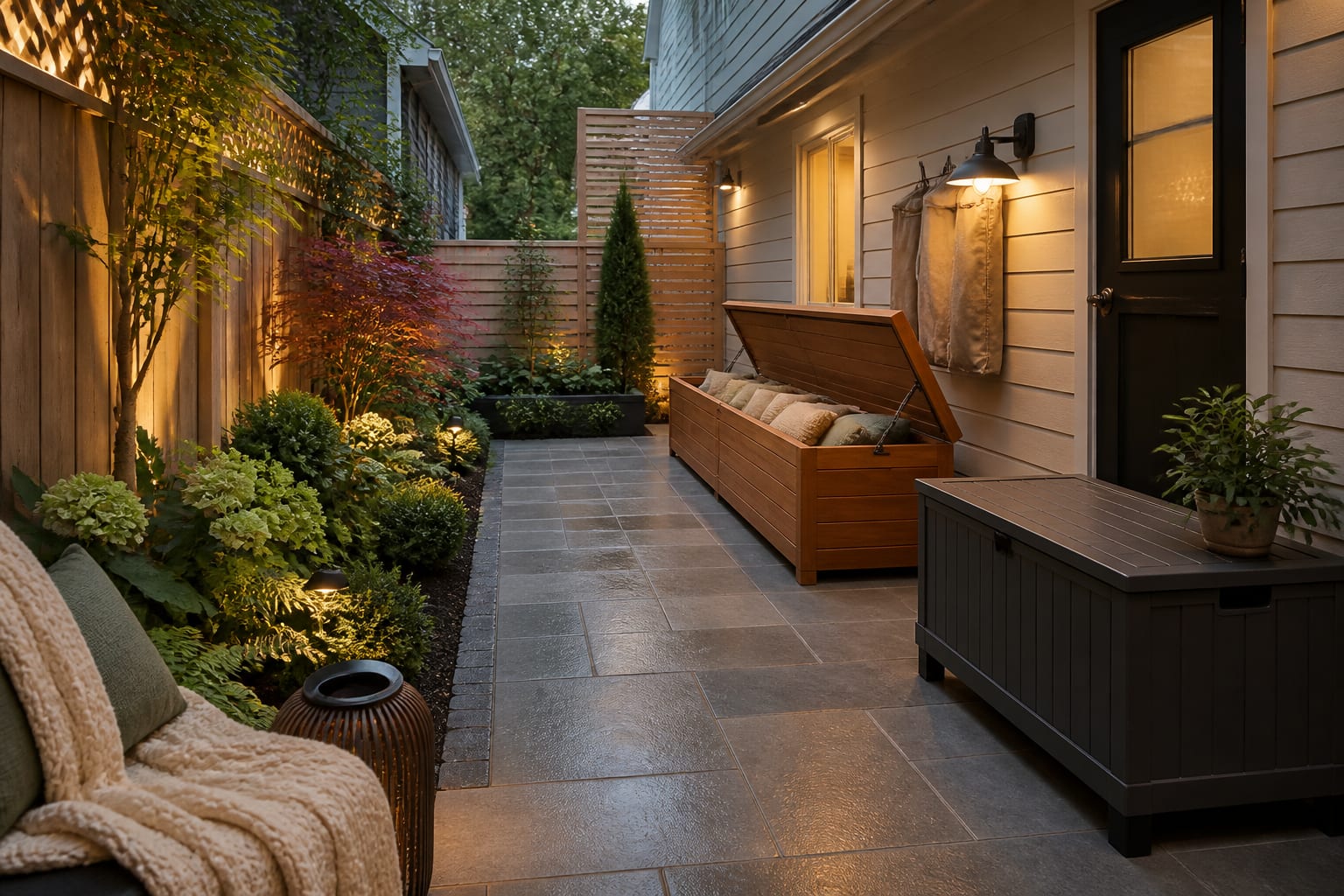
- A storage bench that seats people and hides 2 to 4 cushions under a hinged lid.
- A standalone deck box in resin or cedar, sized 50 to 150 gallons for a chair set.
- A vertical deck cabinet against a wall, useful where floor space is tight.
- Hooks and a weatherproof bag for throws and smaller textiles kept off the ground.
- Indoor overflow in a garage or shed for the off-season, where space allows.
Measure before you buy. A standard chair cushion is roughly 20 by 20 inches, and a deep-seat or lounge cushion can be 24 by 30 inches or larger, so confirm the internal dimensions rather than trusting the gallon rating alone. A storage bench earns its place by working double duty, and the seating-plus-storage logic in my AI patio design ideas helps you fit it without crowding the walkway.
Material decides how the box ages outdoors. Resin and high-density polyethylene shrug off rain and sun for years and wipe clean, though cheaper versions can fade and go brittle, so look for UV-stabilized stock. Powder-coated steel stays rigid and secure but wants a quick touch-up on any chip before rust starts. Sealed cedar or teak looks the warmest and resists rot naturally, at a higher price and with an occasional reseal. Whatever the shell, check that the lid seals against driving rain at the top while the base still vents and drains at the bottom, since that combination is what actually keeps cushions dry.
Think about capacity for the whole set, not just the chair cushions. Throws, a couple of lumbar pillows, and an outdoor rug rolled for winter add up fast, so a box that looked roomy for four seat pads fills the moment you add the extras. Sizing up one tier, or adding a second smaller box for textiles, beats cramming everything into a single bin where nothing dries and the foam stays crushed.
Build storage into the patio layout
The best storage is the kind you barely notice, because it doubles as something else. A bench that lifts to reveal a dry well, a side table with a hollow base, or a low wall cabinet all hide cushions while reading as furniture. Position any of them within a few steps of the seating, since storage on the far side of the yard never gets used and the cushions stay out in the weather.
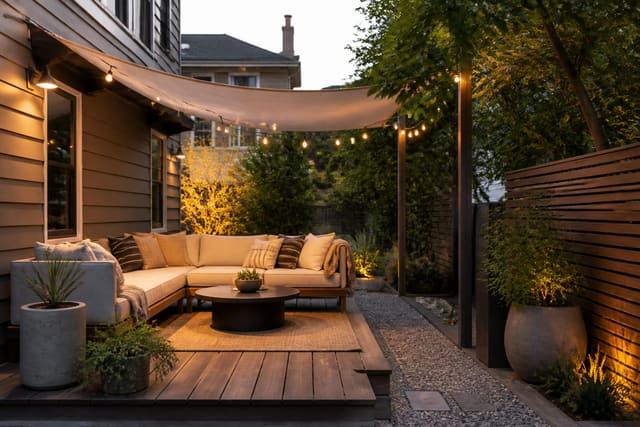
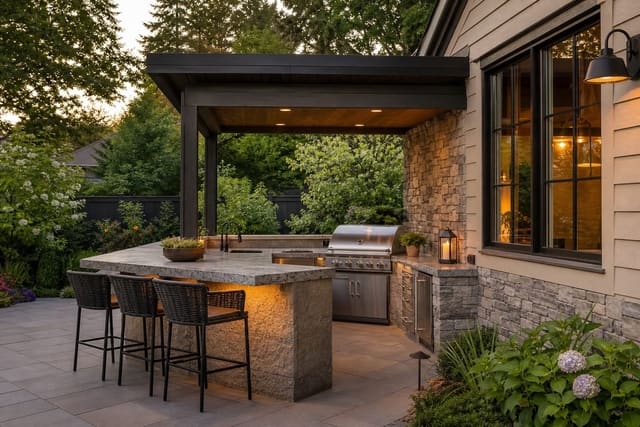
Think about the rest of the patio too. If you run patio string lights for evening use, a storage bench under them gives you a spot to stash throws when the night cools off. And if you are planning a cooking zone, the cabinetry ideas in my outdoor kitchen ideas often include weatherproof drawers that handle cushions and linens alongside grilling gear.
Let the storage echo the rest of the furniture so it disappears into the scheme. A cedar box reads as warm and natural next to teak chairs, while a charcoal resin unit sits quietly under dark metal furniture. Match the height to a nearby surface where you can, so a deck box that lands at table height also serves as a spot to set down a tray. The goal is a piece that earns its footprint twice over, once as a place to sit or set things down and again as the dry, vented home your cushions actually need.
Common mistakes to avoid
The common mistakes to avoid almost always trace back to moisture and convenience. People buy a fully sealed plastic bin, pack damp cushions inside after a rain, and open it weeks later to mildew. They set a deck box flat on a patio that puddles, so water wicks up through the base. They stuff cushions in while still wet from morning dew instead of letting them dry for an hour first.
The other mistakes are about sizing and placement. An undersized box forces you to crush cushions, which breaks down the foam faster. Storage parked at the back of the yard, 50 feet from the chairs, never gets used because no one wants the walk. And skipping any cover at all means relying on memory to bring cushions in before a storm, which fails the first busy week of summer.
Use AI design to preview your storage setup before you commit
It is hard to judge whether a bulky deck box will crowd a patio or blend in until you see it in place. With Re-Design you upload a photo of your deck, balcony, or patio, then ask the AI design to drop in a storage bench, a resin deck box, or a low cabinet against the wall and check how the walkway still flows around it.
Try a few configurations before you order: a long bench under the window with a lift-up seat, a compact box tucked beside the door, or a vertical cabinet on a narrow balcony. Seeing the footprint on your real patio makes it obvious which option keeps the space open while still landing within easy reach of the seating.