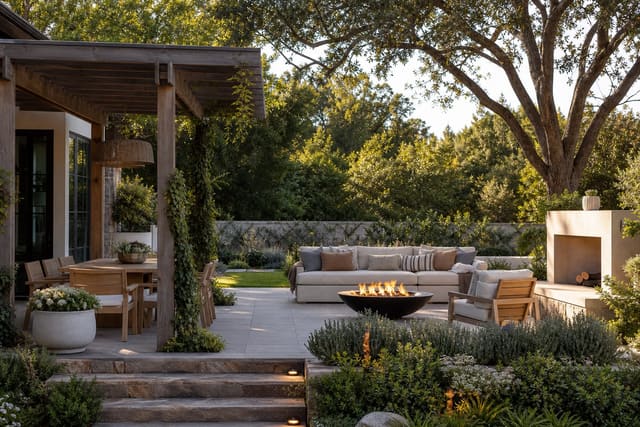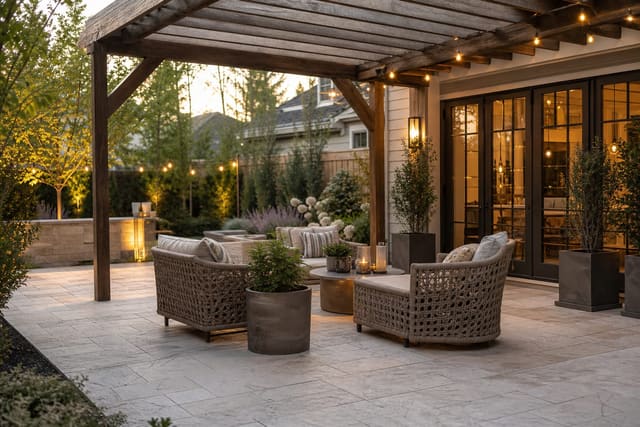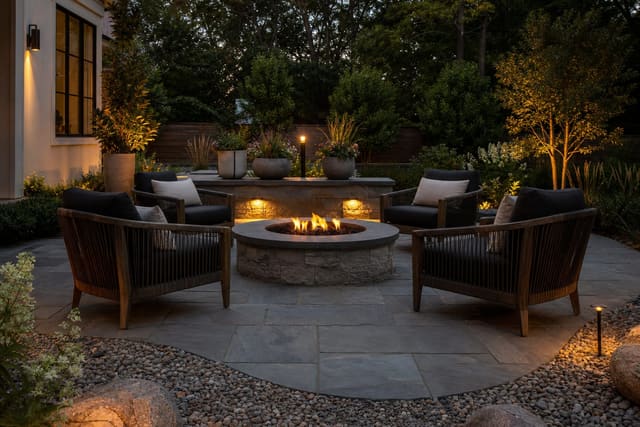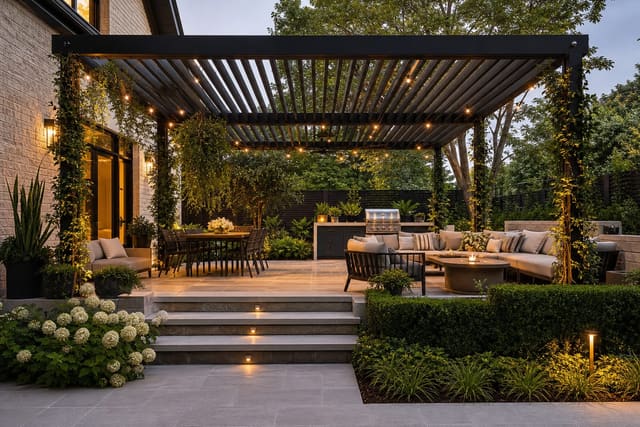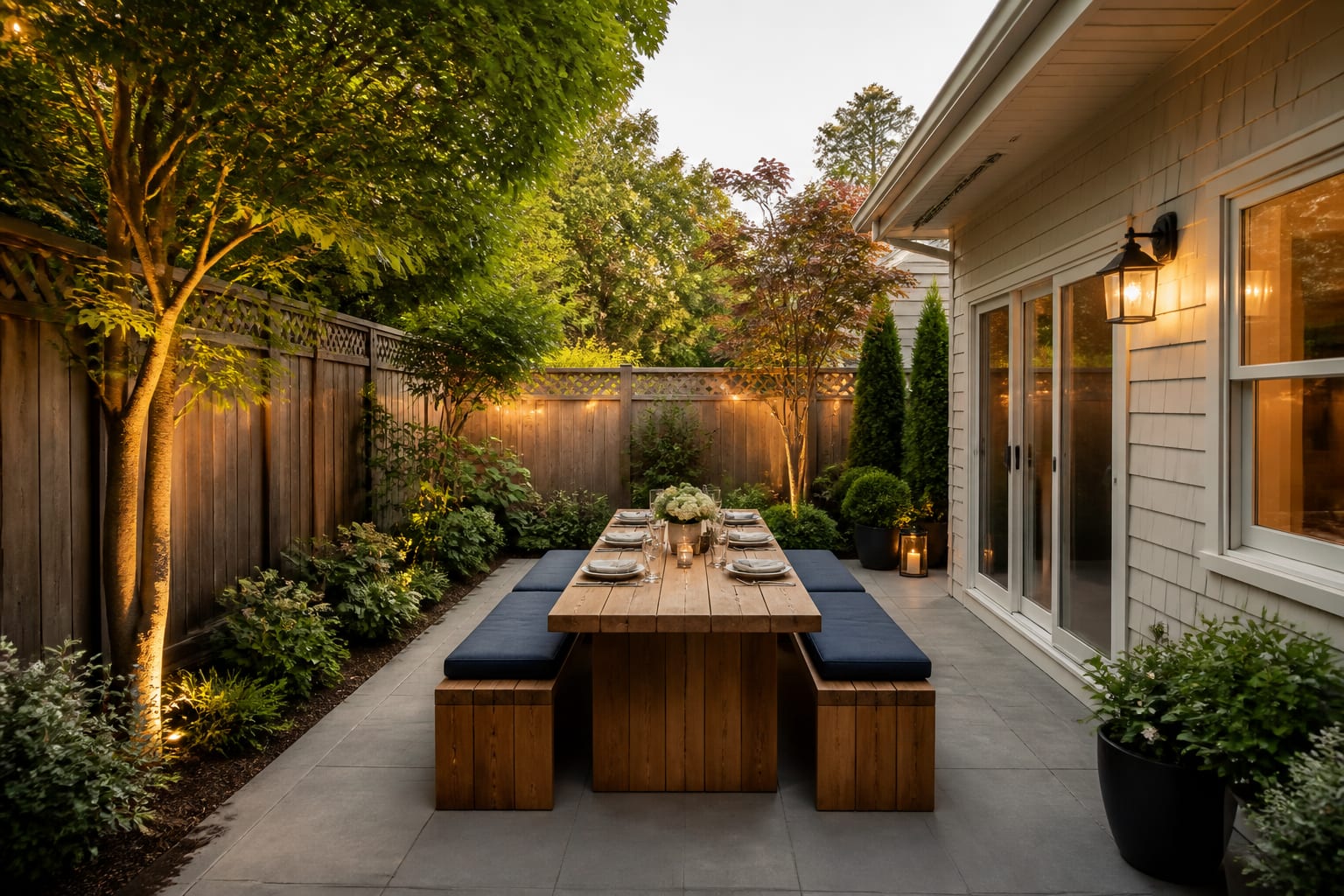
A good outdoor dining bench is one built from a material that survives weather while staying comfortable to sit on, which in practice means teak, powder-coated aluminum, or sealed concrete over bare softwood. That is the honest answer to the bench-material question. My read is that benches, not chairs, are the secret to seating a crowd outside without crowding the patio.
I think most people default to a set of matching chairs and then wonder why their table seats six when the space could hold ten. A bench tucks under the table, seats three where two chairs fit, and clears the deck the moment dinner ends. It is the most space-efficient outdoor seat there is.
Pick a bench style that fits the space
The right bench depends on whether you want flexible furniture or a permanent fixture. Both can be beautiful; they just solve different problems. Loose benches move with the seasons, built-in benches buy you storage and a cleaner look that never blows over in a storm.
Here are bench directions worth considering:
- Set a pair of backless teak benches along a long farmhouse table for a relaxed, bistro feel that seats six to eight in a 6-foot run.
- Build an L-shaped masonry bench into a patio corner, topped with cedar slats, to turn dead space into dining seating with hidden storage below.
- Use powder-coated aluminum benches for a modern look that weighs little, resists rust, and moves easily for cleaning.
- Pair one long bench on the wall side of the table with individual chairs on the open side, so the bench saves space where traffic is tight.
- Float a live-edge slab bench on steel legs under a pergola for a sculptural piece that doubles as overflow seating.
- Wrap a bench seat around a fire pit at 18 inches high so dining flows straight into evening lounging.
Mix a bench with a couple of comfortable armchairs at the ends so older guests have a back to lean on. A long covered run keeps cushions dry between meals, and the roofed setups in these covered patio ideas show how a permanent bench earns its keep when it is sheltered.
Get the dimensions right
Comfort outdoors is mostly geometry. A dining bench wants a seat height of 17 to 18 inches and a depth of 15 to 18 inches, paired with a table whose apron clears your knees at a 29 to 30-inch top. Get the height wrong by even 2 inches and the bench feels like a kid's stool or a bar perch.
Length is the other number that matters. Plan 24 inches of bench per adult, so a 6-foot bench seats three and an 8-foot bench seats four. Leave at least 36 inches between the bench and a wall or planter so people can swing their legs out and stand, and the same clearance lets a bench slide under a table cleanly. Skimp on that gap and every meal becomes a shuffle of people climbing over each other to reach the open side.
Match the bench length to the table, not the other way around. A bench should run a few inches shorter than the tabletop so it tucks fully underneath and leaves the table ends clear for an armchair. If you are building rather than buying, a 2-inch-thick slab spanning 6 feet wants a center leg or apron support so it does not flex under three adults. Measure the doorway and the path to the patio too; a finished 8-foot bench is a genuinely awkward thing to carry through a 32-inch gate. If your seating wraps around warmth, the layouts in these fire pit ideas line up bench height with the rim so nobody is craning to reach the flame.
Choose materials that survive the seasons
Material is where outdoor benches live or die. Teak is the gold standard: dense, oily, and weatherproof, it silvers gracefully and lasts decades with nothing but an annual wash. Powder-coated aluminum gives you a modern, rust-free, lightweight bench. Sealed concrete and natural stone make permanent benches that never move and read as architecture.
What I steer people away from is untreated softwood and pallet builds that look charming for one summer and then split, gray, and wobble. If you love the warmth of wood, choose teak, white oak, or thermally modified ash and seal it. Add cushions in solution-dyed acrylic with quick-dry foam so a rain shower does not end the meal; the foam drains and the fabric will not fade. A pergola overhead extends a cushion's life dramatically, and the structures in these pergola ideas pair a bench with shade and a frame for string lights in one move.
Make benches comfortable enough to linger
The knock on benches is that people leave them sooner than chairs. Fix that with a slight ergonomic tweak: angle the seat back 5 degrees and round the front edge so it never digs into the back of your knees. Even a backless bench feels better with a 1-inch radius on the front lip.
Cushions close the comfort gap entirely. A 2 to 3-inch seat pad changes a bench from a perch to a place you will sit through a long dinner and into dessert. Add a couple of throw pillows against the wall behind a built-in bench and it becomes lounge seating between meals, which is exactly how you get more hours out of an outdoor table. Store the cushions in a deck box or under a built-in bench's hinged seat so a surprise shower never sends you scrambling, and they will look new for years instead of one season. A bench that is comfortable and quick to reset is a bench your guests will actually stay on long after the plates are cleared.
Use AI design to preview your dining bench setup
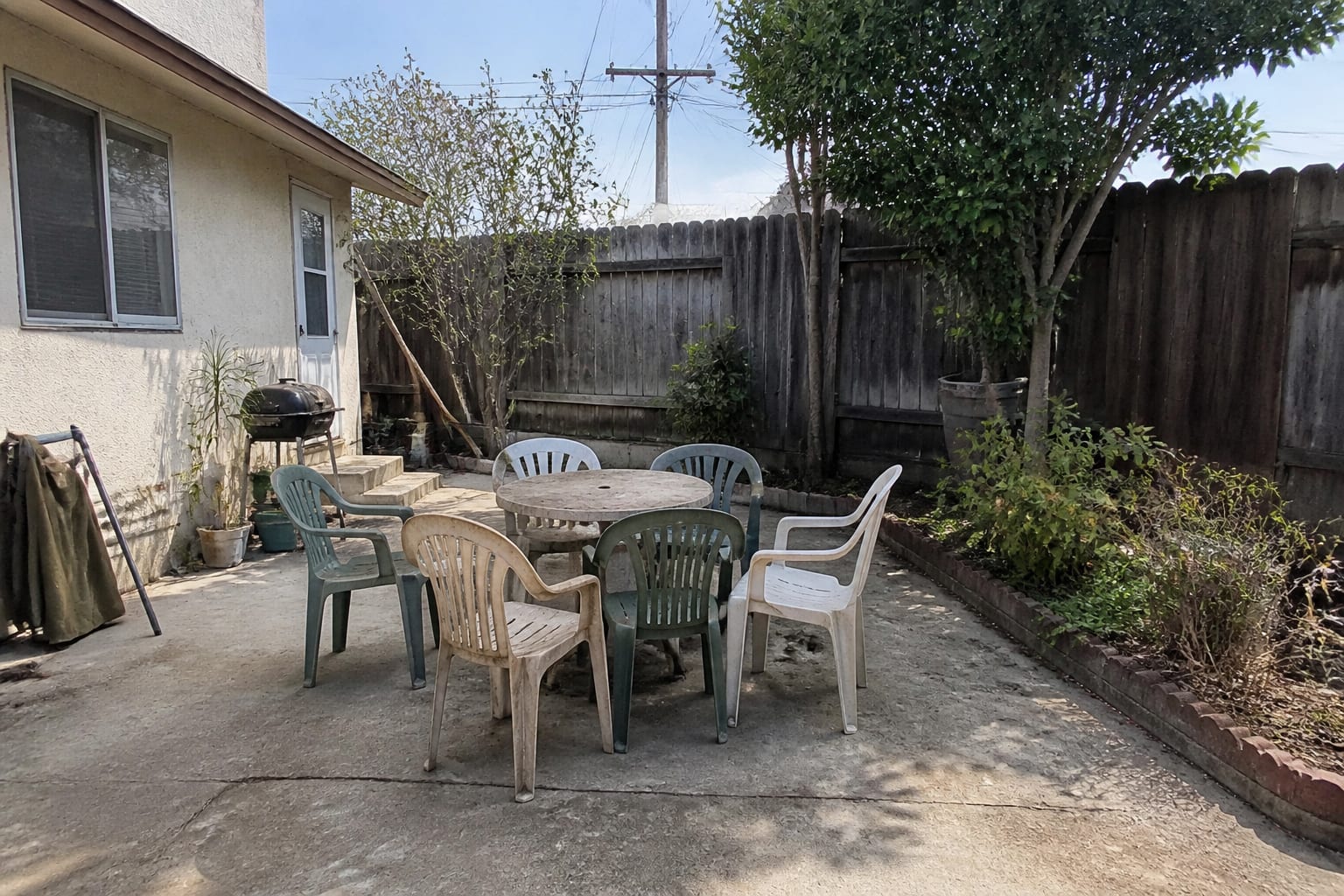
Picturing a long bench along your actual table is hard until it is there. Re-Design lets you upload a photo of your patio or deck and re-render the same space with backless teak benches flanking a farmhouse table, or a built-in masonry bench wrapping the corner. You see the scale against your real space before you build or buy.
Compare a few setups on the same shot. Upload the photo, ask the AI design tool to show loose benches with end chairs, then a built-in L-shaped bench with cushions, and judge which seats your crowd without crowding the path. That preview catches a bench that is too long or a table that is too tall before any lumber is cut.