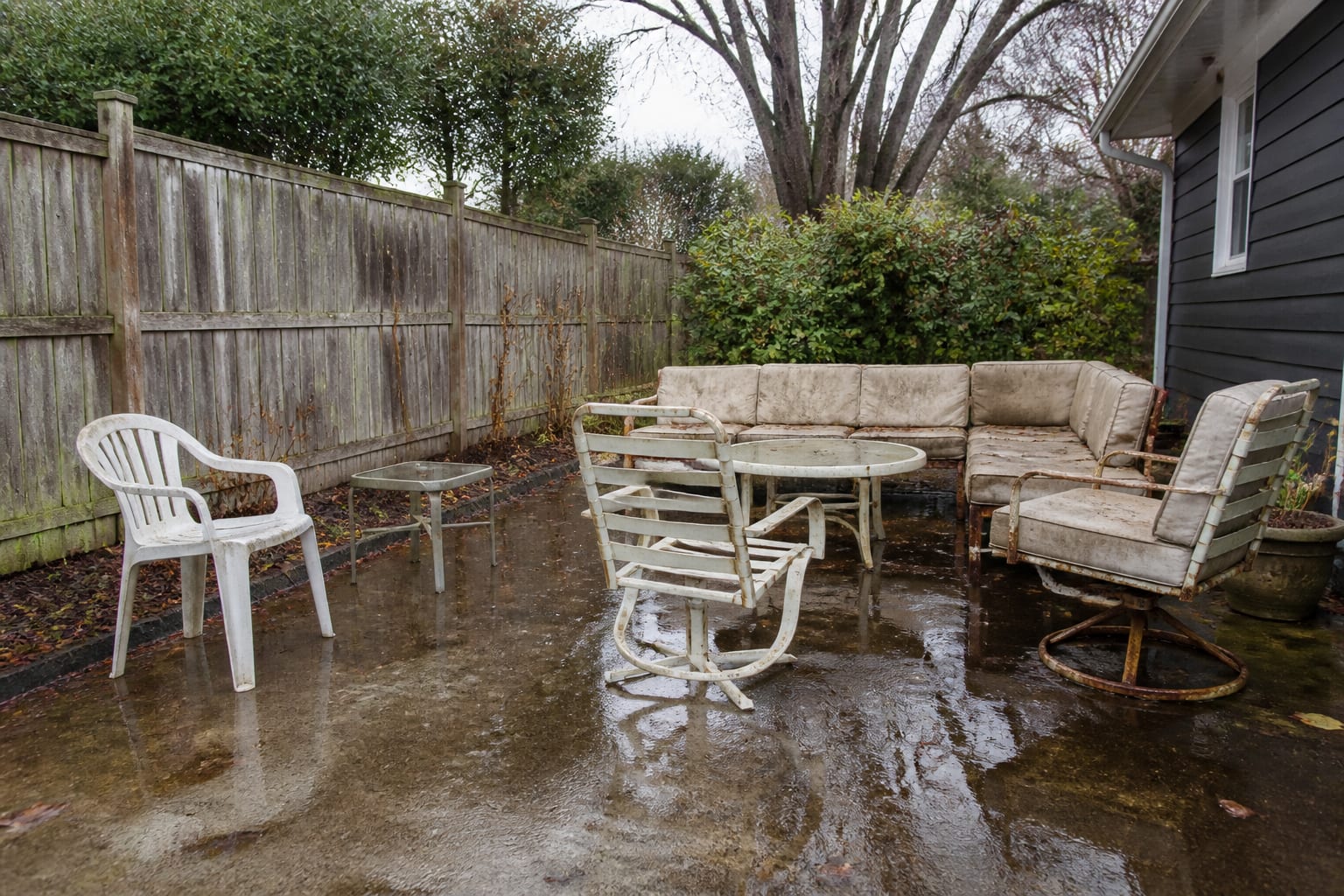
Decide what to store and what to cover before you buy a single tarp, because the two strategies protect against different enemies. To protect outdoor furniture in winter, move cushions and lightweight pieces indoors, then fit breathable covers over heavy items you leave out, raising them off the ground so moisture cannot wick up. My read is that trapped moisture, not cold, is what actually destroys patio furniture, which is why a cheap waterproof tarp often does more harm than no cover at all.
I think the goal is airflow, not a sealed wrap. A cover that breathes and a few inches of clearance under each leg beat the most expensive fabric cinched down tight into a damp, rusting bag.
Decide what to store versus what to cover
The first call is store versus cover, and it splits by material and weight. Cushions, pillows, and textiles always come indoors, because foam soaks up water and grows mildew fast even under a cover. Lightweight folding chairs, side tables, and anything you can lift easily are better off stacked in a garage or shed where weather never touches them at all.
What stays out is the heavy stuff: a cast-aluminum dining set, a teak bench, a large sectional frame. Those get covered in place. Material drives the urgency. Untreated wood and steel need the most protection from moisture, while teak and powder-coated aluminum tolerate exposure better but still benefit from a cover. If you are planning the wider space, the same seasonal thinking that shapes an AI patio design layout should reserve a dry corner of the garage for the pieces you pull in each fall.
Storage beats covering whenever you have the room, since indoors removes UV, rain, and freeze-thaw all at once. When you cannot store a piece, covering it properly is the next best thing, and the rest of this guide is about doing that without trapping the moisture you are trying to keep out.
Clean every piece before it goes into storage or under a cover. Sealing in dirt, food residue, or sap traps moisture against the surface and feeds mildew all winter, so wipe frames down, let them dry fully in the sun for a day, and treat any bare wood or scratched metal that could rust. Teak benefits from a light clean rather than a heavy oiling before winter, since trapped oil under a cover can go sticky. Stack and nest the lighter pieces tightly in the garage so they take up the least room, and keep cushions off a concrete floor on a shelf or pallet where they cannot wick up the damp that concrete holds.
Choose covers that breathe and fit
A good cover does two jobs at once: it sheds water from above and lets condensation escape from below. Look for a breathable woven fabric with mesh vents near the top, not a sealed plastic sheet, because a fully waterproof wrap traps the very moisture it is meant to block and rusts frames from the inside. A fabric rated for UV resistance also keeps the cover itself from going brittle and cracking after a season in the sun.
Fit is the other half. A cover that is too big billows in wind and holds a pocket of damp air, while one too small leaves legs exposed. Aim for a cover sized within 2 to 3 inches of the furniture, with these features in mind:
- Mesh vents near the top to release rising condensation.
- Drawstrings, buckles, or straps so wind cannot lift the cover off.
- A water-resistant but breathable fabric, not a sealed plastic tarp.
- Tie-downs or clips long enough to anchor around the legs in a gust.
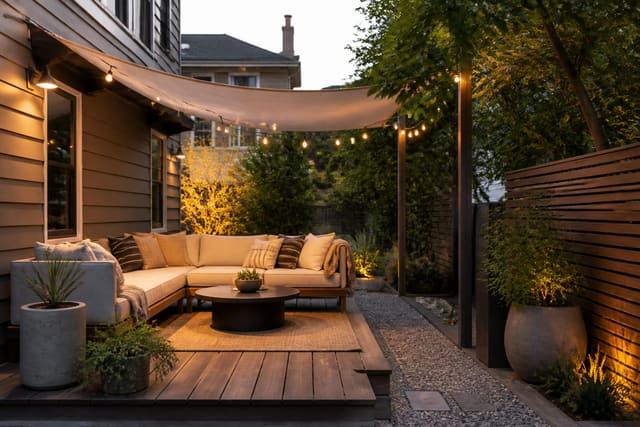
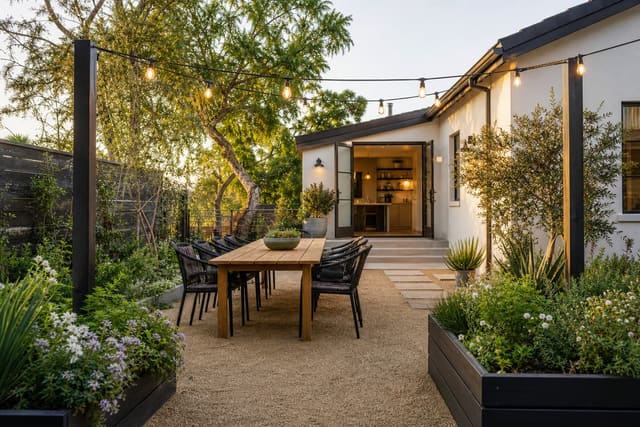
- A color and finish that suits the space, since covered furniture still reads in views, much like the layers in a patio string lights setup.
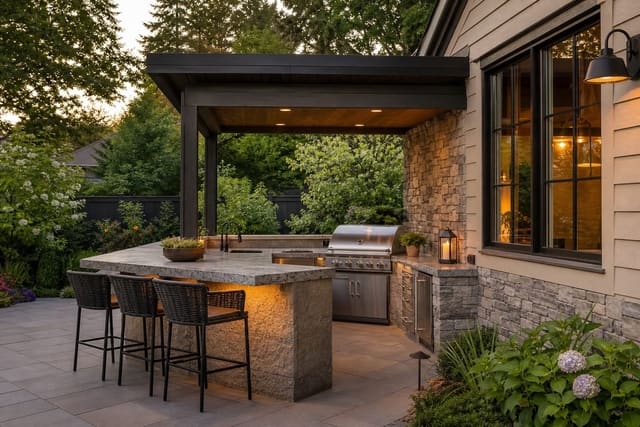
For pieces you cover all winter, lift them off the ground first. A 2 to 4 inch gap on blocks, feet, or a pallet stops water wicking up into end grain or pooling under metal legs, and it lets air move under the whole piece. This same airflow habit keeps the structure around an outdoor kitchen dry through winter, where built-in cabinetry and appliances hate standing moisture as much as a chair frame does.
Check the covers through the season rather than fitting them once and forgetting them. After a heavy snow, brush the load off so the cover does not sag into a basin that holds meltwater against the furniture, and re-cinch any tie-downs a windstorm has worked loose. On a dry, mild afternoon, pull the covers back for an hour to let the frames breathe and to catch any condensation or early mildew before it sets in. Store glass tabletops flat or bring them inside entirely, since a freeze-thaw cycle can crack tempered glass that sits under tension on a cold frame. These quick mid-winter passes cost a few minutes and catch the small failures that otherwise ruin a set by spring.
Common mistakes to avoid
The common mistakes to avoid nearly all come down to trapping moisture. The worst is wrapping furniture in a sealed waterproof tarp, which seals condensation against the frame and rusts or rots it faster than leaving it bare; use a breathable vented cover instead. Leaving cushions out under that same cover is the next error, since the foam holds water and mildews no matter what is over it.
The other repeat mistakes are about ground contact and fit. Setting furniture straight on a wet patio lets water wick up into wood legs and pool under metal, so raise everything 2 to 4 inches. An oversized cover that flaps loose both invites wind under it and traps a damp air pocket, while an undersized one leaves parts exposed; size within 2 to 3 inches. Finally, do not cover furniture that is still wet or dirty, because sealing in damp and grime guarantees mildew by spring, so clean and dry every piece first.
Use AI design to plan your covered and stored layout
It is hard to picture a patio half-stored for winter and half-covered in place. Re-Design helps you plan it: upload a photo of the patio and the AI design tool re-renders the same space, so you can see how covered pieces and a cleared, stored layout look before the first cold snap and decide what stays out.
Try both seasons on the one photo. Upload it, ask the AI to show the summer arrangement with cushions and full seating, then compare it against a winter version with the heavy frames covered and the lighter pieces pulled in. Seeing the contrast makes it obvious which furniture earns a quality cover, which is better stored, and where to leave a clear dry path through the space.