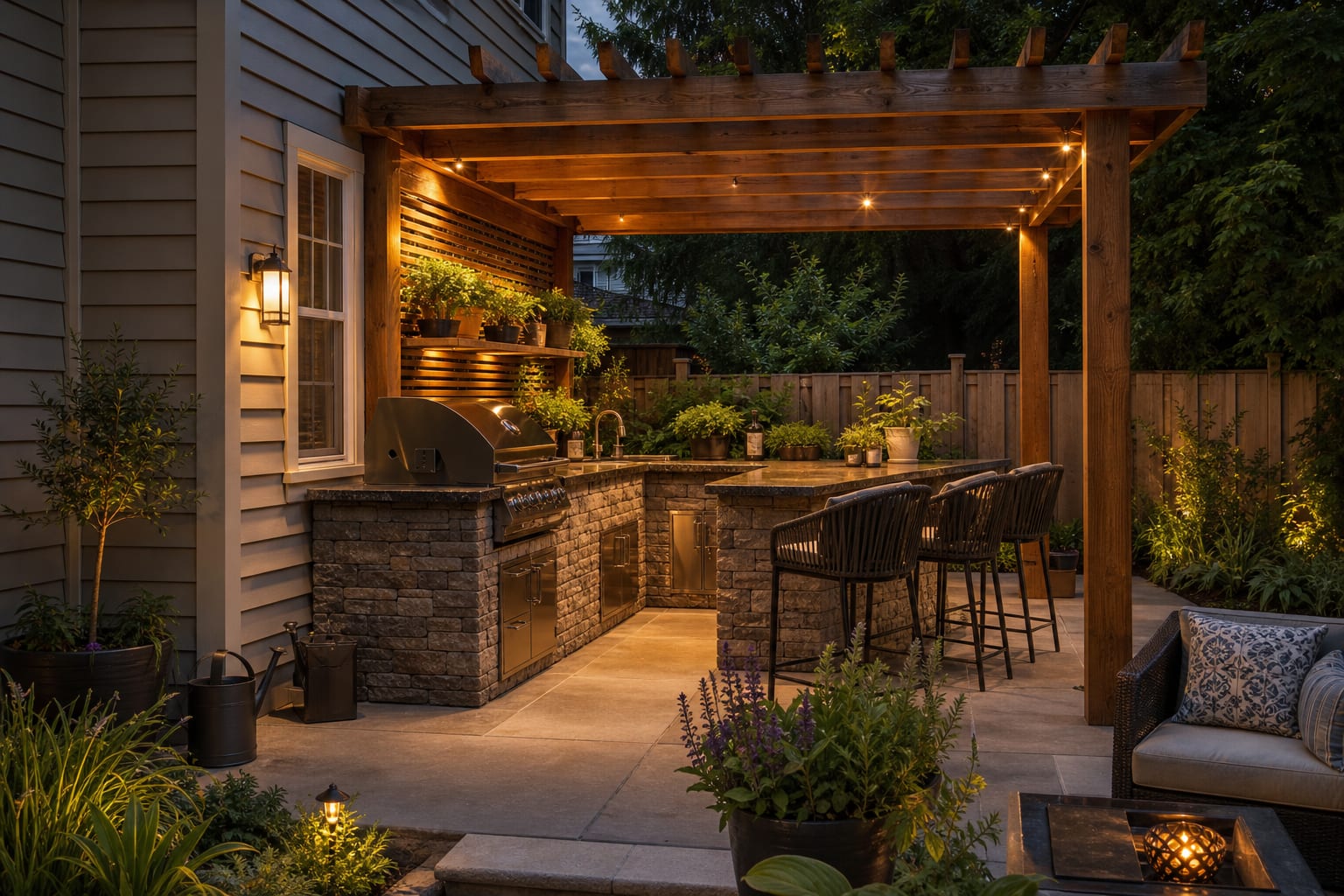
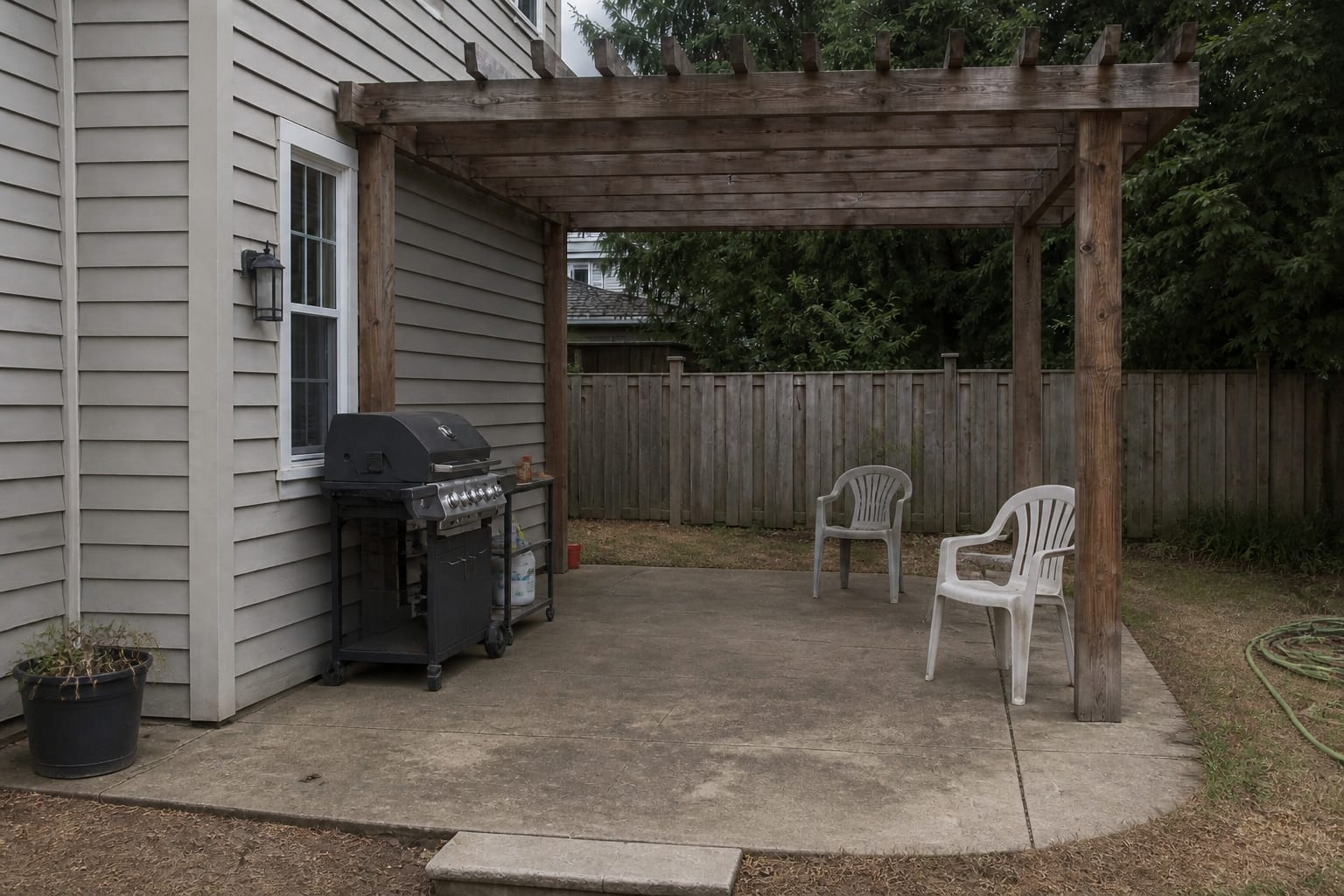
The best outdoor kitchen countertop material for most patios is granite or exterior-rated porcelain, with concrete and stainless steel close behind depending on style and maintenance tolerance. Choose based on heat resistance, cleaning, sun exposure, and support first — the edge profile can wait. Quartzite suits high-end builds; concrete works only with annual sealing.
Which outdoor kitchen countertop material is best?
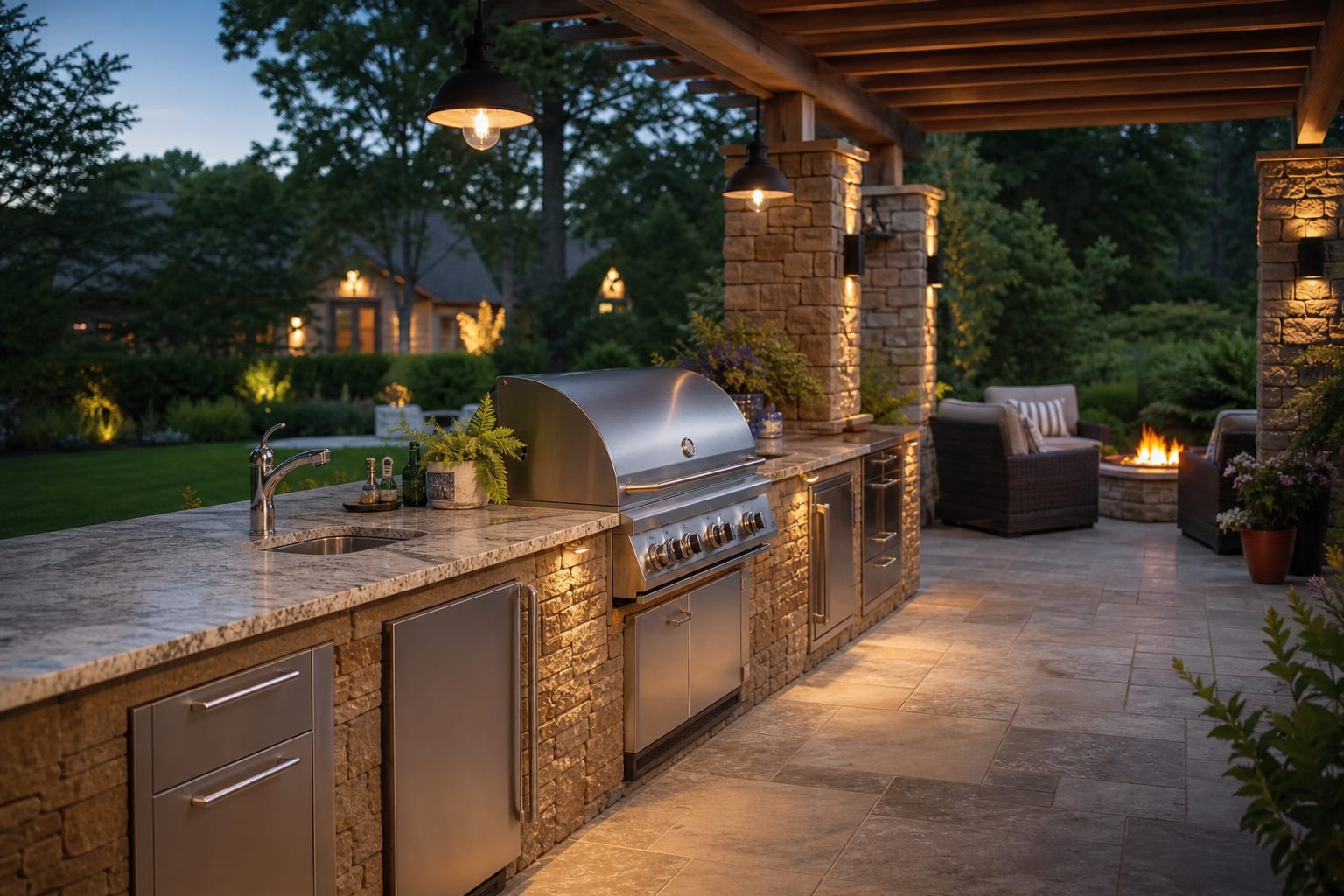
Granite and exterior porcelain top the list because they resist heat, grease, rain, and sun better than most indoor stone. Granite feels traditional and solid, and holds up to heavy use when sealed and properly supported. Exterior porcelain gives a cleaner, modern profile, resists staining, and delivers a pale-stone look without the upkeep of a porous slab.
Keep the counter working as part of the whole patio, not a standalone slab:
- Keep the main walkway around the kitchen about 36 inches wide, clear of the sharpest cooking, water, or seating edges.
- Limit the material palette to three dominant finishes — one floor, one vertical edge, one accent — so the space reads calm.
- Check the layout from the house door and the main seat before buying; those two views decide whether the kitchen feels planned or assembled.
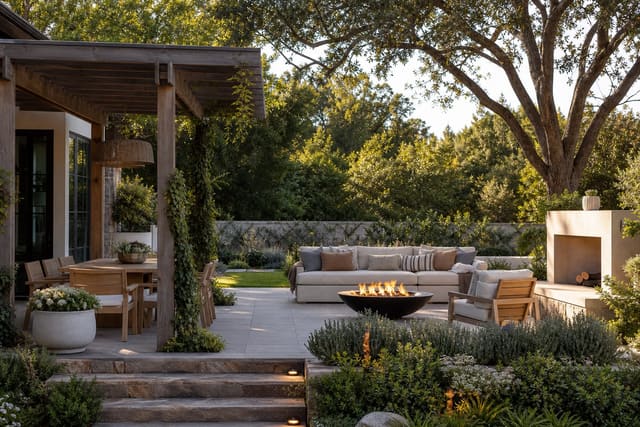
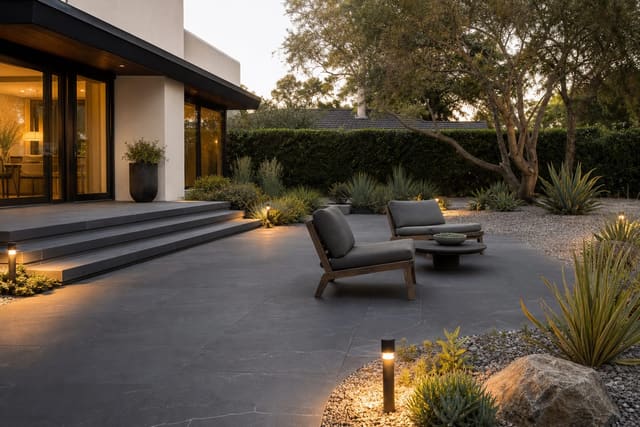
If the patio uses blue-gray paving, study how the ground plane already reads; slate patio ideas for outdoor rooms help the counter, pavers, and masonry feel related instead of shopped separately.
How do the main outdoor counter materials compare?
Skip the "prettiest" question and ask what abuse the counter will take. A covered patio with a gas grill needs less resilience than an uncovered island with a griddle, smoker, sink, and stools dragged across pavers.
| Material | Best use outside | Watch-outs |
|---|---|---|
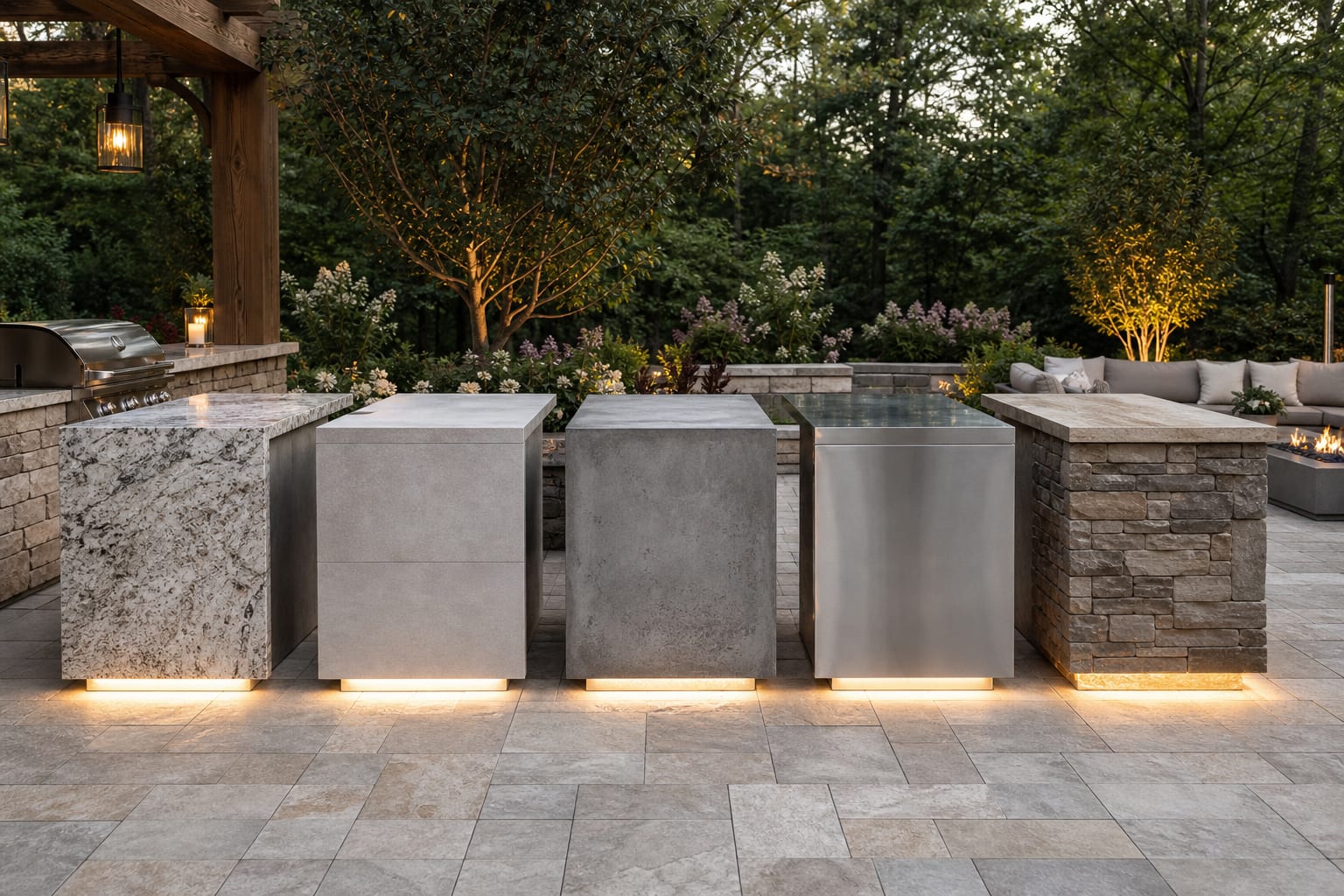
| Granite | Durable all-purpose counters near grills, sinks, serving zones | Seal periodically, test dark slabs in sun, avoid busy patterns on small islands |
| Exterior porcelain | Modern patios, pale-stone looks, high stain resistance | Needs skilled fabrication and exterior-rated installation |
| Concrete | Custom shapes, thick edges, integrated drainboards | Needs reinforcement, curing, sealing, good drainage, and crack tolerance |
| Stainless steel | Cooking zones, side burners, prep inserts | Shows fingerprints and glare; pair with stone or wood nearby |
| Soapstone | Shaded or traditional patios | Scratches and patinas; dark slabs get hot in full sun |
| Tile | Budget or regional patios with outdoor-rated body/grout | Grout collects grease; indoor ceramic tile does not belong outside |
A few pairing ideas:
- Honed granite over a stone or brick base suits traditional architecture — keep the edge simple at 2-3cm and let the masonry carry the character.
- Exterior porcelain over stucco or powder-coated metal gives a crisper modern look; lean warm if the paving is beige or limestone-toned.
- Concrete fits custom L-shapes or waterfall ends; ask for a sealer sample tested in full sun and under standing water.
- Stainless steel earns its place as a 24-36 inch hot landing beside a grill — surround it with stone or planters so it doesn't feel like a catering tent.
- Large-format outdoor tile works only with weather-rated grout and substrate; keep joints tight and avoid mosaic counters near grease.
What details make the counter survive real cooking?
Landing space is functional, not decorative. Keep 24 inches clear beside the grill, 36 if you're juggling trays, sauce bowls, or a griddle press. Near a sink, leave room for a cutting board and wet dishes instead of letting the basin dominate the island. Where the kitchen meets a dining table, hold a 36 inch route and widen to 42 where stool backs or cooler lids swing into the path.
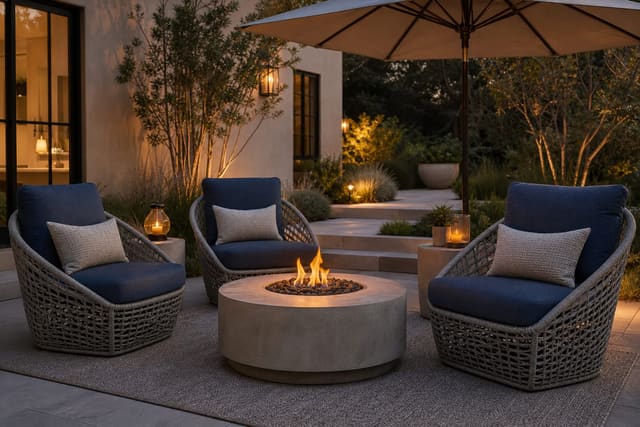
Shade changes the material decision — dark stone, stainless, and some concrete finishes can get too hot to touch in direct sun. Under a pergola or umbrella, coordinate the counter with nearby textiles; the color logic in an outdoor fabric guide for cushions and shade keeps the counter, stools, and umbrella from competing.
Drainage and seams matter more outside than in a climate-controlled kitchen. Keep the structure level for appliances, but slope adjacent paving away from the island. Use exterior-rated cabinet boxes, stainless hardware, noncombustible materials near heat, and manufacturer clearances around grills and vents.
Use AI to preview your outdoor kitchen counter before you order
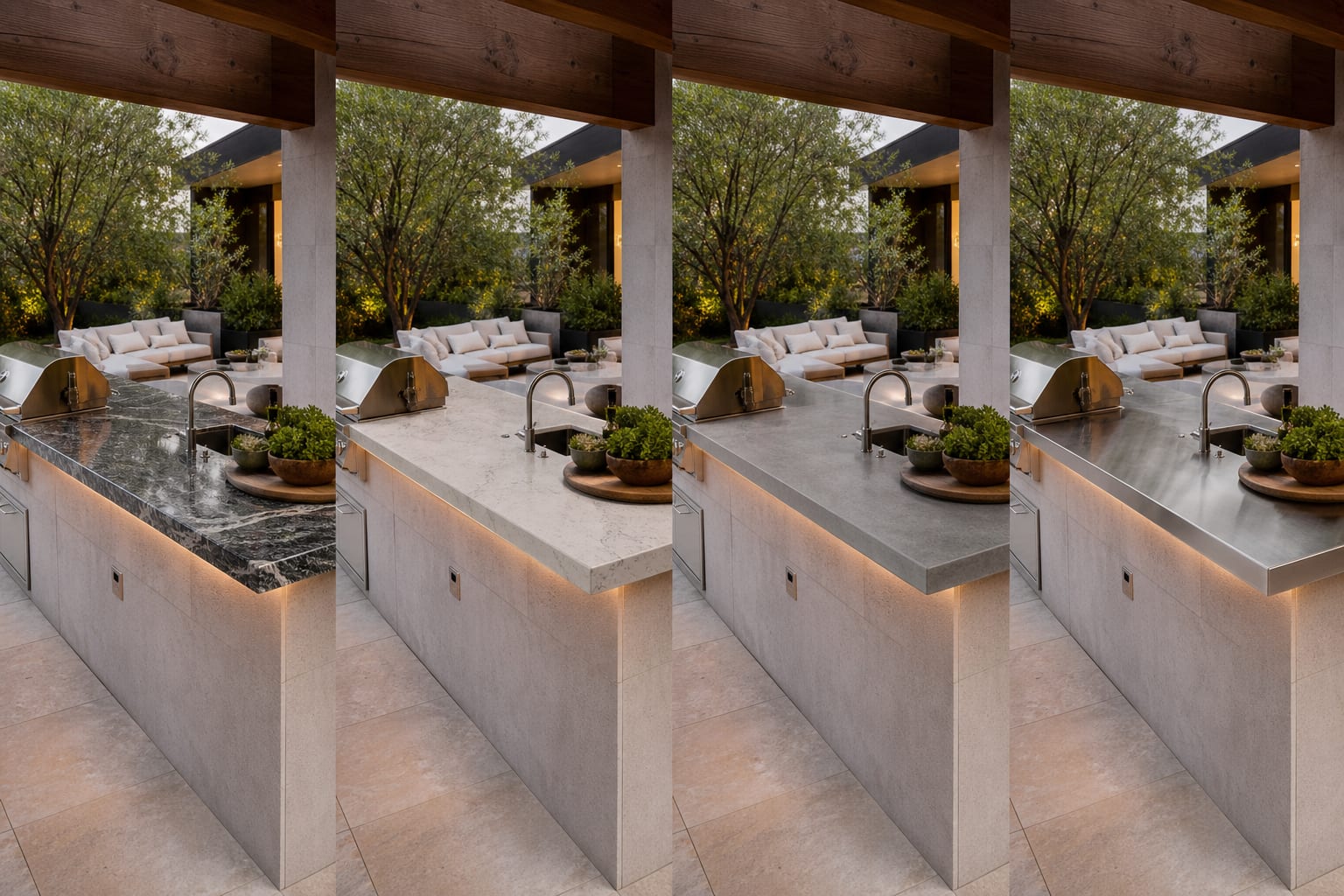
AI design pays off before the slab is chosen, since a countertop shifts the visual weight of the whole patio. Upload a straight photo from the house door or main lounge chair, then test granite, concrete, stainless, and porcelain from the same angle with the grill, pavers, fence, and furniture still visible.
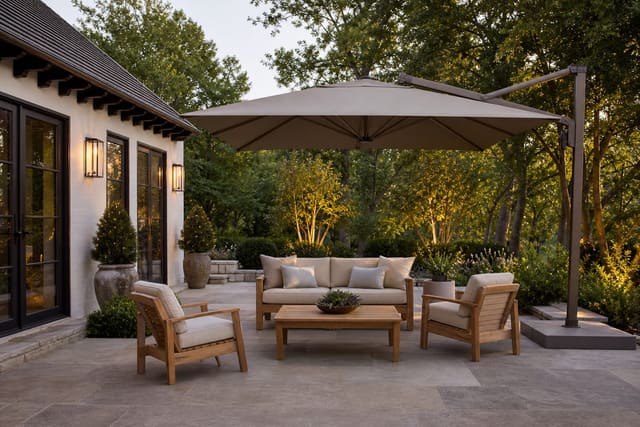
The preview won't check fabrication, code, gas lines, or structural support — but it will show if pale porcelain glares against the paving or if stainless steals attention from the garden. If the zone needs shade, test a cantilever umbrella too; outdoor umbrella ideas for patios covers clearance and shadow lines before you commit to a base.
Common outdoor countertop mistakes to avoid
- Marble on an uncovered cooking counter invites regret — acid, grease, and UV are hard on a soft, porous surface. Choose exterior porcelain or a durable light granite for the same look.
- Skipping hot landing space turns an expensive slab into a display shelf. Shorten a decorative return or drop a stool before sacrificing that 24-36 inches.
- Ignoring the paving color makes the kitchen feel disconnected. Compare samples outside at midday and late afternoon against pavers, grill metal, and cushions.
- Indoor cabinetry or untreated wood below the slab invites swelling and rust. Use exterior-rated boxes and ventilated appliance bays instead.
- Dark counters in full sun with no shade make prep uncomfortable — add a roof edge or umbrella, or go lighter on the surface.
- Treating concrete as maintenance-free sets the wrong expectation; it needs reinforcement, sealing, and acceptance of minor surface character over time.
Frequently Asked Questions
Can quartz countertops go outside?
Most engineered quartz voids its warranty outdoors because UV yellows the resin binder within 18-24 months. Only specific UV-stable lines, which are rare and expensive, belong outside.
Does granite need sealing outdoors?
Yes. Granite needs an outdoor-rated sealer yearly for the first three years, then every two years. Without it, oil and wine stains penetrate within minutes.
What countertop survives freeze-thaw cycles?
Porcelain pavers, granite, soapstone, and properly mixed concrete all handle freeze-thaw over a drained base. Marble, travertine, and limestone crack within a few northern winters.
How thick should an outdoor countertop be?
3cm (1-1/4in) is the practical minimum for full-depth slab spans. 2cm only works over a continuous plywood or steel substrate, which most outdoor kitchens lack.
What is the most affordable durable outdoor countertop?
Porcelain pavers at $40-$80 per square foot installed deliver 25+ years of UV, stain, and freeze resistance with no sealing needed, giving the best lifetime value.
Three transformations to try
- Granite outdoor kitchen counter
- Porcelain paver outdoor counter
- Soapstone outdoor counter with bar overhang