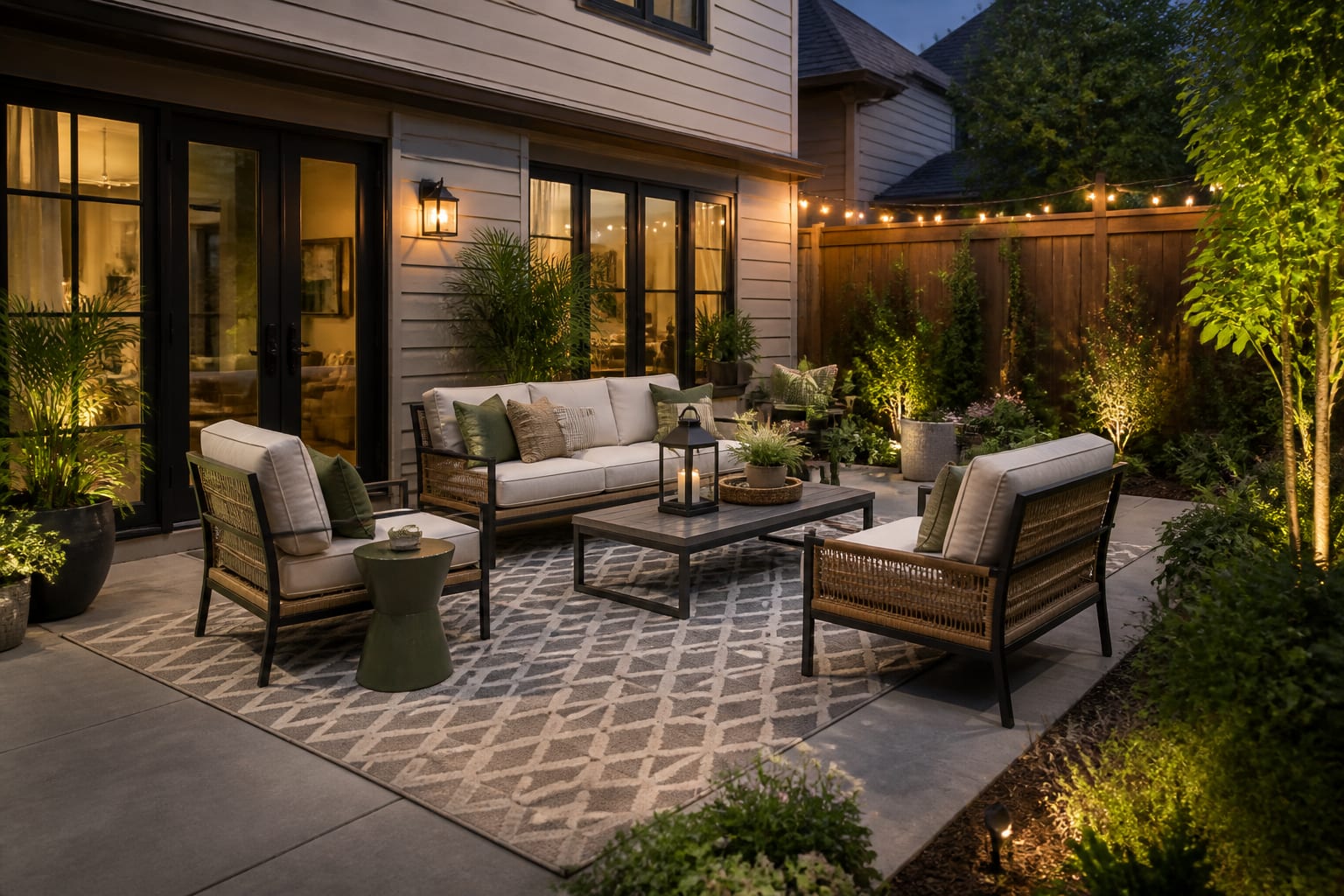
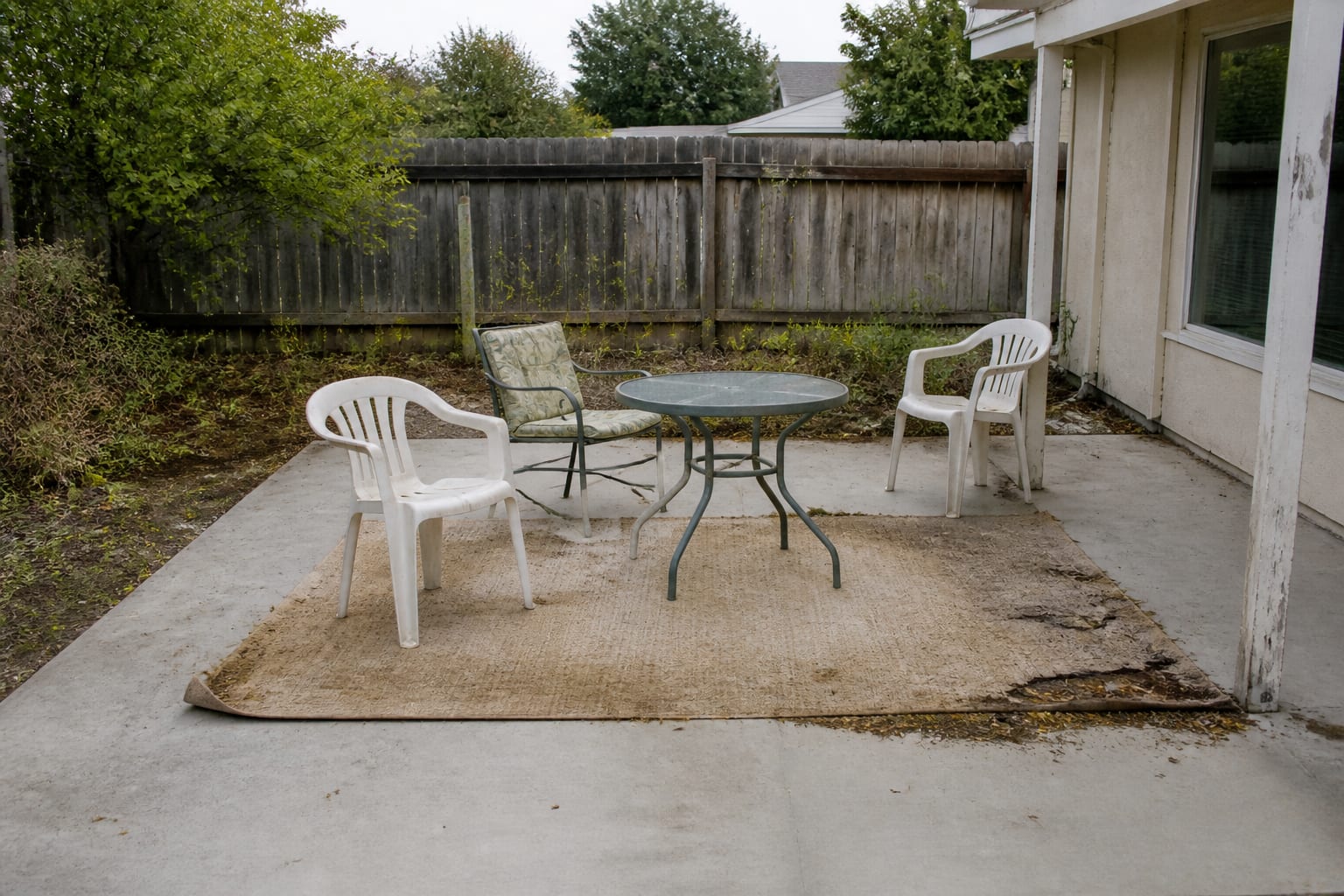
The best material for outdoor rugs is polypropylene for most patios, full stop, because it resists fading and mildew for $2 to $5 per square foot and dries in an afternoon. My read is that people buy outdoor rugs on color and pattern, then act surprised when a pretty jute rug rots into compost after one rainy month on a shaded deck.
I think fiber choice matters more than pattern, and it is the one spec the price tag rarely explains. Below I compare the four fibers you will actually see on outdoor rugs, ranked on the things that decide whether the rug survives a full season or ends up in the trash by August.
How the four outdoor rug fibers compare
These figures reflect mid-range retail pricing for a standard 5-by-8-foot rug, with weather performance based on how each fiber handles rain, UV, and foot traffic.
| Fiber | Cost / sq ft | Fade resistance | Mildew resistance | Feel underfoot | |---|---|---|---|---| | Polypropylene | $2-$5 | Good | Excellent | Firm, slightly stiff | | Recycled PET | $3-$7 | Good | Excellent | Soft, plush | | Solution-dyed nylon | $6-$12 | Excellent | Excellent | Dense, resilient | | Natural (jute/sisal) | $4-$9 | Poor | Poor | Coarse, organic |
The table sorts the decision quickly. If the rug lives in open weather, the bottom row is a mistake regardless of how good the jute looks in the catalog. Among the synthetics, polypropylene is the value pick, PET is the comfort upgrade, and nylon is what you buy when the rug bakes in all-day sun and takes constant traffic. Spending more on nylon only pays off in those punishing spots.
Synthetic fibers: where the real value lives
Polypropylene, also sold as olefin, is the workhorse of outdoor rugs for good reason. The fiber does not absorb water, so it dries within hours and never gives mildew a foothold, and because the color is locked into the plastic it resists UV fading better than printed fibers. The trade is texture: polypropylene feels firm, even slightly plasticky, and it can mat under heavy furniture over a few years.
Recycled PET solves the comfort complaint. Spun from plastic bottles, it feels noticeably softer and plusher underfoot while matching polypropylene on mildew and fade resistance, and it costs only a dollar or two more per square foot. Solution-dyed nylon sits at the top of the range because the dye runs all the way through each fiber rather than coating the surface, which is why it holds color in brutal sun where cheaper rugs go chalky. For the seating layout the rug needs to anchor, the spacing rules in this patio furniture guide tell you what size rug your set actually requires.
When natural fibers actually work
Jute, sisal, and seagrass are not banned from outdoor use; they are just misunderstood. These fibers bring a warmth and organic texture no synthetic matches, and on a fully covered, dry porch they perform for years. The failure happens when they get wet and stay wet: natural fibers drink water, hold it against the backing, and breed mildew that stains and rots the weave from underneath.
Reserve natural-fiber rugs for spots that meet all of these conditions:
- The rug sits under a solid roof or deep eave that blocks driving rain.
- The surface drains well and never holds standing water after a storm.
- Humidity stays moderate, not the constant damp of a coastal or shaded deck.
- You can move the rug indoors for winter rather than leaving it exposed.
If shade is the problem rather than rain, the layering ideas in these outdoor shade options can keep a covered fiber rug dry enough to last. Match the rug to the actual exposure of the spot and a jute rug earns its place; ignore the exposure and it becomes a mildew sponge.
Matching the fiber to your space and budget
An open patio in full sun wants solution-dyed nylon or polypropylene; the rug will face UV and rain with no cover, so weather resistance beats softness. A shaded but uncovered deck wants polypropylene specifically, because mildew is the threat there and olefin shrugs it off. A covered porch can take PET for plush comfort or a natural fiber for texture, since the roof handles the rain.
Run the cost over time, not the sticker. A $120 jute rug that fails in one season costs more per year than a $200 polypropylene rug that lasts five. That math is why I rarely recommend natural fibers for anything the sky can reach.
The backing and weave deserve a look the catalog photo never gives you. A flatweave synthetic rug dries fastest and resists mold best because water passes straight through, while a thick pile or a latex-backed rug traps moisture against the surface below and can leave a damp ring on a deck. If the rug sits on wood, a flatweave or a rug pad that lifts it off the boards protects both the rug and the deck from rot.
Size and anchoring also separate a rug that works from one that curls and trips people. Outdoors, a rug should run at least 6 inches beyond the front legs of the seating so chairs stay on it when pulled out, and on a windy patio a few weighted corners or a grippy pad keep the rug from sailing into the pool. Buy the fiber for the weather and the size for the furniture, and the rug earns its spot for years instead of becoming a soggy, sun-bleached regret by the end of one summer.
Use AI design to preview an outdoor rug before you buy
A rug swatch tells you the color but not how a 5-by-8 reads against your pavers and furniture. Re-Design solves that: upload a photo of your patio or deck and the AI design tool drops different rug patterns, sizes, and tones into the real space so you can judge scale and contrast before you order.
Try several options on the same shot. Upload the photo, ask Re-Design to show a bold geometric polypropylene rug, then a muted PET one, then a natural jute texture, and compare them against your furniture and flooring. Seeing the rug rendered at true scale in your own space keeps you from buying one that swims under the table or fights the cushions.