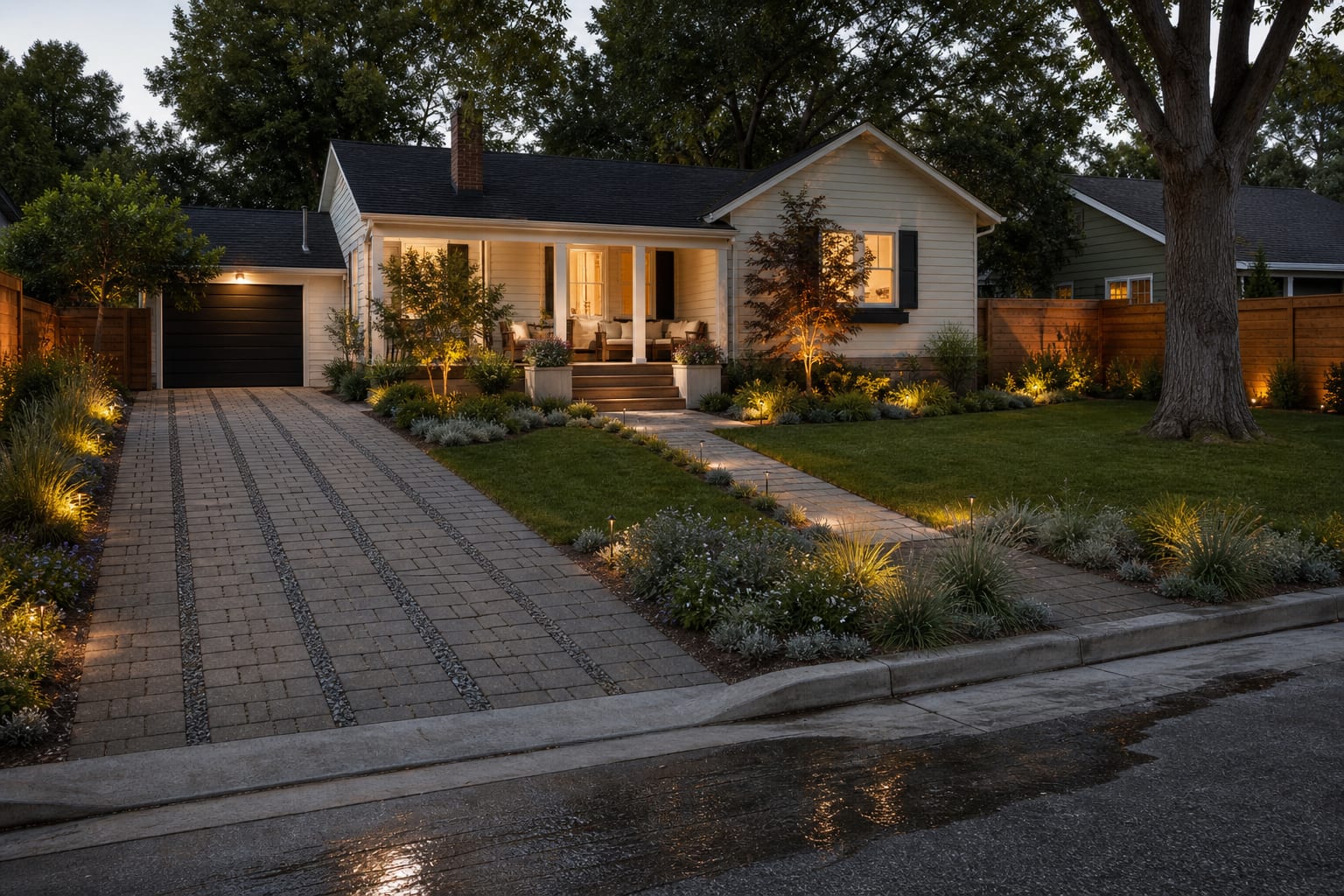
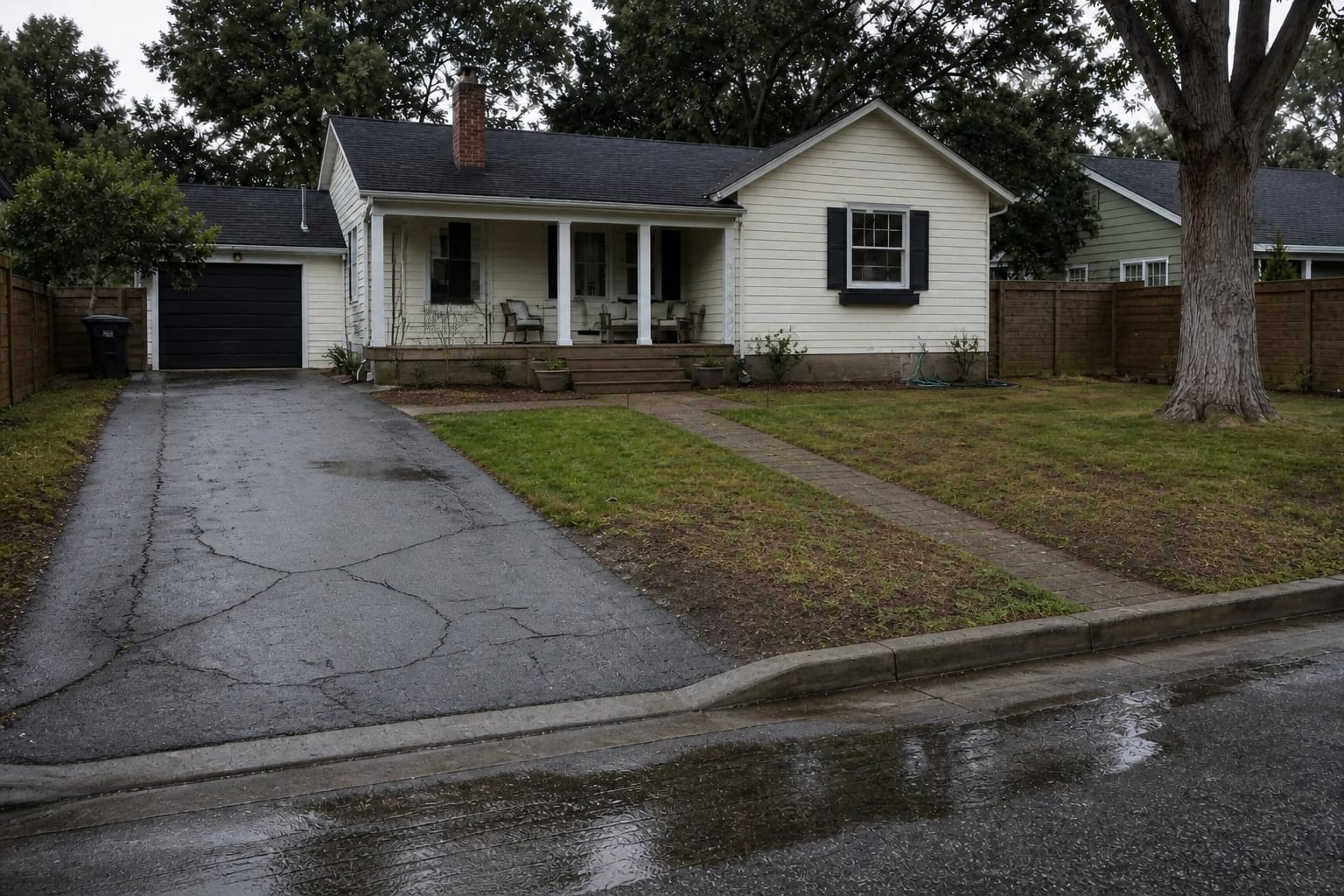
A permeable driveway lets stormwater soak through to the soil instead of sheeting into the street, using open-jointed pavers, gravel or grass grids, or porous concrete over a deep aggregate base. The best permeable driveway materials are stabilized gravel grids, permeable pavers, porous concrete, and grass grids, chosen by slope, traffic, maintenance tolerance, and house style, so drainage looks designed rather than bolted on.
What are the best permeable driveway materials?
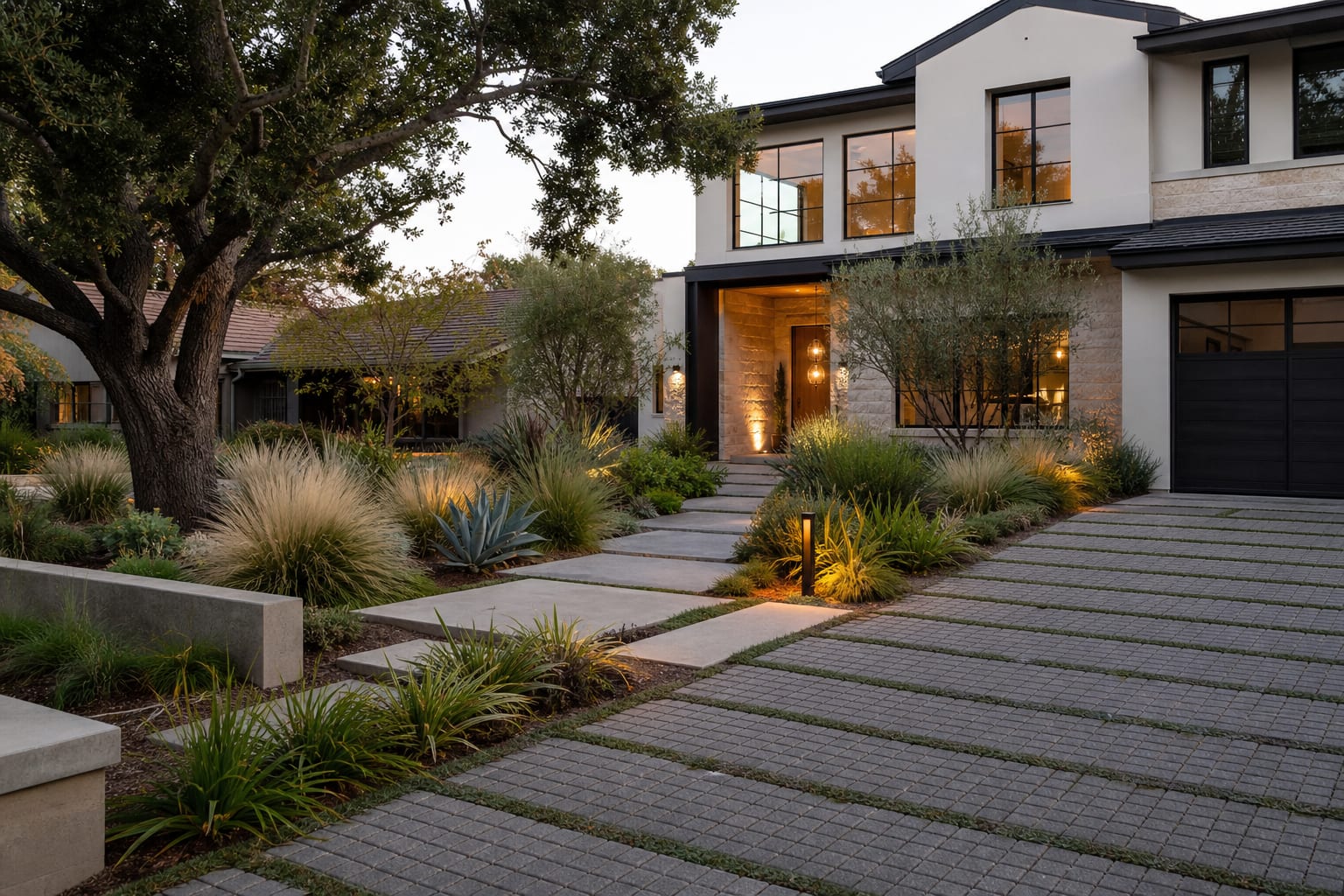
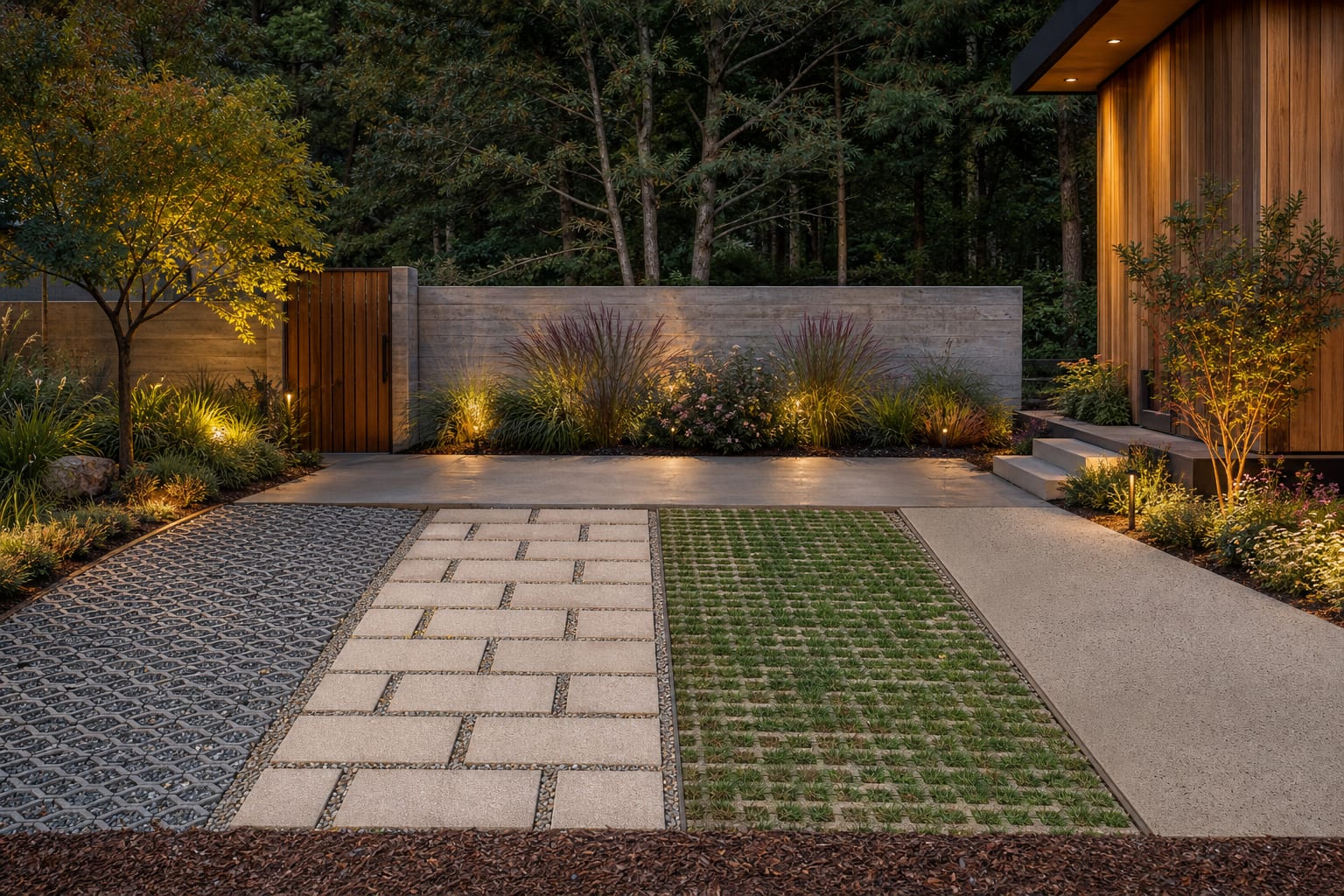
Stabilized gravel grids, permeable interlocking pavers, porous concrete, open-joint stone pavers, and reinforced grass grids all let water pass through the driving surface instead of racing across it. They differ in look, parking durability, and upkeep.
Separate the visible surface from the drainage system beneath it. Most permeable driveways need an excavated base of open-graded crushed stone, 8-18 inches deep depending on soil, climate, vehicle load, and local stormwater rules; the top layer is just the finish.
Stabilized gravel suits an informal cottage or farmhouse drive when a grid holds the stone in place. Permeable pavers look architectural and work well where the drive meets a formal walk, especially if joint color echoes the porch or brick. Porous concrete reads quieter but needs a contractor experienced with pervious mixes. Grass grids are the most landscape-forward choice, provided there's enough sun and realistic expectations about tire wear.
Which material fits which front yard?
The same construction method can read rustic, modern, soft, or commercial depending on the finish layer.
| Material | Best front-yard use | Spec to discuss with the installer |
|---|---|---|
| Stabilized gravel grid | Long drives, casual homes, budget-sensitive projects | Grid depth around 1-2 inches over compacted open-stone base |
| Permeable concrete pavers | Formal entries, visible parking courts, brick or stone homes | Joints 1/4-1/2 inch wide, filled with clean angular aggregate |
| Porous concrete driveway | Simple modern surfaces wanting a continuous slab look | Needs pervious mix, correct compaction, vacuum maintenance |
| Grass grid driveway | Overflow parking, garden-forward homes, low-speed areas | Cells need soil, turf or seed, sunlight, irrigation, tire-aware use |
| Open-joint stone pavers | High-design entries, short parking pads | Stable base with joints wide enough to drain, not trip hazards |
Porous concrete is the least forgiving: a wrong mix, overworked surface, or sediment clogging can ruin it. Only hire a crew with recent pervious installations in your climate. Gravel needs stabilization, not just loose stone, or tires will shove it into ruts; use small angular aggregate that settles into the grid without locking up and blocking drainage.
Align the driveway with the house. Borrow geometry from the front entry so the parking edge doesn't collide with the walkway; pairing a permeable court with front walkway ideas that clarify the entry looks more intentional than an expensive material dead-ending at tire tracks.
Which permeable driveway ideas fit real front yards?
Pick one dominant surface, then use planting, edging, and path geometry so it belongs to the house rather than reading as infrastructure.
- Paver tire strips with gravel or planted joints for short, visible drives — keep strips 18-24 inches wide, aligned with the garage door.
- Full permeable paver field for a drive that doubles as guest parking — add a border course so cuts and curves look controlled.
- Grass grid driveway for occasional parking in sunny, low-speed areas — don't expect it to match a manicured lawn under daily SUV traffic.
- Stabilized gravel apron behind the sidewalk where runoff and turning are worst — hold the edge with metal, concrete, or stone, not grass.
- Two parking bands with a planted middle strip to break up a 16-20 foot slab — keep the strip low, tough, and outside the tire path.
Corner lots are seen from two directions, so repeat the same edging or plant rhythm along the side street; the sightline logic in corner lot landscaping ideas applies directly to driveway edges. Narrow lots amplify every inch of paving — a single car-width drive, a 36-inch walk, and planting under 24 inches near the curb keep the facade from becoming all hardscape; see narrow lot front yard ideas before widening a drive by default.
Design-check shorthand: depth before decoration, repetition before variety, maintenance before novelty.
What mistakes ruin a permeable driveway?
- Skipping soil and slope checks. Compacted clay and steep grades may need underdrains, terracing, or a conventional drainage plan approved locally.
- Weak edges. Gravel, grass cells, and open-joint pavers need rigid restraint at curves and the street apron — mulch won't hold back parking.
- Ignoring sediment. Sand, soil, and leaf debris clog joints; keep beds slightly lower than hard edges and plan periodic sweeping or vacuuming.
- Treating grass grid as invisible. It still shows a pattern, browns under stress, and needs establishment time; use gravel-filled cells where tire traffic is frequent.
- Forgetting winter service access. Plows, bins, and turning wheels are harder on decorative joints than parked cars — ask how snow will be stored and plowed.
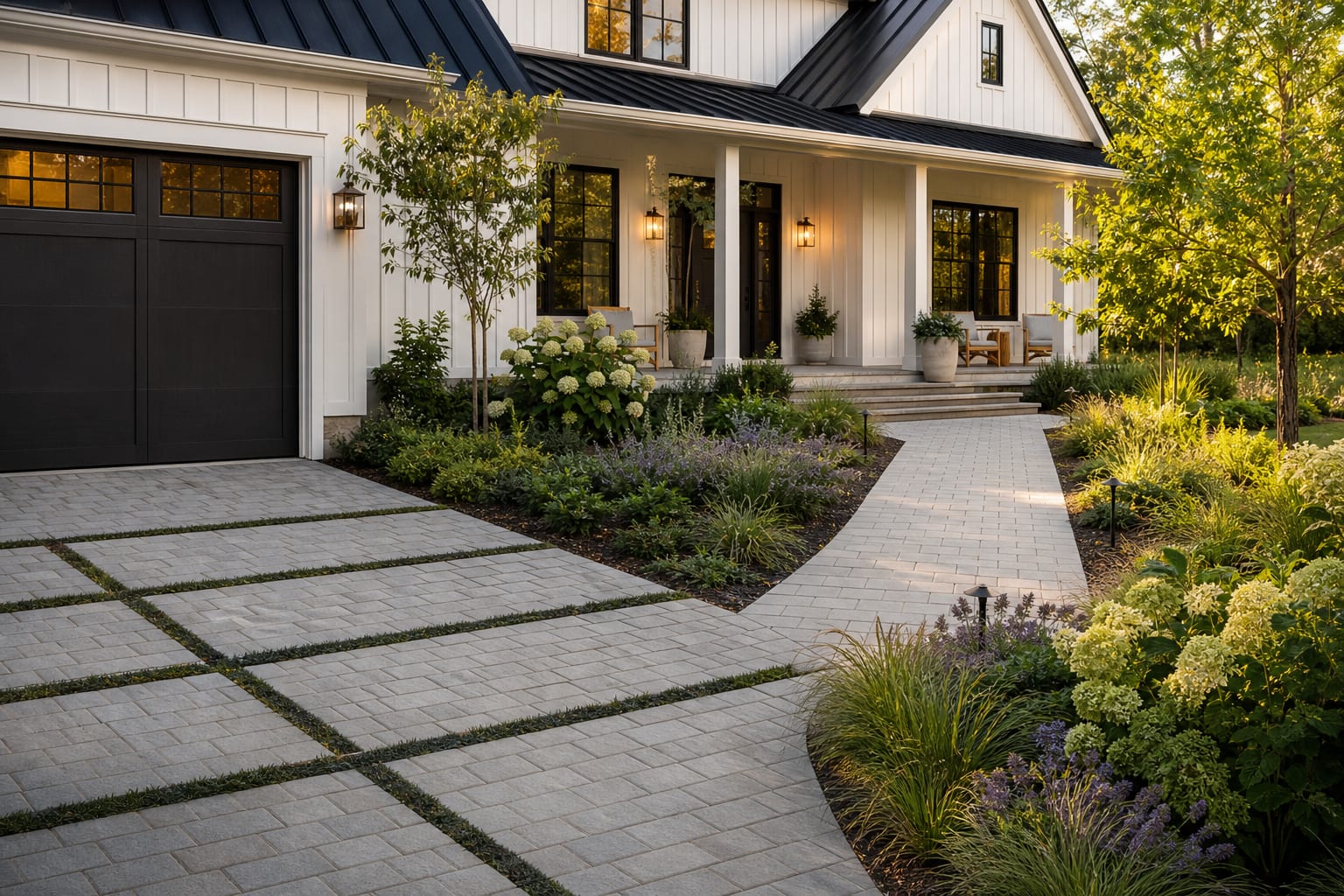
Use AI design to preview your driveway before excavation
Photograph the curb view including the garage, walk, lawn edges, downspouts, and any low spot where rain collects. Preview three options: stabilized gravel grid, permeable paver driveway, and grass grid with low edge planting. Judge proportion, not engineering — if pavers make the house feel paved over, test tire strips with a planted center; if gravel looks too casual beside brick, add a border course.
Confirm rebate requirements, excavation depth, overflow rules, and load rating with your municipality or installer before construction. The preview helps choose the look; site conditions decide how it must be built.
Frequently Asked Questions
How long does a permeable driveway last?
Permeable concrete pavers last 25-40 years, plastic grid driveways last 20-30 years, and porous asphalt lasts 15-25 years before needing an overlay or repair, depending on climate and maintenance.
Does a permeable driveway need maintenance?
Yes. Pavers need annual sweeping or vacuuming to prevent joint clogging, grid systems need topped-up gravel every 2-3 years, and porous asphalt needs vacuum-cleaning every 1-2 years to keep infiltrating properly.
Are permeable driveways cheaper than concrete?
Upfront cost typically runs 15-35% higher than standard asphalt or concrete. Some municipalities offer stormwater credits or relaxed requirements that narrow the gap over time.
Can I park on grass-filled grid pavers?
Yes, for occasional parking. Grid cells protect grass roots from compaction during a typical weekly park-and-drive routine, though daily parking on the same spot will eventually brown the grass.
Do permeable driveways work in cold climates?
Yes, with a frost-protected aggregate base typically 12-18 inches deep in northern zones. Plowing requires a polymer or rubber-edged blade to avoid catching paver edges or grid cells.