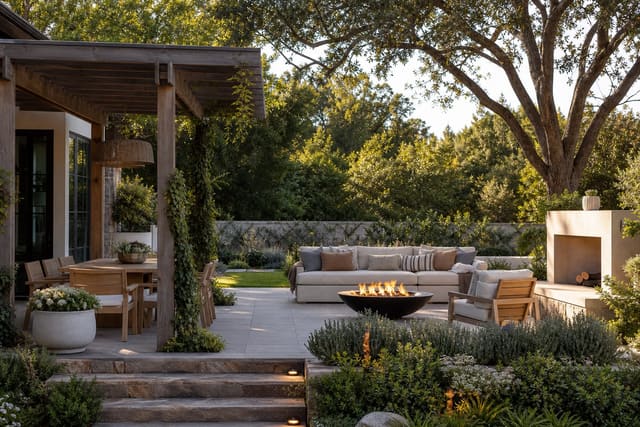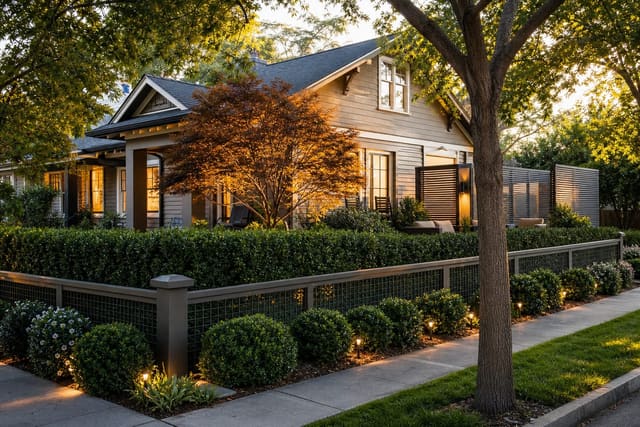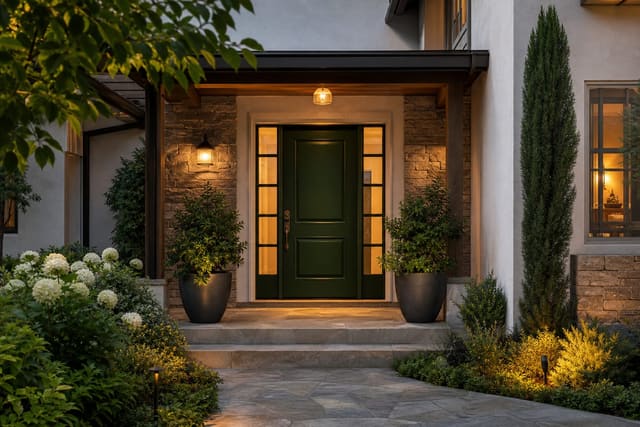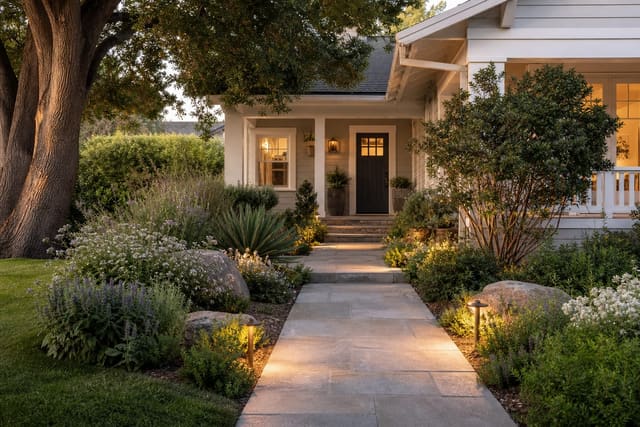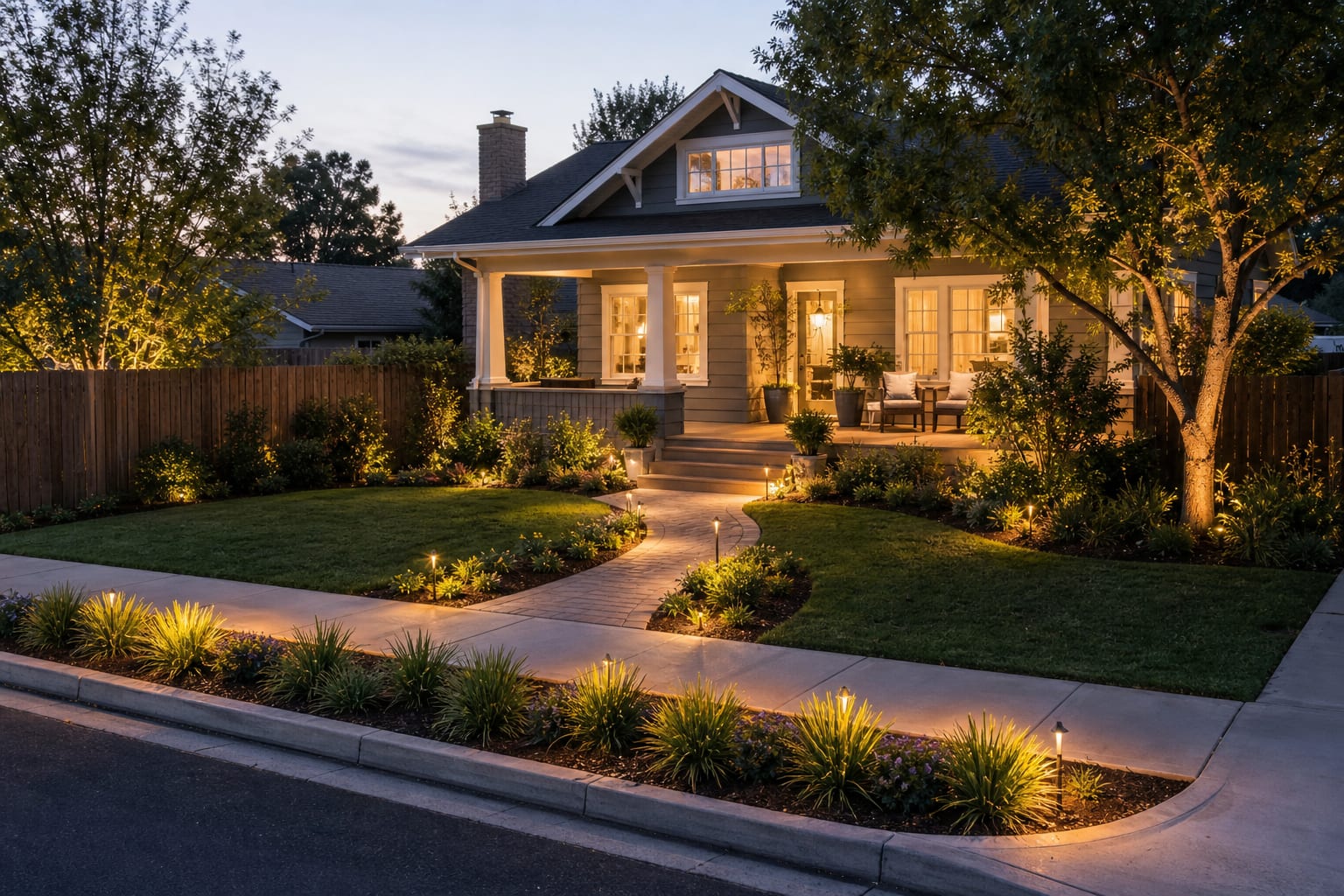
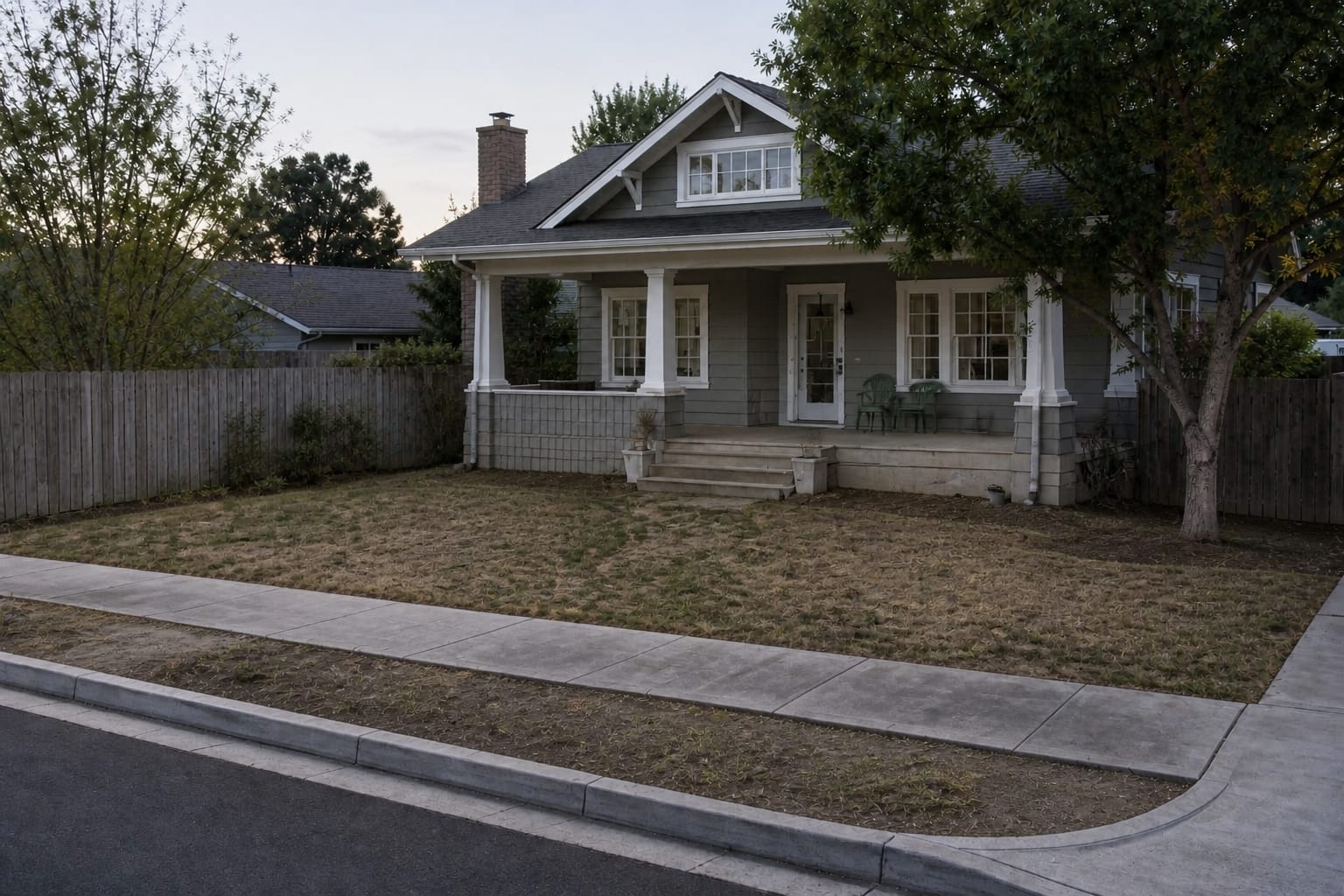
Corner lot landscaping works by keeping the intersection open, layering privacy only where people pause, and giving each street-facing edge one clear job. Anchor the corner with low, layered planting under the municipal sight triangle, route a single 42"-48" curved walk to the porch, and screen porch or patio pockets with 4'-6' shrubs instead of a continuous hedge wall.
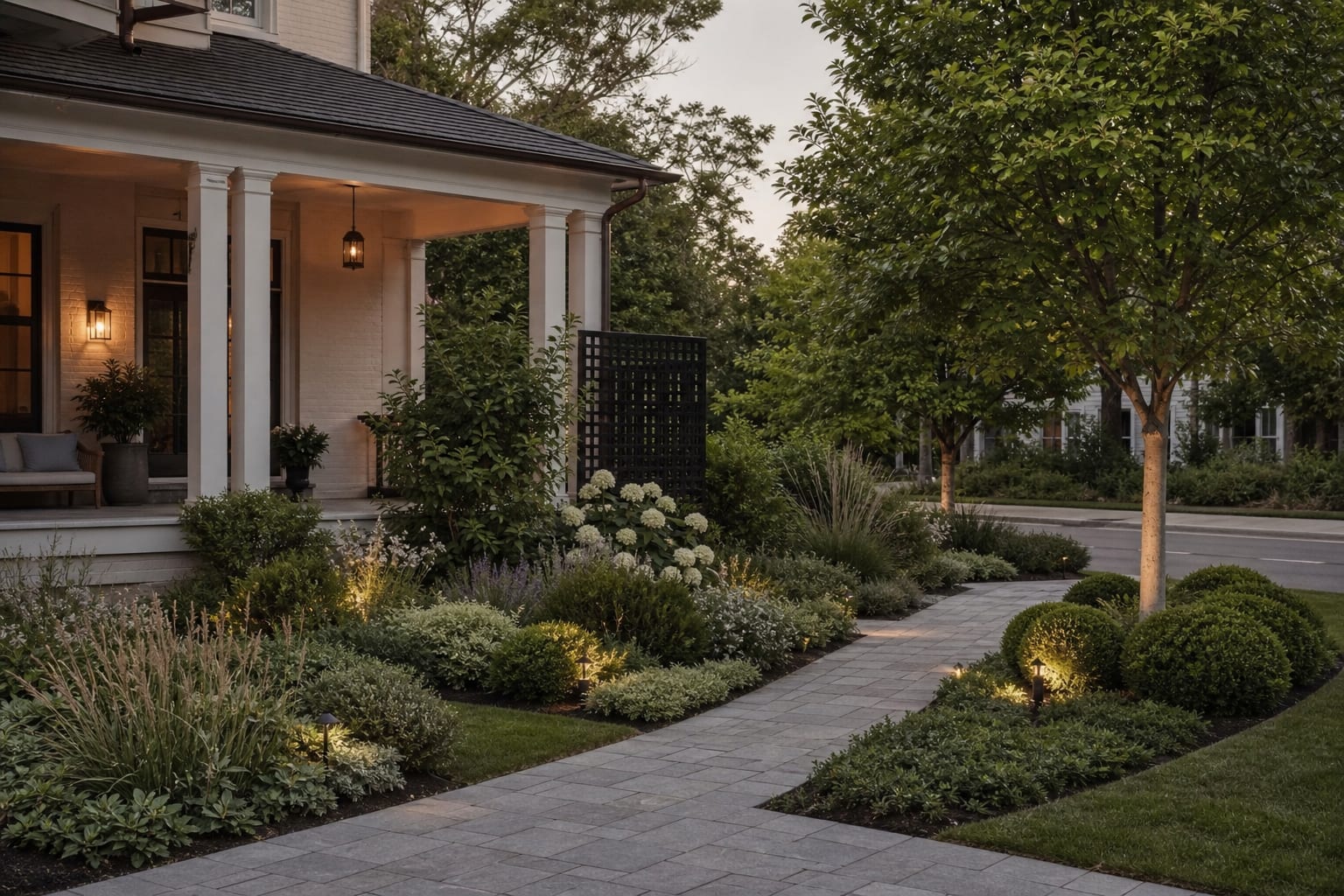
How do I landscape a corner lot without making it feel boxed in?
Protect traffic sightlines first, then assign each street-facing edge a different job, layer low-to-medium planting for privacy, and use one clear walkway sequence so the house reads as intentional from both directions. The corner itself should stay visually open; privacy belongs closer to the porch, side windows, or a patio where people actually feel watched.
Treat the lot as a triangle of attention. The sharpest public corner needs lower planting, usually under 30"-36", so drivers and pedestrians can read the intersection. Taller screening belongs farther back, in staggered clusters rather than a single hedge wall. If a porch or living-room window is the real problem, borrow the layered approach from these corner lot privacy ideas instead of walling off the whole property.
A quick pass before planting: - Keep the intersection corner mostly below 30"-36" so the crossing stays readable. - Make the main walk about 42"-48" wide so the entry feels deliberate from both approaches. - Put taller 4'-6' privacy elements near porch, patio, or window pause points only.
Draw three zones: the open corner (lawn, groundcover, grasses, boulders), the arrival edge (walk, house numbers, mailbox, lighting), and the private edge (shrubs, a small tree, low fencing, or a planted berm where code allows).
Test this on your own photo with ReDesign before finalizing a direction, keeping the house edge, horizon line, hardscape, beds, and main path visible so the preview solves the space you actually have.
Which street edge should get privacy, planting, and curb appeal?
The front-door edge should carry the clearest welcome; the more exposed side street should carry the strongest privacy rhythm. A corner lot usually fails when both edges compete for attention with duplicate trees, beds, and gates and no obvious route to the door.
| Edge or zone | Best job | Spec that keeps it believable |
|---|---|---|
| Intersection corner | Openness and safety | Keep shrubs and grasses under 30"-36"; avoid dense branching near driver sightlines. |
| Front-door approach | Arrival and identity | Use a 42"-48" main walk, visible house numbers, and lighting that leads to the entry. |
| Side-street boundary | Privacy and rhythm | Layer shrubs in 3'-5' deep beds so planting has mass without becoming a wall. |
| Porch or patio pocket | Human-scale enclosure | Add a 4'-6' screen or tree group only where seating or windows need cover. |
Five ideas worth the space:
- Curve the main walk from the busier sidewalk to the porch, keeping a clear 42" walking width; skip tiny stepping stones on the daily route. If the entry feels weak, see front walkway ideas.
- Plant a low corner meadow of grasses, sedges, and perennials, keeping taller masses set back and 18"-30" plants near the sidewalk.
- Use a small ornamental tree (multi-stem serviceberry, crape myrtle, Japanese maple) near the house, not at the exact corner, so its canopy veils a window without blocking the intersection.
- Stagger privacy layers instead of a straight hedge: a 3' evergreen base, a 5' flowering shrub behind it, and a small tree canopy above.
- Treat a narrow side strip with restraint, per narrow lot front yard ideas: one slim path, repeated vertical planting, one clean underfoot material.
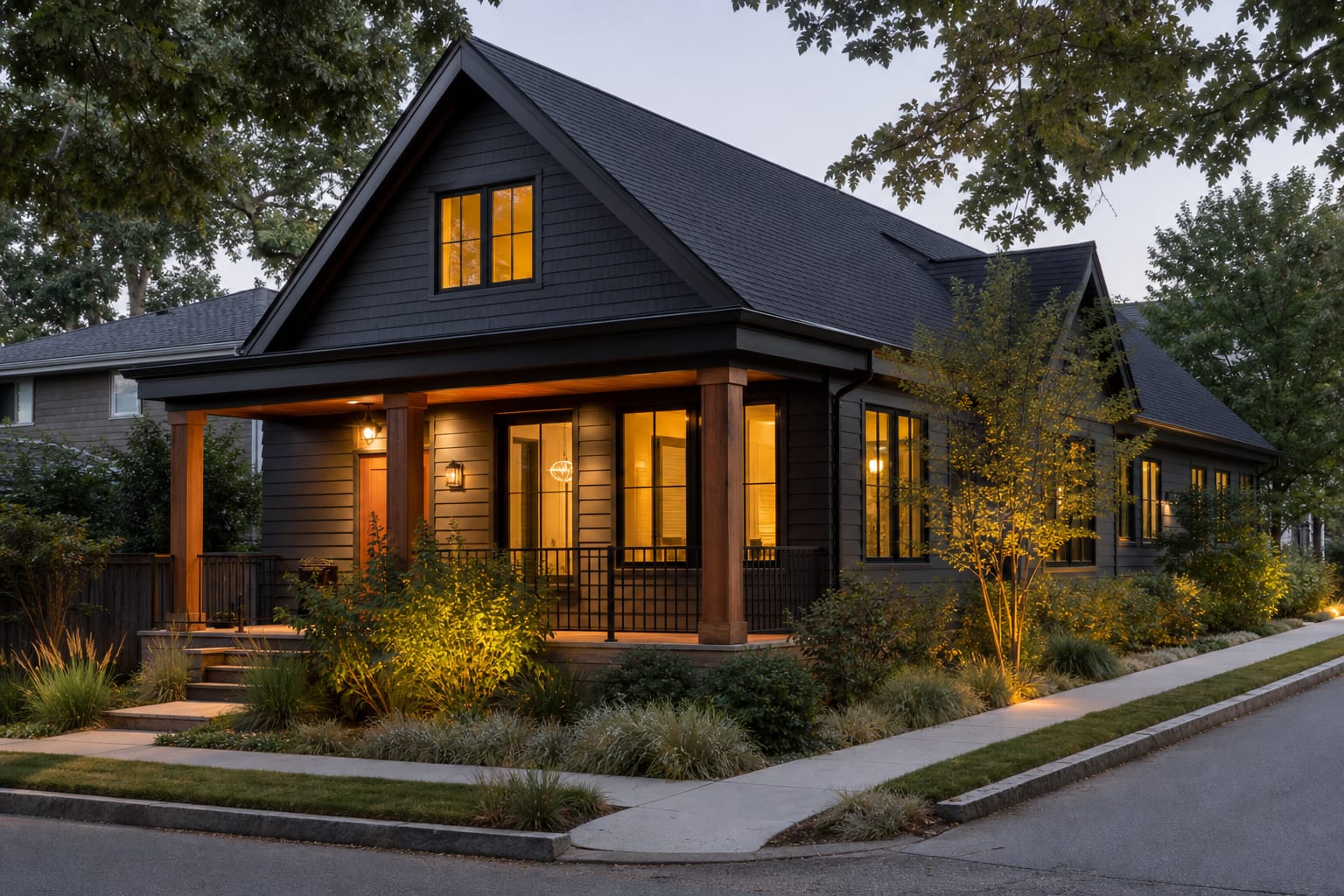
Common corner lot landscaping mistakes to avoid
A tall hedge around the whole corner is the most tempting mistake. It shrinks the yard visually, creates blind spots at sidewalks, and hides the house instead of framing it. Save taller screening for the porch, patio, or windows that need it, and keep the public corner breathable.
Planting one of everything is another problem. Because two streets are visible, homeowners often decorate every angle with a different shrub, boulder, or tree. Repeat three to five plant types in drifts instead; a run of seven grasses or five evergreen mounds reads calmer than twenty unrelated plants.
Forgetting the driveway sightline can make a pretty plan unsafe. Keep the area beside the driveway exit low enough that a reversing car can see walkers, bikes, and pets. Don't plant an 18" shrub 18" from the apron and expect pruning to fix it later.
Lighting both street edges equally flattens the property. Give the entry walk the brightest guidance; the side street may only need low path markers or soft uplights. Use shielded fixtures so light lands on paths and planting, not neighbor windows.
Ignoring maintenance at the most public edge is the last mistake. A corner lot exposes weeds, overspray, and leaning edging from two directions. Choose tough plants near sidewalks, keep mulch below the edging line, and leave 18" between thorny shrubs and the pedestrian route.
Use AI design to preview your corner lot before you commit
AI design helps here because the hardest question is visual balance, not plant shopping. Upload photos from both street approaches, the porch, and the driveway exit, then test versions with low corner planting, staggered privacy shrubs, a curved walk, and a small tree near the house. Ask specifically for open sightlines at the intersection, layered planting near the porch, and a 42" main walkway.
The best preview isn't the lushest one. It's the version where the house still reads clearly from the street, the side street feels calmer, and the corner stops looking like leftover lawn. If a version blocks the driveway view or squeezes the sidewalk, treat that as a warning before buying 5-gallon or 15-gallon shrubs.
Compare restraint across versions: a low meadow corner, a partial fence with planting, and a denser privacy edge near the porch. When one angle feels private without feeling sealed off, that's the direction worth pricing with a landscaper.
Frequently Asked Questions
What's a corner sight triangle?
It's a municipal rule restricting planting height, usually 24"-36", inside a 25-30 ft triangle from the intersection corner so drivers can see oncoming traffic and pedestrians clearly.
How do I add privacy on a corner lot?
Layer a low hedge under 36" inside the sight triangle, taller 5'-6' hedging along the rest of the street-facing edges, and a planted bed against the house. Privacy should stack behind the sight triangle, not in front of it.
Which street side should the front walk start from?
Start the walk from the street with the most pedestrian traffic or visitor parking, curving it naturally toward the porch rather than running straight from a random sidewalk point.
Does a corner lot need two front yards?
No. Treat both street edges as one continuous frontage with consistent planting rhythm and fencing; designing the two sides differently makes the lot read accidental rather than intentional.
How do I balance the corner planting?
Use an asymmetric anchor, one specimen tree or large shrub mass at the corner, rather than a symmetric mirror. The eye reads asymmetry as designed and symmetry as a generic developer plan.
> Try this: Ready to see this on your own outdoor space? Open ReDesign and run the preview before you buy materials, plant, drill, or move furniture.
Three transformations to try
1. Corner lot with layered planting cluster