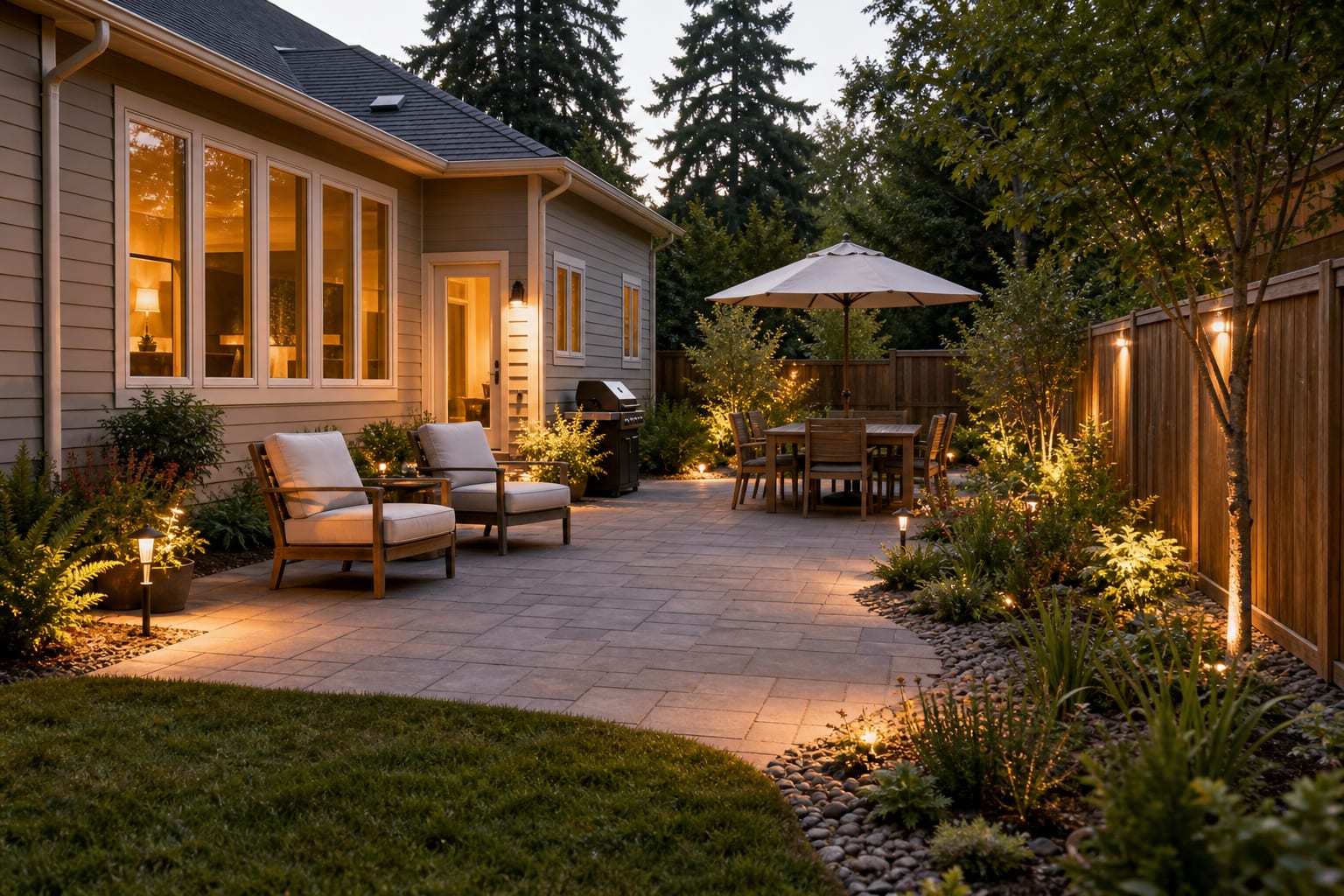
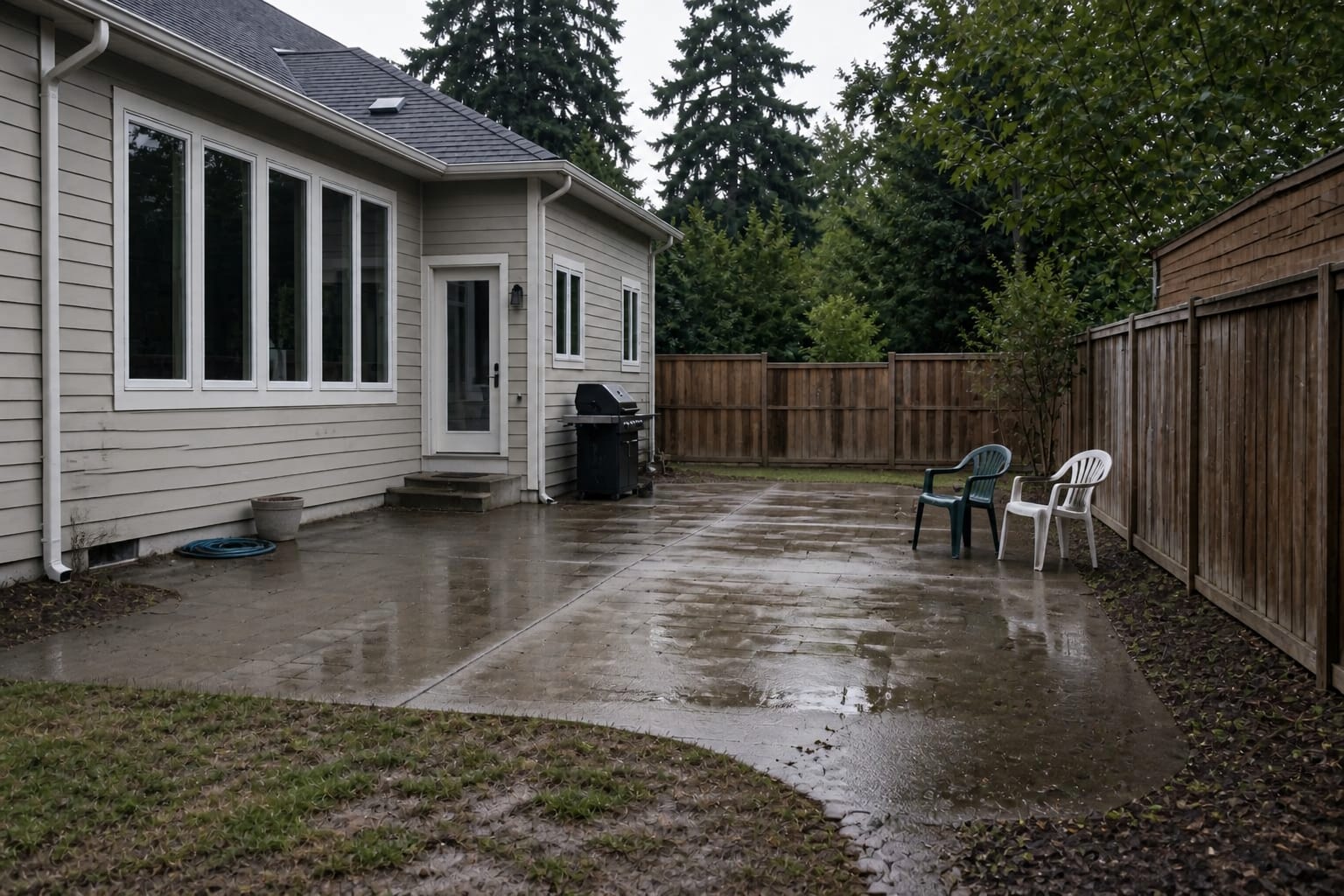
Permeable paving ideas for driveways and patios use open-jointed pavers, gravel grids, or pervious concrete over a compacted stone base so rain soaks through instead of pooling. Match the system to your traffic load, hold a gentle 1% to 2% slope for overflow, and keep joints clear so the surface keeps draining for years.
What Is Permeable Paving and When Should You Use It?
Permeable paving is a hard surface built with open joints, porous material, or stabilized gravel so rain passes through into a stone base instead of running off. Use it where solid paving would worsen runoff — a low driveway apron, a small lot, or a patio beside planting that takes a beating from sheet flow.
The visible surface is only the top layer. A real system includes bedding, a clean crushed-stone reservoir, optional filter fabric, and compacted subgrade that doesn't trap water against the house. Patios can use a shallower base than driveways rated for vehicle loads. If your design leans toward stone and furniture, compare the look against slate patio ideas for outdoor rooms before locking in a pattern.
Permeable paving works best where soil accepts some water and overflow has a legal exit. Heavy clay, steep slopes, high groundwater, or a nearby foundation may call for an underdrain or professional drainage design. Treat it as stormwater infrastructure with a good-looking top, not a decorative shortcut.
Which Permeable Surface Fits a Driveway or Patio?
Decide by use first, appearance second — a driveway asks for more restraint than a dining terrace.
| Surface | Best use | Core spec | Watch-out |
|---|---|---|---|
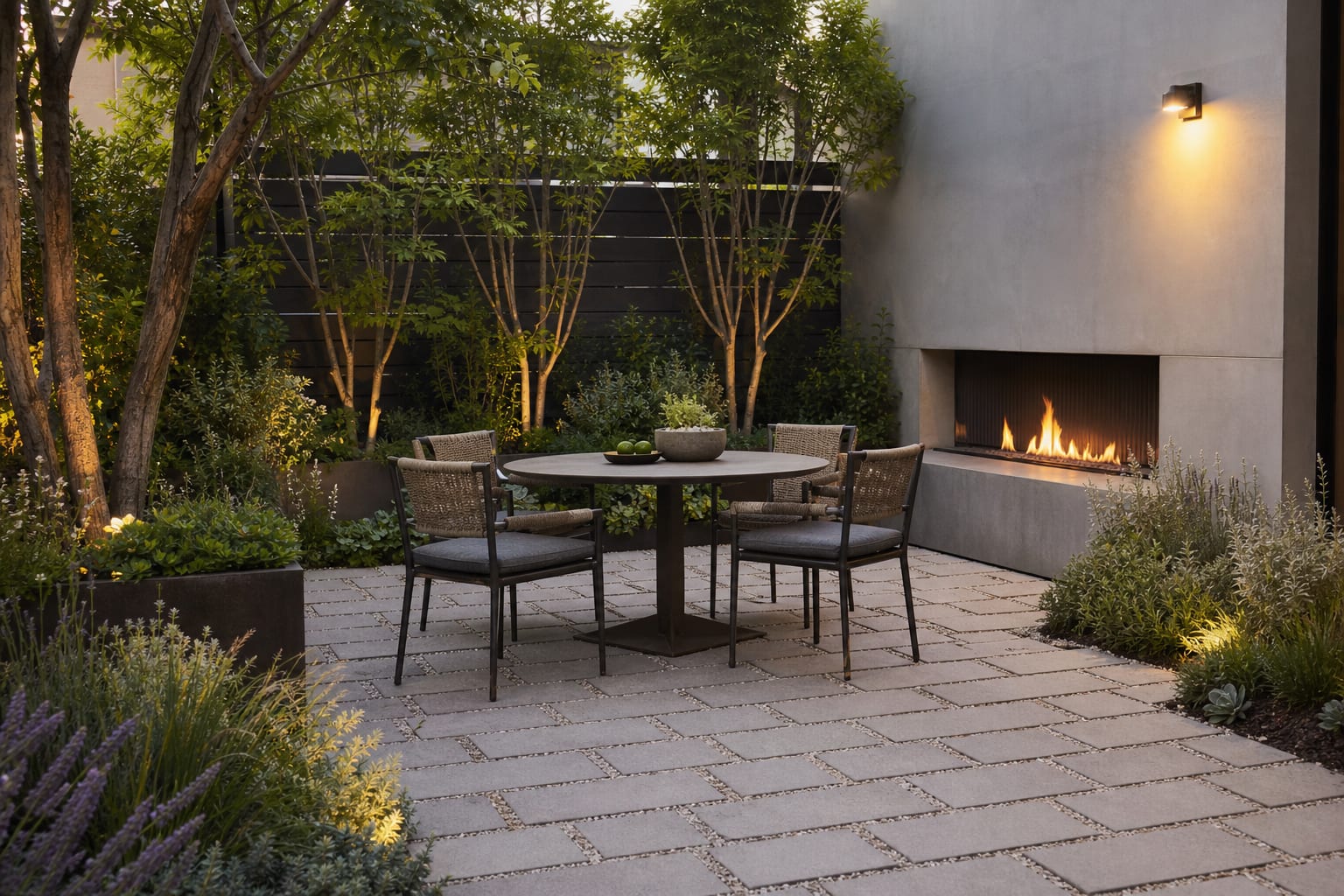
| Open-joint concrete pavers | Patios, walks, driveways | Joints 1/4 to 1/2 inch, filled with clean aggregate | Joint stone must stay open, not packed with soil |
| Gravel grid | Informal parking pads, side yards, paths | Cells stabilize 3/8 to 3/4 inch angular stone | Needs strong edging so the grid doesn't creep |
| Pervious concrete | Modern driveways, larger paved areas | Porous slab over a clean-stone reservoir | Requires experienced placement and careful curing |
| Porous asphalt | Long drives, utility areas | Looks like asphalt but drains through the surface | Can clog under heavy tree debris |
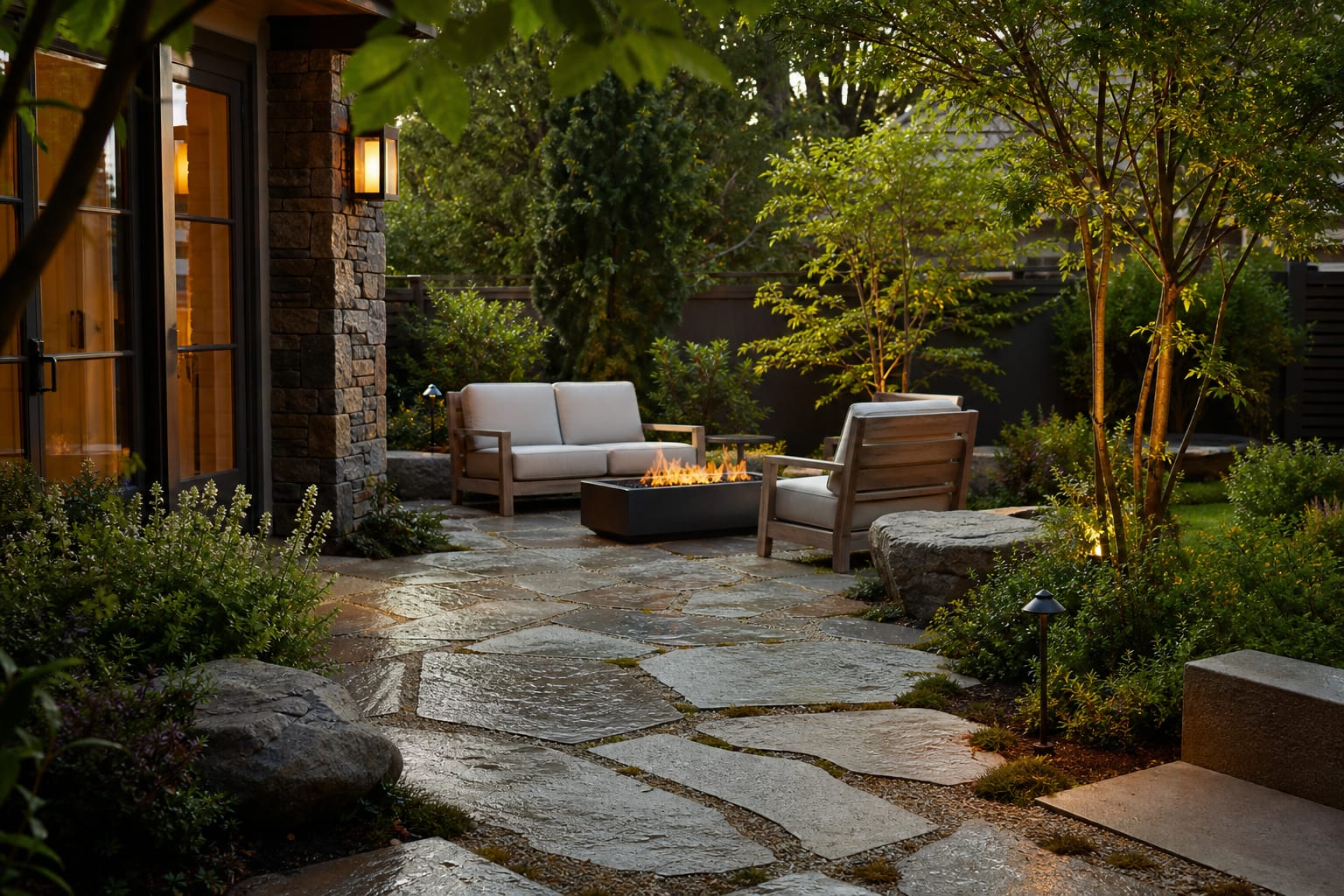
| Stepping stones, gravel joints | Low-traffic patios, garden paths | Stones set 24 to 28 inches on center | Loose gravel feels unstable under furniture |
Permeable pavers are the most flexible choice for a patio that still needs to look refined. Units are repairable — lift and replace one without cutting the whole field — and narrow, flat joints keep chair legs from wobbling.
Gravel grids look cheap only with sloppy edges. Contain the field with steel edging or a stone curb, use angular stone for grip, and keep the finished stone about 1/2 inch below the edge so it doesn't scatter into the lawn.
Pervious concrete is cleaner-looking but less forgiving. Installation timing, mix, and curing all matter, and patches rarely disappear. Save it for driveways or a modern courtyard rather than a small decorative patio unless your contractor has proven local examples.
Permeable Paving Ideas That Look Intentional
- Frame a dining patio with open-joint pavers. Keep the seating zone at least 10 by 12 feet so the table and chairs sit fully on the paved plane.
- Use a gravel grid for overflow parking. Size a one-car bay around 9 by 18 feet and edge it with steel or a curb.
- Break a long driveway with a planted center strip. Hold each permeable wheel track near 24 inches wide, with tough low planting between them.
- Add a stone reservoir under a small courtyard. Combine permeable pavers with a 6- to 12-inch clean-stone base where soil and local rules allow infiltration.
- Coordinate shade with the paving plan. A west-facing seating zone heats up fast; check outdoor umbrella placement ideas so shade doesn't fight circulation.
- Soften garden walks with slabs and gravel joints. Leave 2- to 4-inch gravel bands between larger slabs on decorative, non-critical routes.
Warm gray, buff, and soft charcoal age better outdoors than high-contrast patterns. Test the stone color against weather-ready outdoor fabric choices so the hardscape and textiles don't clash in full sun.
Design-check shorthand: - Depth before decoration. - Repetition before variety. - Maintenance before novelty.
Common Permeable Paving Mistakes to Avoid
Sand in the joints. Sand packs tight and blocks drainage — use the aggregate specified for the paver system and keep soil and mulch from washing across the surface.
Skipping the base reservoir. The stone layer stores and spreads water; a thin setting bed over compacted clay behaves like a cosmetic patio, not real infrastructure.
Beds higher than the paving. Mulch and soil migrate downhill during storms and clog joints. Keep adjacent soil slightly below the paving edge or add a stone maintenance strip.
Wrong surface under furniture. Wide gravel gaps drain well but make chairs sink or twist; use flatter pavers or tighter joints in seating zones.
Ignoring winter maintenance. Plows catch proud edges, and traction sand clogs porous surfaces. Use plastic shovel edges and confirm which deicers the system allows.
Use AI Design to Preview Your Patio Before You Commit
AI design helps here because the hard call is visual: grid or slab, gravel color, joint width, and how the paving meets planting. Upload a straight-on photo and preview a few versions — open-joint pavers, a gravel grid, a planted drainage edge — noting the door, slope, furniture zone, and any downspout that matters.
The preview won't size the stone reservoir or approve stormwater discharge, but it will show whether pale gravel looks dusty beside brick or a driveway grid reads too casual for the house. That's worth checking before demolition, since the pattern is what you'll see every day after the rain clears.
Frequently Asked Questions
Where does permeable paving work best?
Permeable paving works best on flat or gently sloped surfaces in well-draining native soil. Clay-heavy soils don't rule it out, but they need a deeper aggregate base or a connection to a daylighted drain to keep water from backing up under the surface.
Are permeable pavers slippery when wet?
No. Open-jointed pavers drain quickly, and their textured surface usually exceeds wet slip standards. Smooth porcelain or polished stone set in a permeable layout is the exception and needs an anti-slip treatment to perform the same way.
How thick is permeable paving installed?
Total system depth runs 8 to 12 inches for pedestrian patios, 12 to 18 inches for driveways, and 18 to 24 inches for heavier loads or northern frost zones. The pavers themselves are typically 2 to 3 inches thick over the aggregate base.
Can I install permeable paving myself?
Patios and walkways are within reach of an experienced DIYer, since base prep is the hardest part. Driveways and pool decks usually need a contractor because compaction and drainage planning matter more at that scale.
Will permeable paving freeze and crack?
Properly installed permeable paving handles freeze-thaw cycles well because water drains before it can freeze and expand. Cracking usually happens when joints clog, water pools on or under the surface, and the trapped water freezes and pushes the material apart.
Three Transformations to Try
- Permeable patio with planted joints
- Permeable walkway with stepping stones
- Permeable pool deck with porcelain pavers