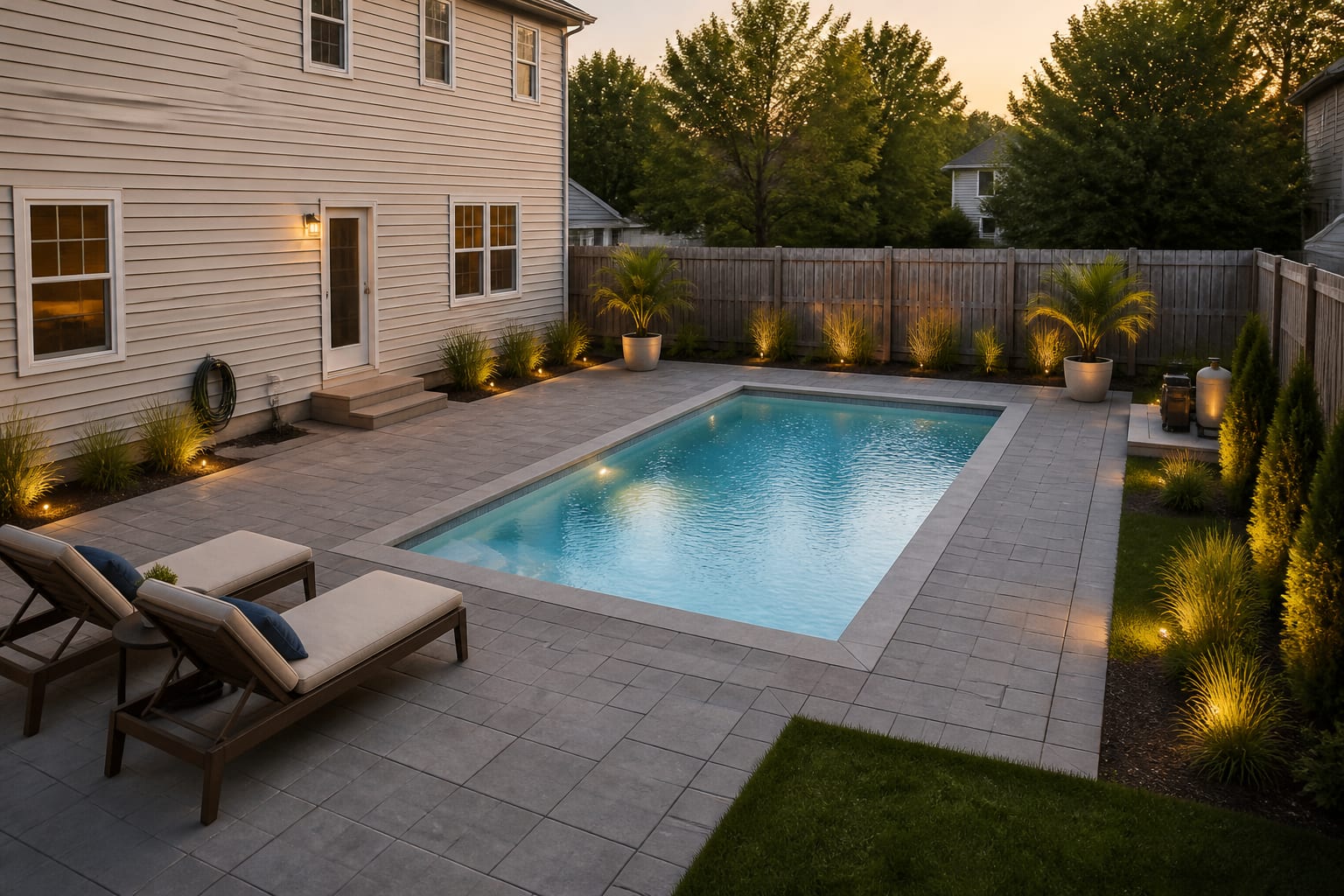
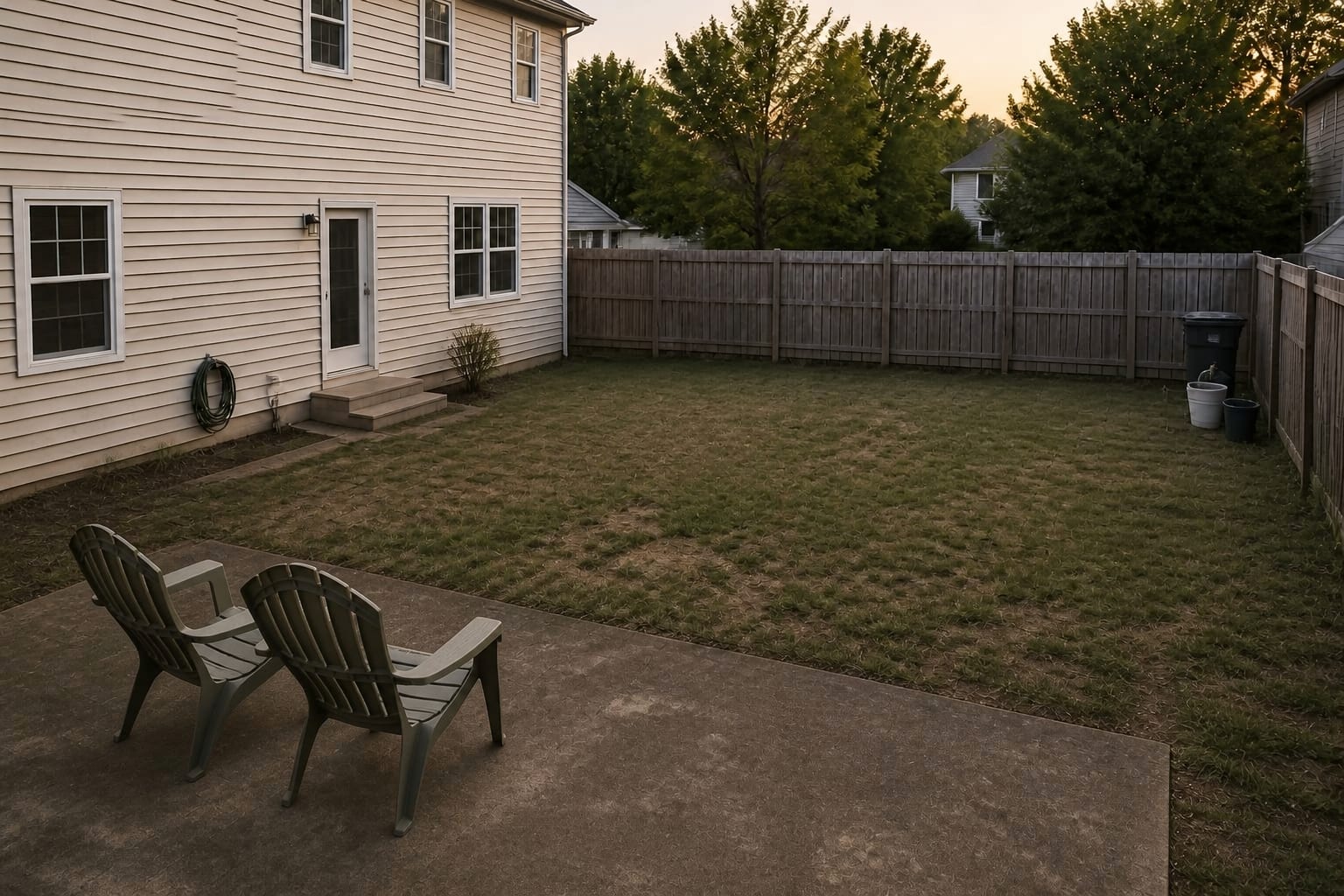
Pool installation cost in 2026 ranges from $3,500 for a basic above-ground kit to $120,000 for a custom gunite in-ground pool, with vinyl-liner and fiberglass falling between $35,000 and $85,000. Add 25% to 40% for decking, fencing, and equipment, and budget $1,200 to $1,800 a year for upkeep once it's built.
What Does Each Pool Type Cost in 2026?
Type sets your budget more than any finish or feature you add later. Above-ground kits get a family swimming for the price of a riding mower, while gunite is the only option a high-end appraiser will reliably reward.
| Pool Type | Installed Cost | Lifespan / Replacement | Notes |
|---|---|---|---|
| Above-ground | $3,500-$12,000 | 10-15 years | Minimal resale value |
| Vinyl-liner in-ground | $35,000-$65,000 | Liner every 7-10 yrs, $4,500-$6,500 | Standard 16x32 ft rectangle |
| Fiberglass in-ground | $45,000-$85,000 | Lowest chemical demand | Fixed shapes and sizes |
| Gunite (concrete) | $55,000-$120,000 | Resurface every 10-15 yrs, $6,000-$12,000 | Fully customizable shape |
| Plunge pool | $25,000-$50,000 | 10x20 ft, 4-5 ft deep | Lowest heating and chemical load |
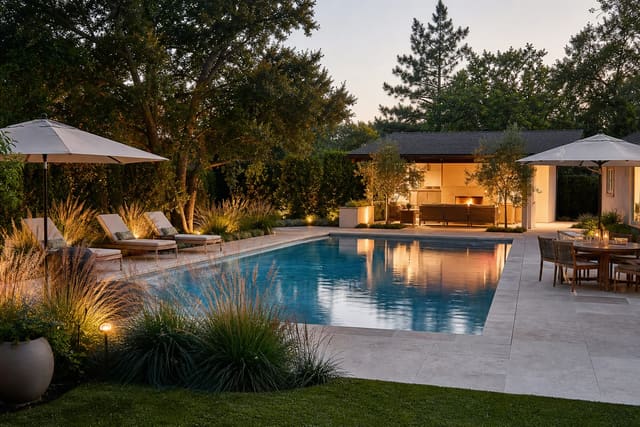
A plunge pool pairs well with a thoughtful pool landscaping plan since the smaller footprint leaves more yard to design around.
How Much Does Climate and Location Change the Price?
In Arizona or Florida, a pool earns its keep eight or nine months a year and pays back in resale value. In Minnesota or Maine, it sits covered half the year and winterizing alone runs $300 to $500 each fall, so be honest about your swimmable weeks before fixating on shell type.
Geography also moves the install cost itself. Labor and permitting in a high-cost coastal metro can push a gunite build 20% to 30% above a rural inland market, and rocky or sloped lots add excavation surcharges. Get quotes scoped to your specific site rather than trusting a regional average.
What Else Should You Budget for an In-Ground Build?
Sticker shock comes from line items nobody quotes up front, turning a $55,000 shell into an $80,000 project once the yard is finished and safe.
| Line Item | Typical Cost |
|---|---|
| Excavation and access | $4,000-$10,000 (more if a crane or hand-dig is needed) |
| Concrete or paver decking | $15-$35/sq ft, so 600 sq ft runs $9,000-$21,000 |
| Code-required fencing | $25-$60/linear ft, often $4,000-$8,000 |
| Heater and variable-speed pump | $3,500-$7,000 |
| Permits, surveys, electrical bonding | $1,500-$4,000 |
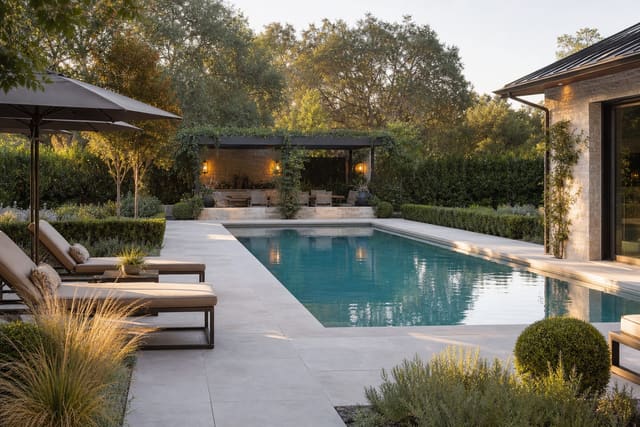
The deck and fence aren't optional extras; they're what make the pool enjoyable and legal, which is why a strong pool patio layout belongs in the budget from day one.
Beyond the $1,200-$1,800 in annual chemicals, electricity, and water, plan for periodic big-ticket items: a liner swap every 7-10 years, a resurface every decade on gunite, and a heater or pump motor lasting 8-12 years. Spread across 20 years, true ownership cost on a mid-range in-ground pool often equals a third of the build price. Financing a $60,000 pool over 15 years can add $400-$550 a month, worth weighing against your climate's actual swim season.
What Mistakes Should You Avoid?
The costliest error is sizing the pool to your biggest party instead of your typical Tuesday swim. A 16 by 32 foot pool holds about 20,000 gallons, and every gallon costs money to heat, filter, and balance for 20 years.
- Don't skip the variable-speed pump to save $1,500 upfront; a single-speed motor can add $600 a year to your power bill.
- Don't forget the pool changes drainage, sightlines, and sun exposure across the whole yard, often requiring a deck addition to make the space whole.
- Don't pour the deck before locating the equipment pad, cleanout, and autocover housing, or you'll be jackhammering fresh concrete later.
Preview Your Pool in Re-Design
Frequently Asked Questions
How much does a pool add to home value?
A well-built in-ground pool typically returns 5% to 8% of home value in warm-climate markets where buyers expect one. In cold regions it can be value-neutral or even a slight liability, so location matters more than build quality.
Is fiberglass or gunite cheaper to own?
Fiberglass costs less to run because its smooth gel-coat surface needs fewer chemicals and no resurfacing for 20-plus years. Gunite costs more to maintain and eventually resurface, but it gives unlimited shape and size, which is why it remains the premium choice.
Can I install an above-ground pool myself?
Yes, a basic above-ground kit is a realistic two-weekend DIY project for a handy owner, saving $1,000 to $2,500 in labor. You still need a level base and proper electrical work for the pump, so hire an electrician for the circuit even if you set the walls yourself.
Do I need a fence around my pool?
Most jurisdictions require code-compliant fencing around any in-ground or above-ground pool, typically costing $25 to $60 per linear foot. Budget $4,000 to $8,000 for a typical yard, and confirm local height and gate-latch rules before building the deck around it.