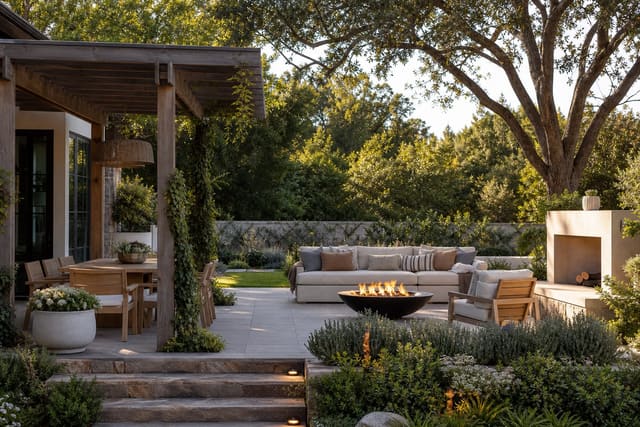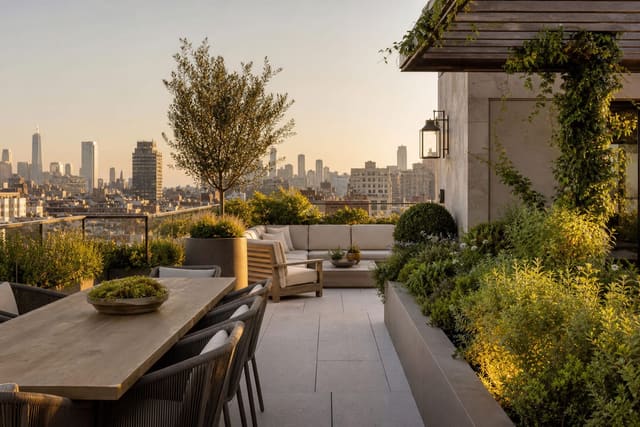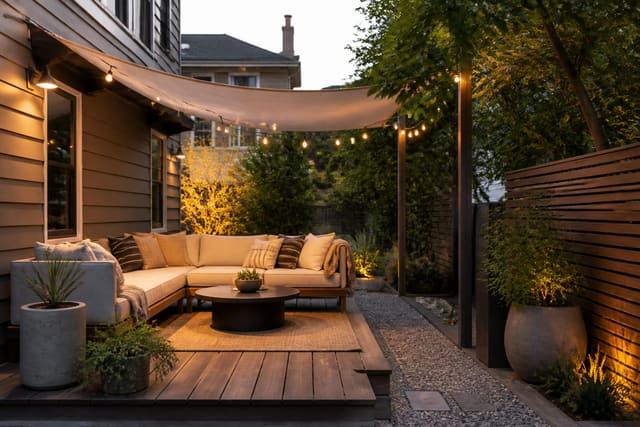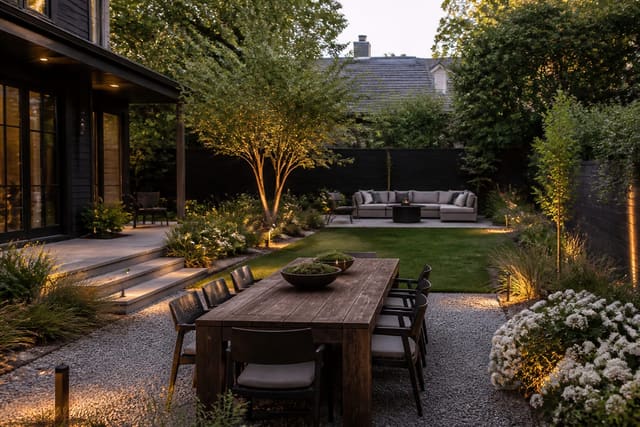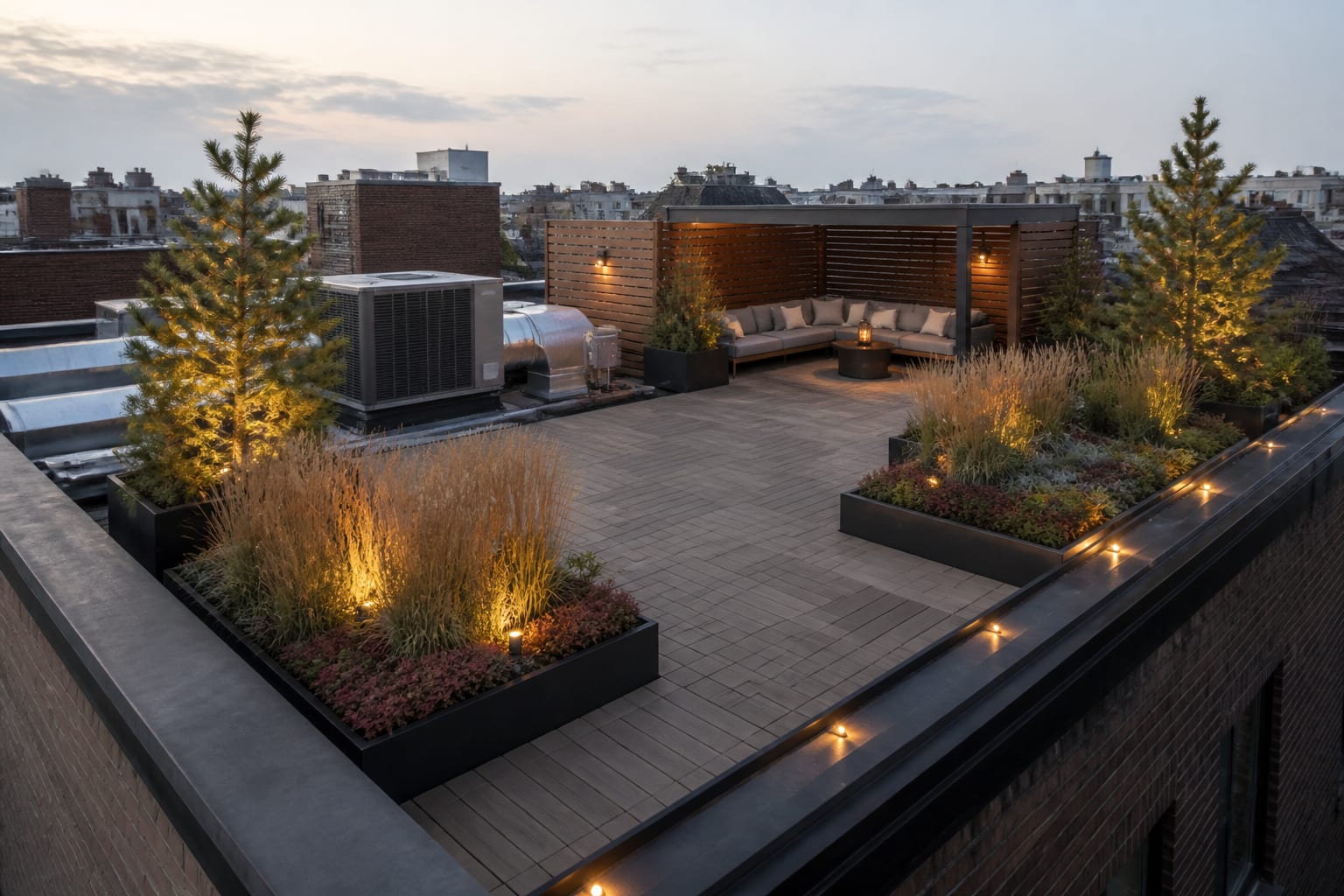
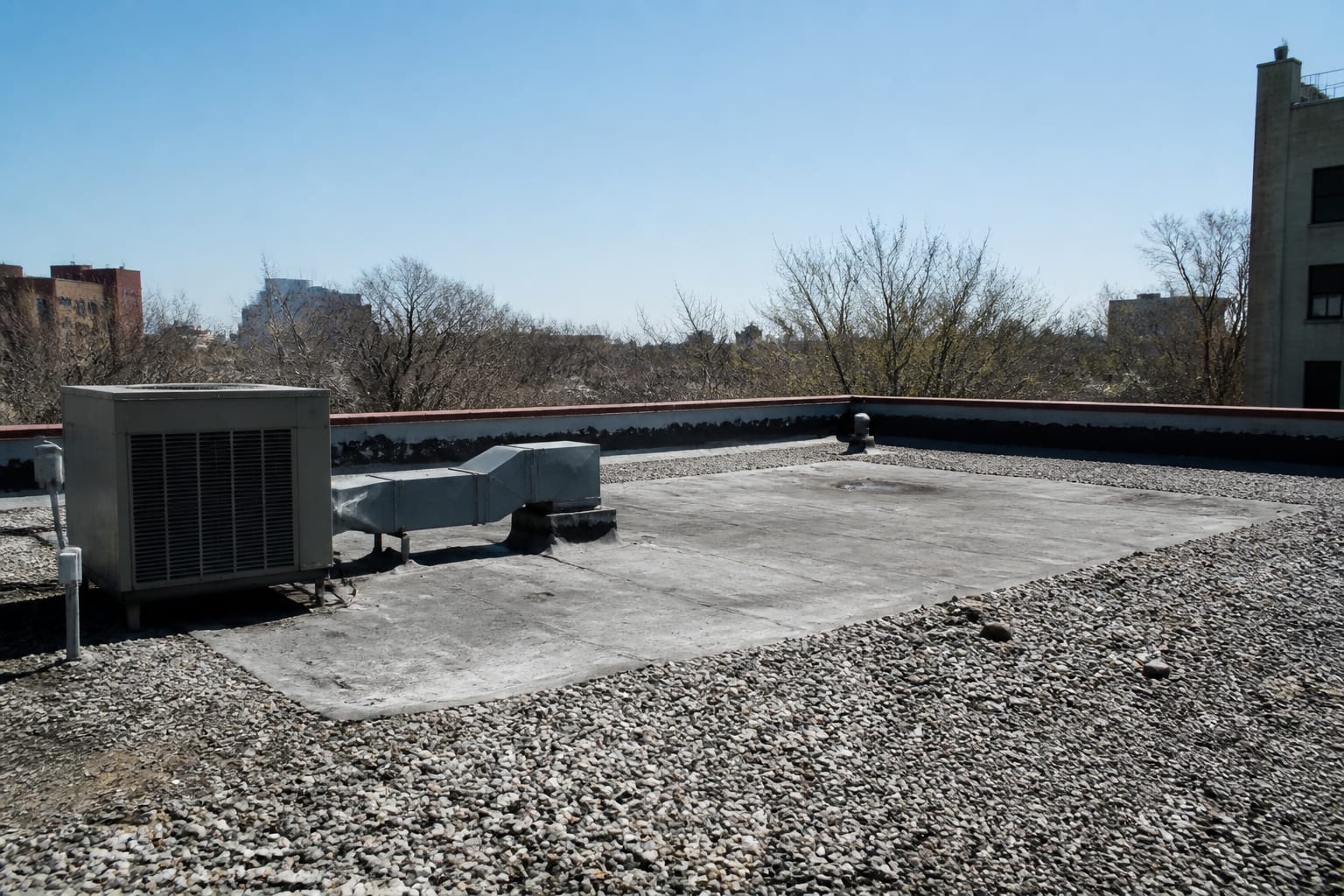
How do I create a roof garden? The honest answer is that you start with the building, not the plants. Before you buy a single pot you need to know how much weight the roof can carry and that its waterproofing is sound, because a roof garden that leaks or overloads the structure is a problem no planting can fix.
My read is that rooftops reward restraint. Wind, sun, and weight limits are brutal up there, so the gardens that thrive are lightweight, sheltered, and built around a few tough plants rather than a jungle. Treat the roof as the harsh, exposed site it is and you can still grow something genuinely green.
Start with structure, weight, and waterproofing
Everything on a roof comes back to load. A planted area carries the dead weight of containers, growing medium, and mature plants, plus the live weight of people, water, and snow. Saturated growing medium alone runs near 100 pounds per cubic foot, so a modest 10-by-10 bed at 8 inches deep can add over half a ton once watered. Have a structural engineer confirm the roof's capacity in pounds per square foot before you commit to anything heavy.
Waterproofing is the other non-negotiable. Any planting sits above a membrane that must stay intact, so use root barriers under beds and set containers on pedestals or feet that lift them off the surface and let water drain away. A clear path to existing roof drains keeps water from pooling, which is what eventually rots a membrane and stains the ceiling below.
Access and the rules around it deserve a check before you start hauling soil. Many buildings cap rooftop loads through the lease or local code, and an extensive green roof is a different structural conversation than a handful of containers. Confirm how you will carry materials up, whether a stairwell or a hoist, and factor that into how heavy any single planter can reasonably be. It is far cheaper to learn the limits on paper than to strip out a finished garden because the structure or the paperwork said no.
Tame the wind and sun before you plant
A roof is windier and brighter than any ground-level yard, and both forces punish soft plants. Wind on an exposed roof can run 20 to 30 percent stronger than at street level, stripping moisture from leaves and toppling tall containers. Reflected heat off surrounding walls and the roof surface can push effective temperatures well past what the same plant tolerates in a garden bed.
Shelter is the fix, and a partial screen beats a solid wall that just creates turbulence. Look for these traits when you shop for screening and plants:
- Semi-permeable screens or slatted panels that filter wind to roughly half speed rather than blocking it.
- Sturdy, low-profile planters wide at the base so a gust cannot tip them.
- Tough, fine-leaved plants such as ornamental grasses, sedums, lavender, and dwarf pines.
- Self-watering or drip-irrigated containers, since shallow rooftop medium dries within a day in summer.
Irrigation is not optional up here. Shallow medium under full sun and wind can dry to dust within a single afternoon in summer, so a simple drip line on a timer is the difference between plants that hold and plants you replace every July. Run it early in the morning so water soaks in before the day's heat and wind pull it back out. The same outdoor-room thinking that works on the ground works up high, and my rooftop terrace ideas cover how to zone seating and planting on a deck that takes full weather.
Lay out the space like an outdoor room
Once structure and shelter are handled, design the roof as you would a small patio: a surface to stand on, a place to sit, and planting that gives it life. Lightweight decking tiles or pavers on adjustable pedestals create a level floor over a sloped membrane without adding much weight. Keep the heaviest elements, like large planters and any water, directly over load-bearing walls or columns rather than mid-span.
Planting in layers still works at altitude if you keep it light. A band of grasses for movement, a few dwarf evergreens for winter structure, and pockets of drought-tolerant perennials give you three seasons without heavy soil. For ideas on arranging seating and surfaces, my AI patio design ideas translate directly to a roof, and the planting-and-zoning logic in my AI backyard design ideas helps you balance open floor against green mass.
Privacy and view both come into play more on a roof than at ground level. A green screen along one edge can block an overlooking window while still filtering wind, and an open edge can be left low to keep a skyline you paid for in the rent. Keep planters at least 12 inches back from the parapet so nothing can be knocked over the edge, and never rely on a container as a safety barrier where a guardrail belongs.
Lighting extends the hours you actually use the space. Low-voltage or solar fixtures tucked among the planters give you soft evening light without trailing heavy cable across the membrane, and uplighting a single dwarf tree or a band of grasses turns the roof into a destination after dark. Keep fixtures lightweight and weather-rated, and run any wiring along the same protected routes as your irrigation so the membrane stays untouched.
Common mistakes to avoid
The common mistakes to avoid on a roof are almost always about weight and water. People fill planters with heavy garden soil instead of lightweight mix and quietly overload the structure. They skip the engineer entirely, then discover the limit only when the ceiling below starts to sag or stain. They set containers flat on the membrane, trapping water until the waterproofing fails.
Wind is the other blind spot. Tall, top-heavy trees in narrow pots blow over in the first real gust, and unsecured furniture turns into a hazard over the edge. And many rooftop gardens die of thirst because shallow medium under full sun and wind can dry out in a single afternoon, so plan irrigation from day one rather than promising yourself you will hand-water every evening.
Use AI design to preview your roof garden before you commit
A bare rooftop is one of the hardest spaces to imagine planted, because there is nothing up there to give your eye scale. With Re-Design you upload a photo of your roof, terrace, or unused building top, then ask the AI design to add lightweight planters, slatted wind screens, decking, and a band of grasses and dwarf shrubs.
Run a few layouts before any weight goes up: planters hugging the load-bearing walls, a sheltered seating nook in one corner, or a green screen along the windward edge. Seeing the proportions on your actual roofline makes it far easier to brief a contractor and to keep the heavy elements where the structure can take them.