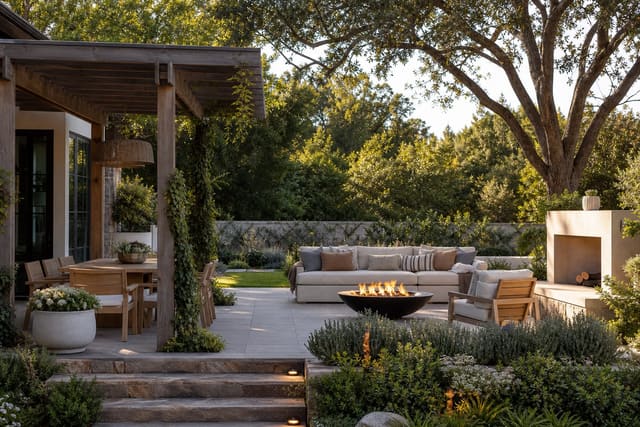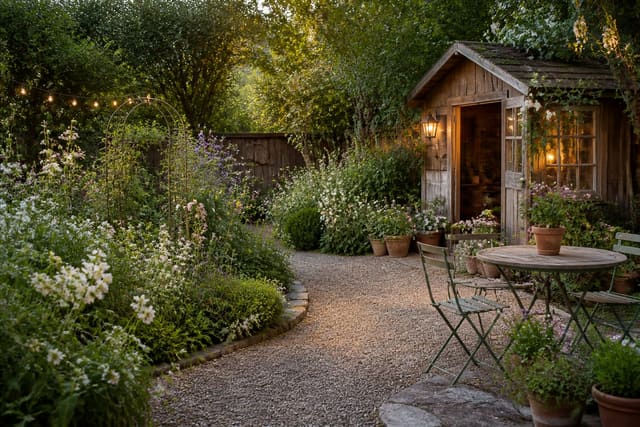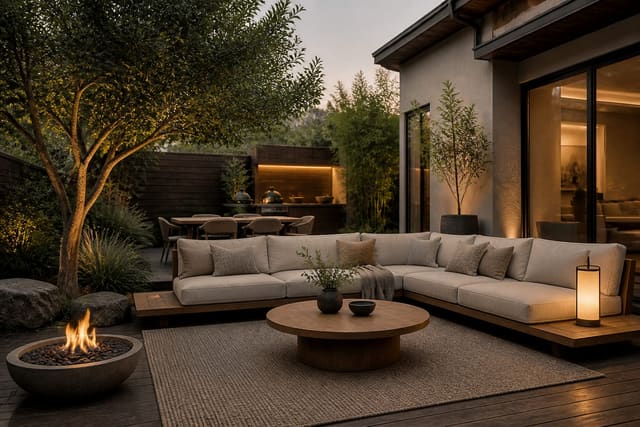
Scandinavian outdoor design is built on a single, honest principle: the outside should feel as intentional as the inside. Rather than filling a patio or garden with decorative noise, the Nordic approach edits down to durable natural materials, clean structure, and a palette borrowed directly from the surrounding landscape.
These ideas translate that philosophy into specific, actionable moves for patios, balconies, and garden spaces of any size. The goal is an outdoor room that you genuinely want to spend time in — not just photograph — by solving for comfort, materiality, and the kind of restful atmosphere that Scandinavian spaces consistently produce.
Pared-Back Natural Materials as the Design Foundation
The material palette of a Scandinavian outdoor space is borrowed directly from the Nordic forest and coastline: weathered teak, raw cedar, grey stone, and powder-coated steel in matte black or dark green. Each of these ages with dignity rather than declining — teak develops a silver-grey patina over one to two seasons that is the intended finish, not a sign of neglect. Cedar resists rot and splitting without chemical treatment, making it the correct choice for planter boxes, decking borders, and pergola frames in wet climates.
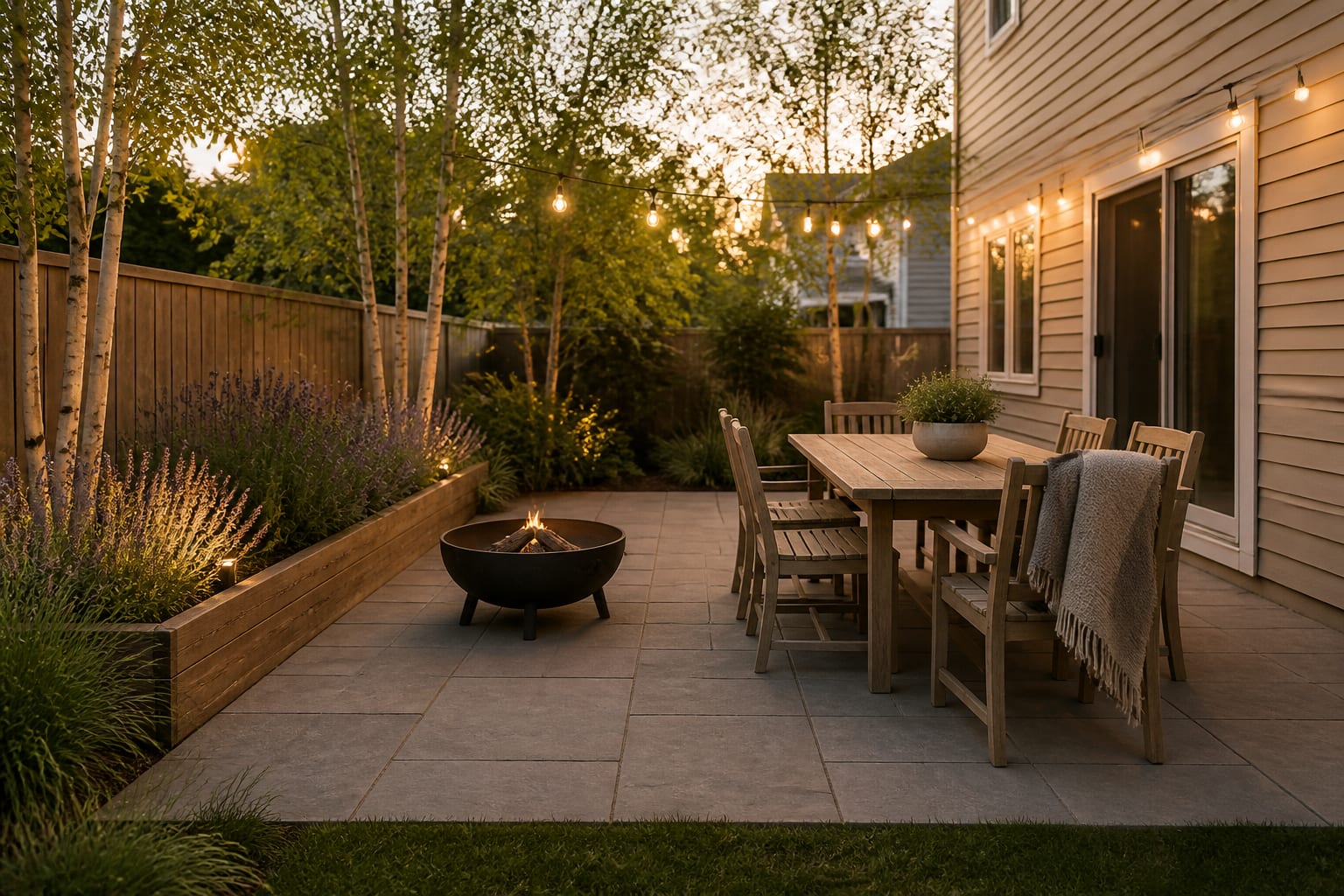
Stone pavers in flat grey or sand tones laid in a clean grid pattern ground the space without competing visually with planting or furniture. A 24-by-24-inch format in smooth-finish sandstone or reconstituted limestone gives a tailored surface that photographs neutrally in all light conditions. Avoid mixed-material paving schemes — alternating two stone types or combining concrete with tile reads as busy in a scheme that relies on restraint for its effect.
The restraint extends to the number of materials used simultaneously. Three primary materials — one for the ground plane, one for furniture, one for planting vessels — is the practical ceiling for a coherent Scandinavian outdoor space. Each additional material type requires active resolution and pulls the eye in more than one direction at once.
See also our guide to Cottagecore Garden Ideas for more on scandinavian outdoor ideas.
Functional Minimalist Furniture for Outdoor Living
Furniture selection for a Scandinavian outdoor scheme follows the same logic as the indoor version: fewer pieces, better quality, nothing that does not serve a clear purpose. A teak dining table and matching chairs as the central anchor piece handles the primary use case — eating and gathering outside — while a separate compact lounge section in powder-coated steel with weatherproof cushions in charcoal or warm linen covers the relaxed sitting function. These two zones, positioned with at least 4 feet between them, define the space without crowding it.
Teak at 1.5 inches thick in a trestle or plank construction handles decades of outdoor use with annual oiling and nothing more. Chair frames with slatted teak seats and backs dry quickly after rain, which makes them far more practical in variable climates than fully upholstered outdoor chairs. Stackable side chairs are worth the modest size trade-off: they allow the dining zone to expand for guests and compress to a single chair and table for everyday breakfast use.
For small balconies under 60 square feet, the smarter move is a single high-quality folding chair in powder-coated steel, a compact ceramic-top bistro table, and a cedar wall planter. Three well-chosen pieces define a space more clearly than a full matching set that leaves no usable floor area between them.
For a related angle on scandinavian outdoor ideas, read Japandi Outdoor Ideas.
Plants, Greenery, and Seasonal Hardiness
Planting in a Scandinavian outdoor scheme favors structure and seasonal resilience over tropical abundance. Ornamental grasses — Karl Foerster feather reed grass, blue oat grass, or prairie dropseed — provide movement, vertical height, and a muted green-to-bronze palette that reads as deliberately Nordic without requiring any specialist knowledge. Planted in pairs along a fence line or as a central focus in a large cedar planter, they establish a quiet rhythm that holds through late autumn when most flowering plants have finished.
Evergreen structural planting earns its place because it performs through the months when an outdoor space would otherwise look bare. Clipped boxwood spheres in 14-inch cedar or concrete pots, a row of columnar yews along a boundary fence, or a single ornamental birch as the space's vertical anchor all maintain the scheme through winter without demanding attention. These choices reflect the Nordic design instinct to build for the full calendar year rather than optimizing only for summer peak.
Herbs and edible planting belong in a Scandinavian garden not as a productivity gesture but because lavender, rosemary, and thyme contribute a sensory layer — fragrance, soft texture, muted silver-green foliage — that purely decorative planting cannot replicate. A single cedar planter at 24 inches wide and 10 inches deep, positioned near the dining table, brings that sensory dimension within reach during meals.
Cozy Lighting and Textiles for Short Daylight Hours
The short daylight hours of Nordic winters shaped an entire design philosophy around artificial light and textile warmth. String lights — warm-white globe lights at 2700K strung at a consistent 9-foot height above the dining area — extend the outdoor season well into autumn and create an atmosphere that overhead or spotlit lighting cannot produce. The key is consistency: a single run of lights at uniform height and spacing reads as architectural. Scattered, multi-height arrangements look improvised and undercut the deliberate feeling the scheme depends on.
A cast-iron or heavy-gauge steel fire pit positioned as the seating zone's focal point adds radiant warmth that a patio heater cannot replicate. The visual presence of a fire pit also anchors the layout in a way that a standalone heater does not — it becomes the gravitational center of the seating arrangement rather than a utilitarian appliance at the perimeter. In spaces where a fire pit is not permitted, a covered propane lantern in a matte black or weathered bronze finish at standing height serves the same atmospheric function at lower heat output.
Textiles seal the deal on outdoor comfort when temperatures drop. Outdoor-rated wool-blend throws in oatmeal, charcoal, or storm grey draped over chair backs communicate comfort and signal that the space is designed to be used rather than admired from a window. A flat-weave outdoor rug in a neutral geometric pattern beneath the lounge seating ties the zone together visually and makes bare stone or deck boards underfoot feel far less cold on autumn evenings.
- Set a weathered teak dining table as the anchor piece — its natural grey patina is the look, not a flaw to refinish.
- Position a cast-iron or steel fire pit as the focal point of the seating arrangement for warmth and visual weight.
- Plant a row of ornamental grasses or birch saplings along the fence line to create a layered natural privacy screen.
- Hang a simple woven cotton or linen hammock between two posts to add a resting point that reads as effortlessly Nordic.
- Use flat grey or sand-toned stone pavers in a grid layout to ground the space without competing with plantings.
- Add a cedar planter box at 24 inches wide filled with lavender or rosemary for fragrance that reinforces the natural palette.
- String warm-white globe lights at a consistent 9-foot height above the dining area for evening atmosphere without harsh spotlighting.
Bring the look home with Re-Design
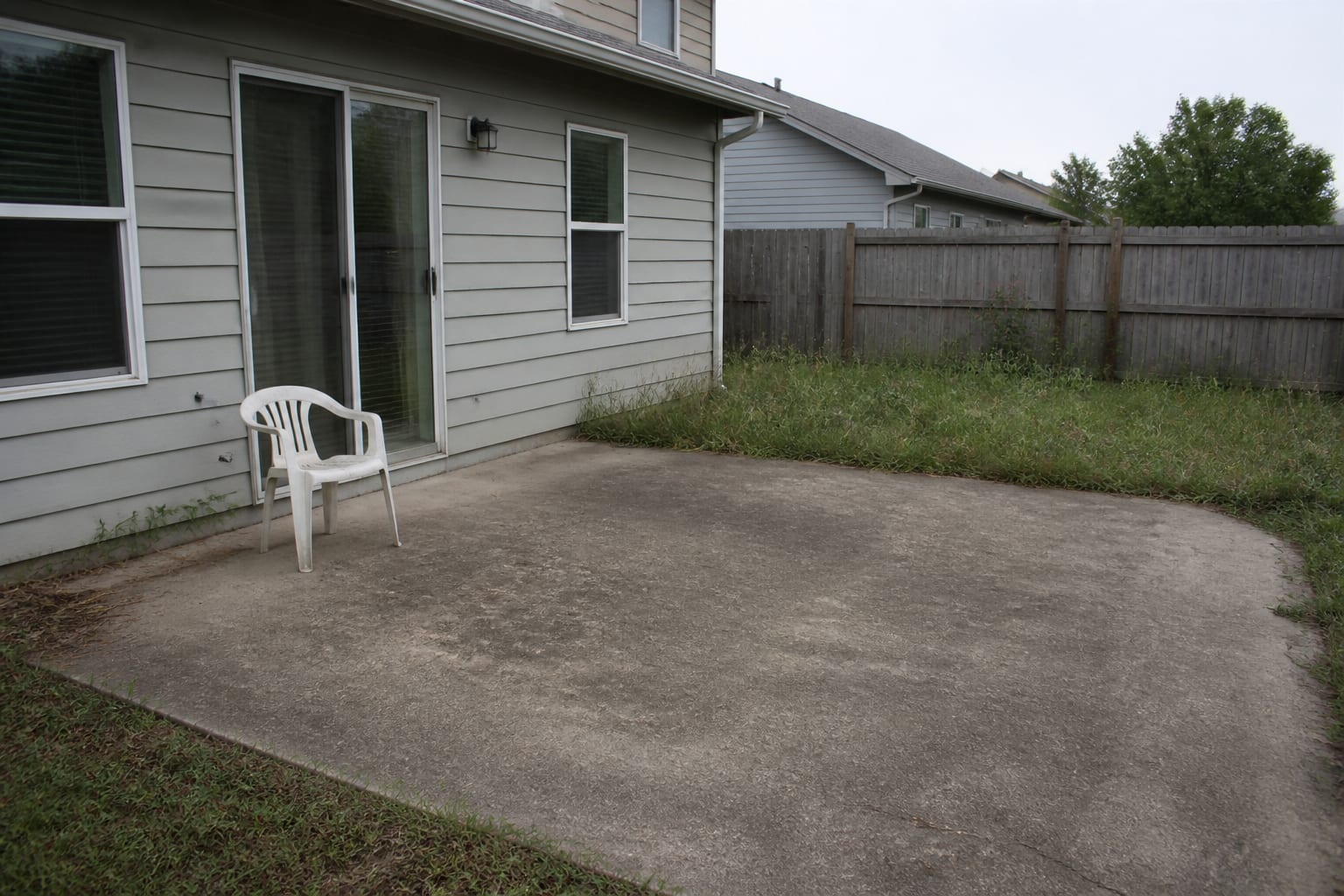
Re-Design lets you upload a photo of your outdoor space and preview a full Scandinavian transformation using AI before you buy a single piece of furniture or plant a single shrub. Try different material combinations, test fire pit placements, and compare lighting arrangements — all from your actual patio or garden image. It makes a confident outdoor redesign far easier to achieve.
Frequently Asked Questions
What plants suit a Scandinavian outdoor design scheme?
Ornamental grasses, heather, lavender, and birch trees are the most on-palette choices because they reflect the flora of Nordic landscapes. Stick to green, silver, and muted purple tones rather than tropical brights, and keep planting schemes structured rather than wild or overgrown.
How do I make a small balcony feel Scandinavian?
Focus on one well-made teak or powder-coated steel chair, a compact side table, a single cedar planter, and warm globe lighting. Restraint is the move in a small space — one quality item per category beats a full furniture set that leaves no room to breathe.
Are Scandinavian outdoor materials suitable for wet climates?
Teak, cedar, and powder-coated steel are all well-matched to wet climates. Teak contains natural oils that repel moisture, cedar resists rot without treatment, and powder-coated finishes outlast painted steel by years. Annual oiling of teak and cedar extends lifespan significantly without heavy maintenance effort.