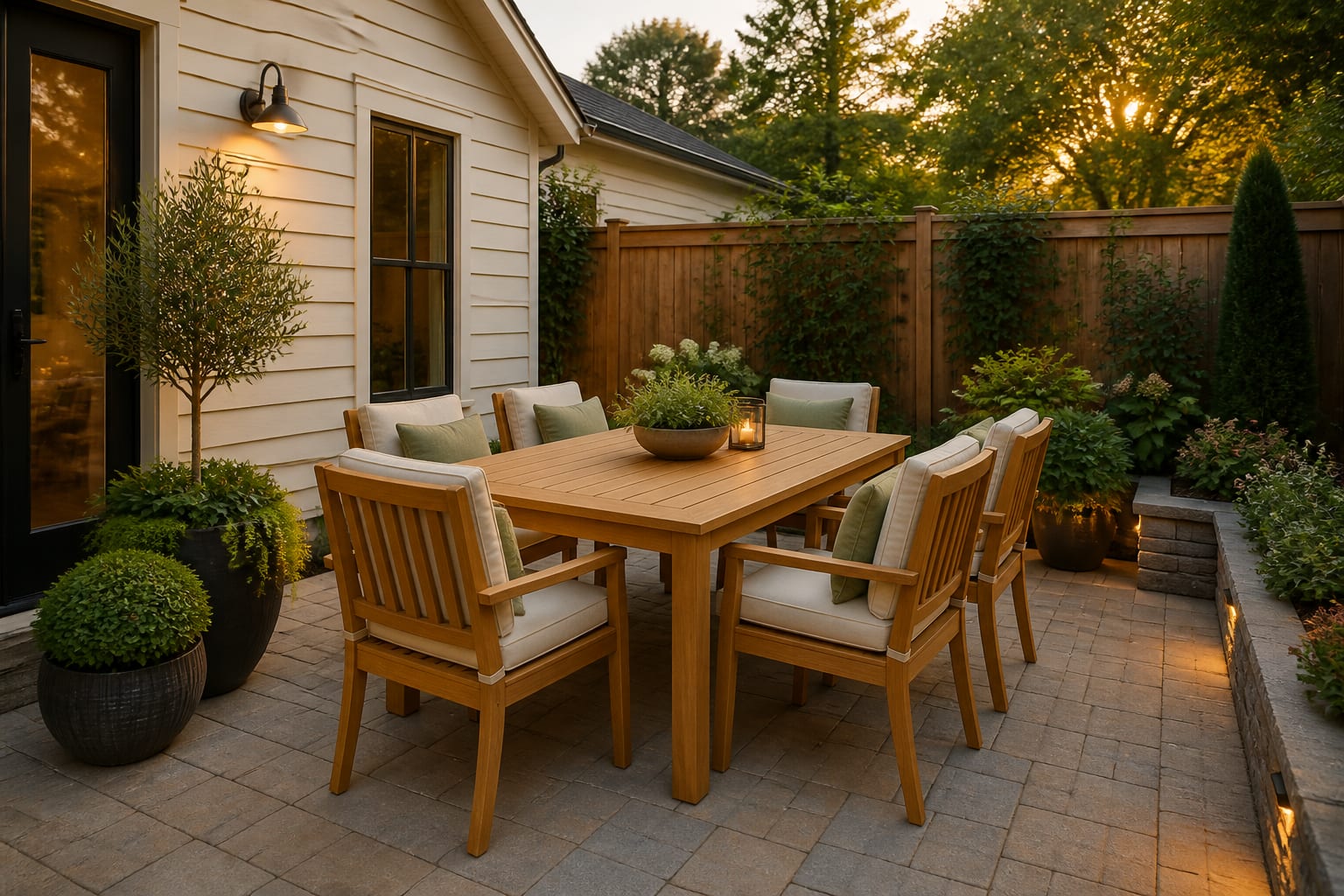
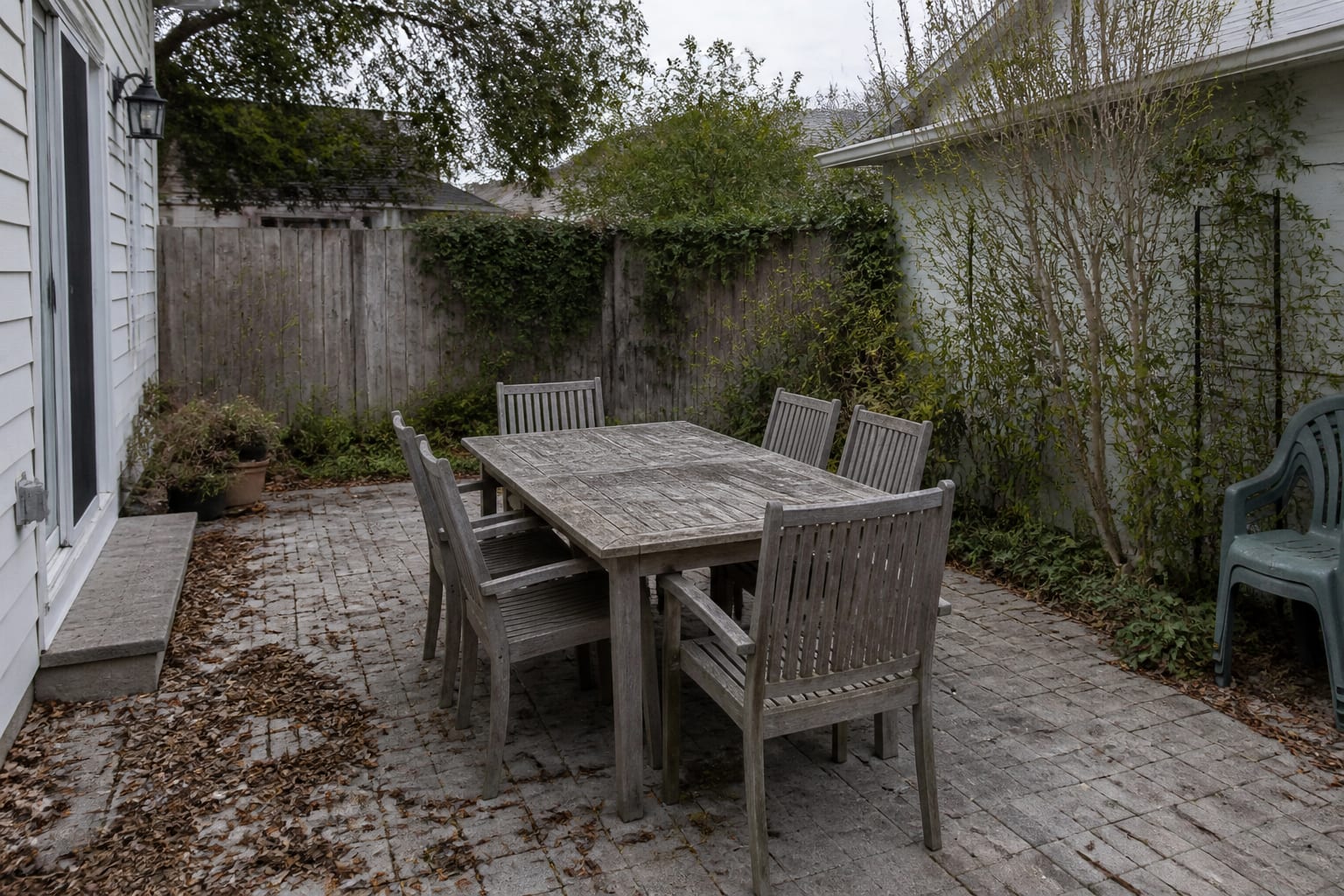
Teak earns its lofty reputation honestly, which is rarer than the marketing suggests. The honest answer to whether it is worth the premium is yes for almost anyone who keeps furniture longer than a few years, because a single quality teak set can comfortably outlast two or three cheaper replacements. My read is that the only real catch is a small, entirely optional maintenance decision: you choose between letting the wood weather to a silver-grey patina or keeping it honey-toned, and that one choice quietly drives everything else about its care.
What makes teak special lives in the wood itself, not in any coating. Its natural oils and famously tight grain resist water, rot, and insects without any sealant at all, which is exactly why it has been the boat-deck wood of choice for centuries. The same properties let it shrug off a wet patio winter that would warp and split a pine bench in a single season.
Why teak outlasts everything else outdoors
The magic is natural oil, and there is a lot of it. Teak heartwood is saturated with silica and protective oils that repel moisture from the inside out, so it never needs the stains and sealers that softwoods depend on to survive a season. That same density also makes the wood dimensionally stable; it barely swells, cups, or cracks through the freeze-thaw cycles that quietly destroy lesser woods over a few winters.
That resistance extends to the things that ruin most outdoor furniture. Teak fends off fungal rot, resists wood-boring insects, and tolerates salt air, which is why it is a staple on coastal decks and yacht decks alike. You can leave a teak bench out through rain, snow, and blazing sun for decades and find it structurally sound, even if the color has shifted.
It helps to compare teak honestly against its rivals so the premium makes sense. Powder-coated aluminum is light and rust-free but dents, and its finish chips to bare metal over time. Cheaper hardwoods like eucalyptus or acacia look similar in a catalog but carry far less natural oil, so they crack and gray within a few seasons unless you fuss over them constantly. All-weather wicker over an aluminum frame lasts well but reads as a different, more casual look entirely. Against that field, teak is the rare material that asks for almost nothing and rewards you for decades.
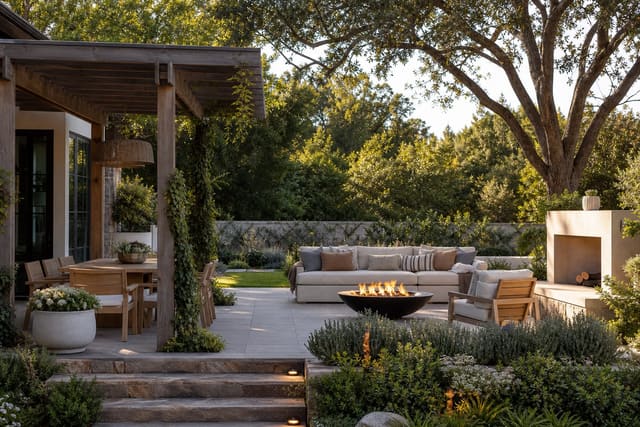
This genuine durability is why teak anchors so many high-end patios and built-in seating areas. If you are planning the larger layout around it, my AI patio design ideas walk through how to position a teak dining set so it reads as the deliberate centerpiece rather than an afterthought shoved against a wall. The wood's warm tone also plays beautifully with warm lighting, so it is worth planning the fixtures early rather than bolting them on later.
The long lifespan also changes how you should think about the upfront cost. Spread the $800 to $3,000 price of a good dining set across 30 years and the annual cost is genuinely modest, often less than replacing a budget aluminum set every five or six years. Teak also holds resale value better than almost any other outdoor material, since a weathered set restores beautifully with light sanding. When people ask whether they can afford teak, my honest answer is usually that they cannot afford to keep rebuying the cheaper option instead.
Choosing the right grade and style
Not all teak is created equal, and the grade you buy directly determines how gracefully it ages on your patio. Here is exactly what to look for before you spend real money:
- Grade A: dense golden heartwood from the center of the trunk, uniform color, and the highest oil content
- Grade B: lighter heartwood with some color variation and a slightly lower oil density
- Grade C: outer sapwood that is pale, porous, and prone to uneven weathering and early cracking
- Mortise-and-tenon or doweled joinery rather than screws alone, which loosen as the wood moves seasonally
- Smooth, splinter-free sanding on every surface and edge you will actually touch with bare skin
- Solid stainless or marine-grade hardware, since cheap fasteners rust and bleed dark streaks into the grain
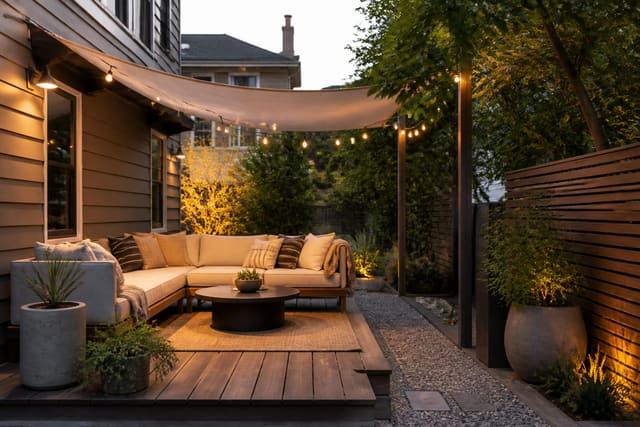
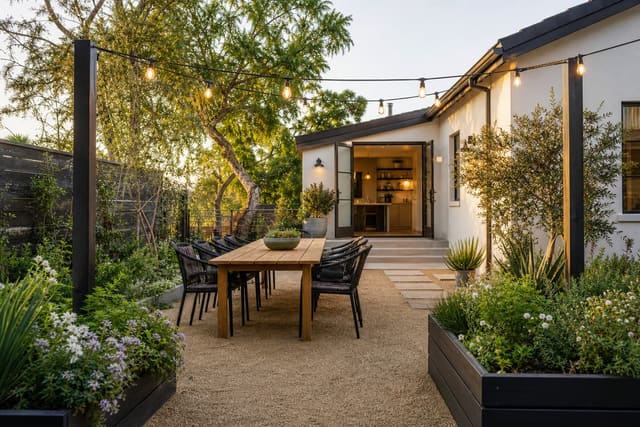
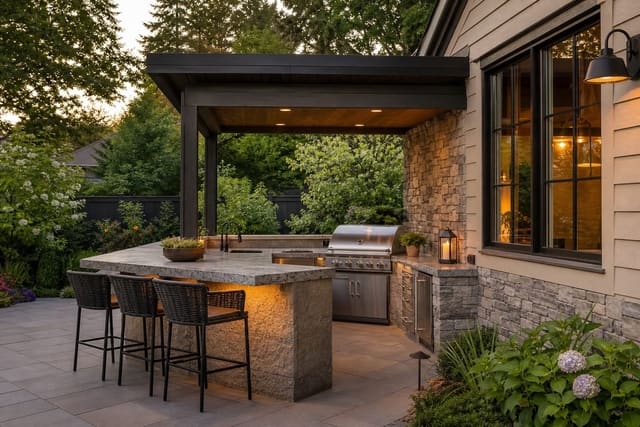
Style-wise, the warm honey of fresh teak suits a polished, finished patio, while the silver-grey patina leans relaxed and distinctly coastal. Neither is wrong; it is purely a look you choose. Lighting amplifies either direction, and pairing the wood with warm-toned patio string lights makes honey teak genuinely glow at dusk. If your space is part of a larger cooking and dining zone, coordinate the set with your outdoor kitchen ideas so the materials and tones actually agree instead of clashing across the patio.
Common mistakes to avoid
The most common mistake people make is power-washing teak to clean it quickly. A pressure washer running above roughly 1,500 PSI tears out the soft grain between the hard growth rings and leaves a permanently furred, rough surface that never feels smooth again. Wash by hand with a soft brush, mild soap, and plain water instead, and do it no more than once or twice a year.
Another costly mistake is applying varnish or polyurethane in a bid to lock in the honey color. Film-forming finishes simply cannot flex with the wood through outdoor temperature swings, so they crack, peel, and trap moisture underneath within a single season, leaving a worse mess than bare wood. If you genuinely want to preserve the gold tone, use a penetrating teak sealer applied once a year, never a hard surface film. A third anti-pattern is buying Grade C sapwood furniture because it looks nearly identical to Grade A under showroom lighting. Within a year that sapwood grays unevenly and starts checking, while a Grade A piece beside it ages with quiet dignity. Inspect the end grain closely and ask the grade directly before you ever hand over a card.
Use AI design to preview teak furniture before you commit
The honey-versus-silver decision is genuinely hard to make from a catalog photo, because both finishes look fantastic in a professionally styled showroom shot under perfect light. Re-Design lets you test the choice on your own patio instead: upload a photo of the actual space and the AI drops a teak set into it, so you can see whether warm honey or weathered grey truly suits your surroundings.
This preview turns out to be just as useful for sizing and layout as it is for tone. Render the dining group against your real fence, plantings, and paving, and you will quickly see whether the set fills the space comfortably or crowds the walkway to the door. Upload a couple of angles, compare honey against silver on the same furniture, and commit only to the teak that genuinely belongs in your yard.