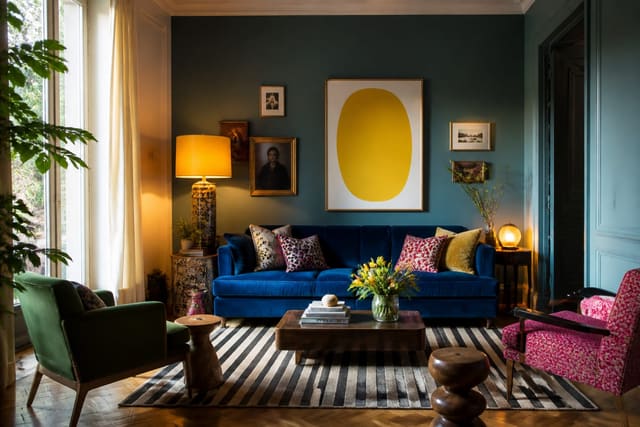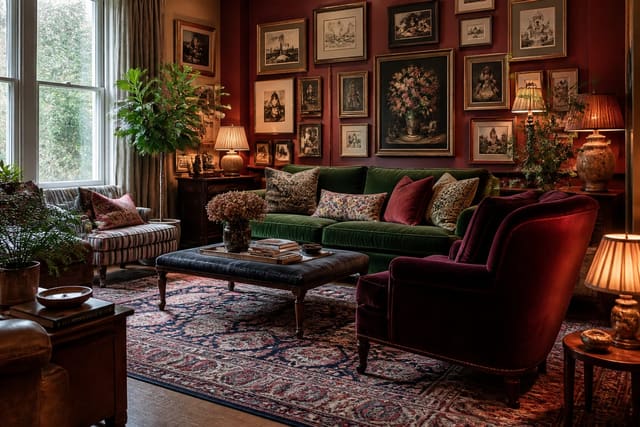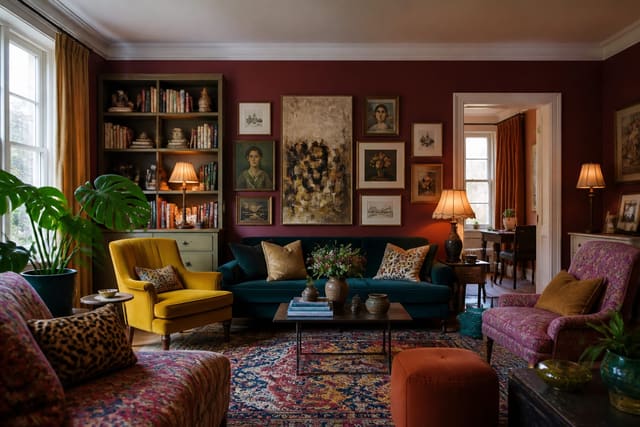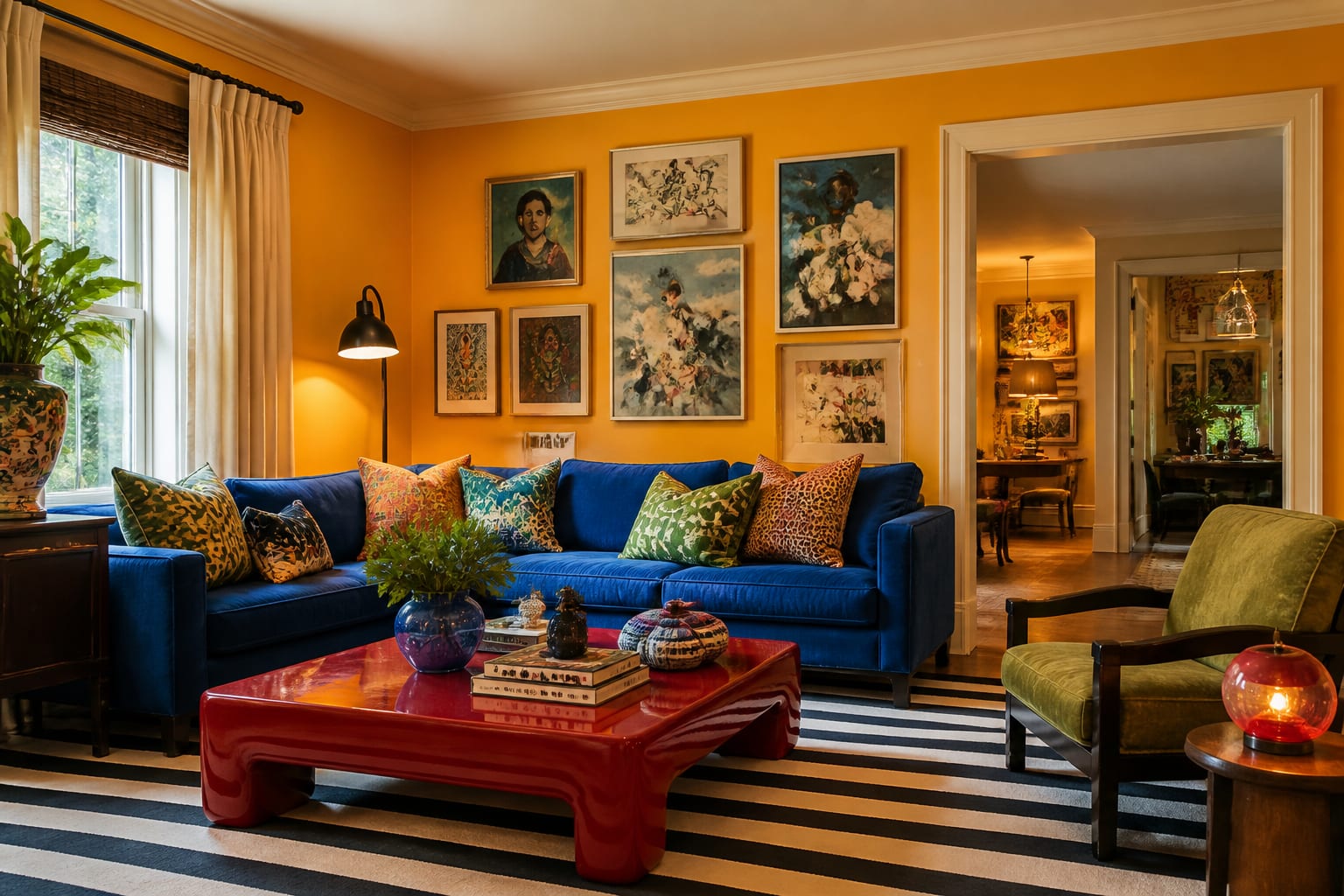
AI dopamine decor room design turns your uploaded photo into bold color, pattern, and furniture previews so you can test joyful looks before committing. The best results come from disciplined prompts that name one dominant color, one pattern family, and the furniture that must stay, keeping the room functional for real life, not just cheerful.
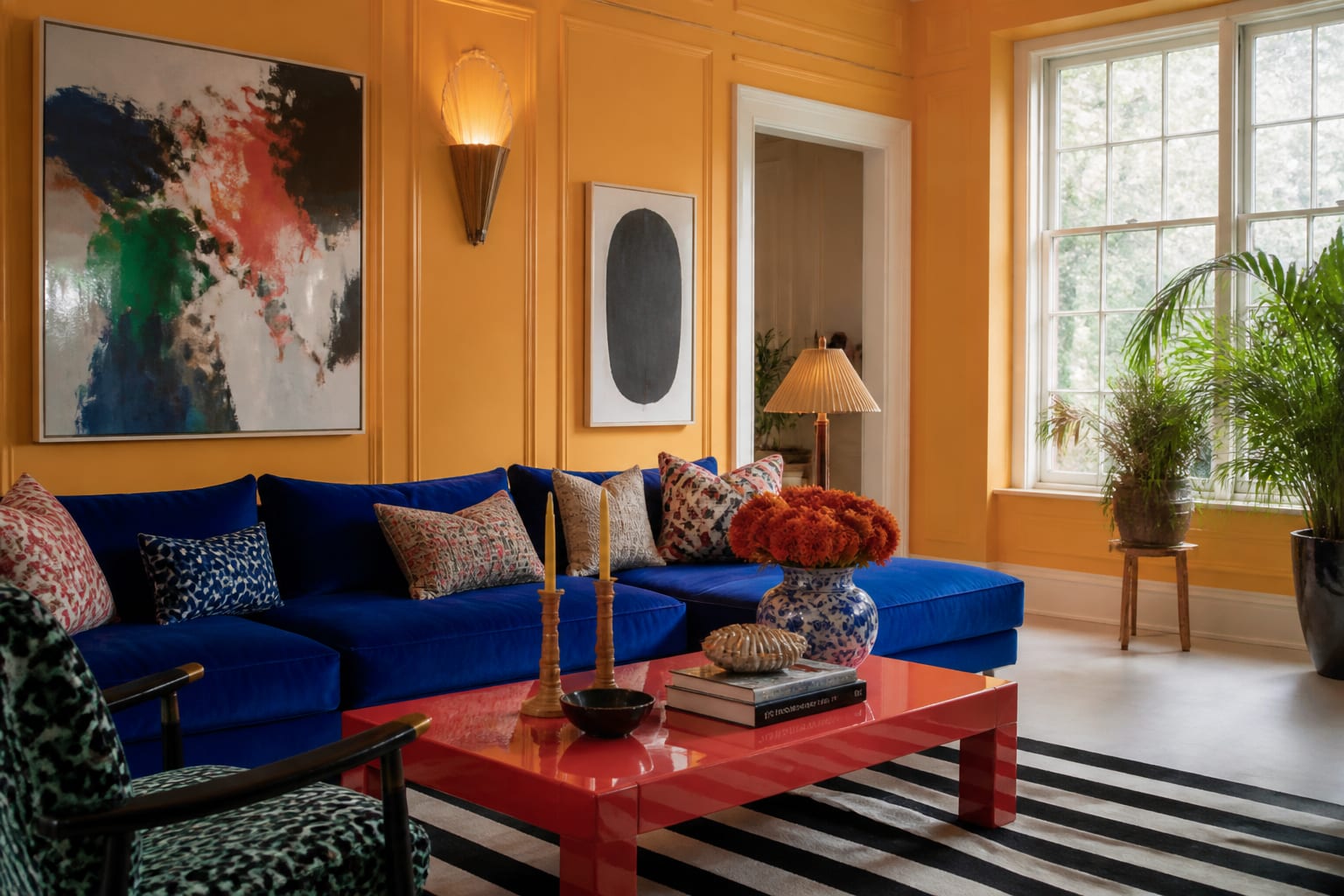
Can AI design a dopamine decor room that feels joyful, not childish?
AI can produce citrus and cobalt palettes, candy pink and red schemes, primary color play, retro gloss, pastel punch, or art-school maximalism. It already recognizes bright walls, checkerboard rugs, color-blocked shelving, scalloped shapes, and playful lighting. What it can't guess is your threshold for visual noise, so the prompt has to set boundaries.
Try: "keep the existing 8 foot ceiling, oak floor, white window trim, and current sofa; create a dopamine decor living room with butter yellow walls, cobalt curtains, tomato red side table, 8 by 10 striped rug, 2700k lamps, one gallery wall, and no changed windows." That structure produces a bold, believable room instead of a cartoon version of your house.
Dopamine decor sits close to maximalism but is usually brighter and more color-forward. If you want deeper layering and stranger pattern collisions, compare results with maximalist AI room design ideas before forcing a cheerful palette to carry every object you own.
Which dopamine decor moves are worth previewing first?
Color moves make the room read clearly from the doorway; small accessories alone won't. A yellow lamp on a beige room is an accent, not dopamine decor.
- One saturated wall color sets the emotional temperature; test coral, grass green, cobalt, marigold, lilac, or tomato before buying paint.
- A graphic rug sized to the seating group; an 8 by 10 rug usually beats a 5 by 7 if front furniture legs land on it by at least 6 inches.
- One playful furniture shape, such as a wavy mirror, 52 to 58 inch scalloped headboard, mushroom stool, or rounded 84 inch sofa.
- The hero color repeated 3 times (curtain, art note, lamp base) so the choice looks intentional, not stranded.
- Warm lighting in lounges and bedrooms at 2700k; save 3000k for desks, vanities, and kitchens where task clarity matters.
- Closed, colorful storage 14 to 18 inches deep to hide chargers, games, and pet supplies without crowding the walkway.
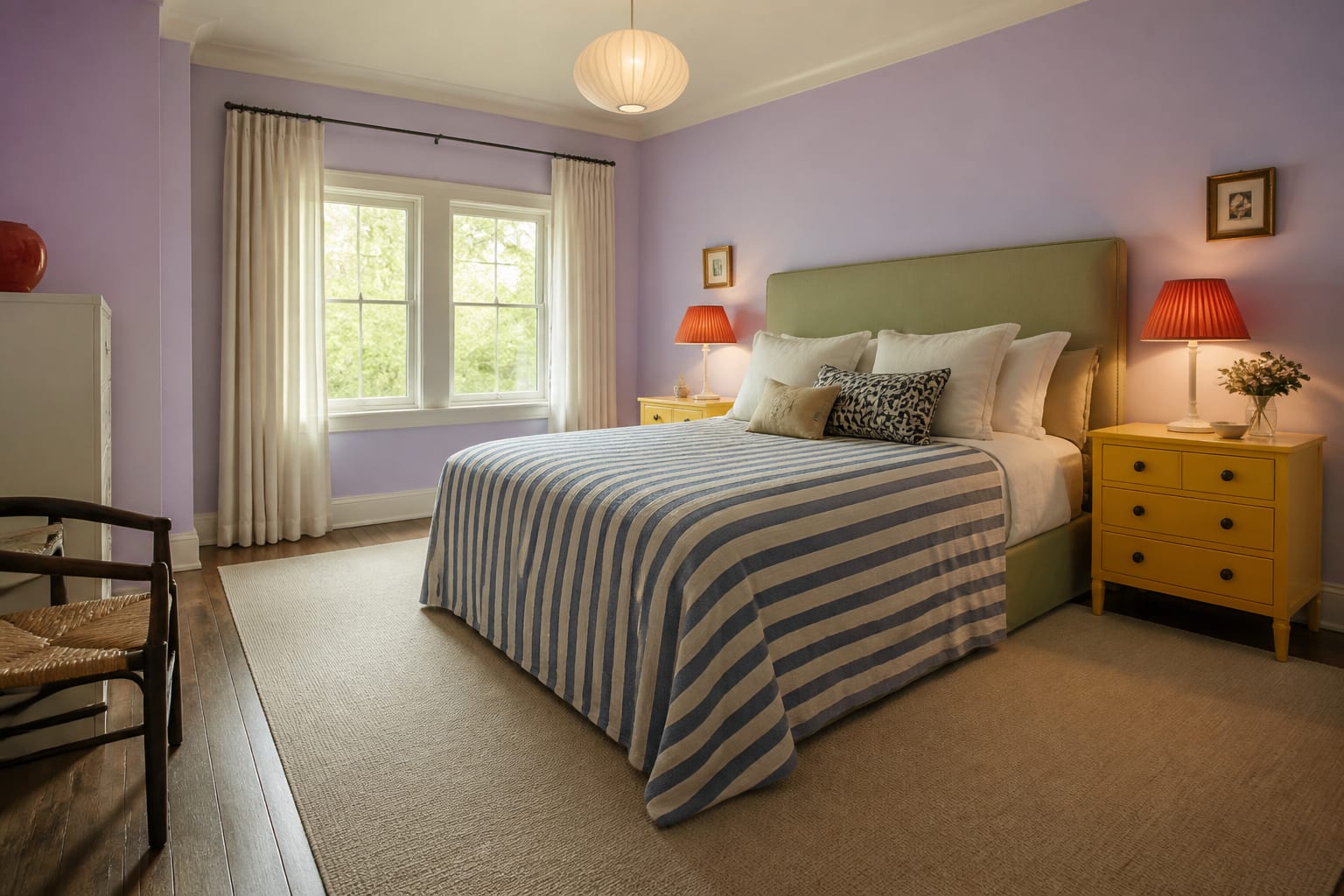
Treat the first prompt as a color-control test: repeat the lead color in at least 3 places, keep one quiet surface (plain rug, white shade, natural wood) for the eye to rest on, and protect a 30 inch path before approving oversized or busy-patterned pieces.
How do you keep bold color livable and avoid the common mistakes?
Choose a lead color, a supporting color, a relief color, and a grounding note, such as pink with tomato and cream, or cobalt with yellow and walnut. The relief color matters most: hot pink walls, red pillows, orange art, and a multicolor rug can feel exciting for five minutes and tiring by dinner. Cream curtains, pale wood, or a solid sofa gives the eye somewhere to land.
Dopamine decor wants cleaner contrast than sweeter styles. AI cottagecore room design leans into faded florals and patina; dopamine decor jumps colors more deliberately. Renters can test the palette through curtains, rugs, lamps, removable wallpaper, and bedding; owners can push further with painted trim, lacquered built-ins, or a saturated ceiling.
Five mistakes flatten the joy fast:
- Mistaking brightness for design. A room with a different color on every pillow and print reads clutter, not delight.
- Overusing novelty shapes. A wavy mirror, blob rug, squiggle lamp, and scalloped sofa together can look like a children's boutique; pick one or two playful silhouettes and keep the rest straighter.
- Ignoring scale. Keep about 30 inches for the main walkway and 16 to 18 inches between sofa and coffee table, even when the palette is fun.
- Letting AI invent a better house. If your room has vinyl blinds or an 8 foot ceiling, make the preview solve those facts instead of erasing them.
- Confusing shine with glamour. Heavy lacquer, brass, and mirrored tables drift toward AI art deco room design, which wants geometry and polish over emotional color and wit.
How do you use AI to preview a joyful room before committing?
Photograph the room from the main doorway with the floor, ceiling, windows, trim, and current furniture visible. Don't crop out the beige sofa you can't replace or the toy storage that has to stay.
Run controlled versions from the same photo: one wall-color led, one rug-and-curtain led, one furniture led, and one renter-safe version with no paint or drilling. Keep the camera angle fixed so you're comparing design decisions, not a flattering new perspective.
A useful prompt: "create a joyful dopamine decor living room while keeping the existing 8 foot ceiling, oak floor, window size, and current cream sofa; add coral walls, cobalt curtains, 8 by 10 checkerboard rug, tomato red side table, yellow ceramic lamps, gallery wall, closed storage 16 inches deep, warm 2700k lighting, and no invented fireplace."
Judge previews by what repeats. If every strong option adds a bigger rug, colored curtains, one red accent, and warmer lamps, those are the real moves. If the best option only works because the tool replaced the windows and doubled the room width, keep the palette and reject the plan.
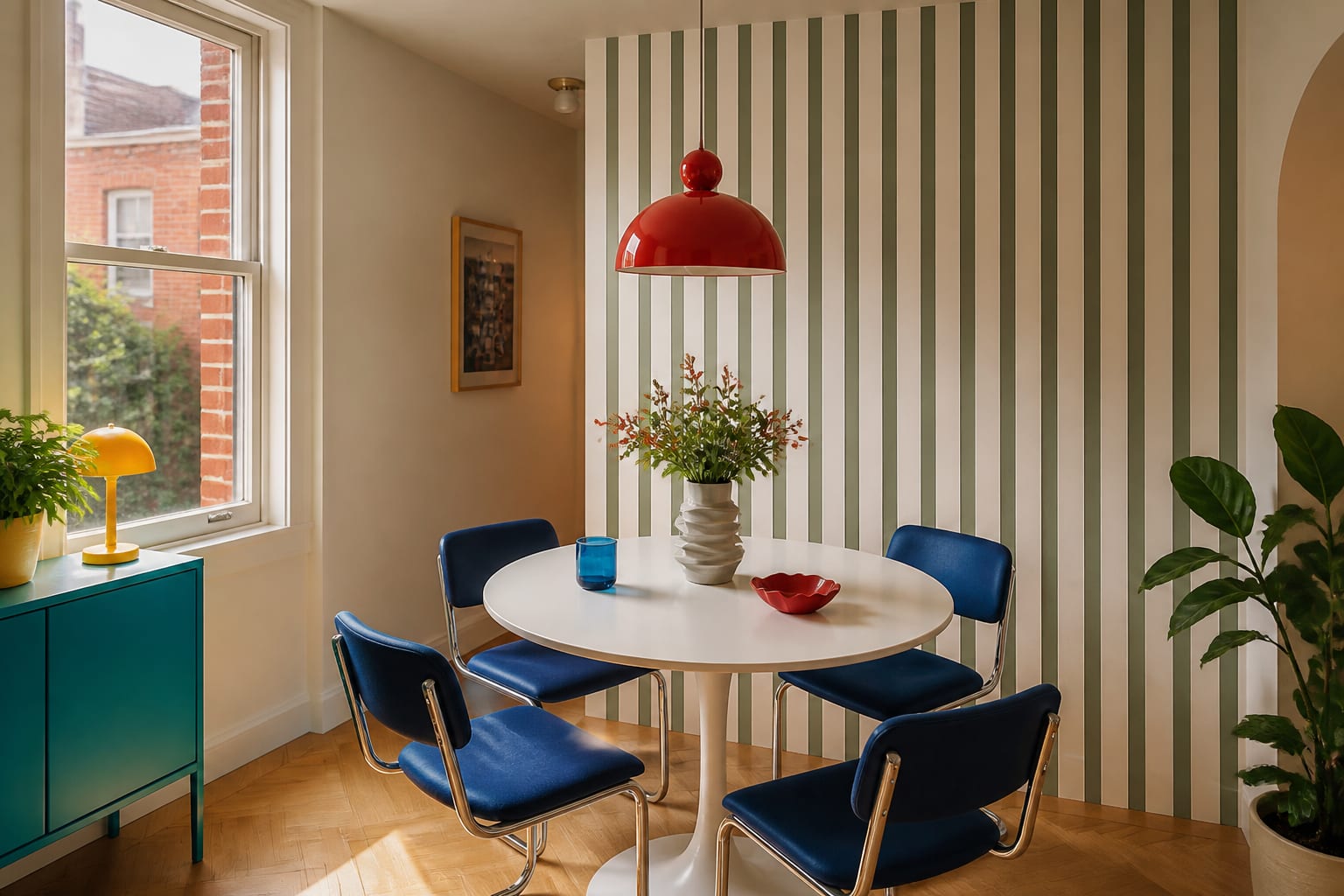
How do you turn the winning preview into a real room?
Translate the winning preview into five decisions: lead color, secondary color, hero pattern, playful shape, and storage plan. If those five agree, the room reads joyful even on a modest budget.
Start with the largest surface you're willing to change: walls, curtains, or rug in a living room; bedding, headboard, and lamps in a bedroom; stools, hardware, and pendant shades in a kitchen. Don't buy a dozen small colorful objects before that big composition is set; one 8 by 10 rug or one painted cabinet does more than a cart full of accessories.
A bold room should make daily life lighter, not harder. If the preview still works with shoes at the entry, a laptop on the table, or a dog bed under the window, the design has a chance. If it only works with every ordinary object erased, it's a poster, not a plan.
Frequently Asked Questions
Is dopamine decor the same as maximalism?
No. Dopamine decor is typically brighter, cleaner, and more color-forward, while maximalism layers more collections, textures, and pattern collisions. If your taste wants deeper layering rather than a cheerful palette, compare results with maximalist AI room design before deciding.
How many colors should a dopamine decor room use?
Plan around four: a lead color, a supporting color, a relief color, and a grounding neutral like cream or pale wood. Repeating the lead color in at least 3 places keeps the room feeling intentional instead of scattered.
Will AI dopamine decor previews match my actual room?
Only if you photograph the room accurately and prompt for it. Include the real ceiling height, floor, windows, and furniture that must stay, and reject previews that only look better because they changed the room's structure.
Can renters try dopamine decor without painting or drilling?
Yes. Curtains, an 8 by 10 rug, removable wallpaper, framed art, bedding, and painted furniture you already own can carry most of the palette. Save wall paint, lacquered built-ins, or tiled backsplashes for owned spaces.
How do I keep a bold room from feeling chaotic?
Vary pattern scale (one large print, one medium stripe, one small accent), limit playful furniture shapes to one or two per room, and keep one quiet surface like a plain rug or solid sofa for the eye to rest on.