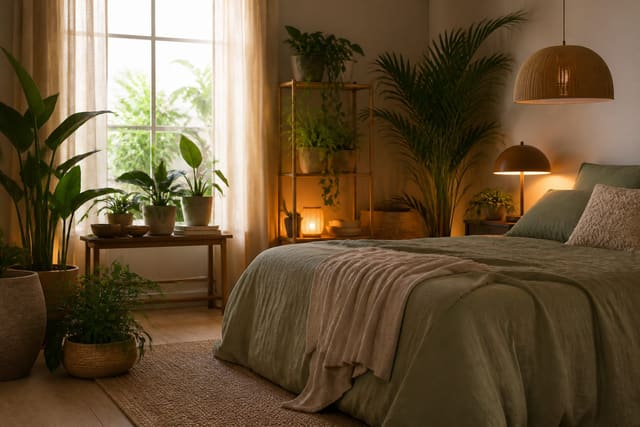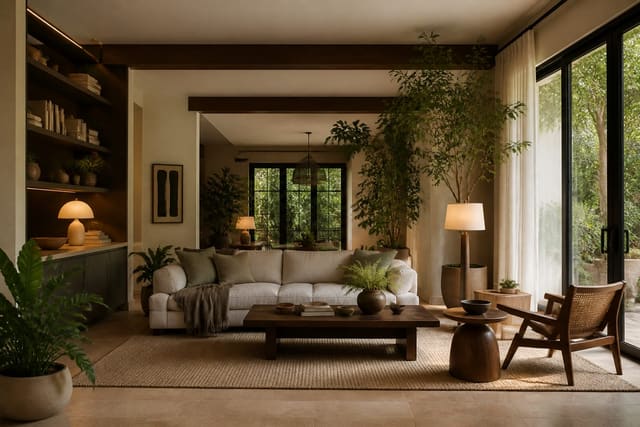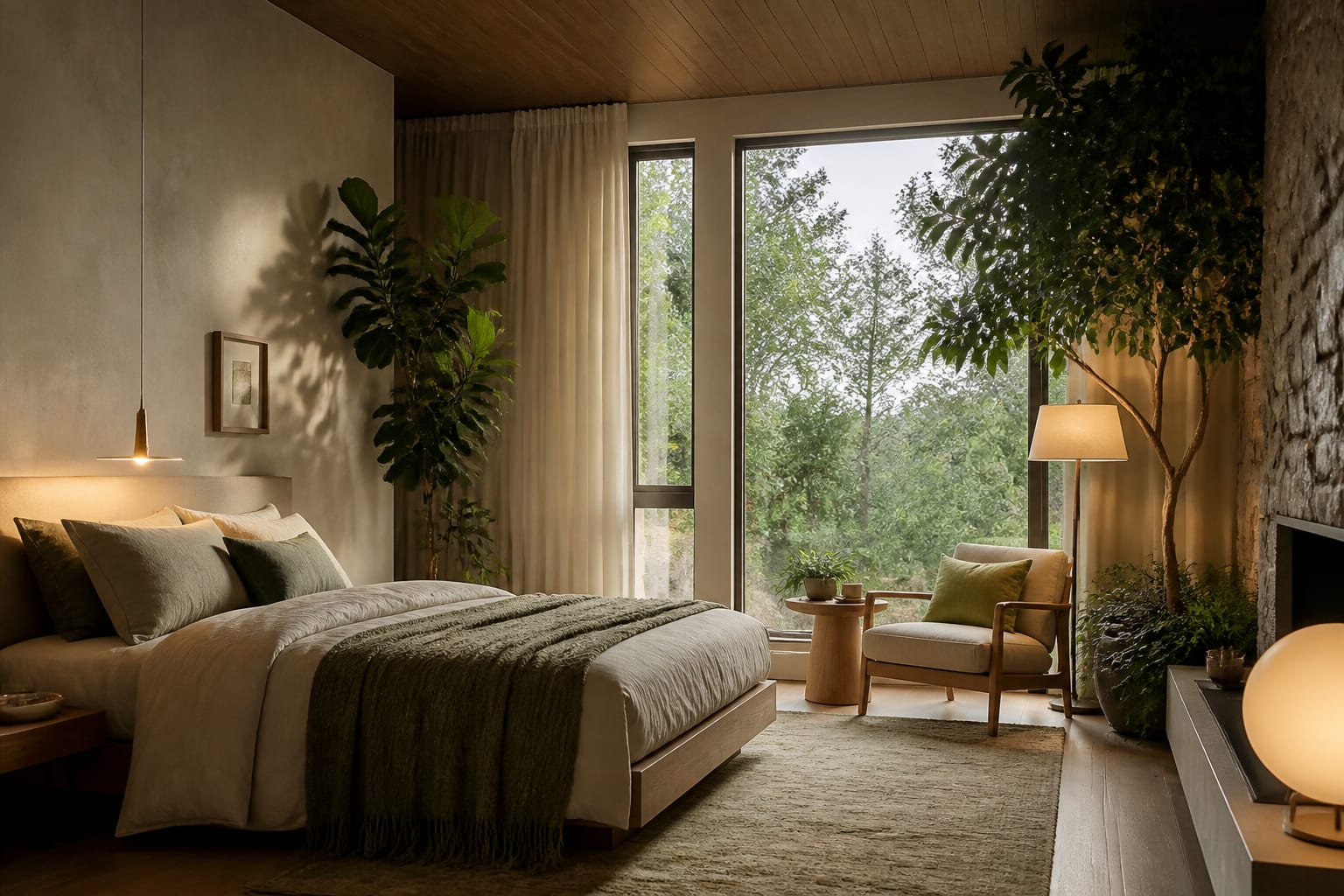
The best biophilic bedroom ideas are not about cramming a jungle of houseplants onto every shelf and hoping the room feels natural. True biophilic design connects you to nature through light, materials, color, and view, with plants as just one ingredient among several. A handful of well-placed greenery, generous daylight, and honest materials like wood, wool, and stone do more for rest than a crowded plant collection ever could. The aim is a bedroom that quietly mirrors the calm of being outdoors, so your nervous system finally has somewhere to settle.
Maximize Natural Light and Outdoor Views
Daylight is the cornerstone of any biophilic bedroom, so the first move is removing whatever blocks it from reaching you. Heavy blackout drapes, cluttered sills, and furniture stacked against windows all quietly sever your connection to the outdoors. Swap dense curtains for sheer linen panels that filter light softly while still preserving your privacy during the day.
Arrange the room so the bed and any seating relate to the window and whatever view it offers, even if that view amounts to only a single tree or a small patch of open sky. Waking to gradual morning light supports your natural sleep rhythm far better than a dark cave lit only by a single bedside lamp ever could. If your window faces something bleak or unappealing, a well-placed plant or a window box of trailing greenery can create a small natural focal point genuinely worth looking at each morning.
When daylight is genuinely limited by your home or floor, mimic its qualities with warm, tunable lighting that shifts through the day. Cooler, brighter light in the morning and warmer, dimmer tones at night echo the sun's natural arc and reinforce healthy circadian cues your body already understands. The goal throughout is to make the bedroom feel responsive to the world outside rather than sealed off from it entirely, since that ongoing connection is what quietly calms the nervous system and prepares the body for deep, restorative sleep at the end of a long day.
See also our guide to Bedroom Plants Guide for more on biophilic bedroom ideas.
Choose Plants You Can Actually Keep Alive
Plants are the most obvious biophilic feature, but a bedroom full of dying specimens quietly undermines the very calm you are after. Bedrooms often receive lower light than other rooms in the house, so choosing species suited to those dimmer conditions matters far more than chasing whatever happens to look trendy online this season.
Reliable low-light options include snake plants, pothos, ZZ plants, and peace lilies, all of which tolerate neglect and shadowy corners gracefully. Snake plants in particular are remarkably forgiving and continue releasing oxygen through the night, which suits a sleeping space especially well. Vary the heights and forms by combining a tall floor plant in a corner, a trailing vine spilling from a shelf, and a small specimen resting on the nightstand for a layered, natural feel that mirrors how plants grow outdoors.
Resist the strong urge to fill every available surface with greenery. A few healthy, thriving plants read as far more intentional and serene than a dozen struggling ones competing for attention, light, and water on a crowded sill. Consider honestly how each plant fits your actual daily routine, since a species that demands daily misting will become a chore rather than a comfort over time. When the greenery you choose genuinely flourishes, the bedroom gains a quiet sense of life and growth that no artificial alternative can ever replicate, and the upkeep stays light enough to remain a pleasure instead of a burden you resent.
For a related angle on biophilic bedroom ideas, read Small Master Bedroom Luxurious.
Layer Organic Materials and Textures
Biophilic design engages the senses through honest, natural materials, and the bedroom is the perfect place to indulge that fully. Synthetic surfaces and high-gloss finishes feel cold and disconnected against the skin, while wood, stone, wool, linen, and rattan invite touch and bring the outdoors inward in a genuinely tangible way you notice every day.
Start with the bed, since it dominates the room visually and physically. A wooden or rattan headboard, soft linen bedding, and a chunky knit throw immediately soften the space and add tactile warmth where you spend the most time. Underfoot, a wool or jute rug grounds the room and feels wonderful first thing in the morning when bare feet meet the floor. Small touches like a ceramic lamp base, a smooth stone tray, or a woven basket reinforce the theme without any single piece shouting for attention or breaking the calm.
Variety of texture is what makes the room feel alive rather than flat and lifeless. Smooth wood beside nubby wool, cool stone near soft linen, and rough rattan against crisp cotton create the kind of layered sensory richness you experience walking quietly through a forest. These materials also age gracefully, developing patina and character over the years, which steadily deepens your attachment to the space. The result is a bedroom that feels grounded, comforting, and unmistakably connected to the natural world you stepped inside from, which is exactly the feeling restful sleep depends on.
Ground the Room With Nature-Inspired Color
Color sets the emotional temperature of a bedroom, and a biophilic palette borrows directly from the landscapes that feel most calming to us. Soft sage and olive greens, warm terracotta, sandy beiges, muted blues, and gentle browns recreate the colors of forests, deserts, and coastlines, all of which the human eye finds naturally soothing after a long day of screens and noise.
Use these tones across walls, bedding, and larger furniture so the calm reads consistently throughout the whole room rather than in isolated patches. A sage green wall behind the bed pairs beautifully with linen in oatmeal and small accents in clay or rust. Keep the overall scheme low in contrast and saturation, since loud or jarring colors fight the restful mood you want a bedroom to hold and protect above everything else.
Let the greenery itself contribute to the palette, since living plants introduce the freshest, most authentic green possible into the room. Wood tones add their own warm honest browns, and natural fibers bring soft, undyed neutrals quietly into the mix. When the colors of the room, the materials, and the plants all draw from the same natural family, the bedroom achieves a quiet harmony that signals safety and rest directly to the body. That deep cohesion, more than any single feature you could add, is what ultimately makes a biophilic bedroom feel like a genuine retreat from the relentless noise waiting outside the door.
- Swap heavy blackout curtains for sheer linen panels that filter daylight while keeping privacy
- Place a forgiving snake plant or pothos in the corner where light is weakest
- Choose a wooden or rattan headboard to bring organic warmth to the focal wall
- Layer linen bedding with a chunky knit throw for honest, tactile texture
- Roll out a wool or jute rug so mornings begin on natural fibers underfoot
- Paint the wall behind the bed a soft sage or olive green for grounding calm
- Add a tall floor plant and a trailing vine to vary natural heights and forms
- Install warm tunable bulbs that shift cooler at dawn and dimmer at night
Bring the look home with Re-Design
Wondering whether sage green walls or a rattan headboard will actually calm your specific bedroom? Re-Design takes the guesswork out by letting you upload a photo of your room and preview biophilic changes on your real space. See how olive paint behaves against your window light, test plant placement and natural textures, and confirm the restful mood you want before spending anything on paint, bedding, or furniture.
Frequently Asked Questions
Are plants safe to keep in a bedroom overnight?
Yes, for nearly everyone. The notion that plants suffocate sleepers is a myth, since they release negligible carbon dioxide at night. Snake plants even release oxygen after dark. Just avoid heavily fragrant species if scent disrupts your sleep or triggers allergies.
Which plants suit a low-light bedroom best?
Snake plants, pothos, ZZ plants, and peace lilies all tolerate dim corners and irregular watering. They forgive neglect and still look full, making them ideal for bedrooms, which usually receive less direct light than living areas or kitchens.
What if my bedroom gets very little natural light?
Mimic daylight with warm, tunable bulbs that brighten and cool in the morning, then dim and warm at night. Pair them with light-tolerant plants and a mirror positioned to bounce whatever daylight you do receive deeper into the room.