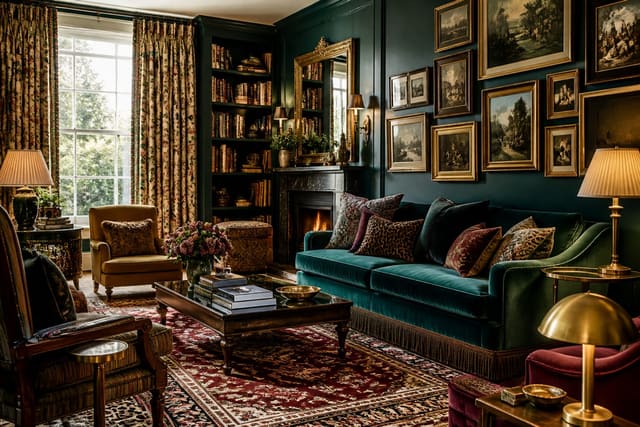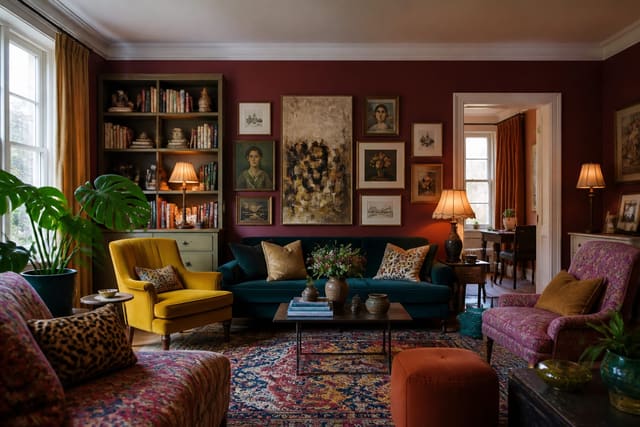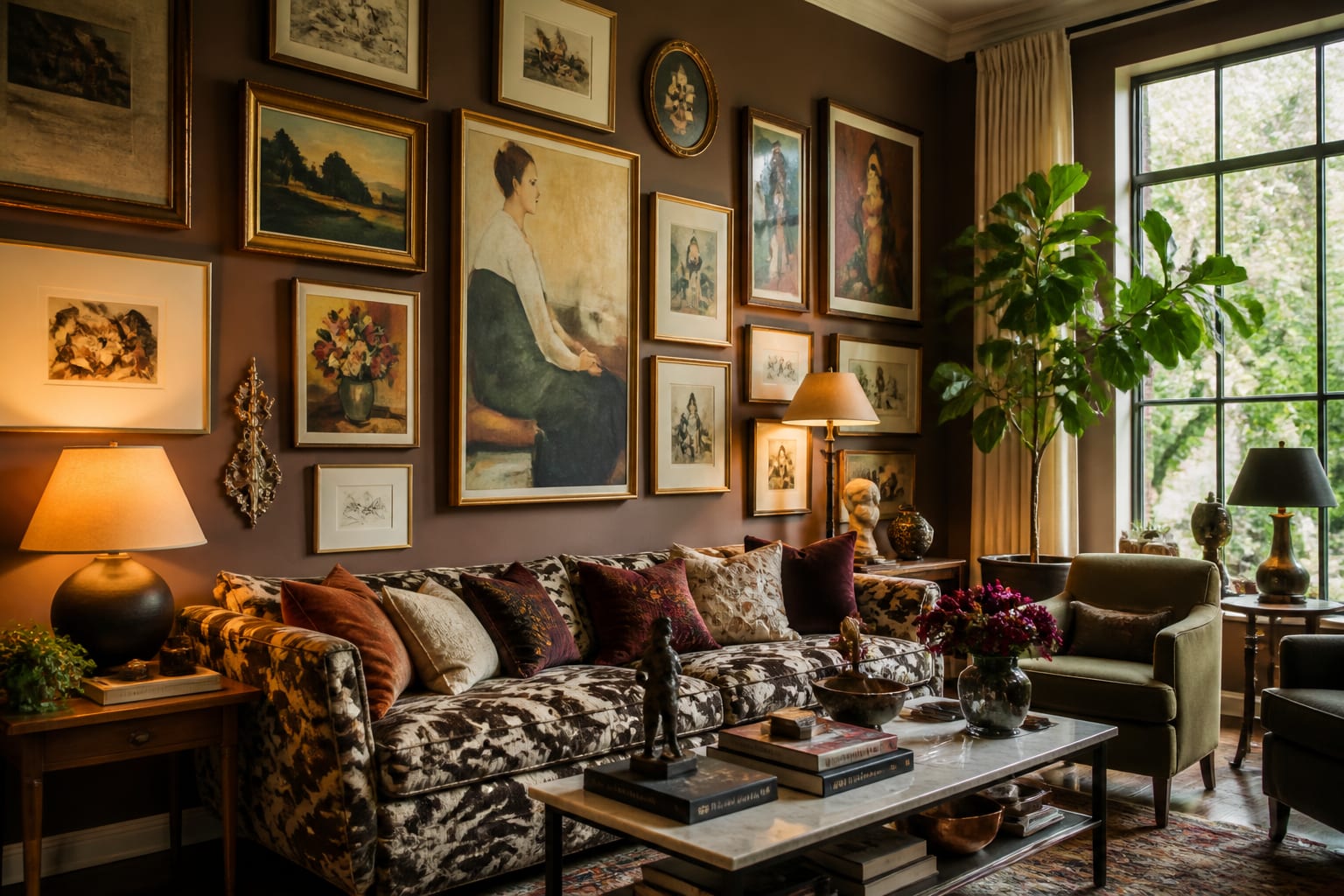
Gallery wall ideas that work start with one anchor piece, a measured layout, and a repeated finish or color that ties mismatched frames together. Choose a large piece first, map the arrangement on paper, keep spacing at 2 in–3 in, and center the whole composition near 57 in–60 in from the floor. That kind of control is what lets maximalism breathe.
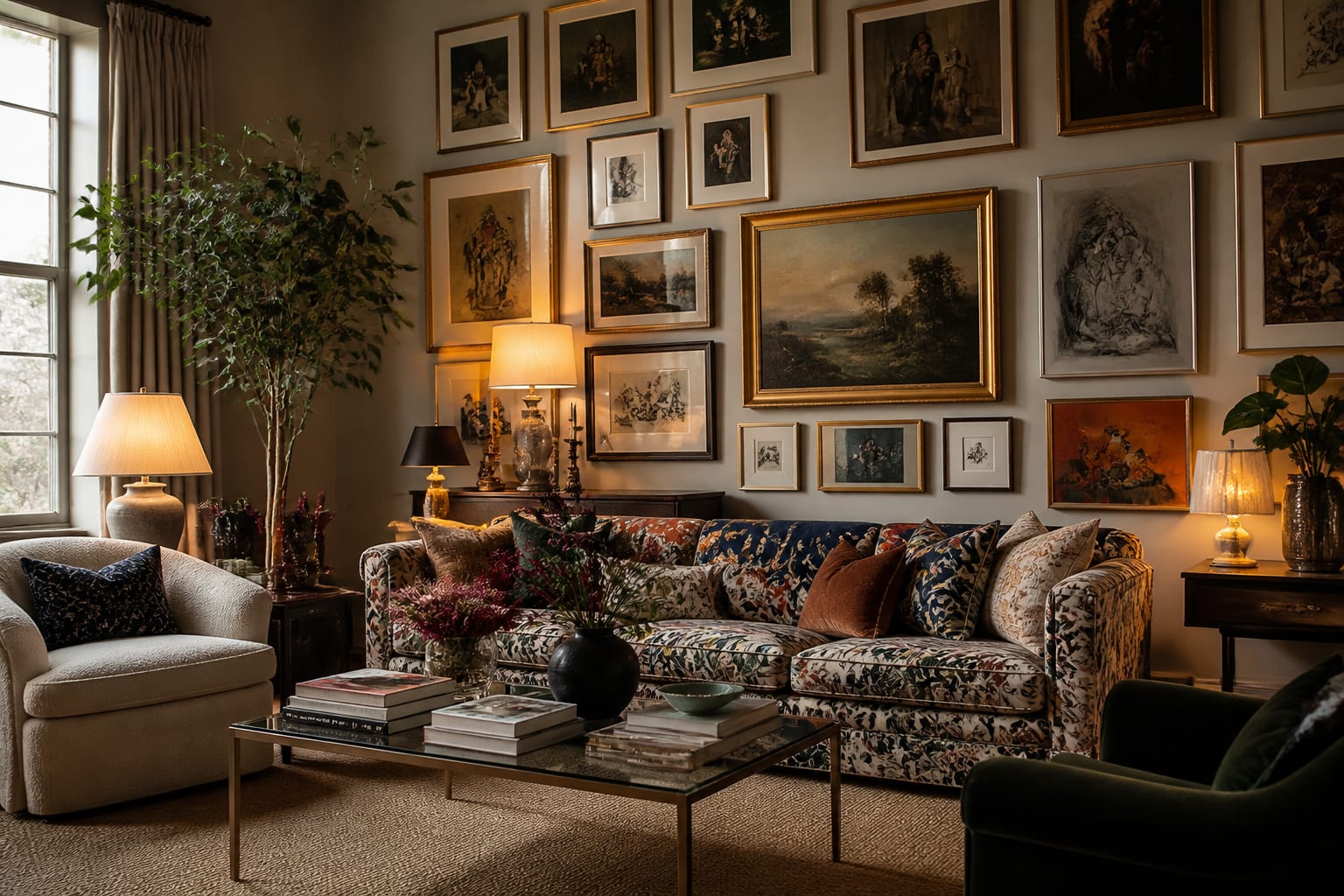
How do I create a gallery wall that feels maximalist, not random?
Start with the wall's job. Over a sofa, the gallery should span about two-thirds to three-quarters of the furniture width. On a blank hallway wall it can run longer and looser, but the center line still needs discipline. Around a television, balance the black rectangle with darker or larger art rather than ignoring it. If your living room already has bold upholstery, pattern, and shelves, study the scale logic in maximalist living room ideas that use strong anchors before adding more small frames.
The layout decision that makes every frame easier
Decide first whether the wall is a grid, a salon wall, or an edge-led composition. A grid uses matching frame sizes, spacing, and orientation throughout. A salon wall mixes sizes and subjects and grows outward from the center. An edge-led composition looks maximalist but tidy because one side, top, or bottom aligns with furniture or architecture.
For a maximalist living room, a salon wall with one controlled edge usually works best. It lets vintage portraits, textiles, mirrors, and photographs coexist without turning into visual mush. Over a sofa, align the lower row 6 in–8 in above the sofa back and let the top line climb unevenly. On a stair wall, follow the stair angle on the bottom edge and let the top get looser.
Make the first piece the boss: a large abstract, landscape, textile, or dramatic photograph placed slightly off center for movement. Don't bury it among twenty similar pieces. A maximalist wall needs hierarchy: one lead piece, three to five medium supporting pieces, and small frames for rhythm.
Which gallery wall ideas actually fill a blank living room wall?
Use ideas that change the wall at room scale, not tiny tweaks only visible up close.
- Build around a 24 in x 36 in or 30 in x 40 in anchor so the wall has weight before charm, then tuck 8 in x 10 in, 11 in x 14 in, and 16 in x 20 in frames around it.
- Mix art types, not just frame color: combine a portrait, landscape, abstract, textile fragment, photograph, small mirror, and one sculptural object no deeper than about 3 in.
- Repeat one frame finish at least three times—black, warm wood, aged brass, or painted cream—so the display reads as intentional.
- Echo a room color in at least three artworks or mats so the art speaks to the sofa, rug, or curtains.
- Let one piece break the rectangle, like a plate, sconce, oval frame, or textile, kept near the middle third so it looks integrated.
- Add picture lights or nearby lamps if the wall goes flat at night; a warm 2700K bulb flatters old paper, brass, and saturated paint.
- Balance a TV wall with darker, larger art and asymmetry rather than a halo of tiny prints that makes the screen look heavier.
If your living room has weak daylight, art color will shift more than expected. North-facing rooms can turn cream mats gray and greens cold, so check the lighting and color cautions in north-facing living room color and lighting advice before committing to dark paint behind the wall.
What mistakes make a gallery wall look chaotic instead of maximalist?
Gallery walls usually fail before the first nail because the plan is too polite or too vague.
- Hanging everything too high makes the group float; keep its center near 57 in–60 in from the floor, or 6 in–8 in above a sofa.
- Buying too many identical small frames makes the wall nervous; choose fewer larger pieces first and use small ones as punctuation.
- Mixing every finish with no repeat creates static; repeat one finish three times and let two or three others appear as accents.
- Ignoring mat color can make good art look unrelated; keep mats consistent if the art itself is already varied.
- Skipping layered light makes the wall die at night; use lamps, sconces, or picture lights instead of one overhead glare.
The other common mistake is treating the gallery wall as storage for every sentimental object. Keep the personal pieces, but edit for scale and contrast so a tiny sketch sits beside a larger piece instead of a crowded cluster of small memories.
How can I preview a gallery wall before I hang anything?
Upload a straight-on photo of the wall to Re-Design and test gallery directions against your actual sofa, trim, wall color, and window light. Ask for a version with a large central anchor and mixed frames, a denser salon wall floor-to-ceiling, and darker frames to balance a television or fireplace. Keep the camera steady and furniture scale honest so the preview answers the real question: does this feel bold, balanced, and possible in your room?
Lighting decisions become obvious here too. A dim corner may need a floor lamp before more art. A long blank wall may need two pools of light instead of one fixture. If the room relies on a single ceiling light, read how to layer lighting in a living room before assuming the wall itself is the problem.
What makes the finished wall feel collected?
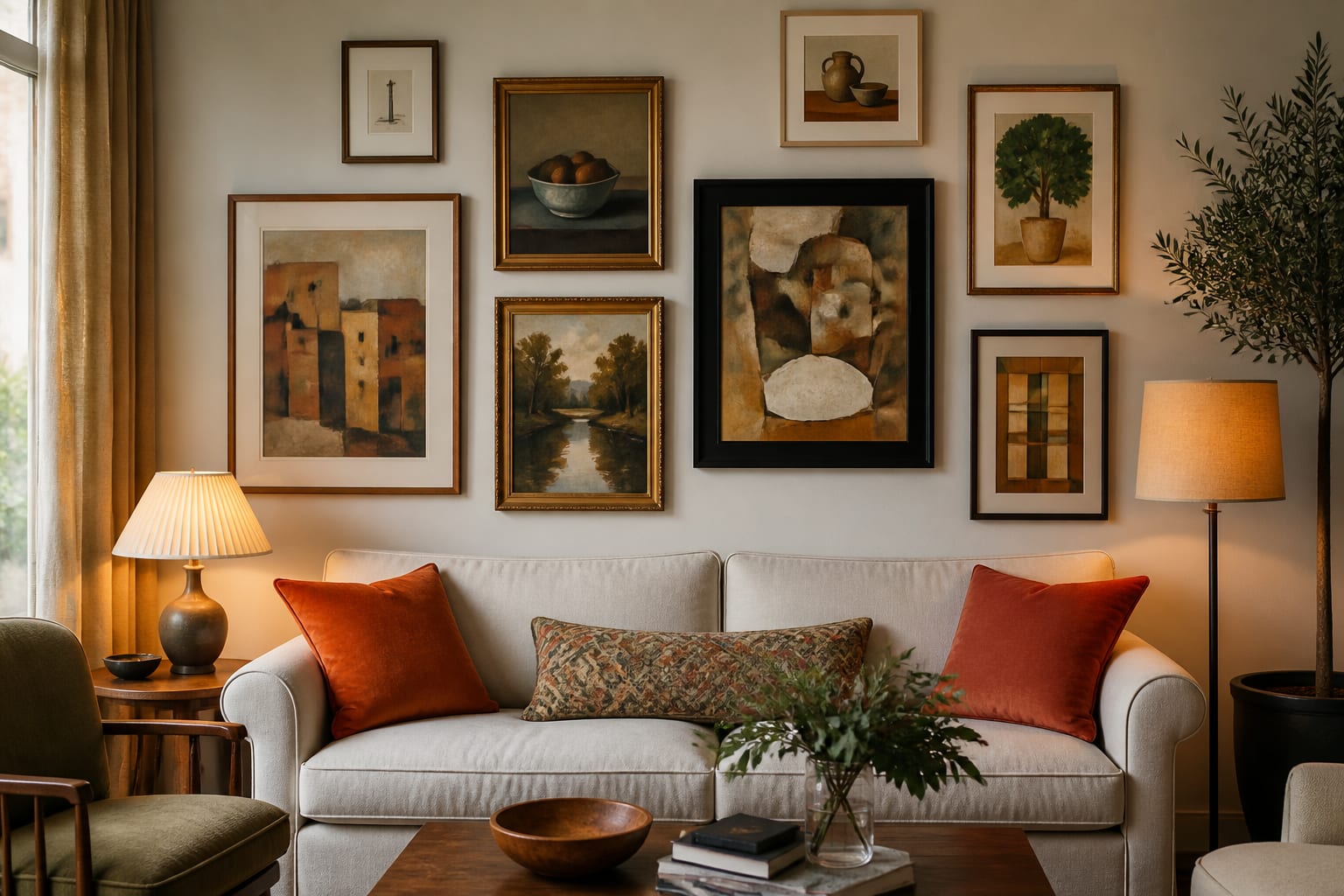
The finished wall should look like it grew through taste, not panic. Mix old and new frames, but keep hardware clean, glass wiped, and hanging lines deliberate—crooked maximalism just looks unfinished.
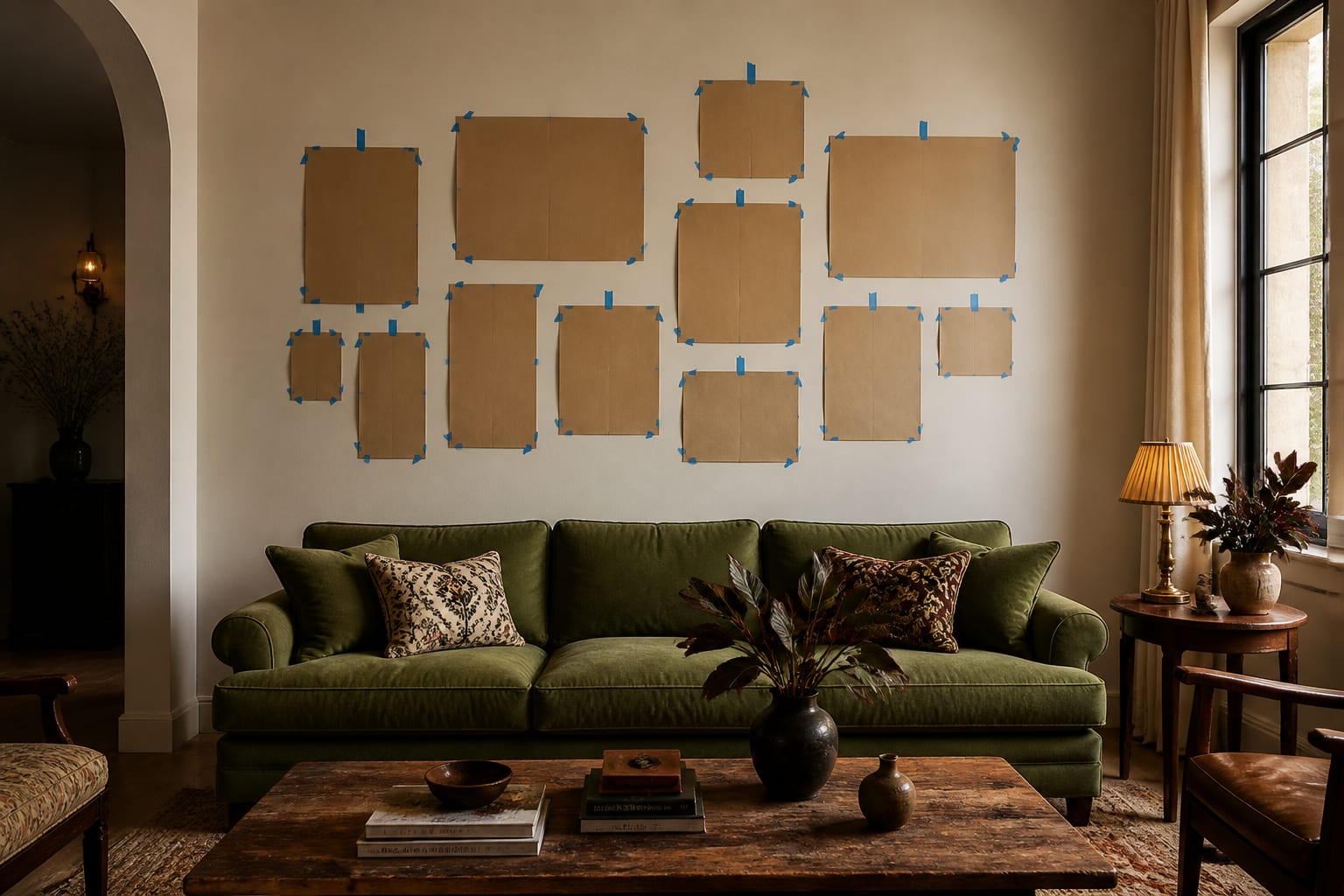
Before hanging, trace each frame on kraft paper, mark the hanger position, and tape the layout to the wall. Step back to the room entrance and the main seat. If a corner looks thin, add one medium piece rather than three tiny ones; if the wall looks heavy, remove the busiest frame.
A strong maximalist gallery wall varies size, subject, and texture, but still leaves room for lampshades, curtain rods, and real heads leaning back on the sofa. It tells a story without every inch shouting at once.
Frequently Asked Questions
How high should I hang a gallery wall?
Center the entire composition around 57 in–60 in from the floor, which is standard eye level. Over a sofa or console, start the lowest row 6 in–8 in above the furniture instead, so the art relates to the piece below it rather than floating near the ceiling.
How much spacing should I leave between frames?
Keep spacing consistent at 2 in–3 in between frames throughout the layout. Even, repeated gaps make a mixed-size, mixed-subject wall look planned; inconsistent spacing is the fastest way to make a maximalist gallery wall look accidental instead of curated.
How do I mix frame finishes without it looking messy?
Pick one finish—black, walnut, brass, or painted cream—and repeat it at least three times across the wall. Let two or three other finishes appear as accents. Repetition gives mismatched frames a common thread so the wall reads as intentional rather than thrifted.
Should gallery wall art match my sofa and rug colors?
It should echo them, not match exactly. Pull at least one recurring tone from your upholstery, rug, or curtains into three or more artworks or mats. This color echo ties a maximalist mix of subjects and frame types back into the rest of the room.
How do I preview a gallery wall layout before hanging anything?
Trace each frame on kraft paper and tape the full layout to the wall first, or upload a photo of the wall to an AI design tool like Re-Design to test different arrangements, frame mixes, and lighting against your actual room before buying frames or making holes.