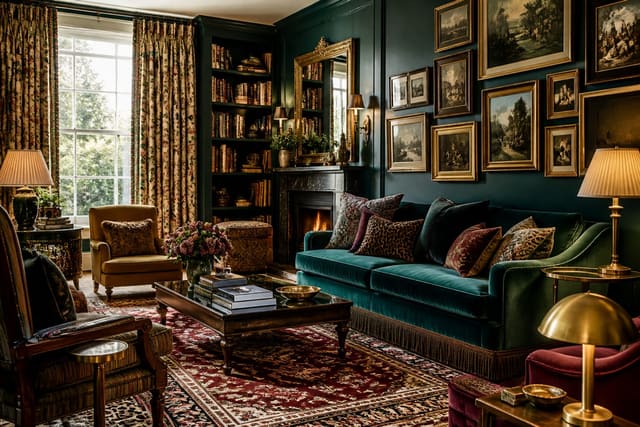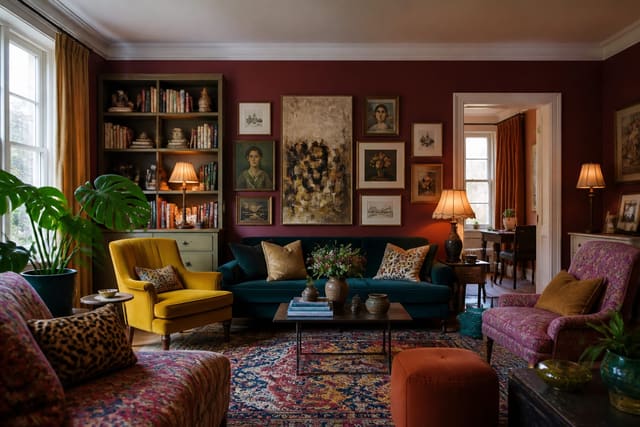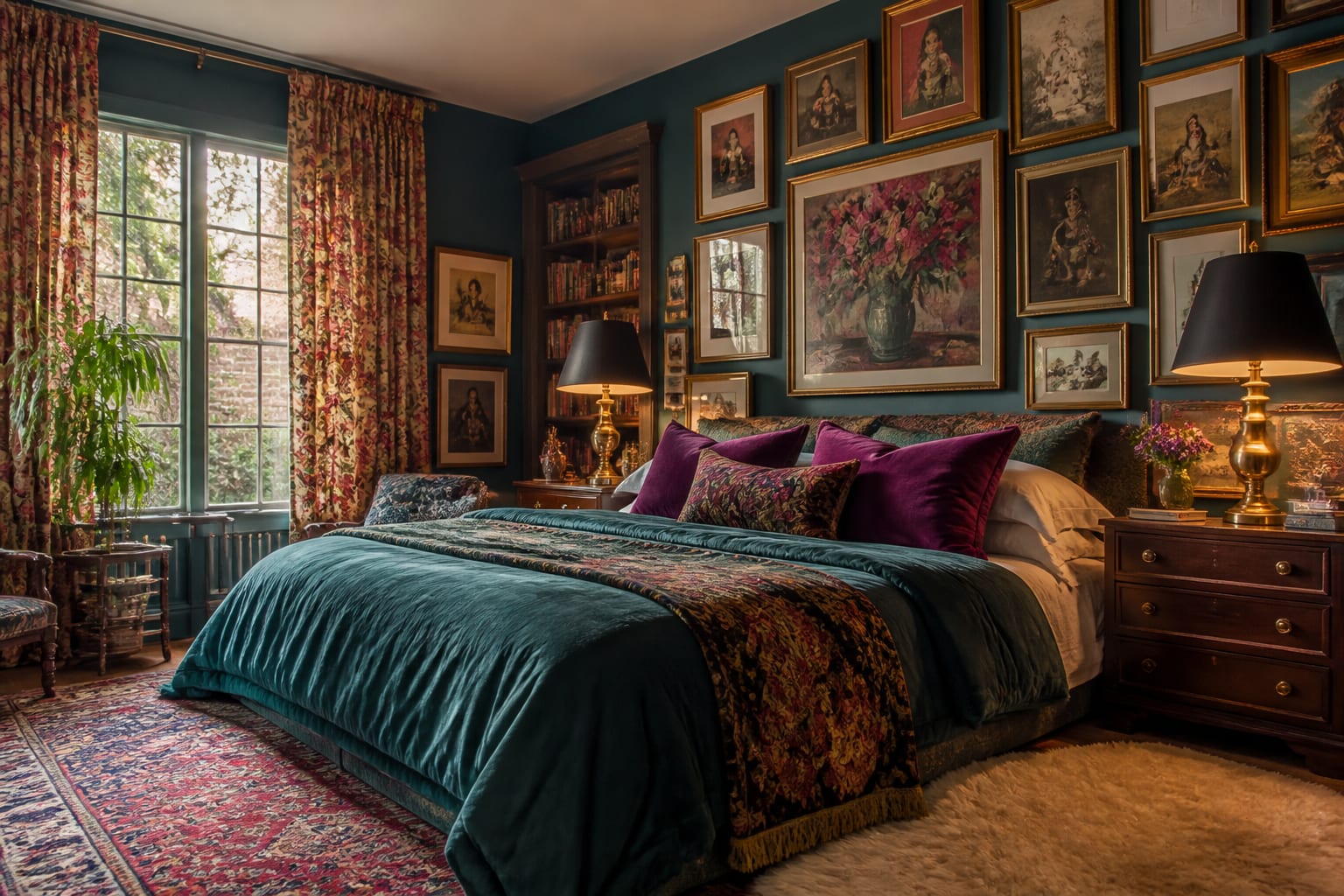
Maximalist bedroom ideas work by pairing one dominant anchor with three to five repeated colors, mixed pattern scales, and enough textural weight to hold the drama together. Done right, the room feels enveloping instead of noisy: color leads, pattern complicates it, texture calms it down, and the space still knows how to help you sleep.
What Makes a Bedroom Feel Maximalist Instead of Chaotic?
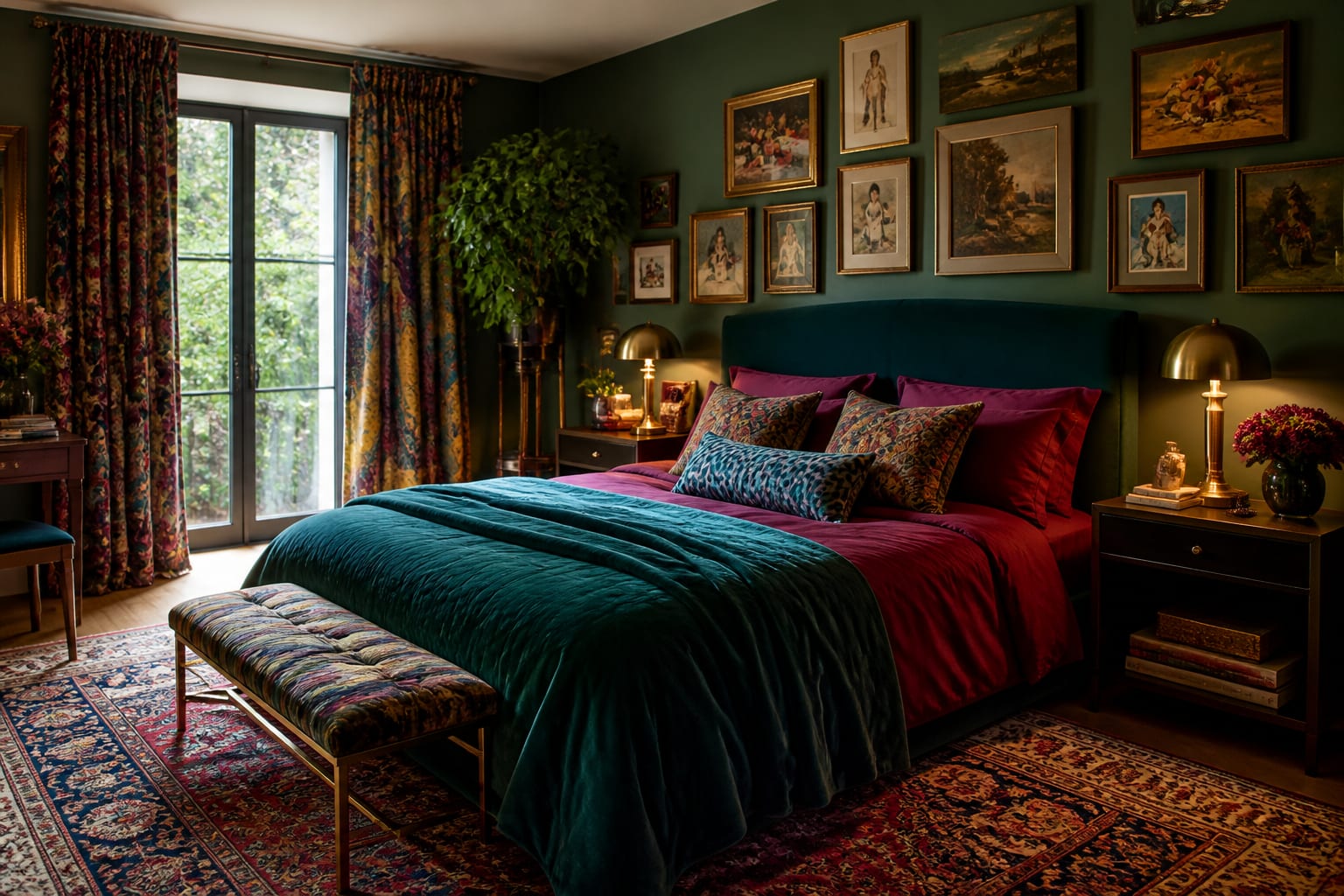
A maximalist bedroom feels intentional when abundance has order: a commanding bed wall, repeated color, varied texture, and enough empty space for the eye to rest. The bed is the natural anchor since it's already the room's largest object. If the headboard, bedding, rug, and art all whisper, small decor won't save the scheme.
A headboard between 48 in. and 60 in. gives pattern, art, or paint something to push against. In a bedroom under 10 ft. by 12 ft., let one element carry the drama: wallpaper behind the bed, a saturated headboard, or a bold rug. The same scale control that helps a small master bedroom feel luxurious applies here, just with stronger color.
Repetition is the second ingredient. If oxblood shows up in the rug, bring it back in a lampshade or pillow welt. Maximalism loves contrast, but it still needs a thread tying the room together.
Which Maximalist Bedroom Ideas Actually Carry the Look?
The strongest maximalist bedroom ideas change the main view of the room, not just its corners. Choose five or six moves, then edit everything else harder than feels comfortable.
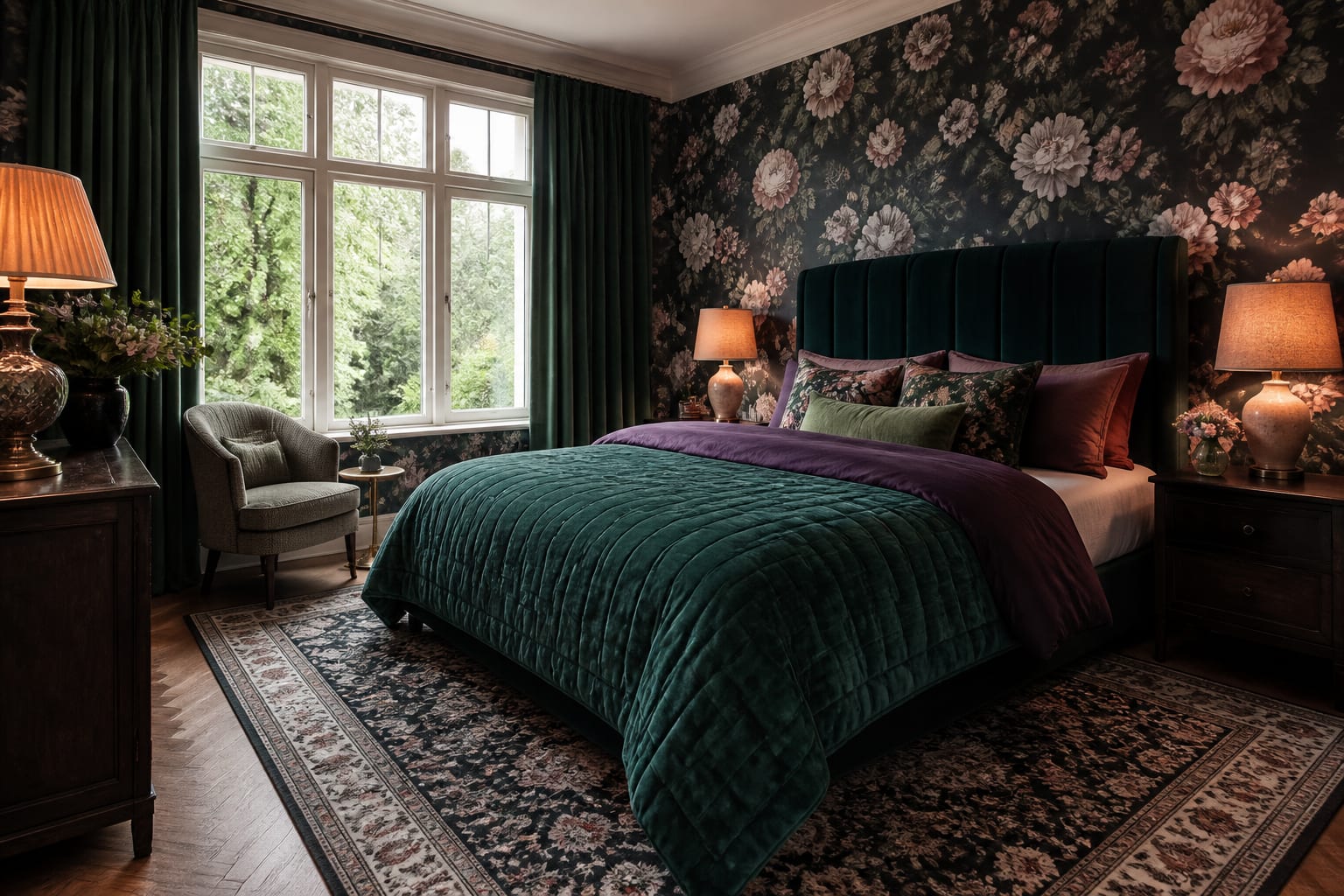
- Paint the bed wall a saturated color (aubergine, peacock, olive, tobacco, deep berry) and keep the ceiling lighter if it sits below 8 ft. 6 in.
- Use patterned wallpaper behind the bed only, stopping at the corners, if a full room feels like too much.
- Choose a rug large enough to extend 18 in. to 24 in. beyond each side of the bed; a small rug at the foot looks unfinished.
- Layer bedding in three textures, such as cotton sheets, a velvet or linen duvet, and a folded quilt across the lower third.
- Hang drapery 6 in. to 10 in. above the casing and 8 in. to 12 in. past each side so pattern reads as architectural.
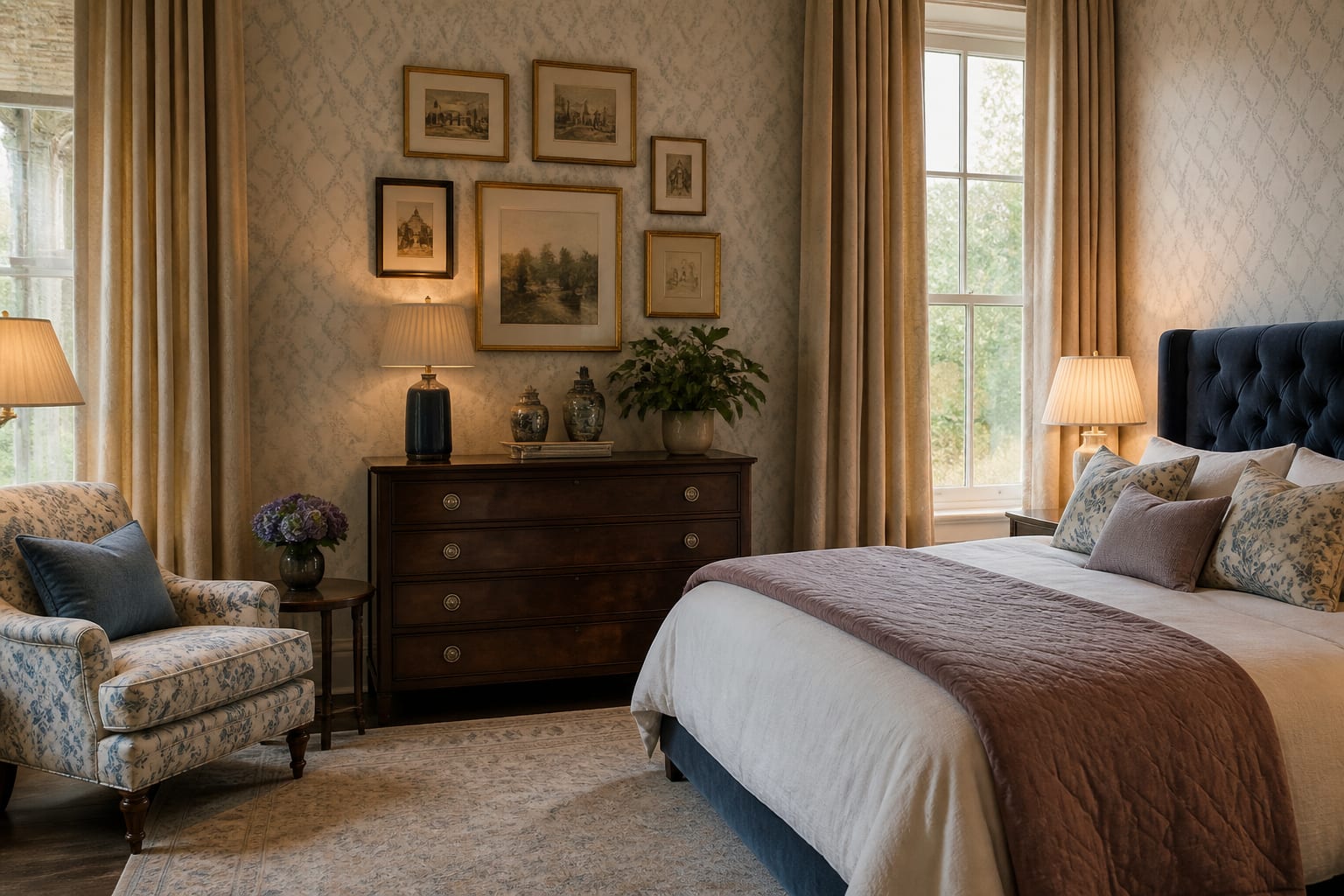
- Build a gallery wall over a dresser or headboard with 2 in. to 3 in. between frames, mixing art, photography, and mirrors around one repeated frame finish.
- Add a real sitting moment if space allows; a bedroom sitting area or a compact reading corner with a patterned chair and small table (18 in. to 24 in. wide) makes the room feel inhabited, using the same comfort logic as a layered kids' reading corner but dressed up.
How Do Color, Pattern, and Texture Work Together?
Color should lead, pattern should complicate it, and texture should calm it down. Pick three to five main hues before shopping, such as plum, olive, tobacco, cream, and brass. Saturated color works, but the scheme breaks down when every new item introduces a hue that never returns.
Pattern mixing gets easier when scales vary: pair a large floral curtain with a medium geometric rug and a small stripe on pillows. If the wallpaper is dense, keep bedding more solid. Keep at least one plain surface near every busy one; a patterned bed beside a plain nightstand reads intentional, while pattern on every surface can feel like the room is vibrating.
What Are the Most Common Maximalist Bedroom Mistakes?
Maximalism isn't permission to ignore sleep, circulation, or storage. The room still has to work half-awake, with a phone charger somewhere near the bed.
- Only buying small colorful decor. The eye never finds a main event; start with a large anchor, like an 8 ft. by 10 ft. rug or a tall headboard.
- Using one pattern scale everywhere. Florals, stripes, and geometrics at the same size create visual buzz; vary large, medium, and small prints.
- Choosing tiny bedside lamps. A bold room needs lighting with presence; lamps 24 in. to 30 in. tall suit most nightstands better than miniature accents.
- Turning nightstands into display shelves. Keep a lamp, book, water, and one object visible; hide chargers and skincare in a drawer.
- Ignoring walkway clearance. Leave about 30 in. for main paths and 24 in. where you only need to pass beside the bed.
A dark bedroom without layering also falls flat. Deep paint needs lamps, mirrors, pale bedding, or reflective art to stay alive after sunset.
How Can AI Help You Preview a Maximalist Bedroom Before You Buy?
A maximalist bedroom is risky to buy piece by piece because the relationships matter more than any single find; the wallpaper has to work with the headboard, the headboard with the rug, and the rug with the floor you're keeping.
Upload a photo of your bedroom to Re-Design and test full directions before ordering expensive pieces: one version with dark walls and calm bedding, one with patterned drapery and a plain wall, one with drama concentrated in art, rug, and lamps. Keep real windows, bed size, and ceiling height visible so the preview reflects the room you actually have.
This is especially useful for rentals or rooms with furniture you must keep. A plain white dresser might need lacquer, bold hardware, or a gallery wall above it; previewing shows which bold move earns its place before the room becomes a pile of brave purchases.
What Final Details Make the Bedroom Feel Personal?
The last layer should prove a real person sleeps here: art you'd keep after the trend passes, a tray for jewelry, a lamp for getting dressed, and one object with weight, like stone, ceramic, or brass.
Hang standalone art at 57 in. to 60 in. on center, or relate a grouping to the furniture below rather than chasing symmetry. Use pillows with restraint, since two sleeping pillows, two shams, and one lumbar often reads stronger than a mountain of mismatched cushions.
Stand at the door and name the dominant idea in three seconds. If you can't tell whether the room is about the wallpaper, the bed, or the rug, edit one layer back.
Frequently Asked Questions
How big should a rug be in a maximalist bedroom?
A rug should extend 18 in. to 24 in. beyond each side of the bed and show on three sides, roughly 8 ft. by 10 ft. in a standard room. A small rug tucked at the foot of the bed makes an otherwise bold scheme look unfinished and undersized.
How many colors should a maximalist bedroom use?
Stick to three to five main hues, repeated across bedding, art, curtains, and lampshades. Fewer colors used repeatedly reads as intentional layering; a new color on every item makes the room feel random instead of rich.
How do I mix patterns without the room looking chaotic?
Vary the scale: pair one large print, one medium print, and one small print rather than several patterns of similar size. Keep at least one plain surface, like a solid nightstand or headboard, next to every busy patterned piece.
Can a small bedroom handle a maximalist look?
Yes, but pick one anchor rather than making every surface equally loud. In a room under 10 ft. by 12 ft., let wallpaper, a saturated headboard, or one dramatic rug carry the scheme while other elements stay quieter.
How do you keep a maximalist bedroom functional at night?
Use warm bulbs around 2200K to 2700K, keep nightstand surfaces clear aside from a lamp and a book, and hide chargers or skincare in drawers. Bold color and pattern still need practical lighting and storage to work at bedtime.