A Mediterranean kitchen should smell like garlic and olive oil, not look like a showroom, and the best Mediterranean kitchen ideas start there. This is a working room built around long meals, sun pouring through a window, and surfaces that improve with use. Forget the sterile all-white kitchen trend; this style wants warmth, pattern, and a little honest wear. Think hand-glazed tile, plastered walls, a butcher-block counter, and copper pots hung within reach. Done right, it feels like a coastal home where cooking is the heart of daily life.
Build Around Hand-Glazed and Patterned Tile
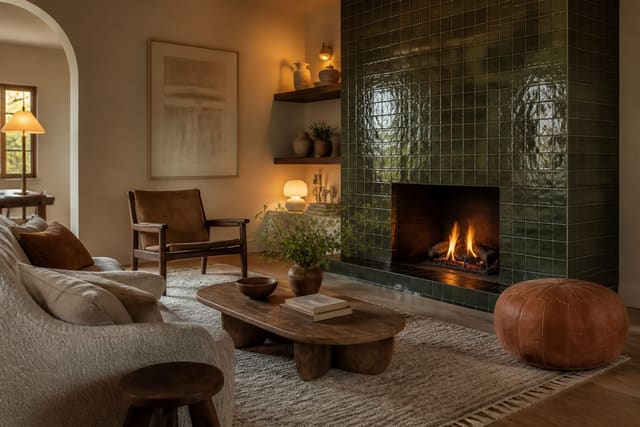
Tile is the soul of a Mediterranean kitchen, so let it carry real personality. Hand-glazed zellige in a warm white, olive green, or deep cobalt brings subtle variation and a gentle sheen that mass-produced tile can't reproduce. Each piece reflects light a little differently, giving the backsplash a living, hand-touched quality that anchors the whole room. The slight color shifts from tile to tile are a feature, not a flaw, and they keep a single-color wall from ever looking dull.
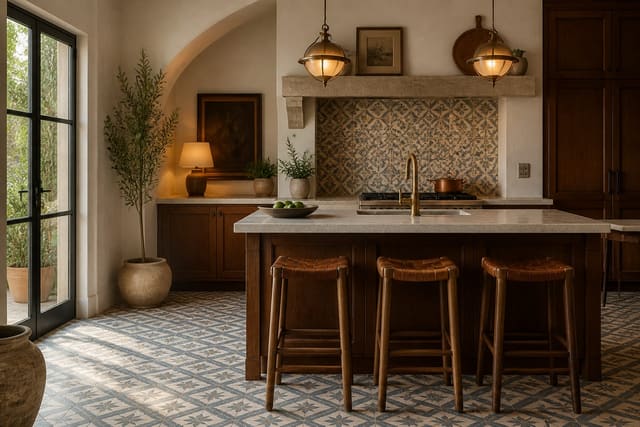
For a bolder statement, install a panel of patterned encaustic or talavera tile behind the range. Geometric or floral motifs in blue, ochre, and terracotta nod to Spanish, Italian, and North African traditions all at once. Frame the pattern within a field of plainer tile so it reads as intentional art rather than visual noise. A simple metal or wood ledge above the panel can hold oils and spices without hiding the design.
Don't stop at the backsplash. Continue tile onto an island face, around a window niche, or up a chimney-style hood for an immersive effect. Pair the busier patterns with calmer counters and cabinetry so the eye has somewhere to rest. The contrast between a lively glazed surface and a simple plastered wall is exactly what gives a Mediterranean kitchen its relaxed confidence, balancing artisan craft with everyday practicality in a room that gets used hard every single day.
See also our guide to Kitchen Home Bar Design for more on mediterranean kitchen ideas.
Warm the Room with Plaster, Wood, and Terracotta
Surfaces in a Mediterranean kitchen should feel touchable and sun-baked. Plaster or limewash walls in soft white, sand, or pale terracotta give a hand-finished texture that bounces warm light around the room. The slight cloudiness of plaster reads as old-world authenticity and pairs naturally with the rougher elements around it. Carry the same finish up to the ceiling for a seamless, enveloping warmth that drywall paint never achieves.
Underfoot, terracotta or natural stone tile delivers that quintessential warmth. Aged terracotta pavers, sealed but not glossy, develop a patina that only looks better with years of foot traffic and spilled flour. If terracotta feels too rustic, a honed limestone in a creamy tone offers a softer alternative that still keeps the floor grounded and organic. Either choice forgives the inevitable scuffs of a busy cooking household far better than pale hardwood, and both feel cool and pleasant underfoot in warm weather.
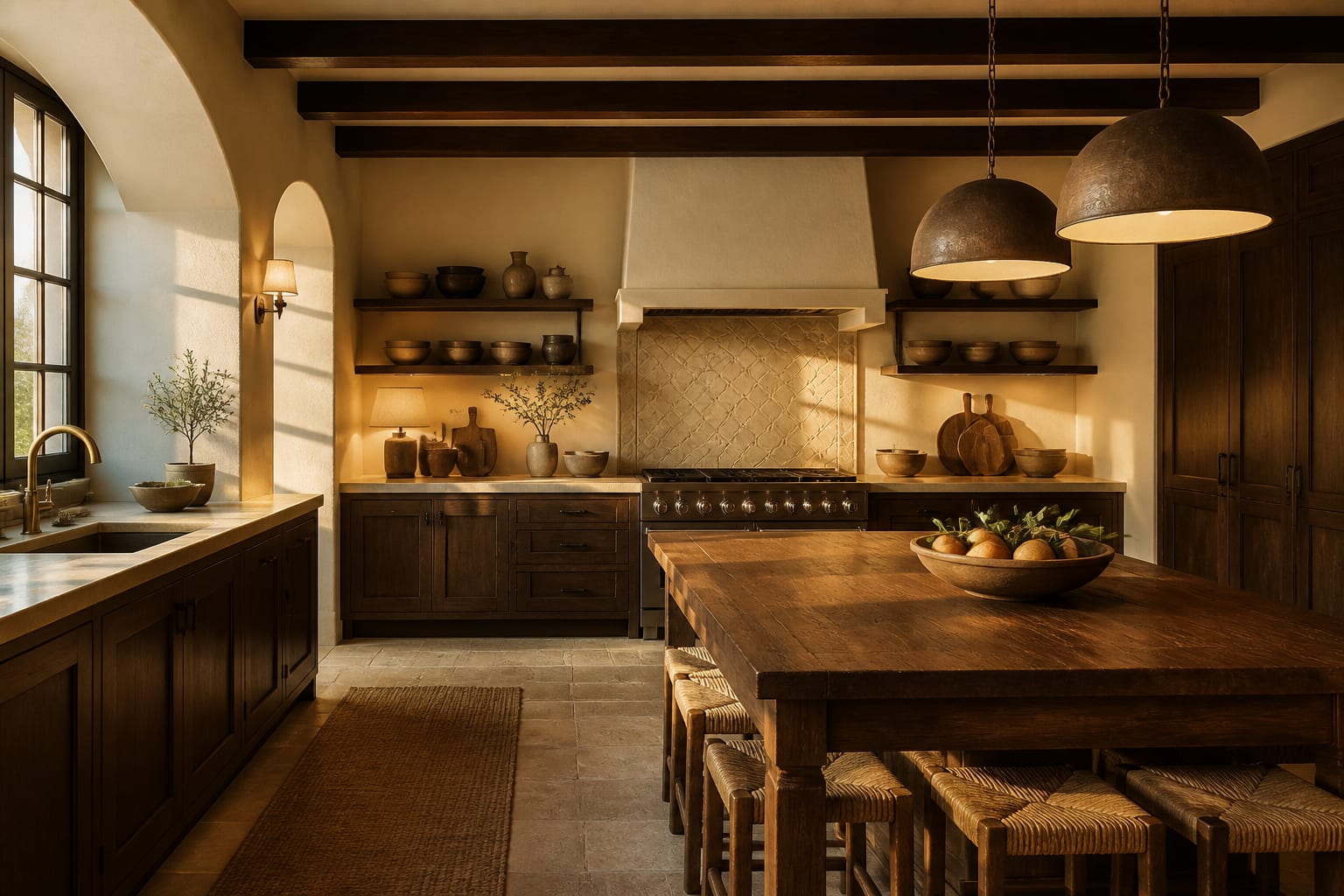
Wood ties everything together. Open shelves and exposed ceiling beams in rich walnut or weathered oak add structure and depth, while a butcher-block island top invites real cooking. Mix the wood tones rather than matching them perfectly, since a Mediterranean kitchen should look assembled over time. Glazed ceramic, hammered copper, and woven baskets round out the textural mix. The combination of smooth plaster, warm wood, and earthy clay creates a room that feels nourishing and alive, the kind of space where long lunches stretch easily into late afternoon.
For a related angle on mediterranean kitchen ideas, read Cottagecore Kitchen Ideas.
Choose Earthy Colors and Iron Details
The Mediterranean palette comes straight from the landscape: the blue of the sea, the green of olive groves, the ochre of sun-baked earth, and the bright accents of lemon and pomegranate. Build the kitchen on a warm neutral base of cream, sand, or soft terracotta, then layer color through tile, textiles, and ceramics rather than painting everything in saturated hues. This approach keeps the room feeling timeless and lets you refresh the accents without a full renovation.
Green is a particularly versatile cabinet color in this style. A muted olive or sage on lower cabinets feels fresh yet rooted, especially against a creamy plaster wall and warm wood open shelving above. Deep blue works beautifully on an island or a single bank of cabinets, echoing the coastal water that defines so much of the region. Painting only the lowers and leaving the uppers open keeps the scheme from feeling heavy.
Wrought iron supplies the punctuation. Forged-iron cabinet pulls, a hand-hammered pot rack, an iron-and-glass pendant over the island, and a sconce or two add darker accents that keep the warm palette from going soft. Aged brass or unlacquered copper hardware works just as well, developing a living patina over time. These metal details, combined with terracotta, glazed tile, and earthy paint, give a Mediterranean kitchen its grounded, hospitable character, a space that feels generous, sun-soaked, and unmistakably made for gathering.
Keep It Open, Hung, and Ready to Cook
A Mediterranean kitchen is a working kitchen, and the layout should make tools and ingredients visible and within reach. Open shelving replaces a wall of upper cabinets, displaying stacked ceramic bowls, olive-oil bottles, and well-used cookbooks. The look is generous and welcoming, and it keeps everyday items handy while showing off pieces with character and color. Reserve a closed cabinet or two for the things you would rather not see, so the open shelves stay curated.
Hanging storage reinforces the cook-forward feeling. A wrought-iron rack above the island holds copper pots and dried herbs, while a wall rail keeps ladles and wooden spoons in easy grasp. A bowl of lemons, a crock of utensils, and a braid of garlic on the counter signal that this is a room where food actually happens, not a staged display. These working details double as decoration and cost almost nothing to assemble.
Ground the social side of the kitchen with a large, sturdy island or a farmhouse table for prep and gathering. Rush-seat or rattan stools pull up for morning coffee and lingering conversation. Layer in natural-fiber textiles, a striped runner, linen towels, and a woven basket or two, to soften the hard surfaces. The result is a kitchen that feels relaxed and unforced, where pattern, warmth, and practicality coexist and where the door always seems open to one more guest at the table.
- Run hand-glazed zellige in olive green across the backsplash for soft, light-catching artisan texture
- Set a panel of blue-and-ochre talavera tile behind the range as a focal point
- Top a chunky island with butcher block and surround it with rush-seat stools
- Hang a forged-iron rack above the island to display copper pots and drying herbs
- Paint lower cabinets muted olive against creamy plaster walls and warm wood open shelving
- Lay sealed terracotta pavers underfoot for floors that gain patina with daily use
- Swap upper cabinets for open walnut shelves stacked with rustic ceramic bowls and oil bottles
- Finish with unlacquered copper or aged brass pulls that develop a living patina over time
Bring the look home with Re-Design
Wondering whether olive cabinets and a talavera backsplash will actually work in your kitchen? With Re-Design, you upload a photo of your real cook space and preview Mediterranean ideas instantly, swapping in terracotta floors, plaster walls, open walnut shelving, and a copper pot rack. Compare cobalt versus ochre tile and sage versus deep blue cabinets so you can commit with confidence before ordering a single sample.
Frequently Asked Questions
What cabinet colors suit a Mediterranean kitchen?
Muted olive and sage green are favorites, feeling both fresh and grounded against creamy plaster. Deep coastal blue works well on an island, and warm cream or natural wood tones keep the base calm so patterned tile and copper accents can lead.
Is terracotta flooring practical in a kitchen?
Yes, when properly sealed. Terracotta resists wear and actually improves with age, developing a warm patina. Reseal it periodically to guard against stains, and enjoy a floor that hides everyday scuffs far better than glossy tile or pale hardwood.
How do I avoid a Mediterranean kitchen looking too busy?
Pick one star, usually a patterned backsplash or bold range hood, and keep surrounding surfaces calm. Balance lively tile with plain plaster walls, simple cabinets, and a warm neutral base so the eye has restful places to land.