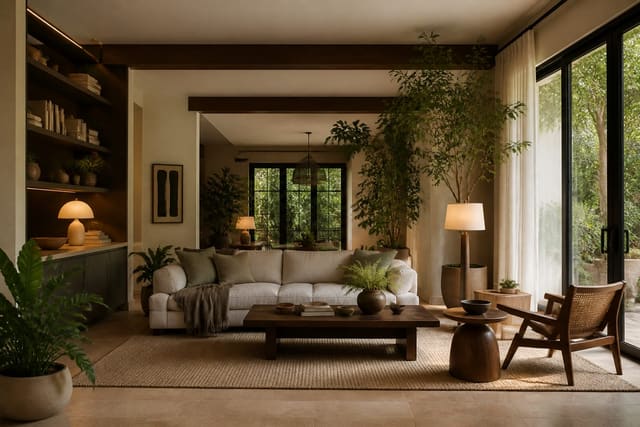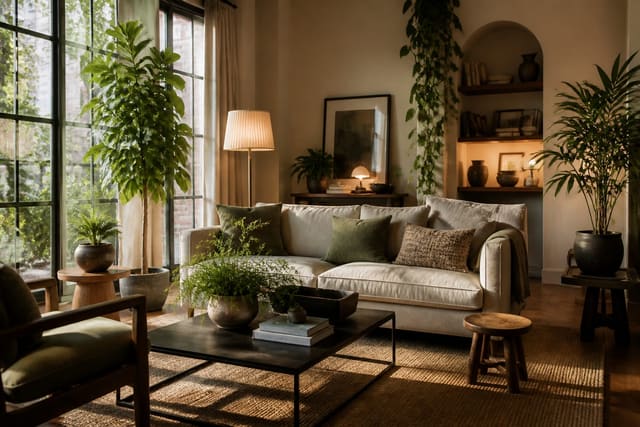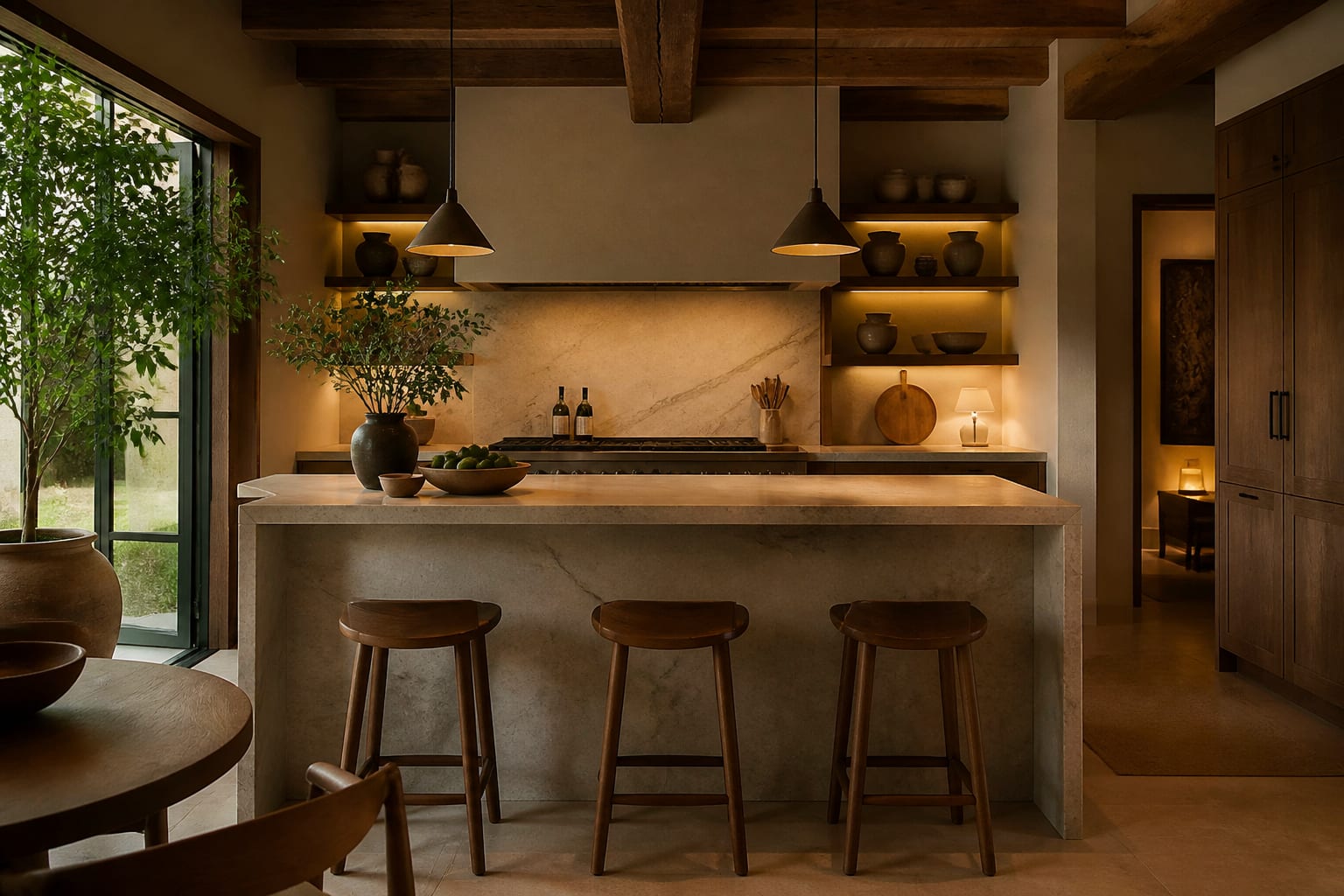
Plenty of kitchens chase a natural look by bolting fake ivy above the cabinets and calling it biophilic, which misses the point entirely. Real biophilic kitchen ideas weave living greenery, honest materials, and daylight into a room you actually cook in every day. A windowsill herb garden you harvest from, a butcher-block counter that ages with use, and cool stone connect you to nature more deeply than plastic vines. The kitchen is the busiest room in most homes, making it the most rewarding place to bring the outdoors in.
Grow an Edible Herb Garden Indoors
Nothing brings a kitchen to life quite like plants you can actually cook with, which is exactly why an indoor herb garden makes the natural starting point. A sunny windowsill lined with basil, thyme, rosemary, mint, and parsley delivers fresh greenery and genuine usefulness in the same small footprint, blurring the line between everyday decor and a working pantry you reach into nightly.
Position herbs where they catch the most light, typically a south or east-facing window above the sink or main counter. If your kitchen lacks a bright sill, a compact grow-light shelf or a hanging rail of small pots keeps the plants thriving without sacrificing the counter space you need for actual prep work. Terracotta pots reinforce the natural theme and breathe far better than plastic, helping roots stay healthy and reducing the risk of overwatering over time.
Beyond herbs, consider a small pot of cherry tomatoes, a trailing pothos draped above the cabinets, or a leafy plant resting on an open shelf to layer in even more living green. The simple act of snipping fresh basil for dinner or watering the mint each morning creates a daily ritual that ties you directly to the rhythms of growing your own food. That living, productive greenery is the true heart of a biophilic kitchen, offering both quiet beauty and a tangible reason to tend it that purely decorative houseplants never quite manage to match in the long run.
See also our guide to Kitchen Home Bar Design for more on biophilic kitchen ideas.
Build Around Natural Materials
Kitchens demand durable surfaces, and the biophilic approach favors materials drawn straight from nature rather than synthetic imitations of it. Wood, stone, and natural metals bring warmth, texture, and a sense of permanence that laminate and plastic simply cannot offer, and crucially they tend to improve rather than degrade with honest, regular use over many years.
Butcher-block or solid wood countertops introduce immediate warmth and develop a rich patina as they age, while natural stone like marble, soapstone, or granite adds cool, tactile depth and unique veining that no two slabs ever share. Open wooden shelving in place of some upper cabinets lets you display ceramic dishes, wooden boards, and glass jars of dry goods, keeping these natural materials visible and within reach rather than hidden away behind closed doors.
Don't overlook the smaller fixtures, since they quietly accumulate into the overall feel of the space. Unlacquered brass or copper faucets and handles patinate beautifully over years of use, woven baskets corral produce and folded linens, and a stone or wood backsplash grounds the entire scheme behind the counter. When these honest materials surround you while you cook, the kitchen feels rooted and substantial underfoot, a working space built from the same earthy elements as the food you prepare in it rather than from cold industrial parts that age into something tired. That sense of permanence is deeply reassuring in a busy home.
For a related angle on biophilic kitchen ideas, read Cottagecore Kitchen Ideas.
Flood the Space With Daylight
Daylight transforms a kitchen from a purely functional zone into a place you genuinely want to spend time, and biophilic design treats it as essential rather than optional or decorative. Cooking and prepping under natural light feels healthier and more pleasant on the eyes, and it keeps the herbs and plants you have carefully added thriving on the sill instead of slowly fading.
If you are renovating, prioritize generous windows over the sink, a glass door opening to a garden or balcony, or even a skylight set above the main work zone. Short of construction, you can still maximize whatever light you have by keeping window areas clear of clutter, choosing sheer or no window treatments wherever privacy reasonably allows, and positioning glossy or reflective surfaces to bounce daylight deeper into the back of the room.
For the hours when the sun has gone, layer warm artificial lighting that complements rather than fights the natural materials around it. Under-cabinet strips illuminate prep surfaces precisely where you need them, a pendant over the island or table creates a warm gathering glow, and dimmable fixtures let the room shift from bright morning energy to a softer, slower evening mood. A kitchen that stays connected to daylight throughout the day and answers it with warm, considered light at night feels alive and welcoming in a way that flat overhead fluorescents alone never could manage to achieve on their own.
Soften Hard Surfaces With Color and Greenery
Kitchens are inherently full of hard, functional surfaces, so the biophilic challenge is softening them without sacrificing any of the practicality you depend on while cooking. Color and greenery do most of this quiet work, breaking up large expanses of cabinetry and counter with the same earthy tones and living textures you would find outdoors on a walk.
Draw your palette directly from nature by choosing sage or olive green cabinets, warm wood tones, terracotta accents, and creamy neutrals that feel calm rather than coldly clinical. A green-painted lower cabinet paired with wood open shelving and a honest stone counter instantly reads more organic and inviting than an all-white kitchen ever could. Keep the scheme cohesive and muted so the room feels restful even amid the inevitable mess and motion of daily cooking and cleanup.
Greenery then adds the final softening layer to everything else. Let it trail down from a high shelf, cluster on the windowsill, or spill generously from a hanging planter near the window where it catches the light. Natural textiles like linen tea towels, a woven table runner, and rattan stools tucked at the counter further break up the hard edges and invite touch as you pass. When earthy color, living plants, and tactile materials all work together, even a compact kitchen crowded with appliances feels grounded and welcoming, far more like a warm gathering place than a sterile room built only for cold utility.
- Line a sunny windowsill with basil, rosemary, and mint in breathable terracotta pots
- Install butcher-block counters that develop a warm patina through everyday cooking and prep
- Replace some upper cabinets with open wooden shelving to display ceramics and glass jars
- Choose unlacquered brass or copper fixtures that patinate gracefully over years of use
- Paint lower cabinets a muted sage or olive green to soften hard surfaces
- Hang a trailing pothos above the cabinets to bring greenery up high
- Add a stone or wood backsplash to ground the scheme in natural texture
- Layer warm under-cabinet and pendant lighting for evenings after the daylight fades
Bring the look home with Re-Design
Not sure whether sage cabinets and butcher-block counters will suit your particular kitchen? Re-Design lets you upload a photo of your current kitchen and preview biophilic upgrades on your real layout. Test green cabinetry against your existing daylight, see how wood and stone surfaces read together, and place greenery exactly where it fits before committing to a renovation, new counters, or a weekend of repainting.
Frequently Asked Questions
Which herbs grow best on a kitchen windowsill?
Basil, thyme, rosemary, mint, parsley, and chives all thrive indoors with adequate light. A south or east-facing window above the sink works well. If light is limited, a small grow-light shelf keeps them healthy and within easy reach while cooking.
Are natural materials practical for a busy kitchen?
Very much so, since wood, stone, and brass are built to age. Butcher block can be oiled and sanded, stone resists heat, and unlacquered metals develop patina. These surfaces grow more characterful with use rather than looking worn out.
How do I add nature to a kitchen with little daylight?
Use a compact grow light for herbs, choose low-light plants like pothos, and bounce available light with reflective surfaces and a well-placed mirror. Then lean on natural wood, stone, and earthy greens to carry the biophilic feeling indoors.