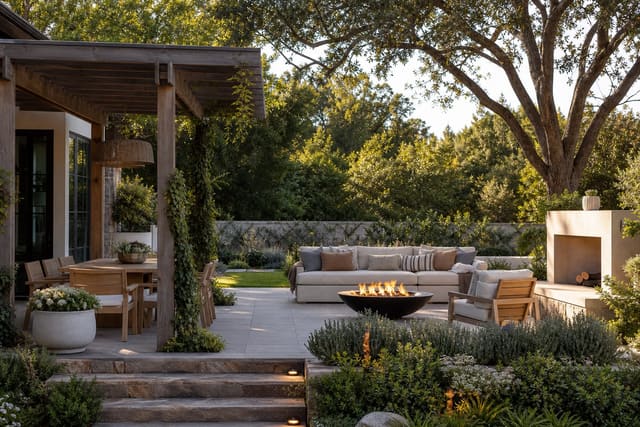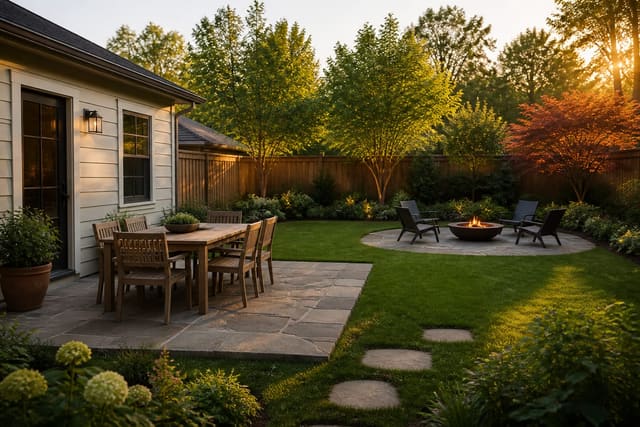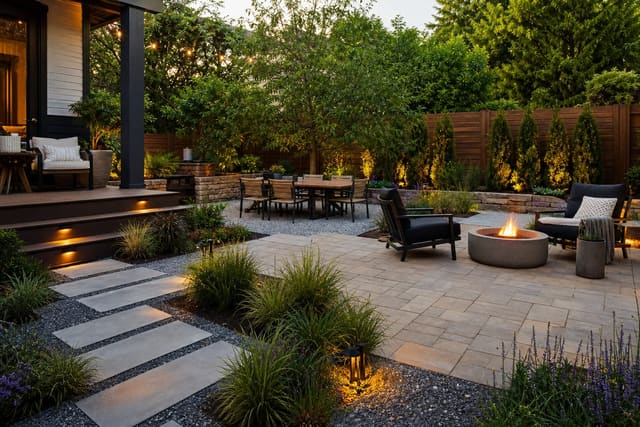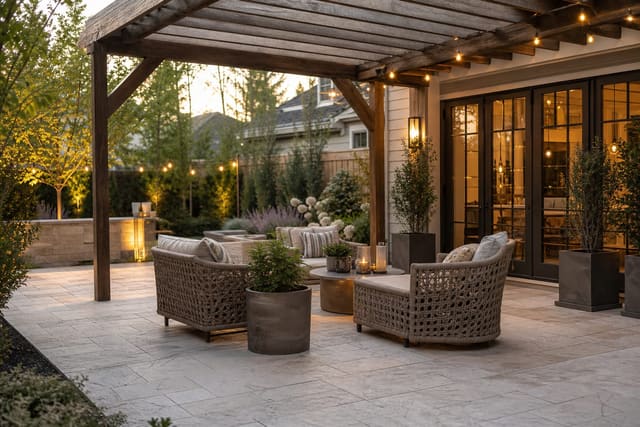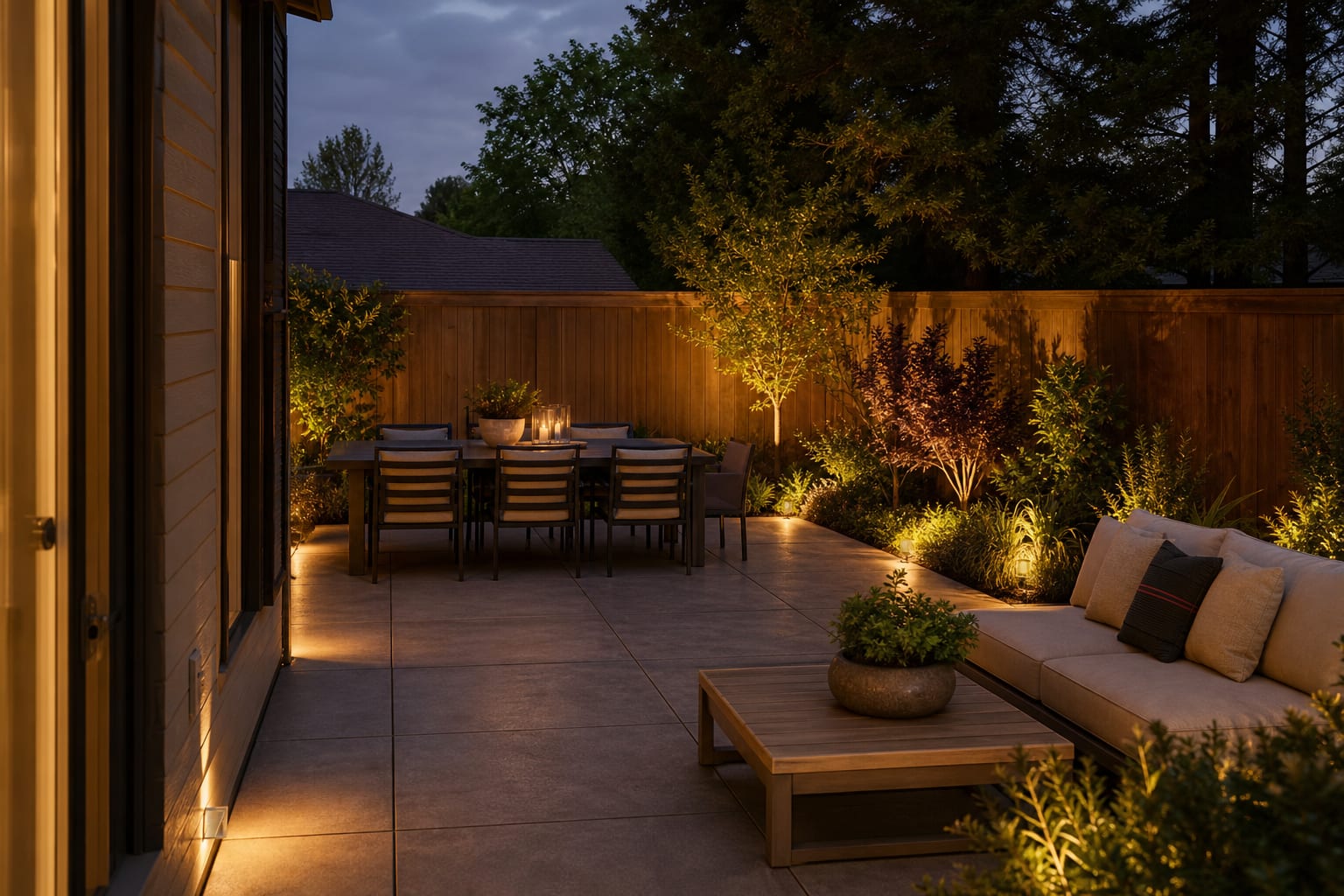
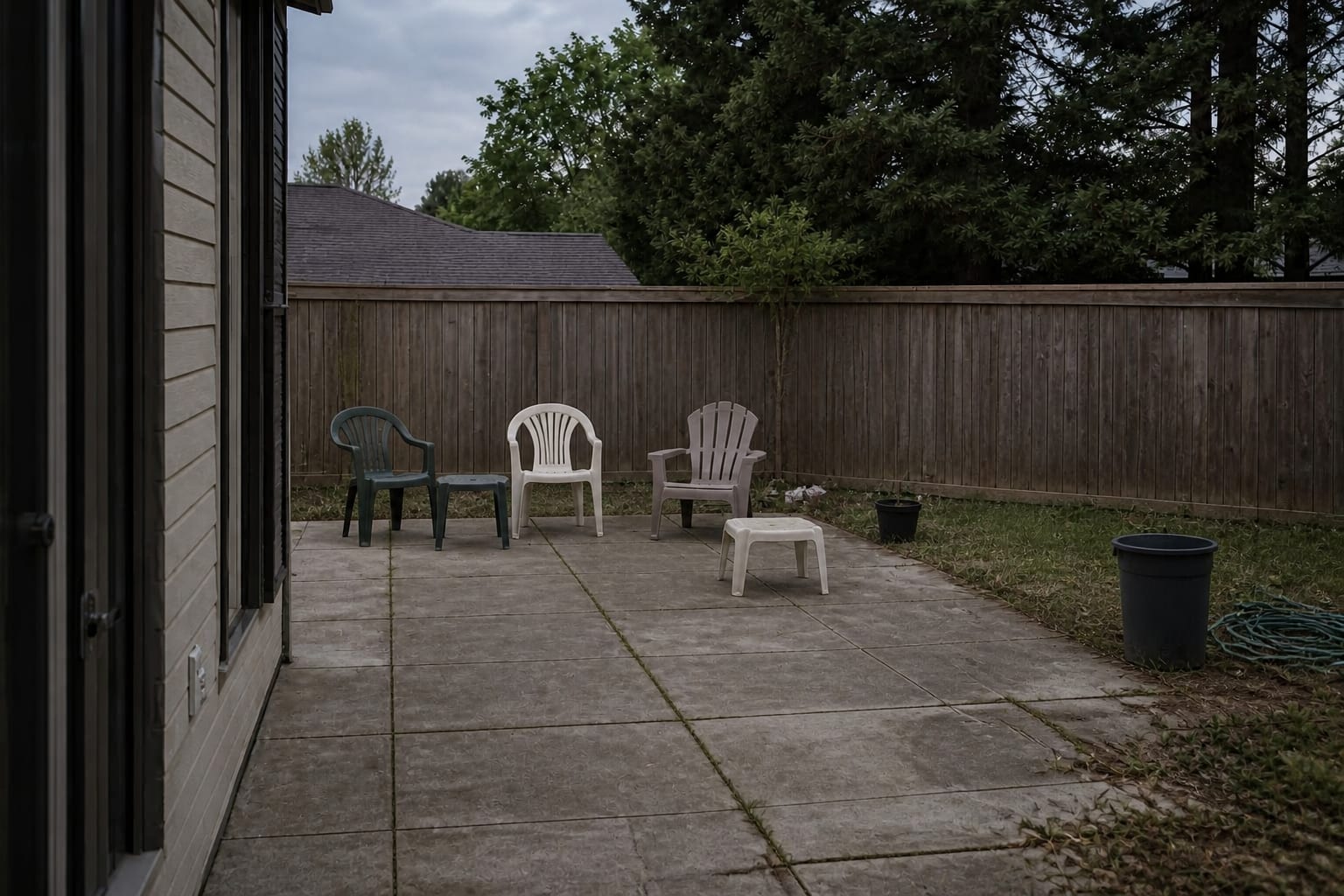
A concrete patio reads designed when it's finished (stained, scored, or stamped), sealed, edged with planting or gravel, and paired with a furniture plan and shade instead of leftover chairs on bare gray slab. The fix is a finish strategy plus zoning, not more decor. These concrete patio ideas show how to get there without tearing out the whole pad.
Practical construction checklist
- Confirm slab condition and drainage before choosing a finish.
- Confirm furniture footprint and pathway widths before scoring or staining.
- Confirm lighting and shade paths so the patio works at 3 p.m. and after dusk.
What makes a concrete patio feel designed instead of patched?
A concrete patio feels designed when it has a clear finish, a furniture plan, softened edges, and one vertical move for the eye to land on. Concrete is visually loud because it's broad, flat, and usually right off the back door — a blank slab makes every chair leg and pot look random.
Decide first whether the existing surface is worth keeping. Shallow discoloration, small chips, or a dull broom finish respond well to stain, scoring, and sealing. Spalling, deep pitting, or mismatched patchwork usually needs an overlay, porcelain pavers on a proper system, or a contractor's assessment.
Give the slab a boundary. A 6in gravel strip, 12in planting edge, or soldier-course paver border stops a square pad from looking like it stopped by accident. Concrete meeting lawn on three sides looks unplanned; concrete meeting planting, gravel, or a low edge looks intentional.
Test this on your own photo with ReDesign before choosing a direction — keep the house edge, hardscape, planting beds, and main path visible so the preview matches your actual space.
Which finish should you choose: stamped, stained, polished, or scored?
The right choice depends on whether you need pattern, color, sheen, or disguise. Stamped concrete gives the strongest texture, stained concrete the most natural color variation, polished concrete the cleanest look in protected areas, and scoring is the sleeper move for turning a plain slab into panels.
| Finish | Best use | Watch point | Useful spec |
|---|---|---|---|
| Stamped concrete | New pours or full resurfacing needing stone, tile, or plank texture | Deep texture traps dirt, can wobble furniture | Match pattern scale to patio size; oversized stamps look fake under 250 sq ft |
| Stained concrete | Existing slabs with sound structure and dull color | Won't hide every patch or crack | Test 2+ colors on the actual slab, including one sealed wet-look sample |
| Polished concrete | Covered patios, modern courtyards, indoor-outdoor transitions | High sheen can glare or feel slick outdoors | Use a slip-resistant exterior sealer near pools or exposed steps |
| Scored concrete | Plain slabs needing order without full resurfacing | Random cuts can emphasize bad proportions | Use 24x24in, 24x36in, or plank-style cuts aligned to the house |
For stamped patios, restraint ages best — ashlar or large rectangular stamps hold up better than hyper-detailed cobblestone. Match a cleaner grid to modern houses and a softer stone pattern to cottage or traditional ones.
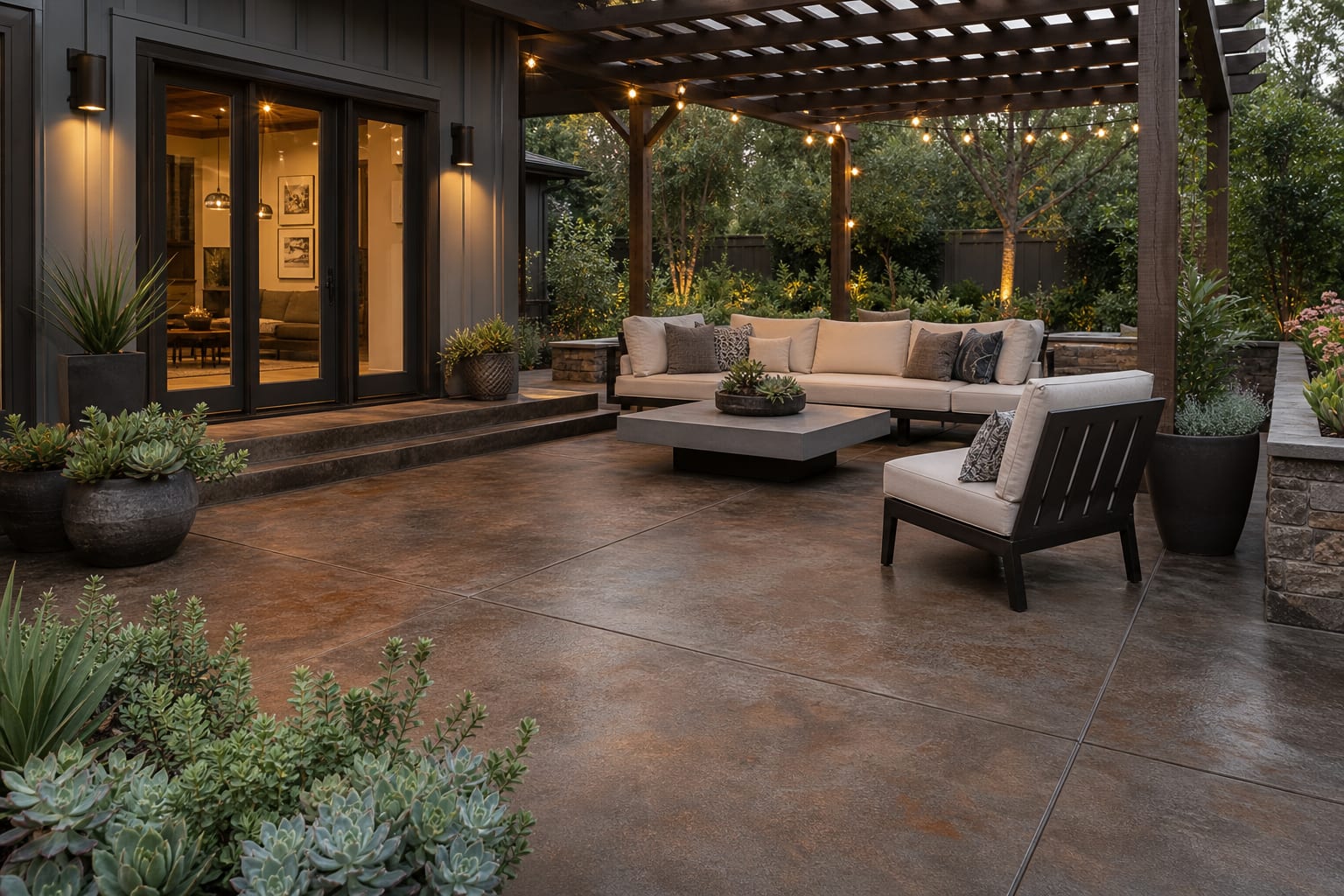
Stained concrete is often the best fix for a serviceable slab because color variation forgives dust and daily use. Warm taupe, soft charcoal, muted terracotta, and weathered brown wear better than bright red or orange. If the patio is covered, check shade and ceiling options in these covered patio ideas before locking in a dark finish that could feel heavy.
Concrete patio makeover ideas that solve real problems
Each idea below fixes a specific weakness: color, scale, edge, shade, or nighttime use.
- Score a plain slab into 24x36in panels, then stain the field warm gray-brown for rhythm without a busy checkerboard look.
- Add a 30in gravel-and-planting border along the most exposed edge; grasses, rosemary, salvia, or boxwood stop the slab-in-lawn look.
- Place a 9x12ft outdoor rug under a four-seat lounge group only where drainage is good, so it isn't trapping moisture against the slab.
- Use two or three oversized planters (24-30in wide) instead of scattered small pots that read as clutter.
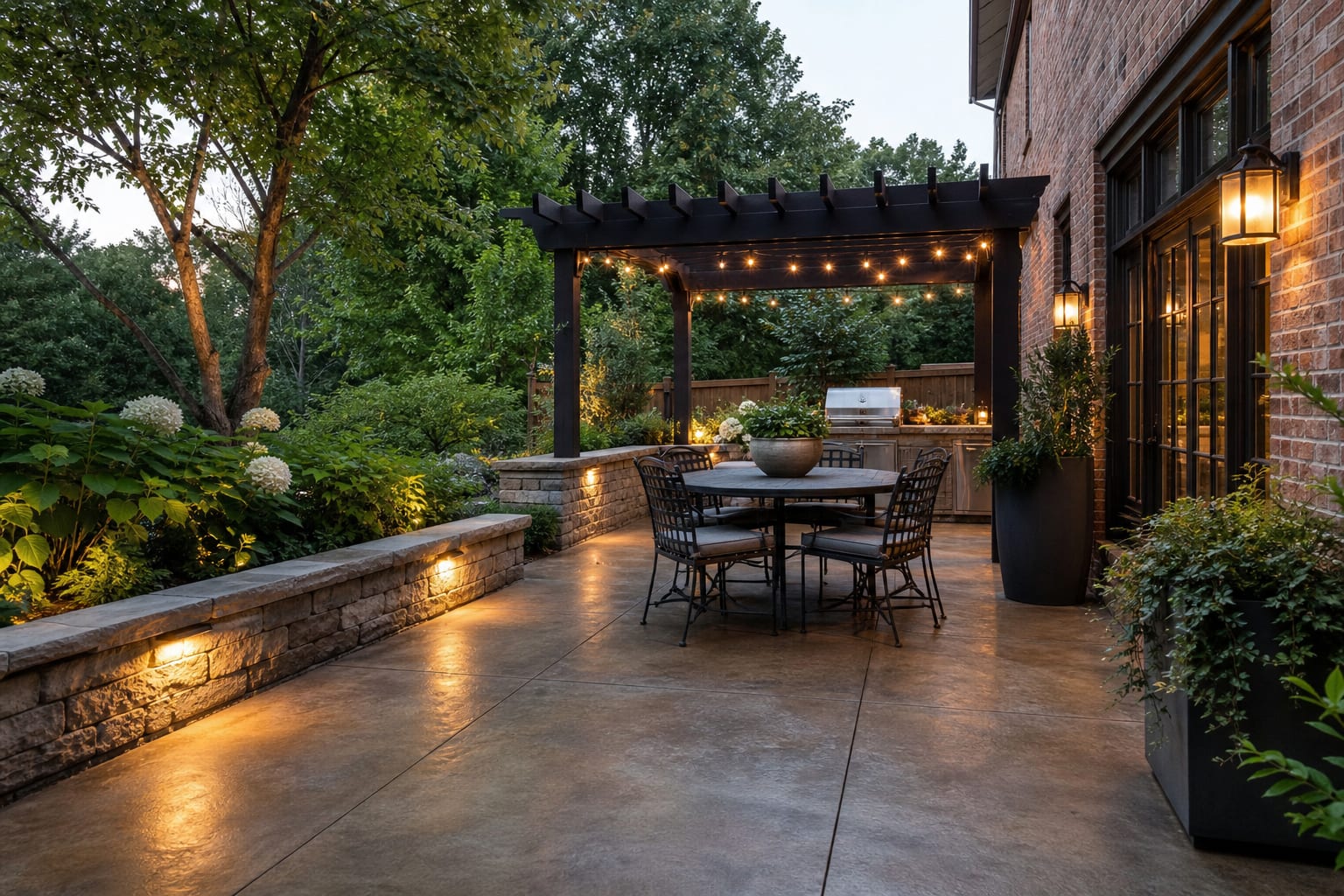
- Size shade to the seating zone: a 10x10ft pergola covers a compact dining setup; a cantilever umbrella should clear the table without blocking paths. Compare options in these pergola ideas for sun-heavy patios.
- Light the edges instead of one floodlight: 18-24in path fixtures, step lights at grade changes, and 2700K wall sconces bring out concrete texture at night.
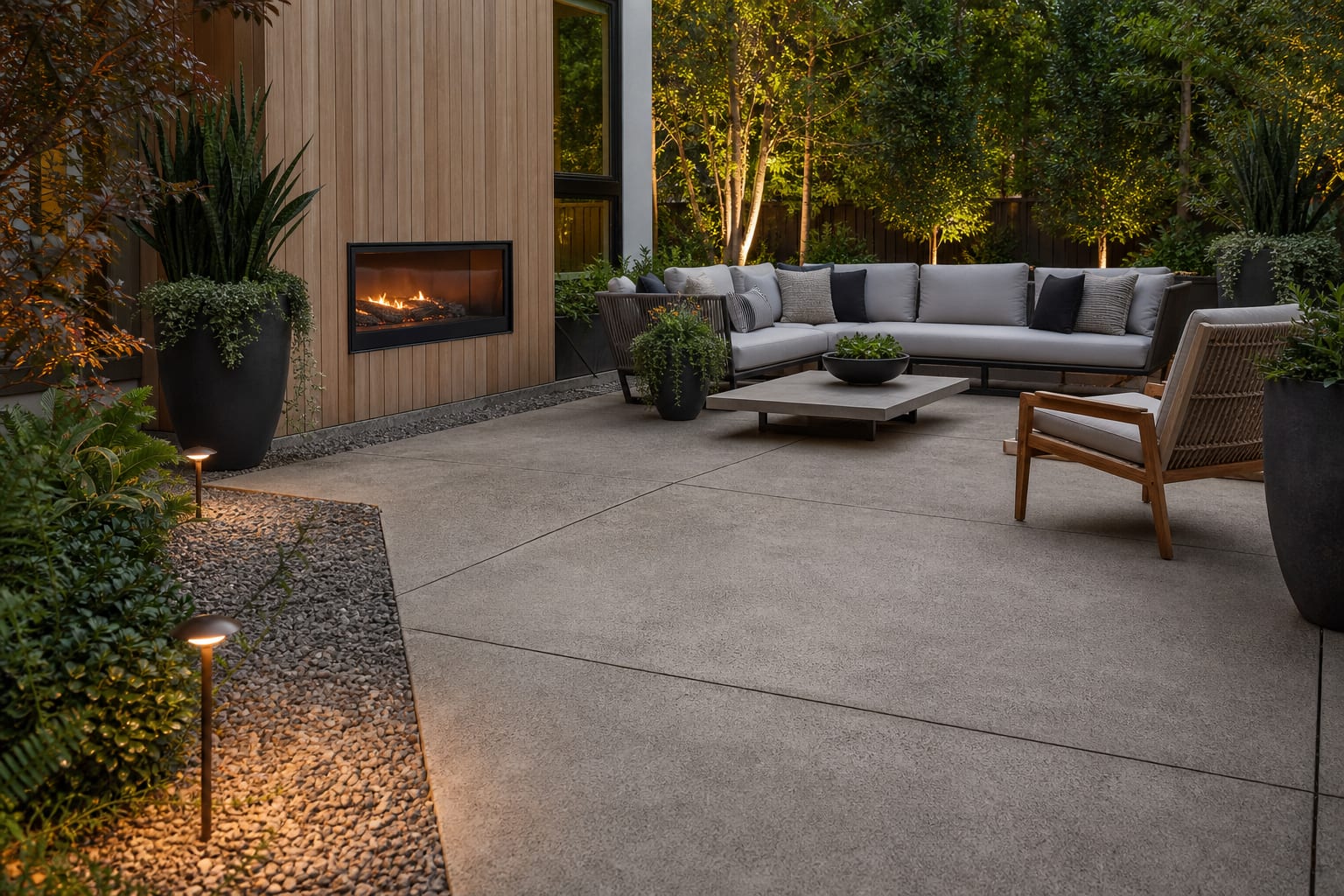
- Frame a fire feature with 30-36in of clearance from the flame edge; see fire pit ideas before placing heat near siding, railings, or branches.
Common concrete patio mistakes
A glossy sealer on an uncovered patio magnifies imperfections and can turn slippery with rain or pollen. Use a lower-sheen, slip-resistant exterior sealer unless the space is covered and deliberately modern.
Stamping a small patio with an oversized stone pattern reads as fake repetition rather than texture. Under about 200 sq ft, scoring, subtle stain, or a small-scale ashlar stamp is more believable.
Ignoring the house color creates a patio that fights the architecture — cool gray beside warm brick looks unfinished. Test samples against the foundation, siding, trim, and fence before committing.
Oversized furniture can cramp a small patio even after every flaw is hidden; a 36-40in deep sectional still needs table room and clearance. Forgetting slope and drainage can ruin a coating, overlay, or rug — run a hose test and fix water movement before any decorative work.
Use AI design to test finish, color, and furniture before work starts
AI previews are useful here because the expensive decision is visual: the same slab can look modern, rustic, Mediterranean, or bland depending on finish and furniture. Upload a straight photo from the door or main seating view, then generate versions with stained concrete, scored panels, stamped texture, larger planters, a pergola, and different furniture scales.
The preview won't tell you if the slab needs crack repair or which coating system to use, but it can show whether charcoal stain overheats the yard, a rug chops the space in half, or planters need more height to balance a blank wall. Keep the camera angle consistent, clear loose items, and include the house wall so finishes are judged against the real exterior.
Once you find a direction, translate it into specs: finish color family, panel size, furniture footprint, shade type, planter height, lighting temperature. That's the gap between a nice picture and a concrete patio makeover that holds up after dinner, after rain, and after a full season of use.
Frequently Asked Questions
How thick should a concrete patio be?
4in is the residential minimum for foot traffic; use 5-6in for vehicle parking or a heavy outdoor kitchen structure. Reinforce with #3 rebar on an 18in grid regardless of thickness.
What is the best concrete patio finish?
Broom finish is the safest and most durable, staying non-slip when wet. Salt wash gives pebbled texture at low cost, and exposed aggregate is the most decorative option and hides surface wear better than plain broom over time.
How long should I wait before using a new concrete patio?
Wait 24-48 hours for light foot traffic, 7 days before placing furniture, and a full 28 days before sealing, adding heavy furniture, or laying pavers on top.
How do I fix cracks in a concrete patio?
For hairline cracks under 1/8in, fill with polyurethane concrete caulk and apply a penetrating sealer over the whole slab. Cracks wider than 1/4in or actively moving are structural and need a contractor assessment before any surface repair.
Can I add color to a concrete patio?
Yes: integral color mixed in at the batch plant gives the most uniform result, while acid stain applied after cure creates a mottled, natural look. Both are UV-stable and need resealing every 2-3 years.
> Try this: Ready to see this on your own outdoor space? Open ReDesign and run the preview before you buy materials, plant, drill, or move furniture.
Three transformations to try 1. Salt-wash concrete with integrated planters 2. Exposed aggregate patio with steel edge 3. Stained concrete patio with outdoor furniture