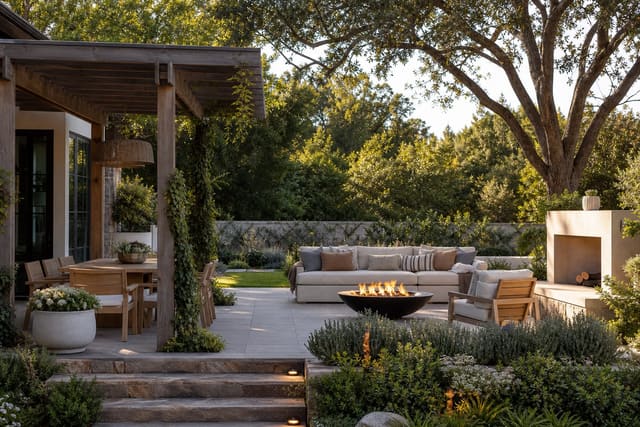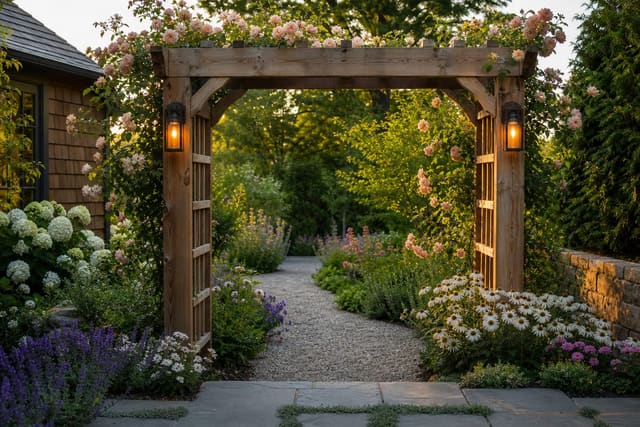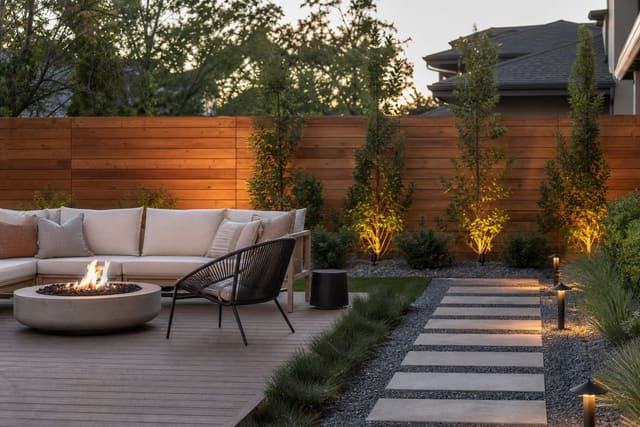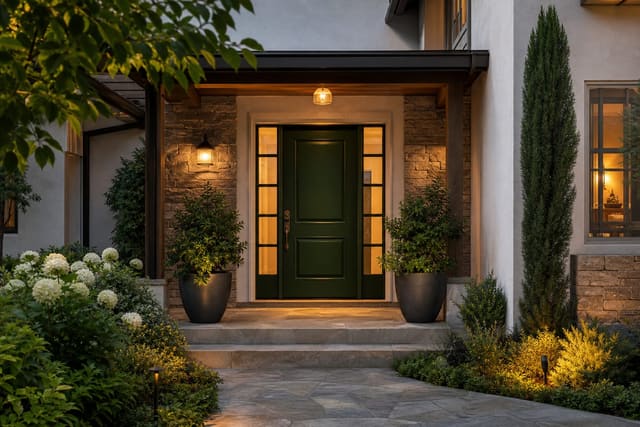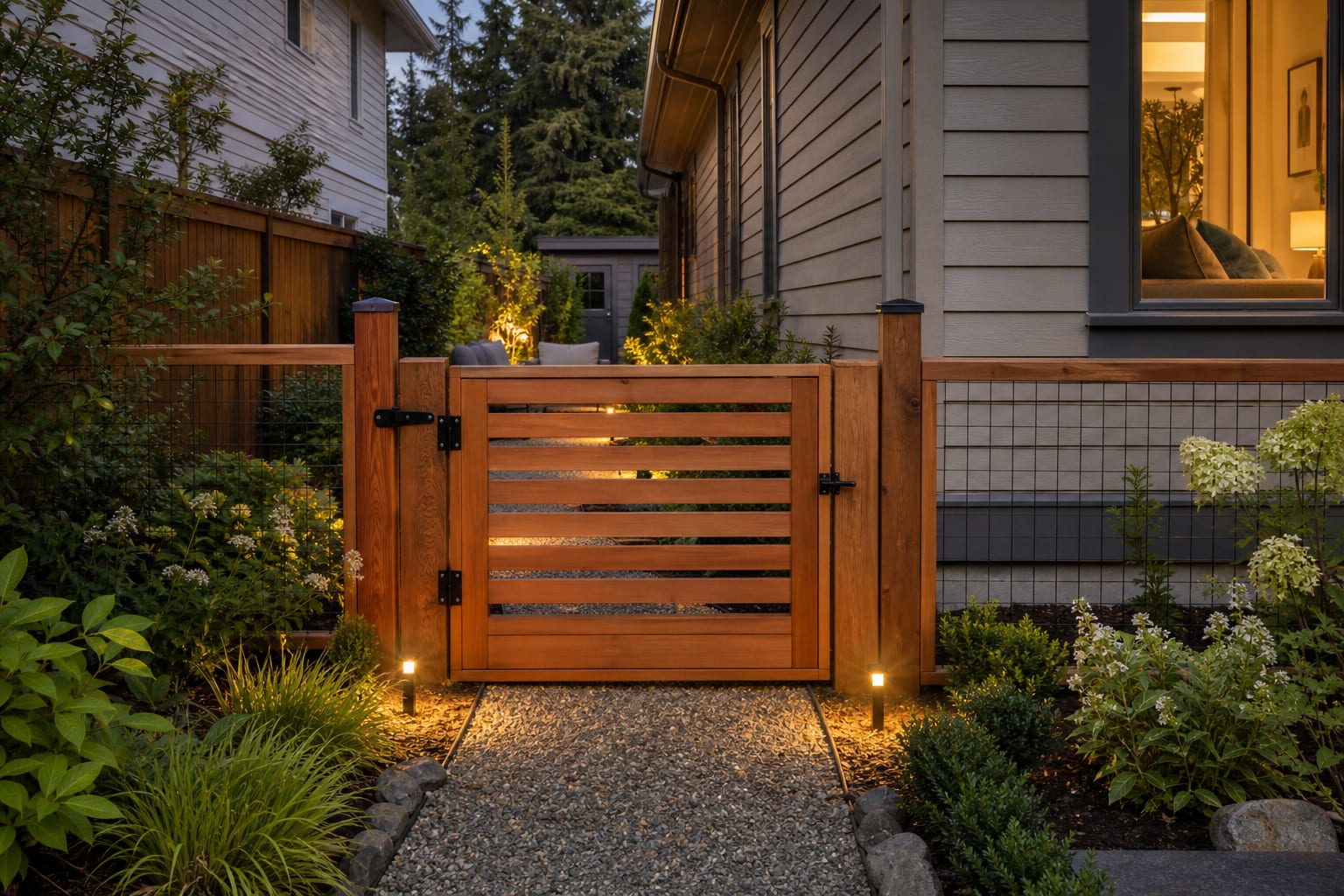
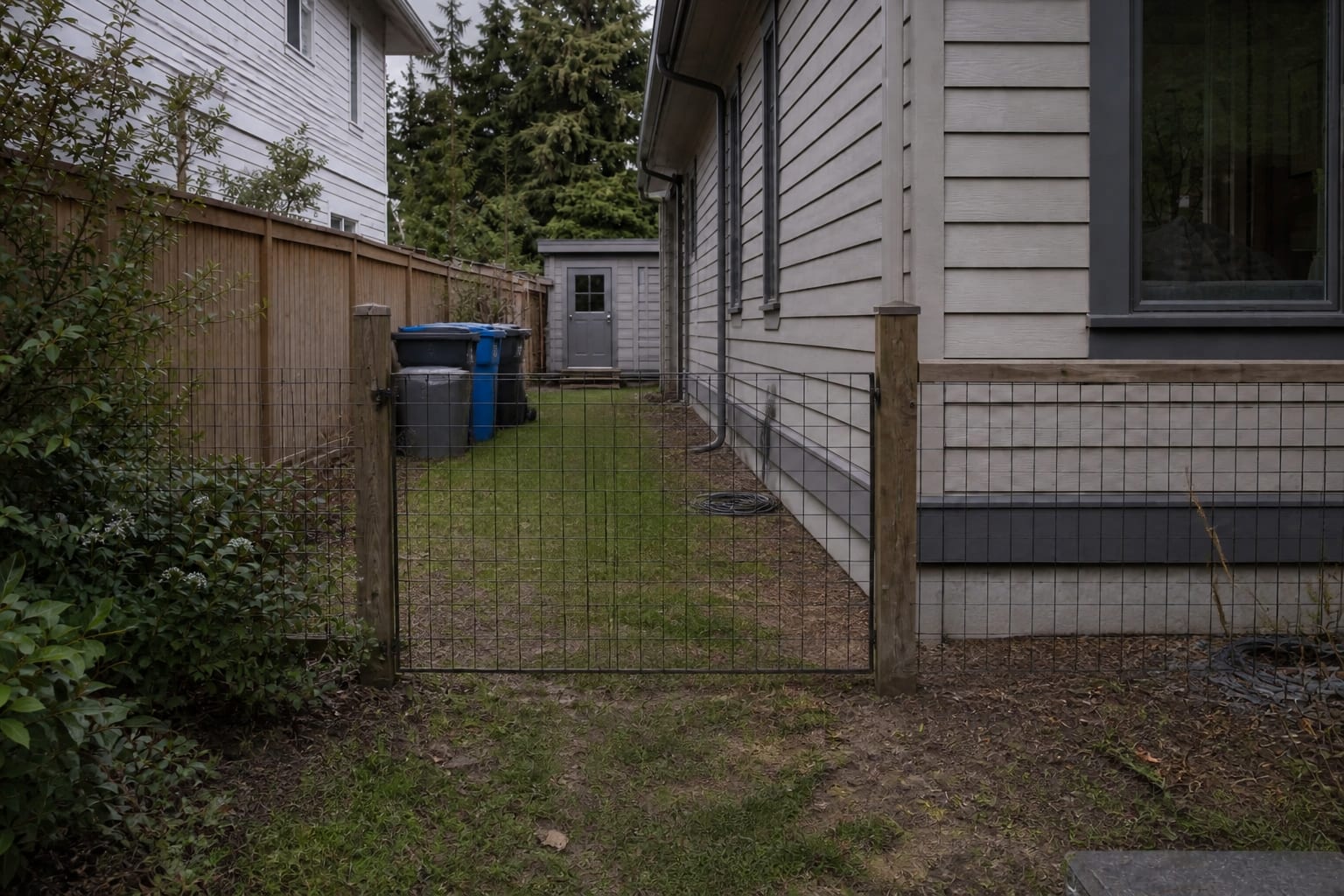
The best garden gate material is powder-coated aluminum or galvanized steel for low-maintenance security, while cedar, oak, or ipe wins when warmth matters more than lock strength. Size, posts, and hardware matter as much as the panel itself. A flimsy gate makes even a beautiful garden feel temporary; the right one solves arrival, privacy, and maintenance in one move.
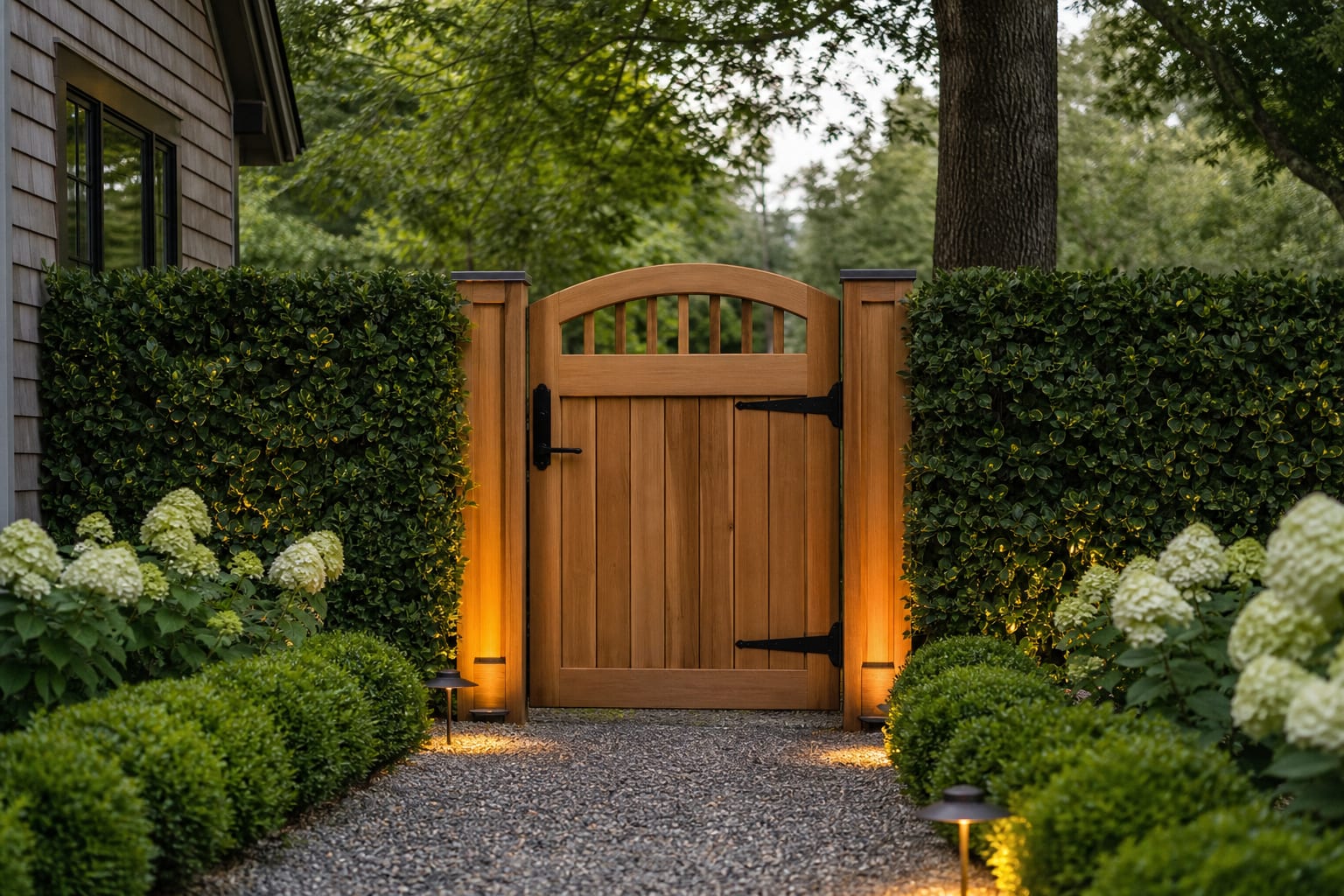
What makes a garden gate feel designed rather than tacked on?
A gate feels designed when posts, path, latch, planting, and sightline all agree on where visitors should go. The panel can be modest, but the arrival has to be clear. A gate floating between a lawn edge and a flower bed reads as a barrier, not an invitation.
Start with alignment: set the gate on the path centerline or the visual break between planting areas. Keep the clear opening at least as wide as the path itself, and leave the hinge side room to swing past thick planting without weekly scraping.
Posts matter more than most homeowners expect. A 6' privacy gate on skinny posts looks nervous next to masonry or mature hedges. Use 4"x4" posts as the minimum for small gates; go to 6"x6" for wide gates, heavy timber, or a gate competing visually with a driveway or stone wall.
Frame the opening with low planting 18"-30" from the posts, and continue the path material through the threshold so the gate doesn't look stranded. Near a structure, borrow spacing logic from garden arbor entrances so the frame reads as a real passage.
Test this on your own photo with ReDesign before committing. Keep the house edge, horizon line, hardscape, planting beds, and main path visible so the preview solves the space you actually have.
Which garden gate material fits your climate, privacy, and security needs?
Powder-coated aluminum and galvanized steel are the safest low-maintenance choices for most homes: they resist movement, take modern hardware cleanly, and work as open, semi-private, or solid panels. Wood remains the richer visual choice near planting and warm trim, brick, or cottage details.
| Gate material | Best use | Watch-out | Practical spec |
|---|---|---|---|
| Cedar or redwood | Warm entrances, cottage paths, side yards | Needs finish upkeep, can move over time | 1"x4" or 1"x6" boards on a braced frame |
| Ipe or hardwood | Premium modern gates near patios | Heavy, harder to drill | Size hinges and posts for the weight |
| Powder-coated aluminum | Damp climates, modern homes, low upkeep | Feels thin if frame is too narrow | Frame at least 2" wide from the street |
| Galvanized/powder-coated steel | Security, slim profiles, contemporary gardens | Rust if coating is damaged | Exterior-grade coating, seal cut edges |
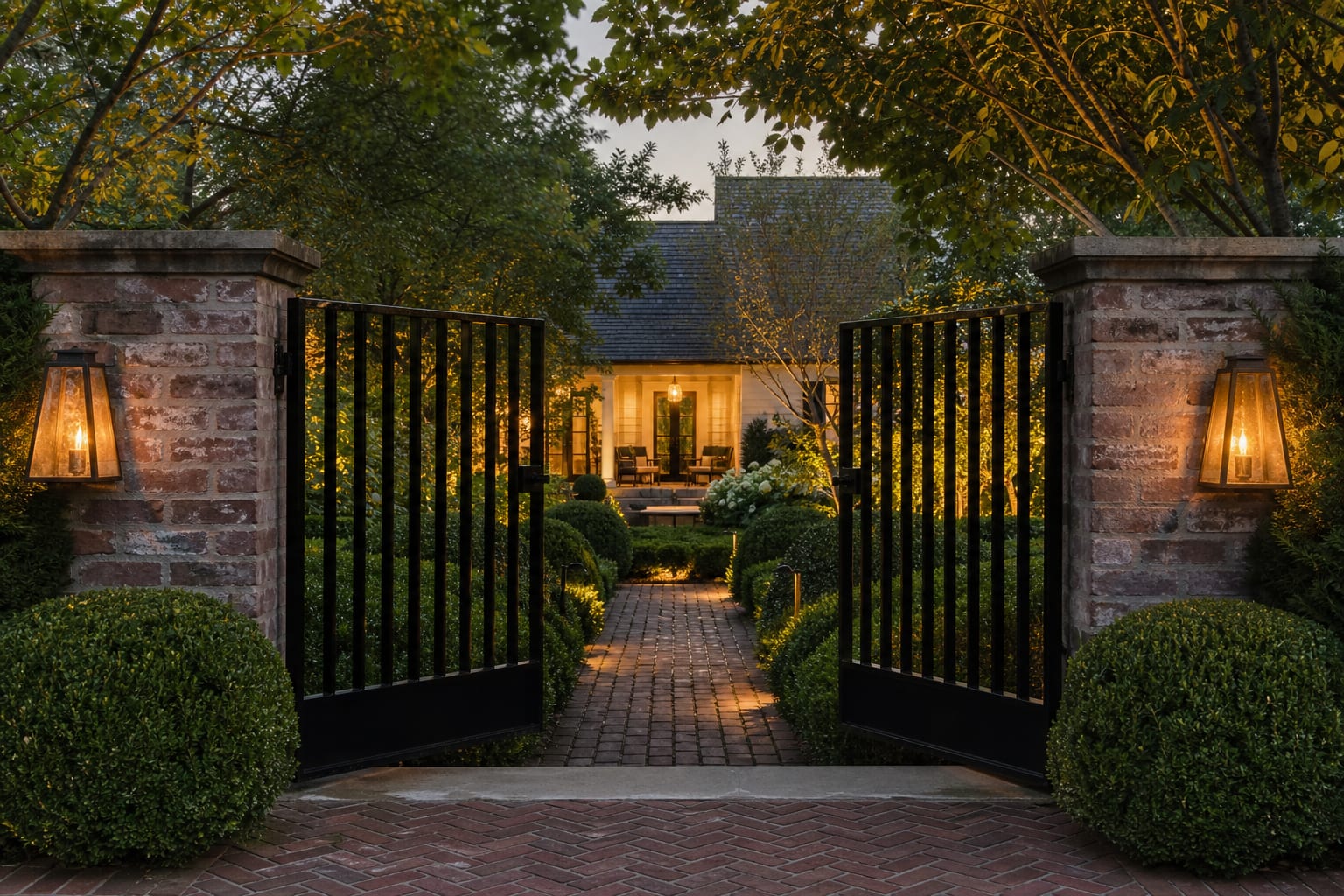
| Wrought iron or pickets | Front gardens where visibility matters | Less privacy without planting behind | Gaps under 4" if pets are a concern |
For a wooden gate, brace diagonally from the bottom hinge side to the latch side to fight sag, and leave 2"-3" ground clearance for gravel or frost heave. For metal, keep proportions disciplined: a 5' gate with a 2" frame often looks calmer than a tall panel loaded with curls and finials.
Garden gate ideas for specific problems:
- Solid cedar slat gate for a side passage hiding bins or bikes; keep slats one direction and height around 5'-6" for privacy.
- Open metal gate for a front garden meant to be seen; pickets or mesh let planting show while still marking the boundary.
- Short gate with tall planting behind it when full privacy panels would look hostile; 42"-48" backed by 3'-5' shrubs screens the path without a wall.
- Framed top rail to make budget boards look architectural next to masonry or mature hedging.
- Threshold lighting placed 18"-24" before the posts, which pairs with path lighting that makes the gate legible.
What garden gate mistakes should you avoid?
Most bad gates fail because practical details were chosen after the pretty panel. A gate has to swing, latch, survive weather, and guide people through the garden.
- Undersizing the opening. A 30" gate looks sweet but frustrates daily use; aim for 42" on main routes and 48" for service paths carrying tools.
- Mixing privacy and welcome badly. A solid 6' front gate can feel defensive; open pickets or a lower gate with layered planting usually feels more inviting.
- Choosing weak decorative hinges. Wide or hardwood gates need outdoor-rated hardware and posts that won't twist, not indoor strap hinges picked for looks.
- Ignoring the ground plane. Grass under a gate turns muddy; extend gravel, brick, or stone through the opening and past the swing area.
- Skipping threshold light. A dark latch makes guests hesitate; a low shielded fixture or landscape uplighting near the hinge side solves it without glare.
How can AI design help you choose a garden gate?
The hardest garden gate decisions are scale and character, not the product photo. Cedar, black steel, and painted picket can each look right online, then feel too heavy, too cute, or too exposed once placed against your actual fence, path, and planting.
Upload a straight photo from the first view people use: sidewalk looking in, patio looking out, or side path toward the gate. Keep both posts, the path surface, and nearby planting in frame, then test one variable at a time: wood versus metal, open versus solid, square top versus arched top.
Let the preview answer practical questions before you spend money. Does a 6' privacy panel feel secure or boxed in? Does black metal disappear against dark shrubs? If the entrance reads clearly from 20 feet in the preview, the real gate will likely work from the street and the first step into the garden.
Frequently Asked Questions
How wide should a garden gate be?
Use 36-42in for a single gate wide enough for a wheelbarrow, 48-60in for a single sweep gate, or 60-72in split into two leaves for vehicle and equipment access.
What materials work best for a garden gate?
Cedar, white oak, accoya, and painted hardwood hold their geometry over a decade. Pressure-treated pine warps within two seasons, while steel frames clad in wood combine longevity with material warmth.
Should a garden gate match the fence?
Either match the fence exactly so the gate disappears, or detail it as a deliberate feature with contrasting color or slat pattern. Partial matches tend to read as accidental rather than intentional.
How deep should gate posts be buried?
Bury posts 30-36in in a concrete pier, matching frost depth plus 6in in cold climates. Use a heavier 6x6 post on the hinge side since constant use pulls hardware loose from thinner posts.
What hardware works for a garden gate?
Black powder-coated steel works well: two 6in strap hinges or three 4in butt hinges on the hinge side, a thumb latch or ring-pull on the latch side, and a self-closing spring or hydraulic closer for security.
> Try this: Ready to see this on your own outdoor space? Open ReDesign and run the preview before you buy materials, plant, drill, or move furniture.
Three transformations to try
1. Cedar slat gate with black hardware