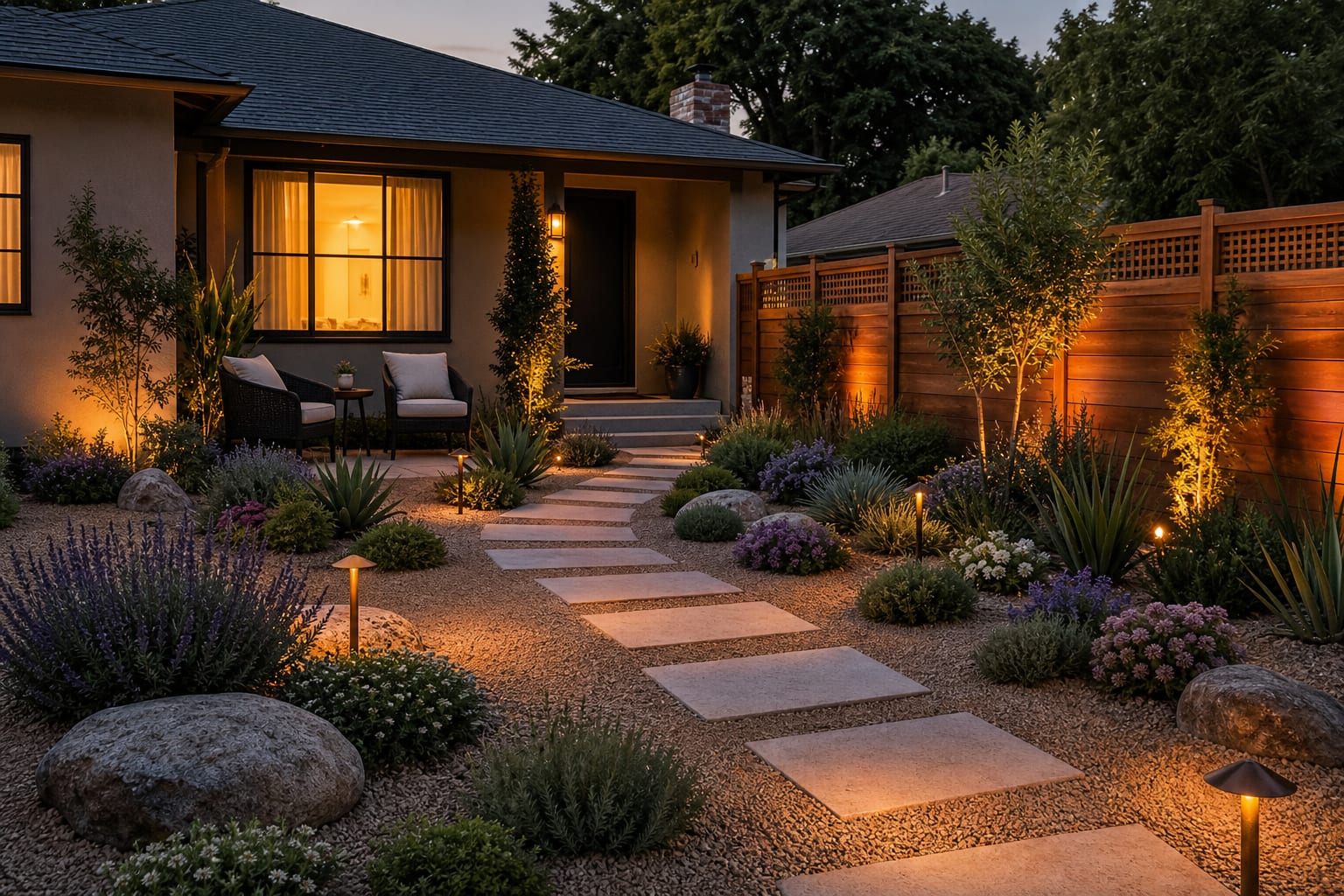
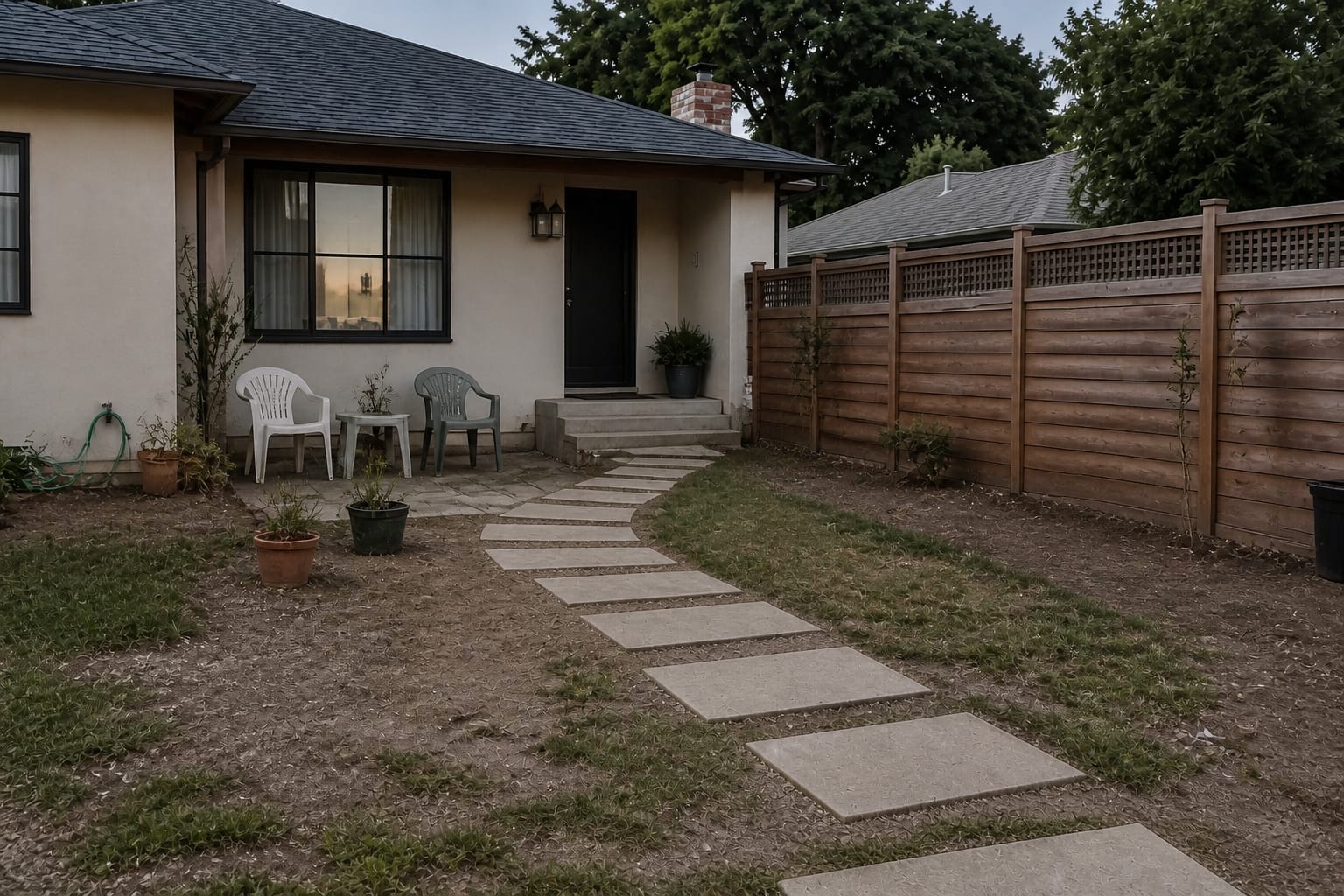
A gravel garden replaces lawn when 2-3in of angular 3/8in gravel sits over prepped, weed-free soil (with a non-woven fabric under paths), drought-tolerant plants like sedum, salvia, and grasses root through planting pockets, and steel or stone edging contains the field. Done right, it cuts mowing and watering while still looking intentional, not like stones dumped over a dead lawn.
How do I build a gravel garden that actually replaces lawn?
Remove the turf, clear perennial weeds, fix drainage, set firm edges, lay a permeable gravel layer, then plant through the gravel rather than on top of it. Skipping steps doesn't show up immediately — gravel hides mistakes for a few weeks before weeds, puddles, and stray stones expose them.
Decide first whether the area is for walking, planting, or viewing. A path needs a firmer surface and stable edge; a planted bed can be looser. For most planting beds, 2 inches of gravel is enough to reduce splash and shade the soil — go deeper and you risk burying crowns and slowing water into the soil.
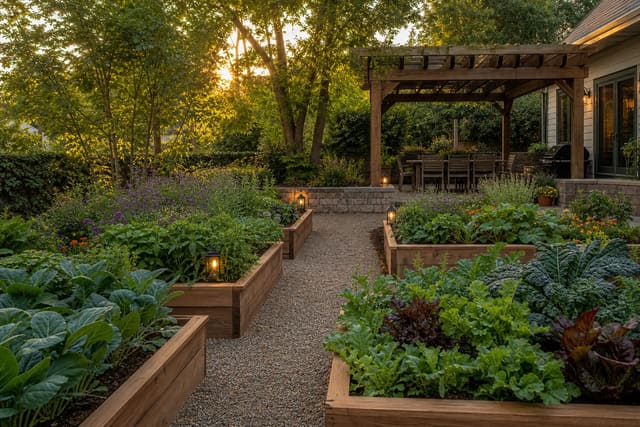
If the old lawn sits on compacted clay, gravel alone won't fix drainage. Lift the turf, break up the top 6-8 inches where practical, and add grit or sharp sand only if your local soil calls for it. In wet gardens, a raised or mounded bed is safer than a flat gravel blanket. For mixed food-and-flower plans, borrow structure from raised garden bed layouts so productive soil doesn't get lost under decorative stone.
Every gravel bed needs a real edge — metal, brick, stone setts, or timber — set high enough to hold gravel in and low enough to avoid a trip hazard. At lawn or paving junctions, plan a 4-6in transition strip so stones don't migrate into mower blades or drains.
Which gravel, edging, and base should I use?
Choose gravel based on maintenance, drainage, and the house's architecture, not the brightest sample at the yard. Pale limestone chip looks crisp against red brick but can glare in full sun and show leaf litter fast. Angular stone locks together better on foot traffic routes than round pea gravel.
| Gravel garden choice | Best use | Spec that keeps it practical |
|---|---|---|
| Pea gravel | informal seating edges, cottage gardens, rentals | keep inside a firm edge — rounded stones migrate easily |
| Angular crushed gravel | paths, front gardens, daily walking routes | use a compactable base so footsteps don't rut the surface |
| Decomposed granite | dry gardens, Mediterranean planting, modern paths | best where local rainfall suits a fine mineral surface |
| Self-binding gravel | formal paths and front approaches | install over correct compacted base for even firming |
| Larger decorative aggregate | mulched beds, dry creek details, low-traffic zones | keep sizes weedable; avoid where chairs or bins roll |
For a walkable route from gate to door, budget at least 36in of width and enough base depth and compaction for the soil underneath. For a planted border, gravel acts as mineral mulch — it should suppress splash and unify the bed without blocking bulb planting or hand-weeding.
Edging decides whether the garden survives its first storm looking finished. Steel gives a crisp, contemporary line; brick or stone ties into older houses and existing paving. If you're also solving a boundary, check garden wall ideas before locking in gravel color, since a new wall or planter can shift the whole palette.
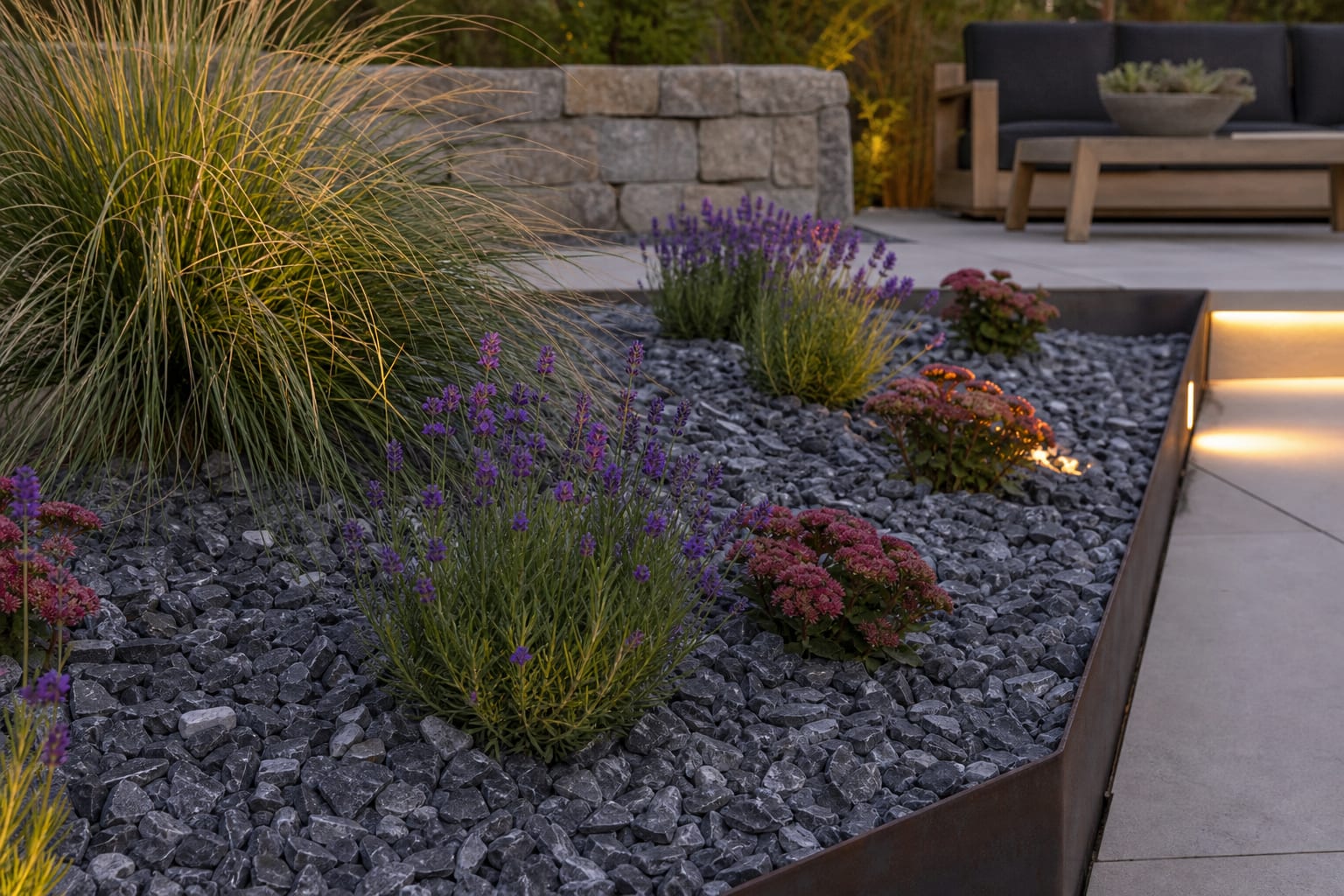
Test this on your own photo with ReDesign — keep the house edge, horizon line, hardscape, planting beds, and main path visible so the preview solves the space you actually have.
What planting pattern makes gravel look lush, not bare?
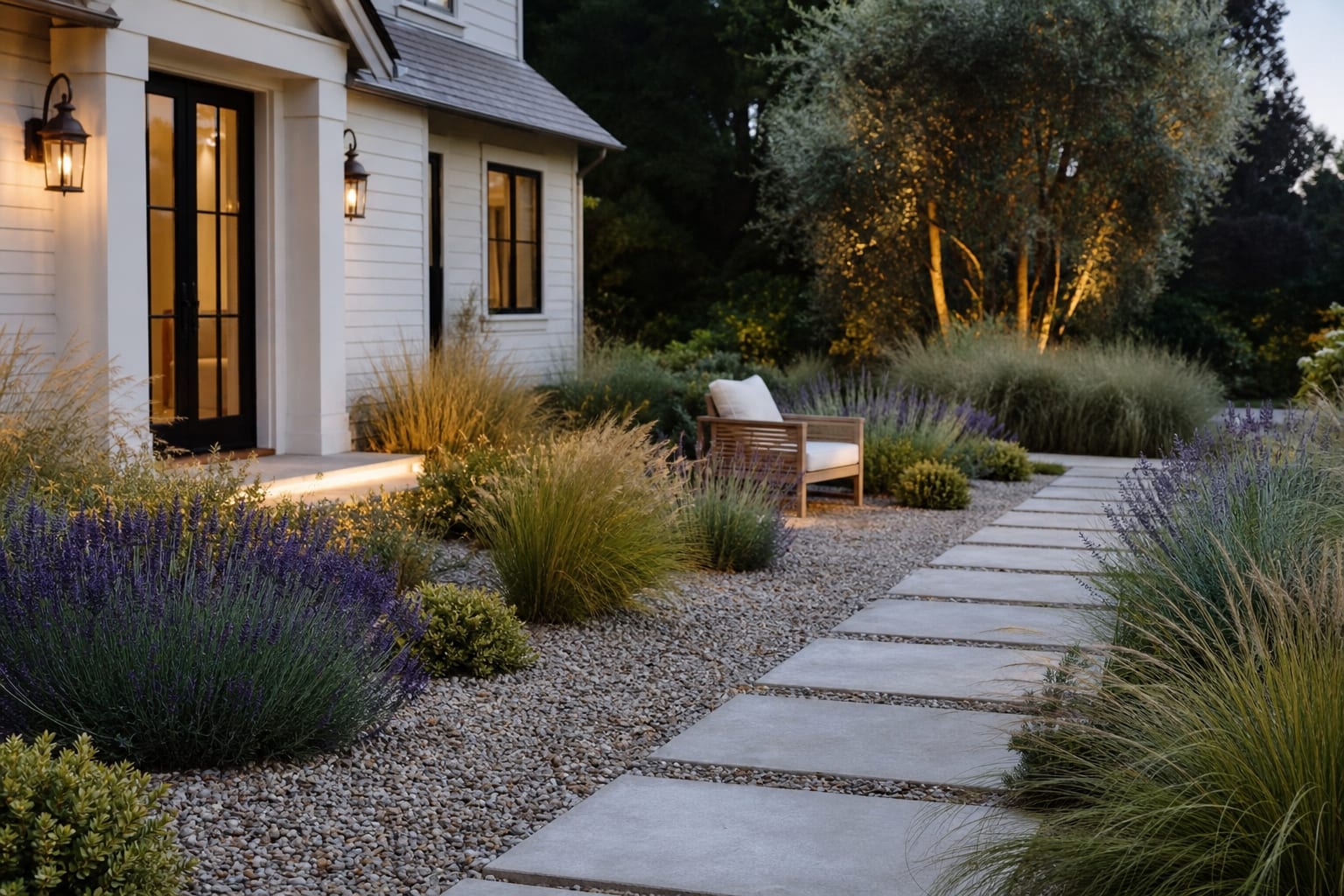
Gravel gardens feel alive with repetition, height change, and seasonal movement rather than isolated single plants in a stone tray. Buying one of everything is the fastest way to look cheap. Instead, pick a limited plant language: one upright, one mounding, one airy grass, one low spreader, one repeating seasonal flower.
For sun, lean on tough Mediterranean and prairie plants: lavender, rosemary, thyme, santolina, salvia, nepeta, achillea, stipa, pennisetum, sedum, eryngium, and euphorbia where climate allows. In wetter or colder gardens, pick plants that tolerate sharp drainage and your actual winter, not just a dry-summer mood board. Place taller grasses or shrubs toward the back or center, letting lower herbs spill toward paths.
Spacing rewards patience. A 1-gallon perennial looks lonely on installation day but many spread 18-24in within a few seasons; a mature ornamental grass can need 30in or more. Leave gaps and fill early emptiness with annuals, bulbs, or moveable pots rather than overcrowding. Add vertical punctuation too — a multi-stem shrub, clipped evergreen, tall grass, or simple trellis — so the bed doesn't flatten into a low carpet.
What mistakes ruin a gravel garden?
- Laying gravel over living lawn. Grass and perennial weeds push straight through; strip turf and roots first or the maintenance problem just changes shape.
- Using fabric under every planted bed. It helps under paths, but in planting areas it traps debris, blocks future planting, and encourages shallow roots.
- Choosing the wrong gravel for the job. Rounded pea gravel is charming under a bench but miserable on a slope or under wheeled bins — use angular material where stability matters.
- Planting too sparse. Three tiny shrubs on gravel reads like a parking verge. Spend on a few larger anchors, then repeat perennials in groups of 3, 5, or 7.
- Ignoring night and winter. Gravel gardens look flat after dark without path and focal-plant lighting. Without wired power nearby, solar outdoor lighting ideas can help test fixture positions first.
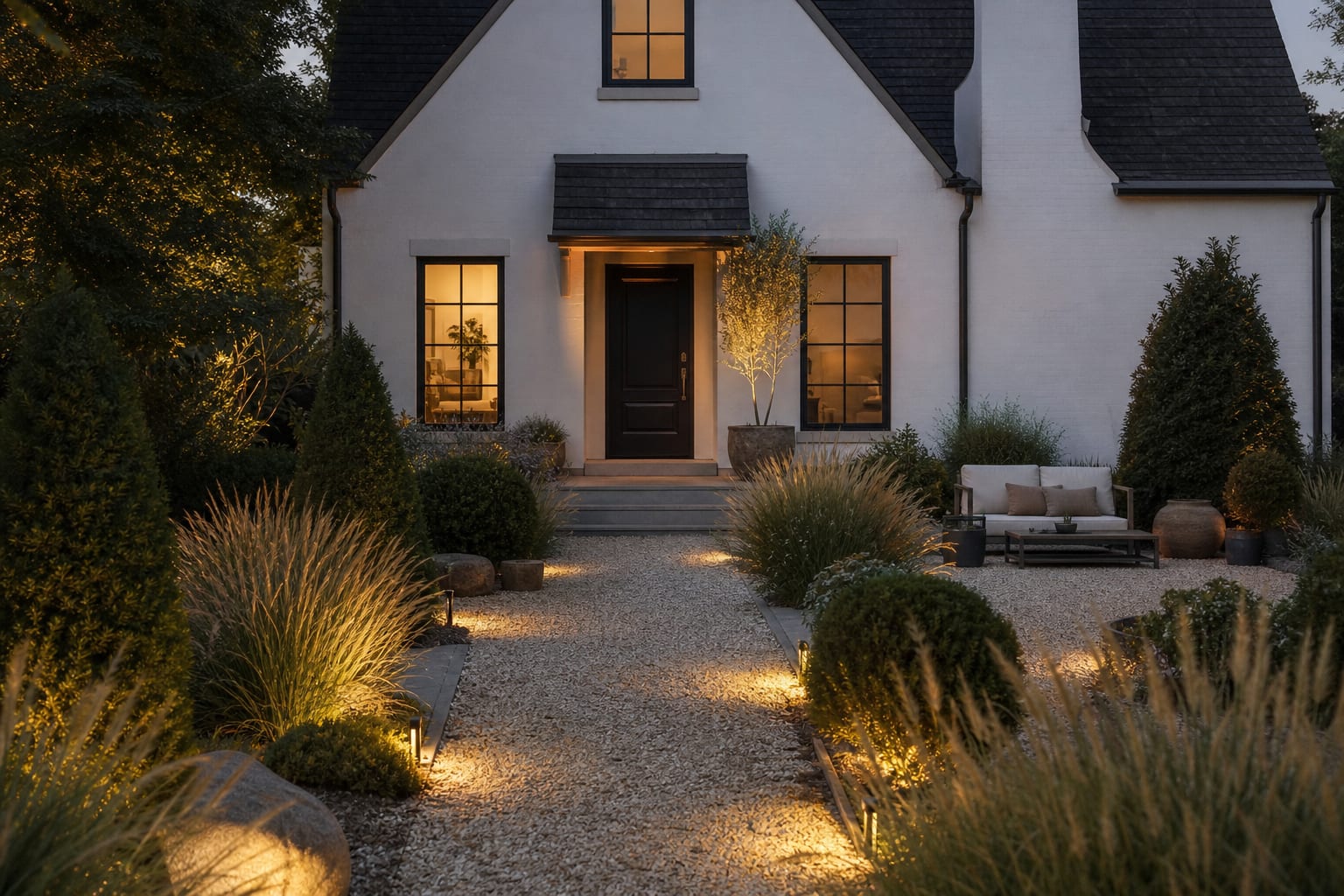
Should I test the design with AI before removing turf?
Yes — the riskiest gravel garden decisions are visual: how much lawn to remove, which gravel color suits the house, where paths go, and whether planting reads as generous or thin. Photograph the angle you see most (front path, kitchen door, patio edge), then preview a buff gravel scheme, a darker crushed-stone scheme, and a fuller planting version from that same viewpoint before buying materials.
Judge relationships, not construction detail: does the gravel brighten or wash out the house? Is the path wide enough for bins or a scooter? Do plants read as believable drifts or scattered dots?
Frequently Asked Questions
Is gravel a good lawn alternative?
Yes, for sunny, dry, low-traffic areas. Gravel cuts mowing, watering, and fertilizer to near-zero. High-traffic kids-and-pets zones still need turf or artificial grass instead.
What plants work in a gravel garden?
Sedum, salvia, lavender, perovskia, ornamental grasses, and Mediterranean herbs thrive in the sharp drainage and reflected heat of a gravel bed. Moisture-loving plants struggle and rot in the same conditions.
Does a gravel garden need a base?
Paths and seating zones need a compacted 4in base under the decorative gravel. A planting bed can sit on just 1-2in of gravel over tilled soil, with fabric limited to path areas.
How do I stop weeds in a gravel garden?
Use non-woven landscape fabric under gravel paths and cut planting pockets through it for beds. Plastic sheeting fails within 2-3 years and traps water; a gravel layer of 3in or more also suppresses weed germination.
Will a gravel garden look bare?
Not if plants sit in odd-numbered drifts of 3-7 across the gravel field, with one taller anchor — a yucca, agave, or ornamental tree — per zone. Even, evenly spaced planting is what reads as a parking lot.
> Try this: Ready to see this on your own outdoor space? Open ReDesign and run the preview before you buy materials, plant, drill, or move furniture.
Three transformations to try
1. Gravel garden with ornamental grasses 2. Drought-tolerant gravel courtyard 3. Modern gravel garden with steel edging