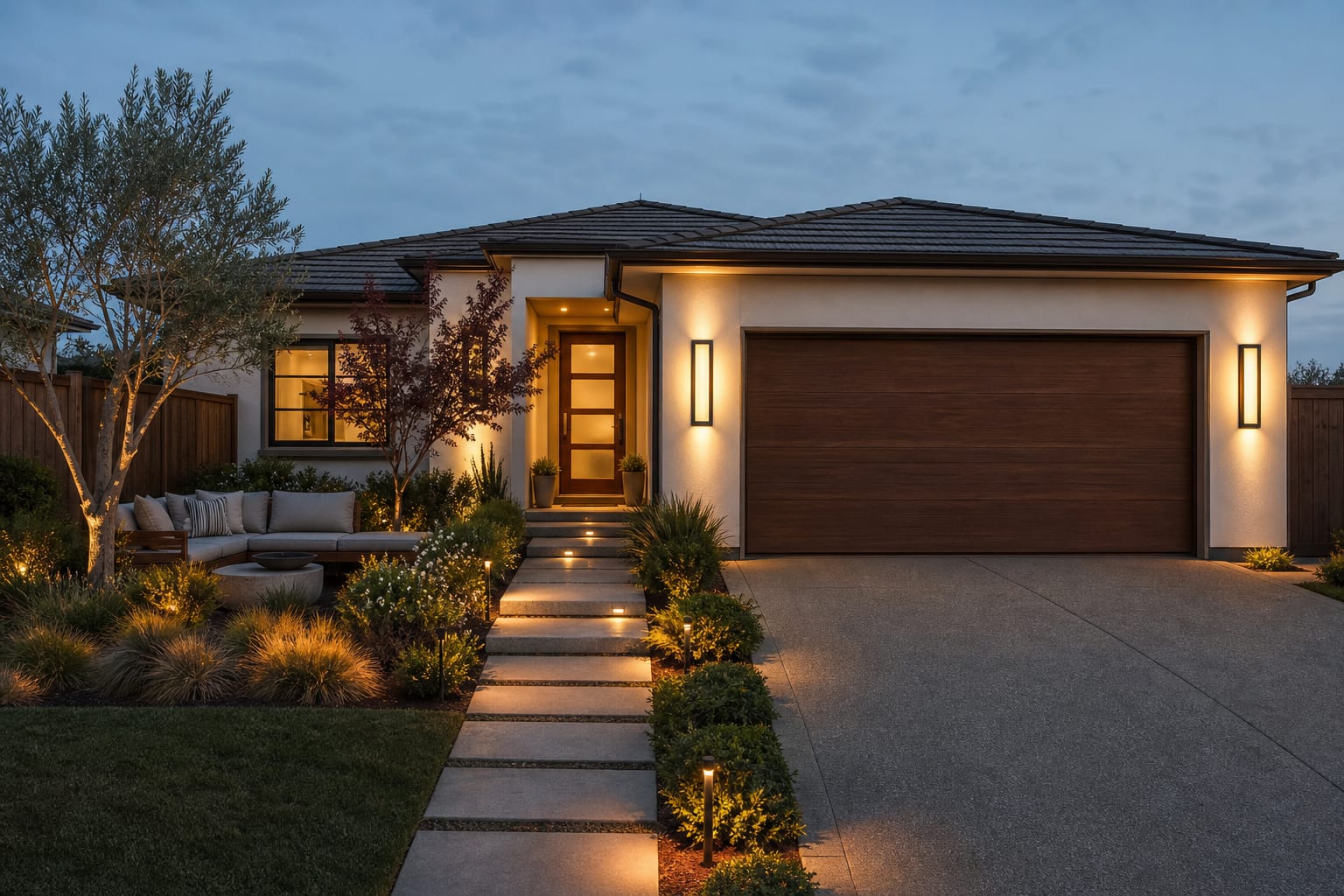
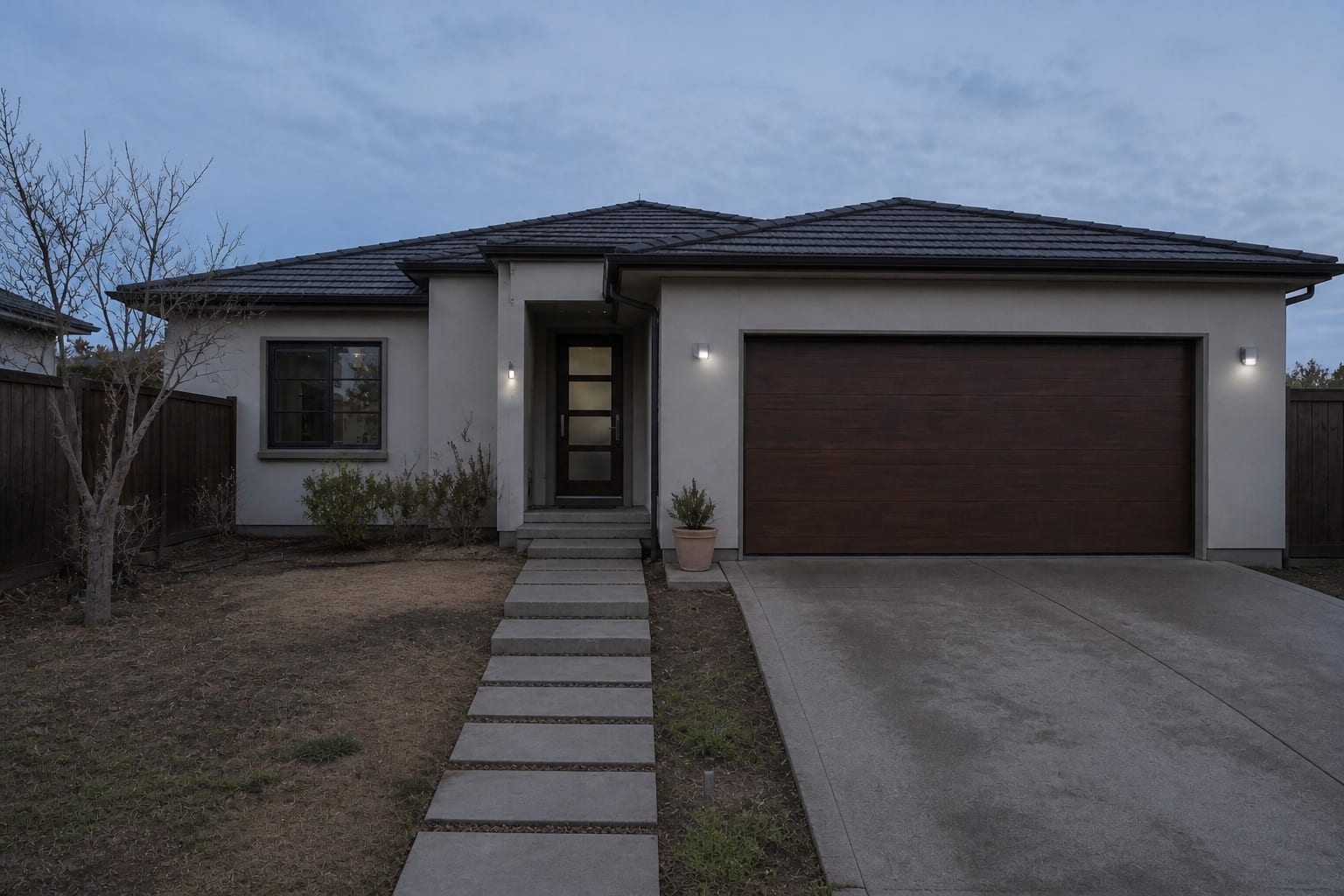
The best outdoor wall sconce ideas size the fixture to the door or wall (18-28in tall at the entry, smaller on secondary walls), match the finish to the door hardware, shield the bulb with frosted or downlit glass, and center the light 60-66in above grade. Get scale and glare control right before you shop for style, because a mis-sized sconce reads as an afterthought no matter how good it looked online.
How do I choose outdoor wall sconces without fighting the house?
Match size, light direction, finish, and bulb temperature to the door, wall, and architecture before you chase a style. A front door usually earns the most presence, a garage needs rhythm across a broad wall, and a patio wants gentler light near seating.
For scale, a sconce beside an 80in door looks best at roughly one-quarter to one-third the door height, or 18 to 26in tall. Center the light source 60-66in above the finished floor, adjusting for taller doors or raised stoops. A ceiling porch light throws general downward light; a wall sconce shapes the vertical face of the house, and many entries want both.
| Location | Better sconce move | Spec to copy |
|---|---|---|
| Front door | Pair vertical fixtures with warm frosted lamps | 18-26in tall beside an 80in door |
| Garage | One fixture per side or between bays | 1/4 to 1/3 the height of the nearby opening |
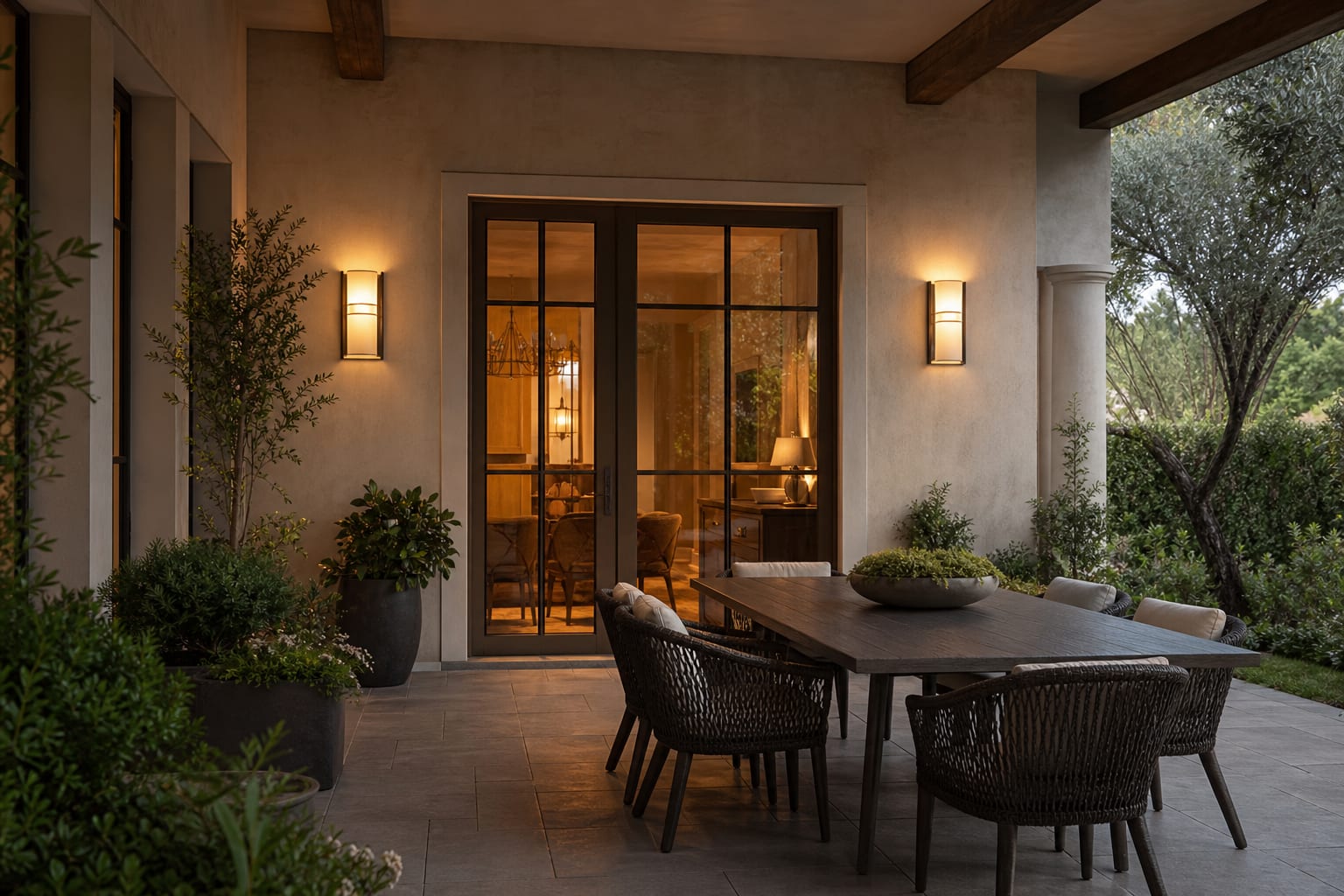
| Patio door | Shielded or opal glass near seating | 2700K-3000K, dimmable if possible |
| Side gate | Wet-rated, low-glare fixture | Aim light below eye level, away from neighbors |
Choose 2700K-3000K lamps unless the house is intentionally modern. Cold light hardens brick, cedar, stucco, and planting when the fixture sits close to eye level.
Test this on your own photo with ReDesign before you settle on a direction; keep the house edge, horizon line, hardscape, planting beds, and main path visible so the preview solves the space you actually have.
Which outdoor wall sconce ideas work for entries, patios, and garages?
The best ideas solve a specific problem: a dark threshold, a blank garage wall, a patio door beside a dining table, or a forgotten side yard. Pick the idea that fits the wall before picking the finish.
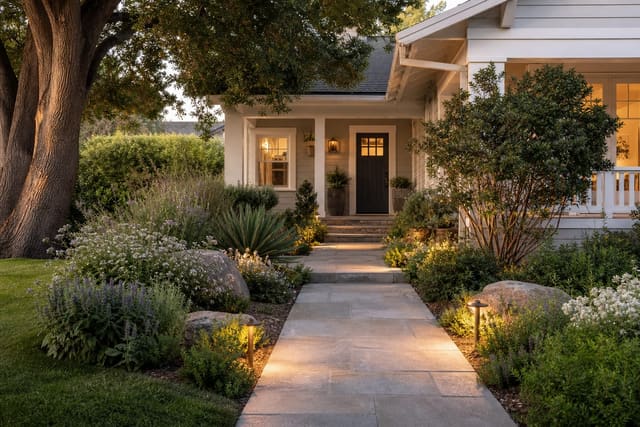
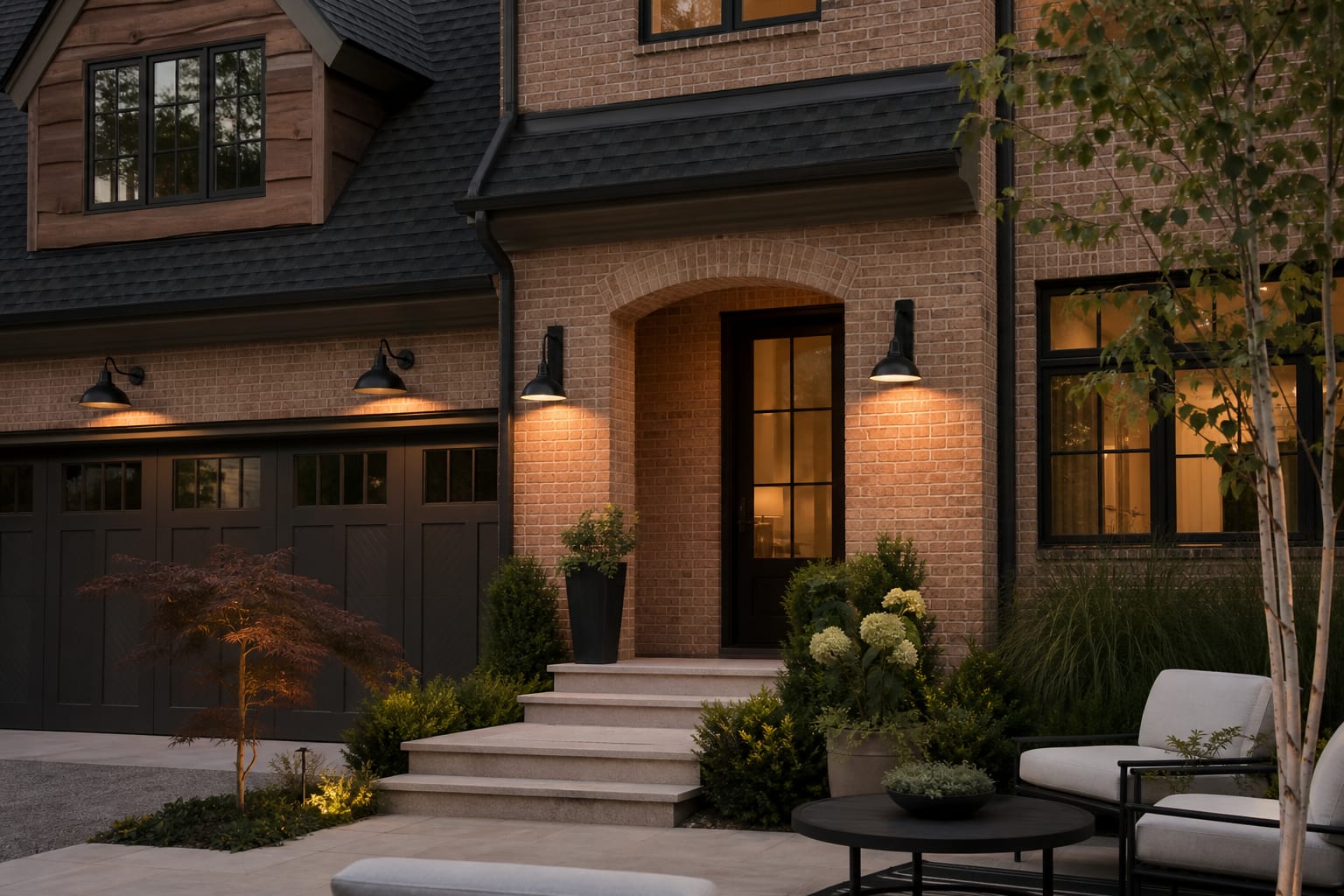
- Frame a symmetrical front door with two taller sconces set 6-12in from the trim. On narrow stoops, one sconce on the latch side often looks cleaner than two undersized fixtures.
- Use one substantial lantern on a cottage, colonial, or traditional porch. Choose seeded, opal, or frosted glass if the bulb sits near eye level; black, aged brass, bronze, and dark pewter age better outside than novelty finishes.
- Repeat garage sconces with discipline. One fixture per outer side is often enough for a two-car garage; add one between bays if the wall is wide. Coordinate the fixture with the walking route and materials in pressure-treated decking layouts so the evening approach feels continuous.
- Soften patio sconces near dining and lounge seating with shielded or frosted glass, since seated eye height often lands 42-48in above the surface. If you're also choosing paving, the bounce from porcelain tile patio designs changes how bright the same sconce feels after dark.
- Keep side-yard sconces quiet. A narrow passage needs a wet-rated fixture that marks the gate or path without shining into a neighbor's window. On gravel patios, pair wall light with the softer texture of decomposed granite patio ideas instead of expecting one sconce to light the whole space.
Finish should follow the house, not a trend. Black looks sharp on white siding but can disappear on dark brick at night; bronze and aged brass warm up stone, stucco, cedar, and cream trim. For coastal houses, prioritize powder-coated aluminum, marine-grade stainless, or sealed brass over silhouette.
Common outdoor wall sconce mistakes to avoid
The most common mistake is buying a fixture that looked large online and shrinks against the house. Exterior scale is unforgiving, so when torn between two sizes for the front entry, the larger one is usually safer as long as it clears trim and walking space.
Mounting too high is another problem. A centerline of 72in can work on a tall garage pier, but beside a normal front door it throws glare toward faces and leaves the threshold dim. Test the centerline with painter's tape at 60, 64, and 68in before the electrician drills.
Clear glass is overused: it photographs well by day, but at night the bulb becomes the design and rarely looks as good as the fixture. Reserve clear glass for hidden or low-output lamps, and use frosted, seeded, or shielded glass near a door, chair, or walkway.
Don't mix color temperatures across one facade. A 5000K security light beside 2700K entry sconces makes the house look patched together; use a shielded, warmer, motion-only fixture instead. Also respect the wall material, since a strong up-and-down beam can enrich rough stone but create distracting stripes on glossy siding.
Use AI design to preview exterior wall lights before you order
AI design helps because the hard decision is visual proportion, not the product spec. Upload a straight-on dusk photo of the entry, patio door, or garage wall, then preview taller lanterns, slimmer cylinders, frosted glass, darker finishes, and warmer light. It won't replace fixture ratings, code, or an installer's judgment, but it shows whether the house wants a pair of 22in lanterns or a quieter 16in shielded sconce.
Shoot from where the sconce will actually be judged: the front walk, driveway, patio chair, or gate approach. Include the door trim, roofline, house numbers, planters, and paving, since those objects reveal scale. If one preview reads like jewelry and another makes the wall feel calmer, choose the calmer wall.
Frequently Asked Questions
How big should an entry wall sconce be?
18-28in tall flanking the front door, about one-third the door height, with the centerline at 60-66in above grade. Sconces shorter than 14in disappear next to a 6-7ft door.
Should outdoor sconces be UL wet or damp rated?
Use wet-rated fixtures for any sconce exposed to direct rain, which covers most front and side doors. Damp-rated fixtures are only appropriate under a covered porch with no horizontal rain exposure.
Can I put a wall sconce on a stucco wall?
Yes, but use a junction box rated for stucco mounting with a back-plate gasket. Never surface-mount directly without flashing, or the wall will leak at the fixture.
Do I need two sconces or one?
Pair sconces at the front entry for symmetry and balanced glare. Secondary doors and garage walls usually need only one sconce, centered above the opening.
What color temperature works best for outdoor sconces?
Warm 2700K matches interior light spilling out the door. 3000K works for modern facades, but anything above 3500K starts to read as commercial.
> Try this: Ready to see this on your own outdoor space? Open ReDesign and run the preview before you buy materials, plant, drill, or move furniture.
Three transformations to try
1. Front entry with paired black sconces