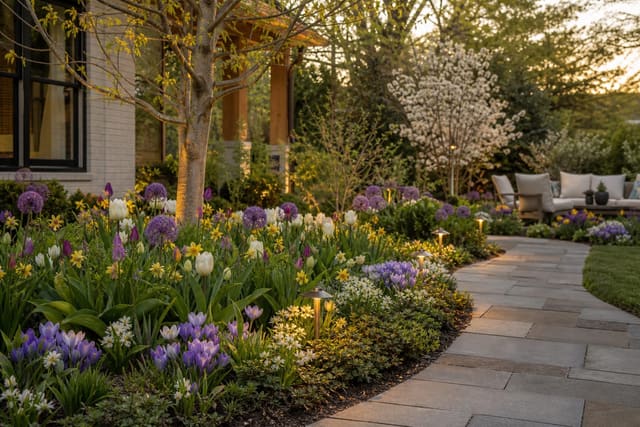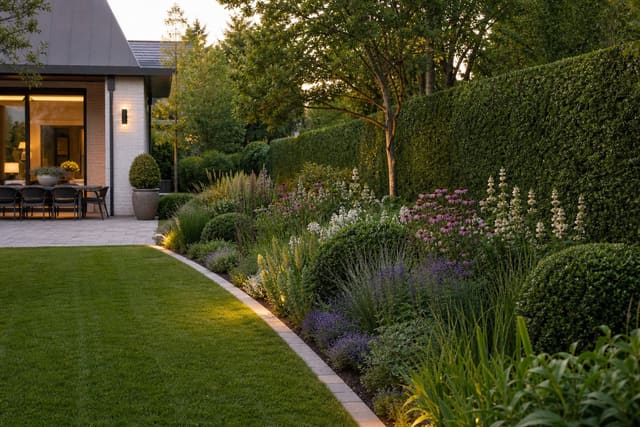
A spring garden refresh runs in this order: cut grasses and dead perennials to 4in, edge every bed with a sharp spade line, top-dress with 1-2in of compost, plant cool-season color, and divide overgrown perennials once soil thaws. Structure comes before shopping, since new plants can't fix a muddy or undefined space.
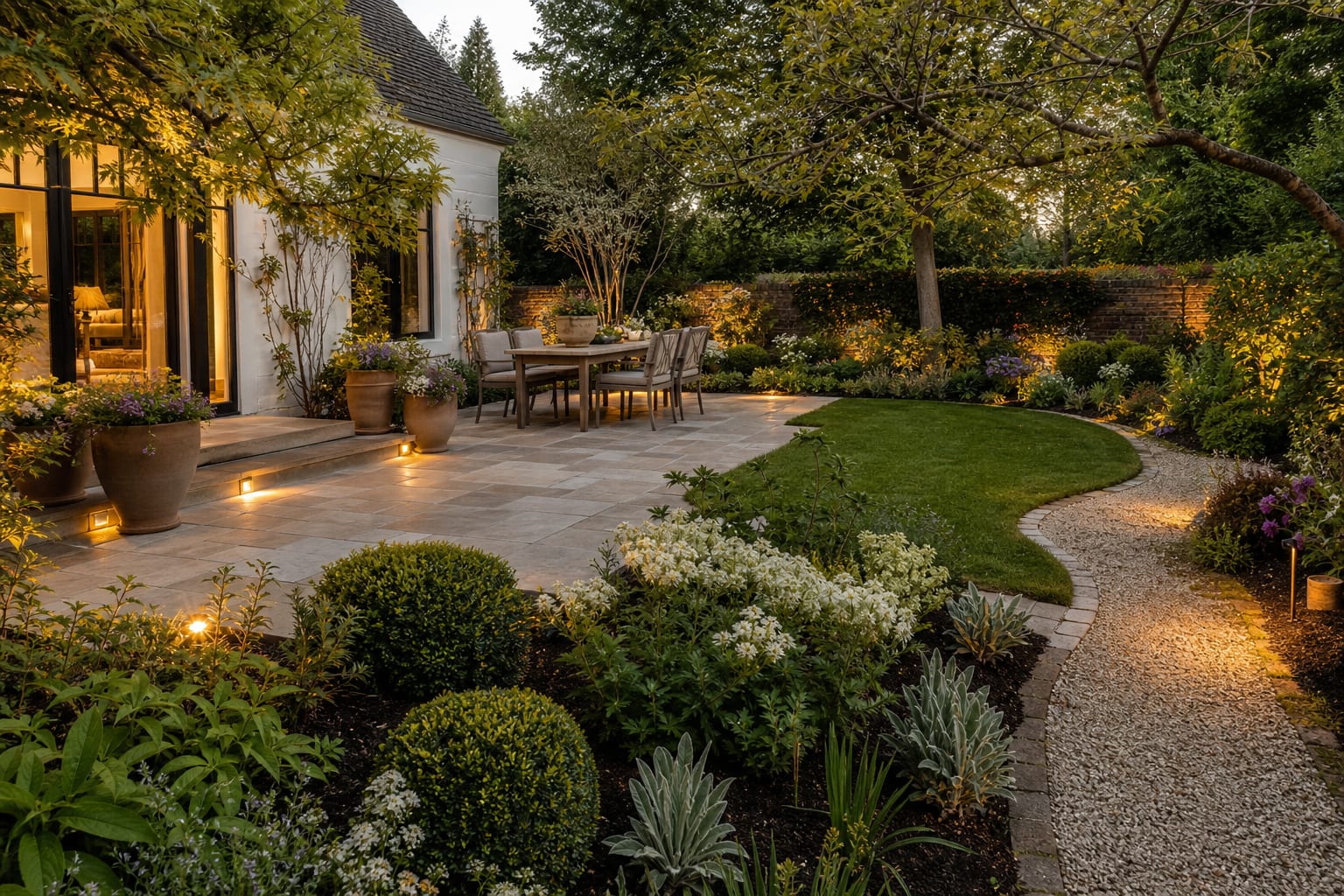
How do I refresh my garden for spring?
Clear winter debris, prune damaged growth, repair edges and paths, feed the soil, refresh containers, clean the patio, and add early color where you'll actually see it. Start with the 10-15 feet closest to the house — the kitchen door, patio, or front entry — because that view shapes how finished the whole garden feels.
Begin with a ruthless surface reset: rake leaves out of beds, remove snapped stems, sweep paving, and pull dead annuals before they self-seed. Cut back perennials only where fresh growth shows, and leave hollow stems sheltering insects until consistently mild weather. Prune conservatively — remove dead, diseased, or crossing branches first, then stop before shearing shrubs into tight balls.
Top-dress tired beds with 1-2in of compost, keeping it off woody crowns and shrub trunks. Refresh mulch to about 2in deep after soil has warmed, not piled 5in against stems. If the lawn edge has blurred into the border, cut a clean 3-4in trench or install edging so the bed reads as designed, not neglected.
Cleanup versus redesign: how do I decide?
The common mistake is treating every tired-looking area as a planting problem. Some spots just need a broom or soil care; a few need an actual layout change. If a bed looked good last year and only looks battered now, refresh it — if it's been awkward for three seasons, fix the edge, path, or planting mass instead.
| Garden problem | Quick refresh | Better lasting fix |
|---|---|---|
| Dirty patio slabs | Scrub with a stiff brush and outdoor-safe cleaner | Relevel sunken pavers and improve drainage away from seating |
| Ragged bed edge | Recut a 3in trench | Add steel, brick, stone, or timber edging that suits the house |
| Empty border front | Add early bulbs, violas, or low herbs | Plant durable edging plants or low ground covers |
| Exposed boundary | Add pots and tall seasonal planting | Plan shrubs, climbers, or living fence and hedge ideas |
Work from hard surfaces outward: wash tables, tighten loose chair bolts, clean algae from steps, and check outdoor lights before chasing flower color. Edit as you go — cut back a shrub that blocks a path by more than 12in, widen a border under 18in deep, or add a firmer landing where a gate scrapes over soil.
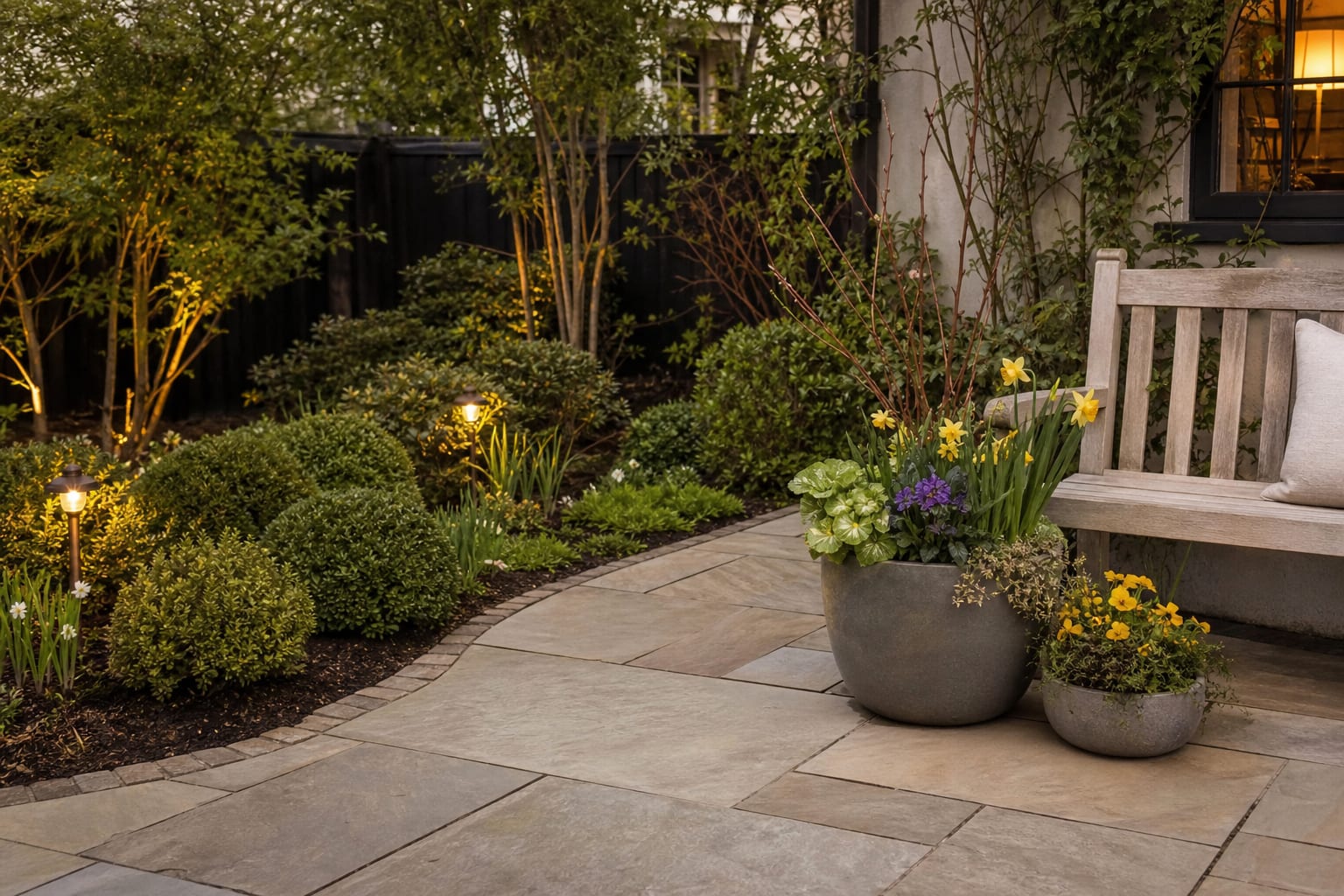
Test this on your own photo with ReDesign before choosing a final direction; keep the house edge, horizon line, hardscape, beds, and main path visible so the preview solves the space you actually have.
Which spring garden upgrades make the biggest visible change?
Choose upgrades that sharpen edges, improve comfort, and make the garden usable before peak bloom.
- Recut the lawn-to-border line in one smooth curve, keeping beds at least 3 feet deep where you want layered planting.
- Refresh the main container group with one tall, one mounding, and one trailing plant in pots at least 16in wide.
- Add a gravel landing, roughly 3x4 feet, or large stepping stones where feet leave the patio for the lawn.
- Replace dead winter annuals with violas, primroses, herbs, or small evergreens near the front step, where they'll actually be seen.
- Leave 30-36in behind seating chairs and keep the route to the door clear of planters, hoses, or firewood.
- Add one low lighting layer: warm bulbs around 2200-2700K and path fixtures 18-24in high mark steps without flattening the planting.
- Solve one recurring nuisance, like traffic noise, with sound barrier garden design rather than more seasonal pots.
Design-check shorthand: depth before decoration, repetition before variety, maintenance before novelty.
Common spring garden refresh mistakes
Shopping too early is the glamorous mistake. Cold soil and late frost punish tender plants, so buy hardy color for key containers and wait for your local frost date before filling every gap with summer bedding.
Mulching over weeds looks tidy for a week, then weeds push through stronger. Pull perennial weeds and loosen compacted soil first, then mulch to 2in so the surface stays calm without smothering crowns.
Pruning everything into the same round shape erases plant character. Remove dead wood, shorten wayward stems, and keep flowering shrubs on their correct pruning schedule so you don't cut off this year's buds.
Ignoring drainage turns a refresh into a repeat chore — clean drains, lift sunken pavers, or redirect runoff before placing rugs and furniture over standing water. Give gloves, cushions, and small tools a defined storage spot near the door so the first nice weekend doesn't turn messy by Monday.
Can AI design preview my spring garden refresh before I buy?
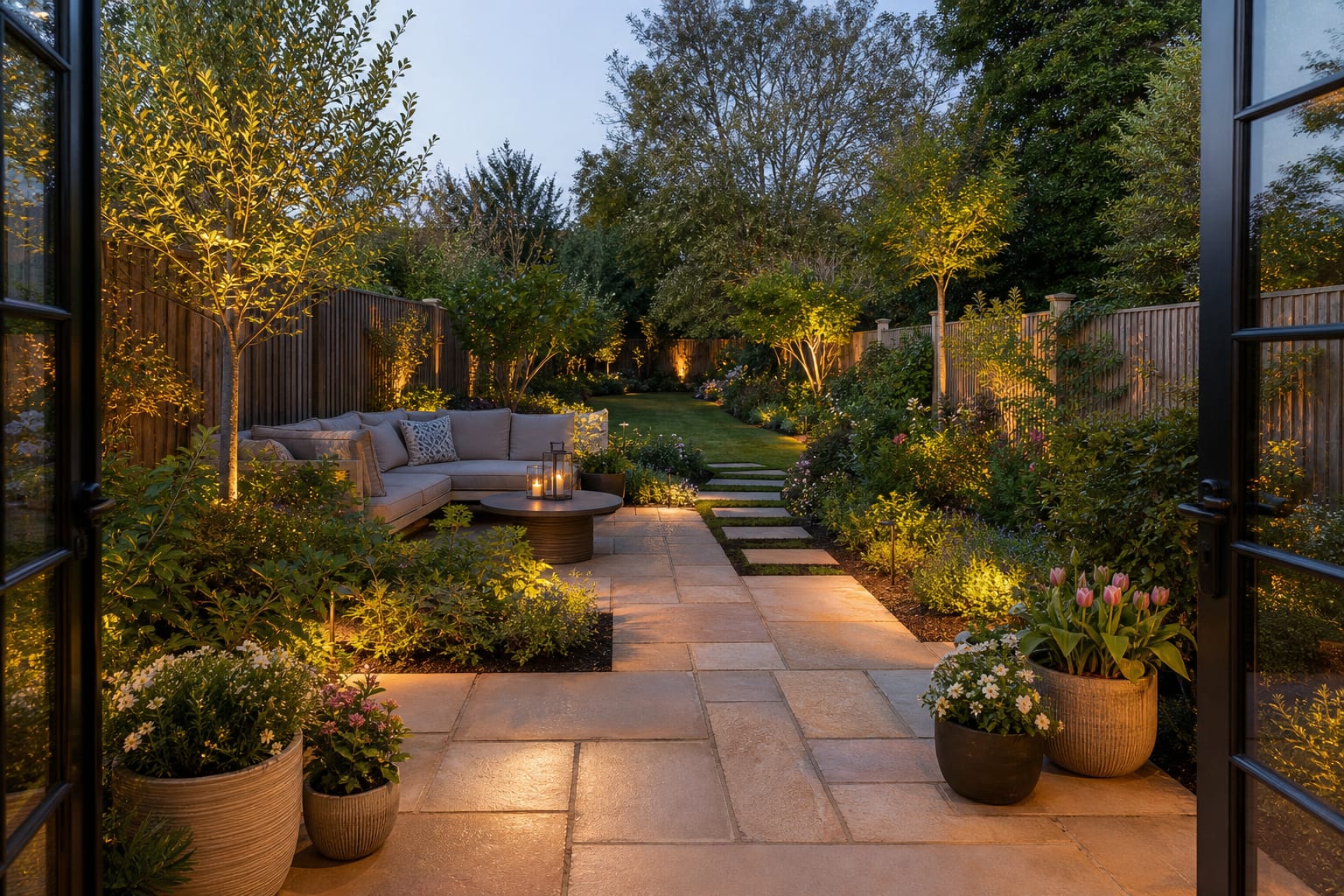
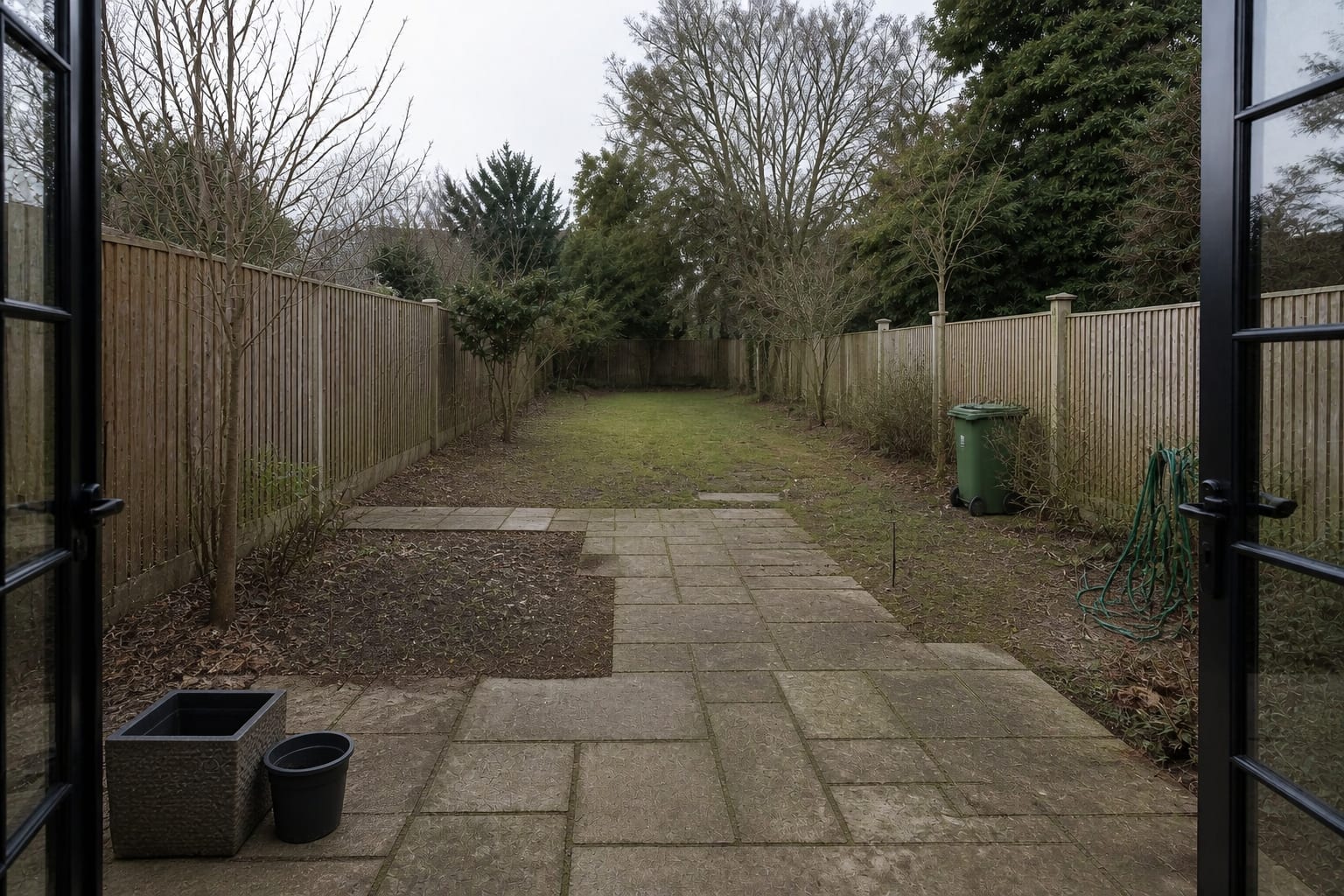
Yes — AI design tools can preview cleaned edges, container placement, patio updates, and early planting on a photo of your own garden before you spend the first spring budget. Upload a straight photo from the kitchen window, patio door, or front path, and ask for realistic constraints: a 36in route to the lawn, two 16in planters by the door, refreshed mulch, and a gravel landing at the muddy edge.
If the preview looks busy, cut the number of plant colors; if it still looks tired, the issue is likely structure — edging, paving, boundary planting, or furniture scale. Renters can preview removable upgrades like pots, trellis panels, and outdoor rugs, while owners can test widened beds, hedge planting, or new path lines on the same photo.
Frequently Asked Questions
When should I start spring garden cleanup?
Wait until daytime temperatures hold above 50°F for a week so pollinators overwintering in stem nests can emerge. Cleaning too early kills native bees and butterflies still sheltering in hollow stems and leaf litter.
Should I cut back ornamental grasses in spring?
Yes, cut to 4-6in before new growth starts, typically late March to mid-April. Cutting later risks shearing new green blades along with last year's straw.
How much compost should I top-dress a bed with?
Use 1-2in over the bed surface, worked lightly into the top inch of soil. Thicker layers can smother shallow-rooted perennials and slow spring growth.
What is the cheapest high-impact spring refresh?
Edging every bed with a sharp spade is the cheapest fix. A clean 50ft edge costs nothing in materials and reads as a fully redesigned garden from across the yard.
Which perennials should I divide in spring?
Hostas, daylilies, sedum, and ornamental grasses divide cleanly in early spring. Bleeding hearts and peonies prefer division in fall instead.
> Try this: Ready to see this on your own outdoor space? Open ReDesign and run the preview before you buy materials, plant, drill, or move furniture.
Three transformations to try
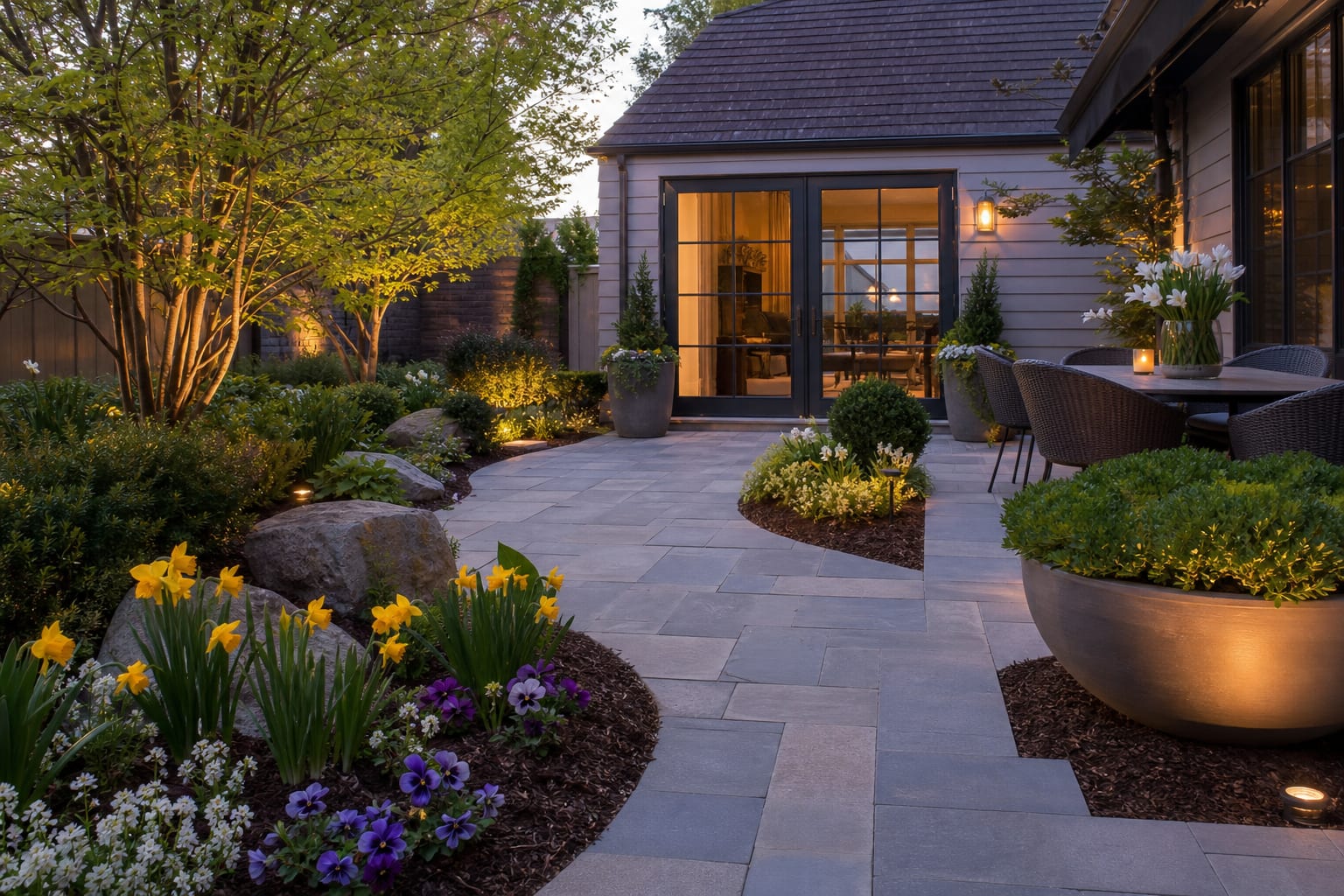
1. Spring garden with fresh edge and mulch