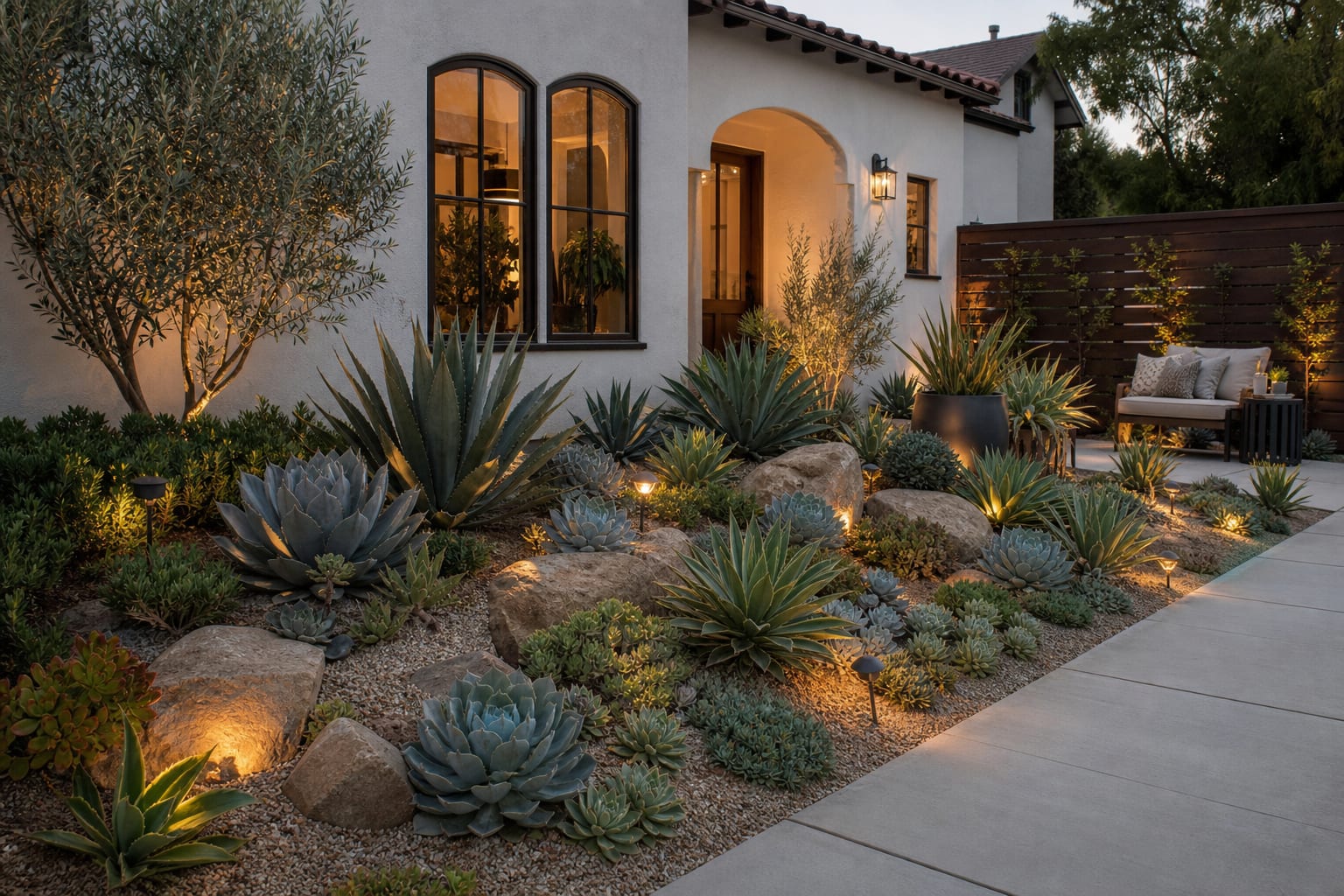
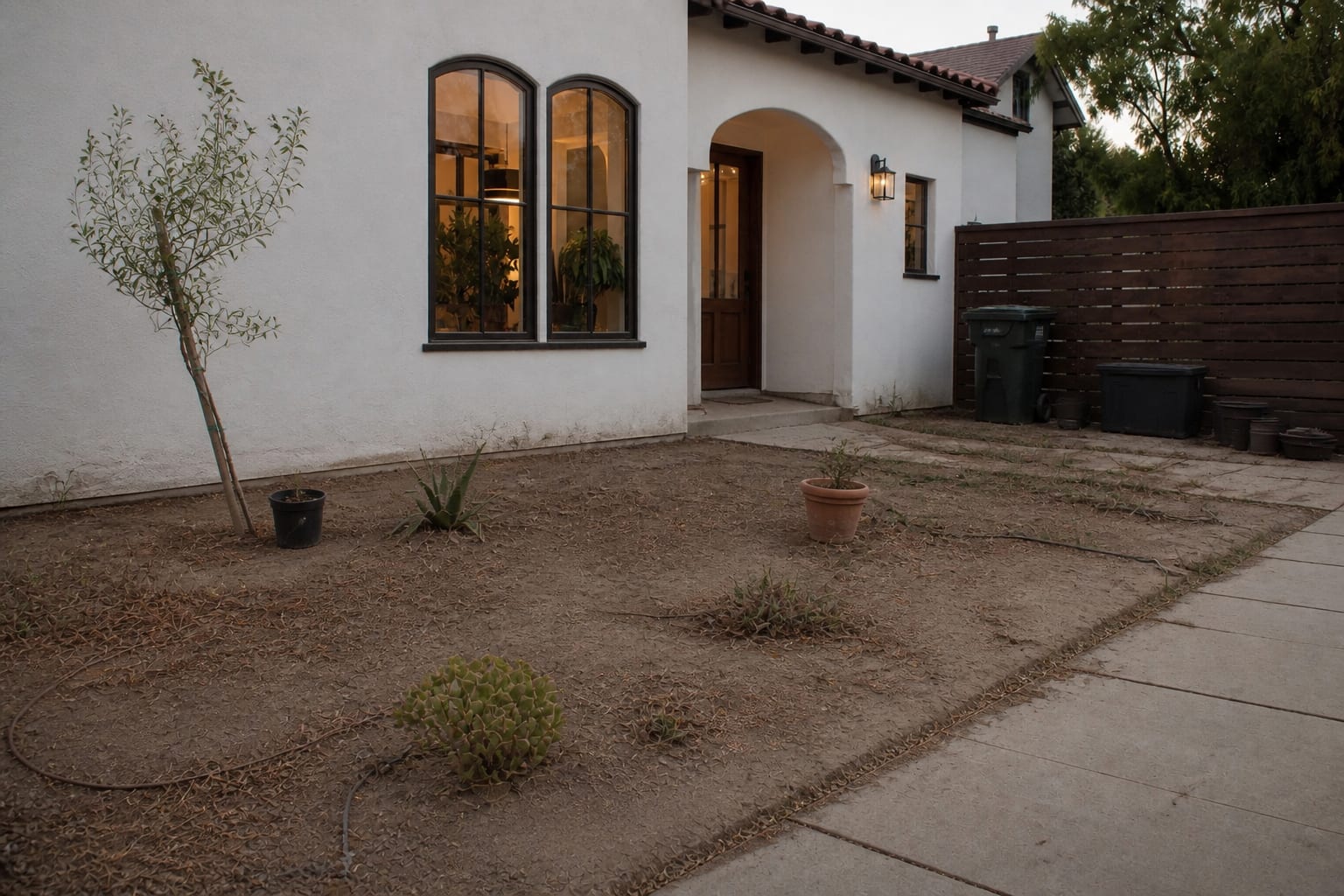
A succulent garden looks designed when you mix three scale tiers — rosette ground covers (2-6in), mounding mid-tier (8-18in), and vertical accents (24-48in) — in a gritty 50% pumice soil blend, edged with 2in gravel mulch that keeps crowns dry. Most succulent gardens fail because people plant them like annual beds, packed tight and overwatered.
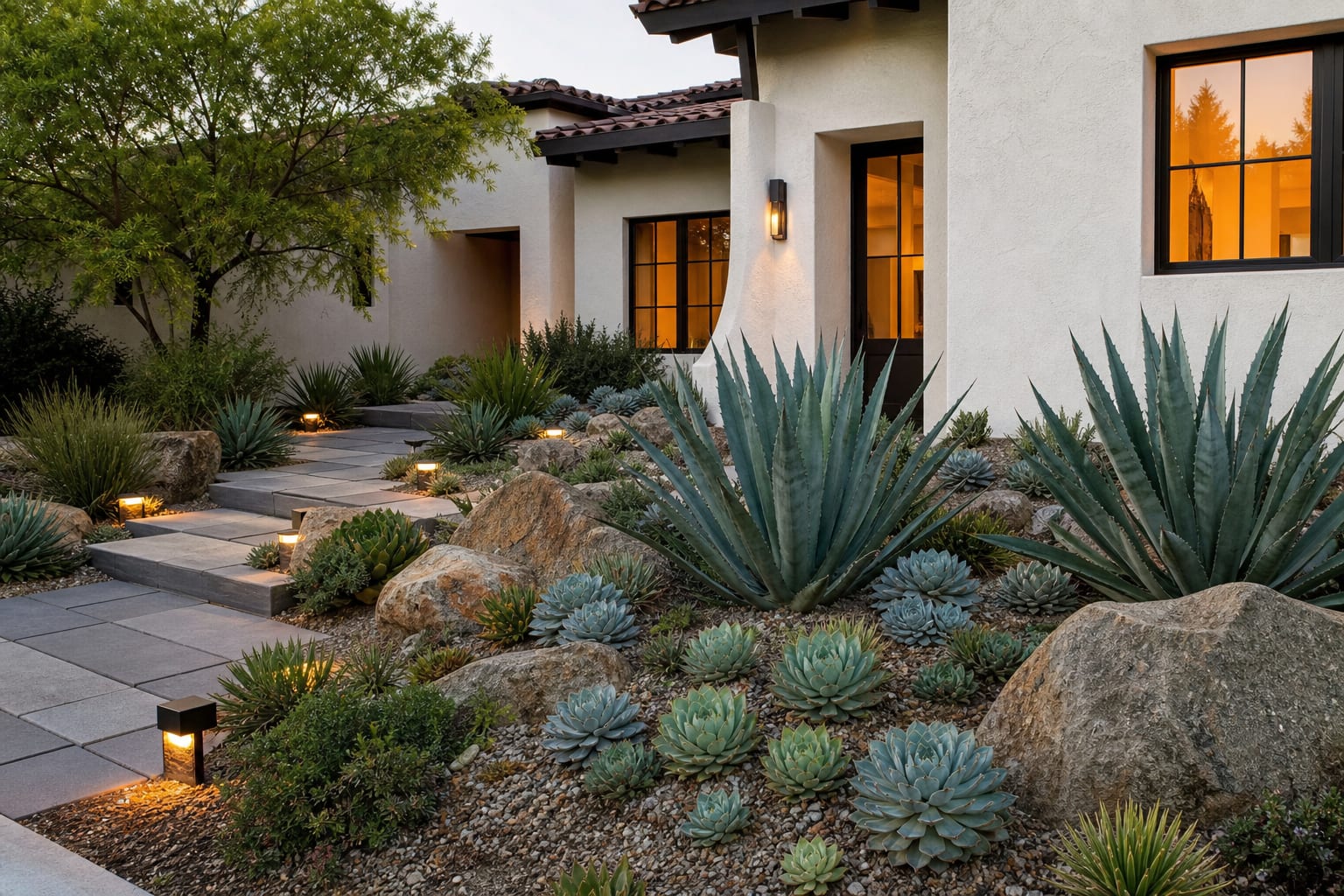
What makes a succulent garden feel designed instead of scattered?
A succulent garden feels designed when planting, stone, grade, and negative space work as one dry landscape rather than potted plants emptied into the ground. Crowns should sit slightly proud of the surrounding soil so water moves away from the neck. On flat clay, build low berms 8-14in high and plant into the shoulder, not the soggy bottom.
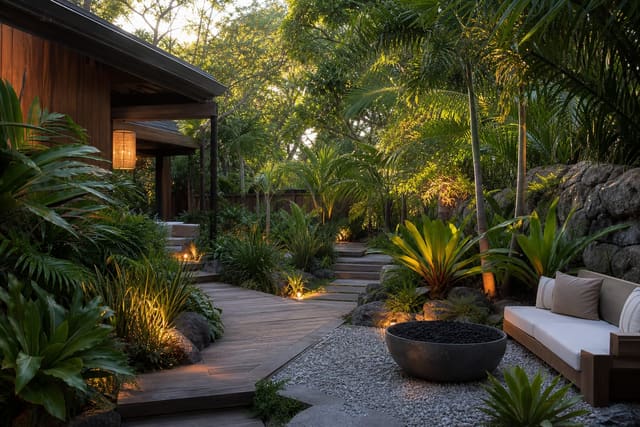
Scale beats novelty: one 4ft-wide agave can carry a corner better than a dozen tiny mixed succulents that read as confetti from the patio. Pair broad rosettes with vertical forms like aloe, yucca, or euphorbia, then fill pauses with low sedum, ice plant, or gravel. If your yard leans lush elsewhere, borrow contrast principles from tropical garden ideas so big leaves and sharp succulents each keep their own zone.
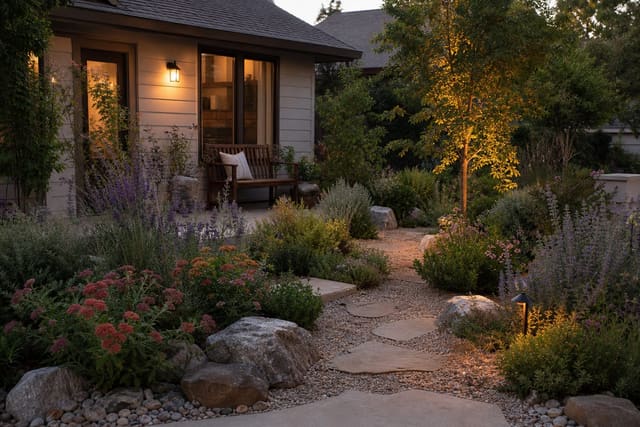
Let foliage color lead — blue-gray, chalk green, bronze, and silver hold the design longer than one flush of flowers. Keep the ground plane quiet: tan gravel warms stucco and terracotta, charcoal sharpens modern architecture, and mixed river rock looks busy unless the stones share a tight color range.
Which plants and hardscape should lead the layout?
Let your largest structural plants and drainage strategy lead, not the small colorful rosettes at checkout. Big succulents set the geometry; gravel, boulders, and paths make it believable. A cactus garden beside a modern house can handle sharp lines, while a cottage edge needs softer gravel and smaller stone.
| Design choice | Best garden use | Practical spec |
|---|---|---|
| Agave or yucca anchor | hot front yards, entries, modern courtyards | keep sharp leaves 24-48in from walkways and car doors |
| Aloe clusters | frost-light gardens, slopes, warm patios | plant in groups of 3-7 so blooms read as a mass |
| Echeveria and rosettes | containers, raised beds, protected pockets | keep crowns above mulch; avoid overhead spray |
| Sedum and groundcovers | rock edges, wall tops, between specimens | use as stitching, not carpet; keep off stepping zones |
| Boulders and gravel | dry creek looks, mounded beds, front yard structure | bury boulders one-third into grade so they look settled |
Add companion planting to soften the armored look: lavender, rosemary, santolina, blue fescue, feather grass, and thyme all tolerate the same low water. Connect the sunny edge to low-maintenance herb garden ideas so rosemary, thyme, and sage share the same drainage logic.
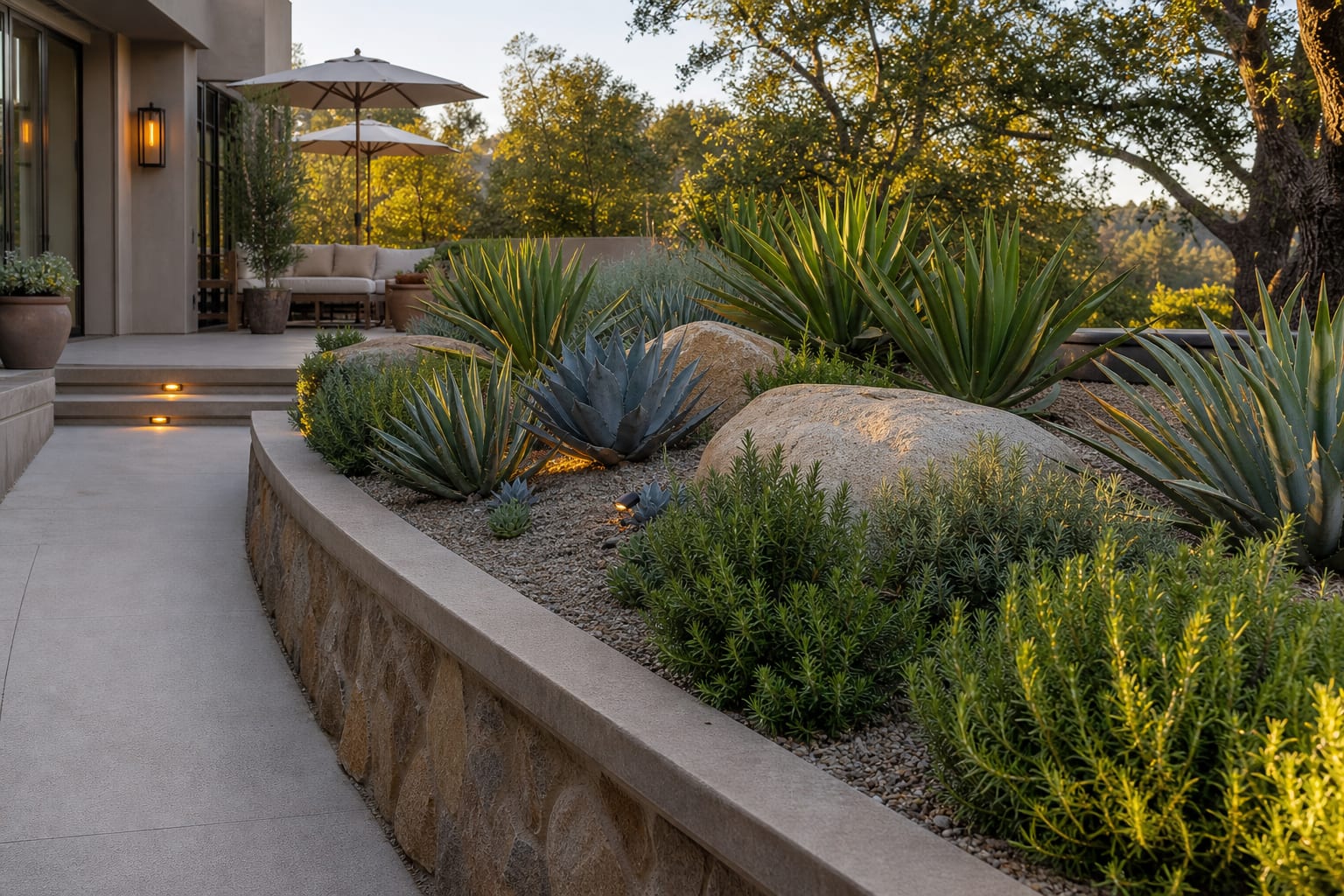
Test this on your own photo with ReDesign — keep the house edge, horizon, hardscape, beds, and main path visible so the preview solves the space you actually have.
Five succulent garden ideas worth testing
- Front yard agave garden: repeat three anchors with one quiet gravel color. Place the largest agave at least 3ft from the path, echo it with two smaller specimens, and use sedum or crushed stone to keep the bed open.
- Raised-berm cactus garden: shape the mound 8-14in above grade on questionable drainage, tuck boulders into the slope, and keep spiny plants away from play areas and gates.
- Bowl-to-bed transition: an 18-24in container of echeveria, trailing sedum, and gritty mix bridges patio and planting bed, while larger agaves or aloes anchor the ground.
- Dry creek ribbon: when runoff crosses the yard, use mixed stone sizes in a subtle swale and plant succulents on the raised shoulders so roots stay dry after storms.
- Succulents with a controlled water feature: a low basin set 6-10ft from seating can soften hardscape; see backyard water feature ideas for keeping splash off the planting bed.
The cleanest gardens use fewer species than expected: one anchor, one upright plant, one trailing or mat-forming plant, and one companion grass or herb gives contrast without a label collection.
Common succulent garden mistakes to avoid
- Bark mulch instead of gravel. Bark holds moisture at the crown and fights the mineral look. Use 2in of gravel or decomposed granite instead.
- Sharp plants near movement. Agave tips beside a 36in path or driveway become a hazard fast. Keep spiky anchors deep in the bed; use soft sedum or herbs near circulation.
- Lawn-schedule watering. Succulents need deep, infrequent water once established; turf irrigation is shallow and repetitive. Separate the zones and let soil dry between cycles.
- Ignoring cold pockets. Low corners where winter air settles stay damp longer. Put tender echeveria, aeonium, and aloe in raised beds or containers; reserve sedum, sempervivum, or yucca for exposed spots.
- Buying only tiny plants. A garden viewed from the street needs medium and large forms. Spend on a few mature anchors first, then fill in slowly.
Use AI to preview your succulent garden before you commit
AI design helps because the hard choices are visual: spacing, gravel color, boulder placement, plant scale, and whether the bed feels calm or too sparse. Upload a straight photo of the sunny bed and test a blue agave scheme, a softer aloe-and-herb scheme, and a cactus garden design from the same angle.
If the image looks empty, add one larger anchor before ten small plants. If gravel looks harsh against the house, test a warmer or darker mineral tone. A landscape contractor or nursery still matters for soil, irrigation, and sourcing, but a preview saves you from the wrong composition before the first agave goes in the ground.
Frequently Asked Questions
What soil do succulents need in a garden bed?
Mix 50% coarse pumice or perlite with 50% native soil for fast drainage that prevents root rot. Never use potting mix alone; it retains too much moisture between waterings.
How far apart should succulents be planted?
Space at 1.5x the mature spread of the slower-growing neighbor so drifts fill in within two seasons without crowding. Give agave and large aloe 4-6ft of clearance from paths.
Can succulents survive frost?
Hardy sedums and sempervivums survive to -20°F (USDA zone 5). Echeveria, Agave parryi, and Yucca rostrata are hardy in zones 6-7, while tropical succulents like Aeonium need zone 9+ or container growing.
How do I stop weeds in a succulent garden?
Lay 2-3in of gravel mulch over the planting area and avoid organic mulch near crowns. Gravel drains instantly, deters weed germination, and keeps the crown dry.
How often should an in-ground succulent garden be watered?
Water once a week during the first growing season to establish roots. After year one, most hardy succulents thrive on natural rainfall above 12in annually with no supplemental irrigation.
> Try this: Ready to see this on your own outdoor space? Open ReDesign and run the preview before you buy materials, plant, drill, or move furniture.
Three transformations to try
1. Layered succulent bed with gravel mulch 2. Agave and grass accent in gravel garden 3. Rosette drift with vertical aloe