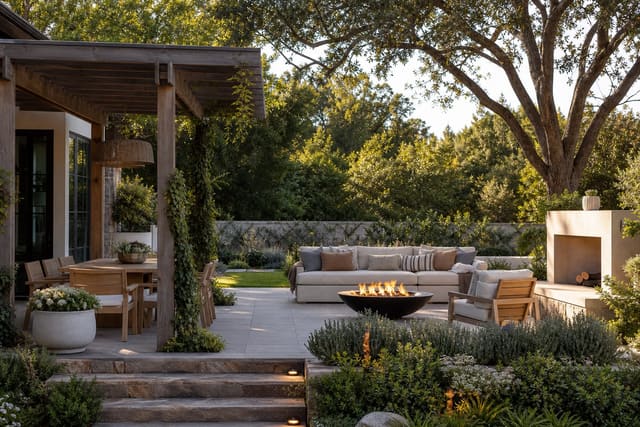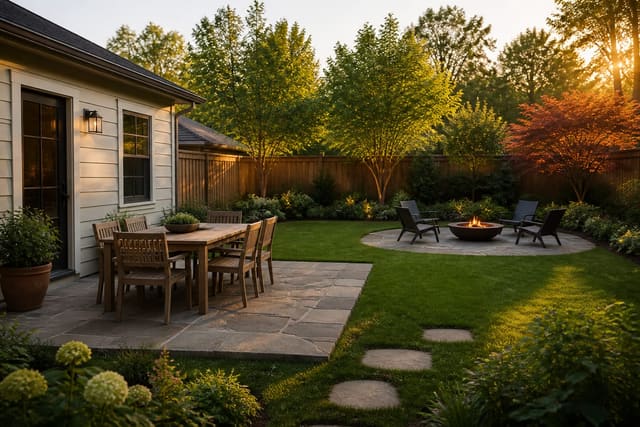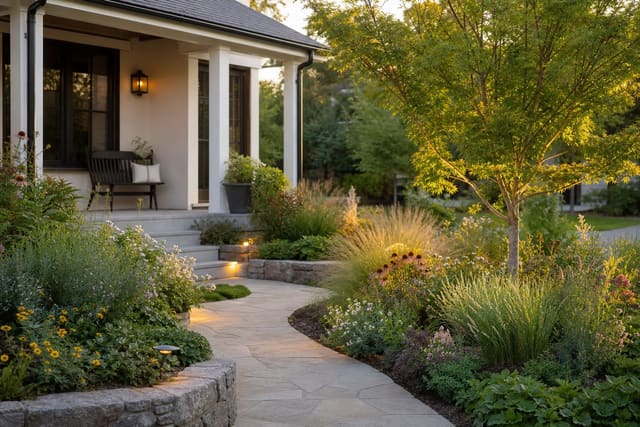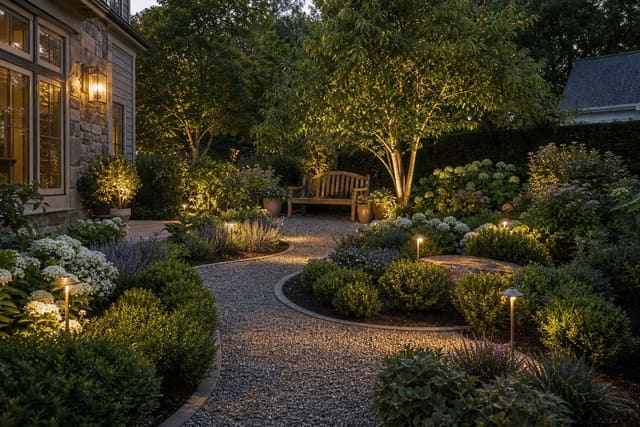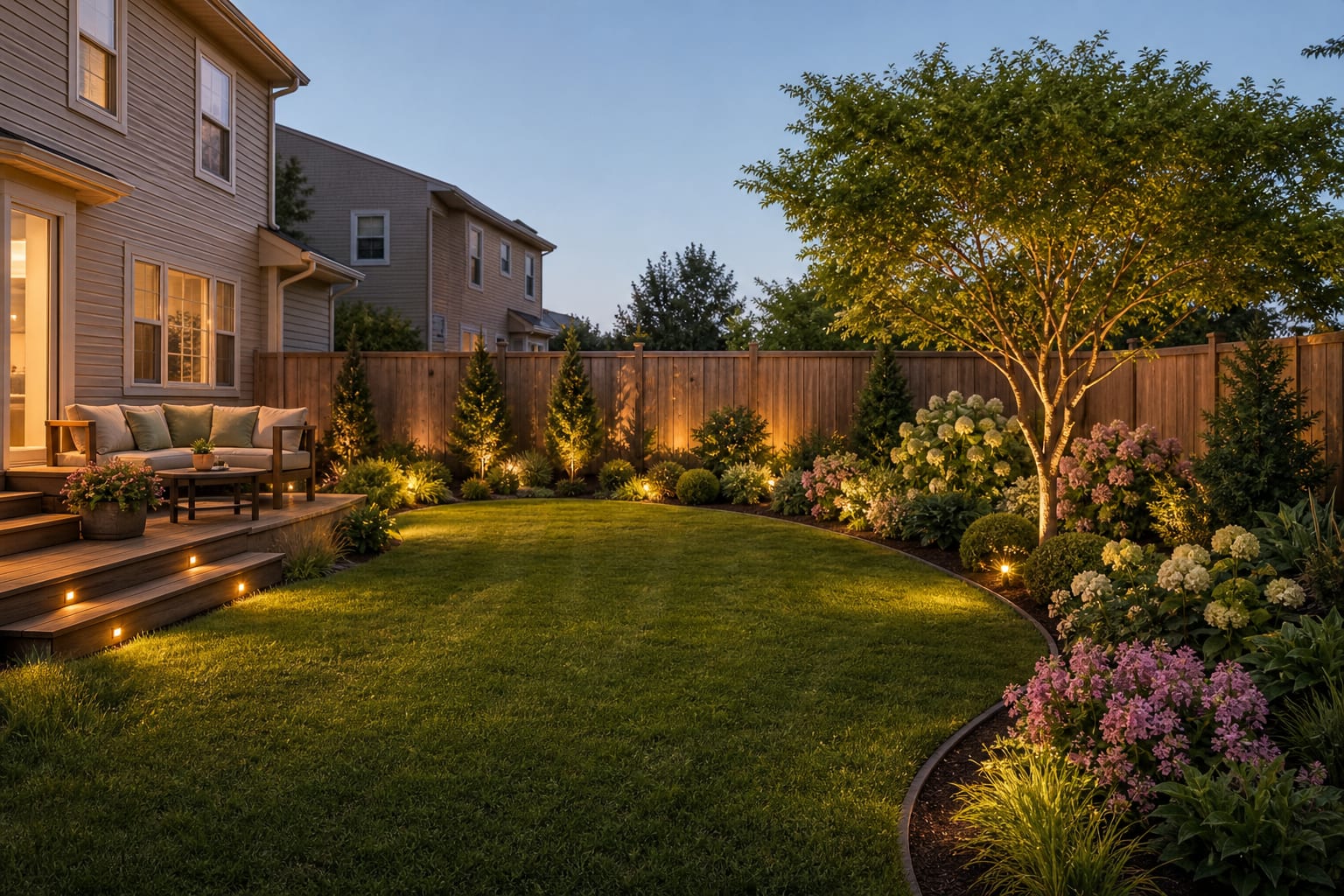
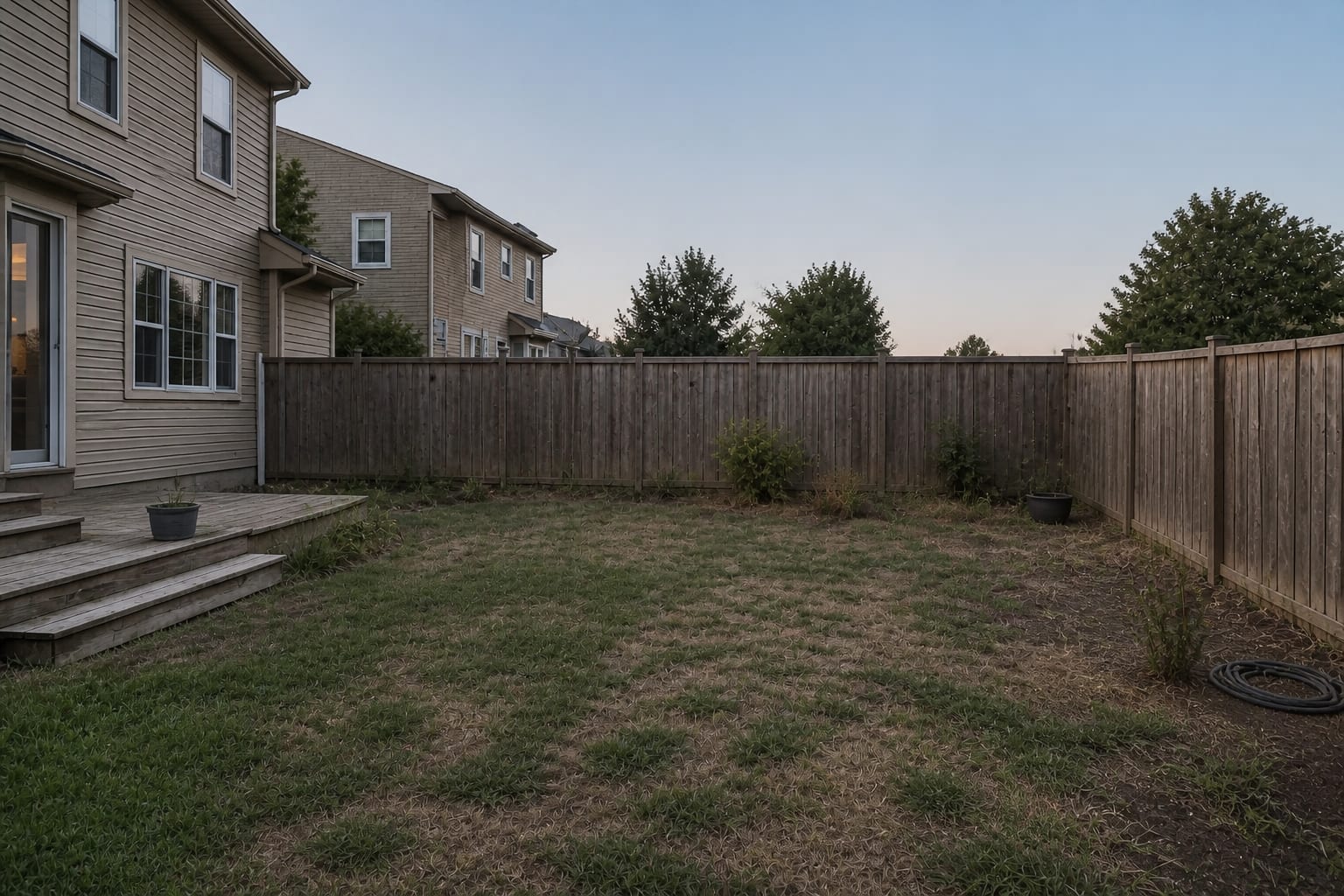
Good tree and shrub placement means keeping large trees at least one mature-canopy-width from the house, planting evergreen screening shrubs in staggered double rows 4ft apart at 60-70% of mature width, and holding all shrubs 3ft back from fences or walls. Trees supply scale, shade, and winter bones; shrubs turn that structure into edges, rooms, and framed views. Get this right before flowers ever enter the plan.
What makes a garden feel structured all year?
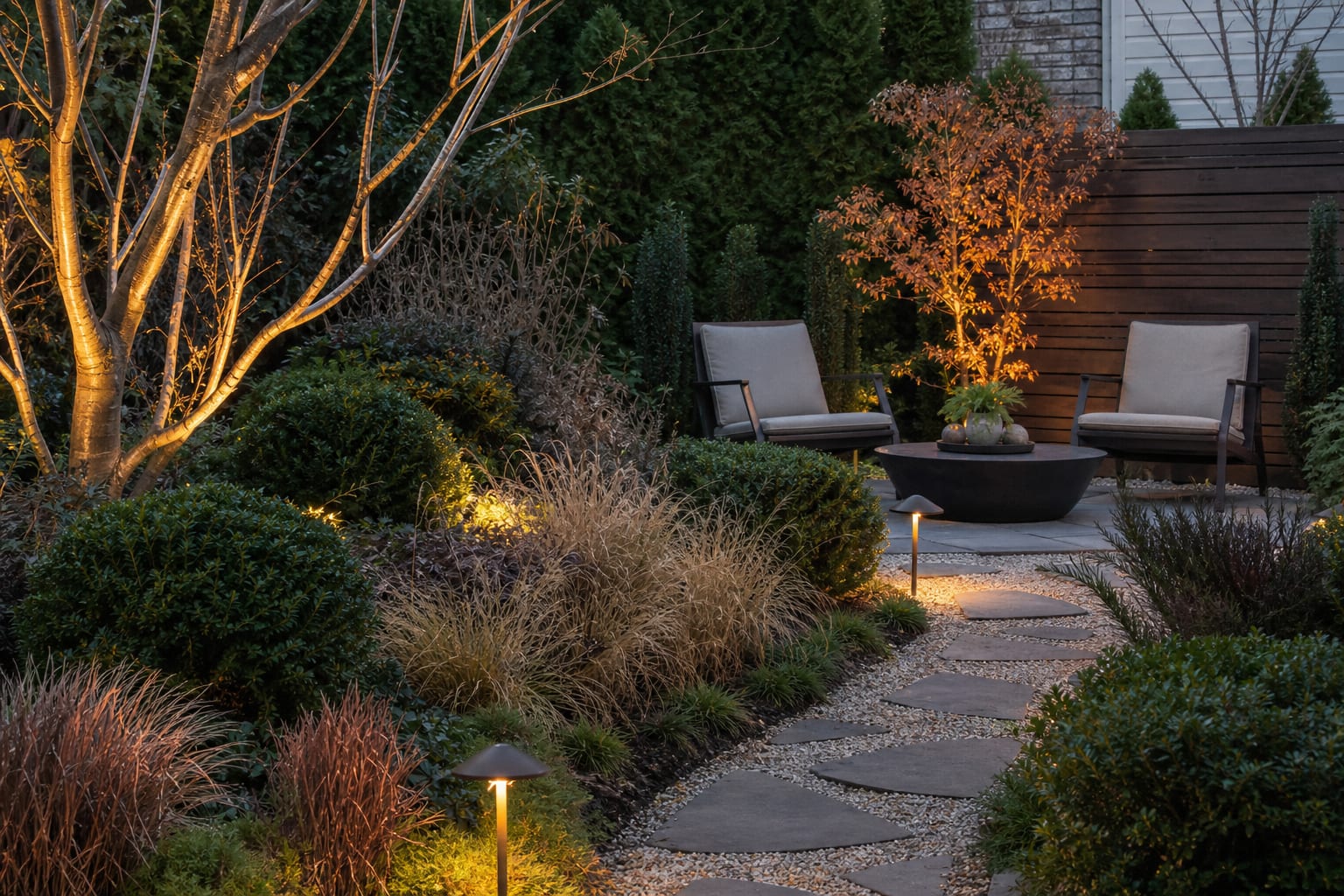
A garden feels structured year-round when trees, shrubs, and paths form a framework that still makes sense after flowers fade. Start with the views you use daily: the kitchen window, the patio door, the chair you actually sit in. A tree placed at the end of a sightline can make a small yard feel deeper, while one dropped randomly in the lawn reads like a traffic cone. If the whole layout feels vague, broader garden design ideas for outdoor structure can help you decide whether the yard needs a path, a focal tree, or a clearer seating zone first.
Think in layers from high to low: one canopy or ornamental tree for height, two or three large shrubs for mass, and low shrubs or perennials to stitch the ground plane together. A narrow 4-foot-deep bed can hold compact shrubs, but a convincing mixed border usually wants 6-8 feet of depth so plants aren't jammed into a single row.
Which tree should lead the garden plan?
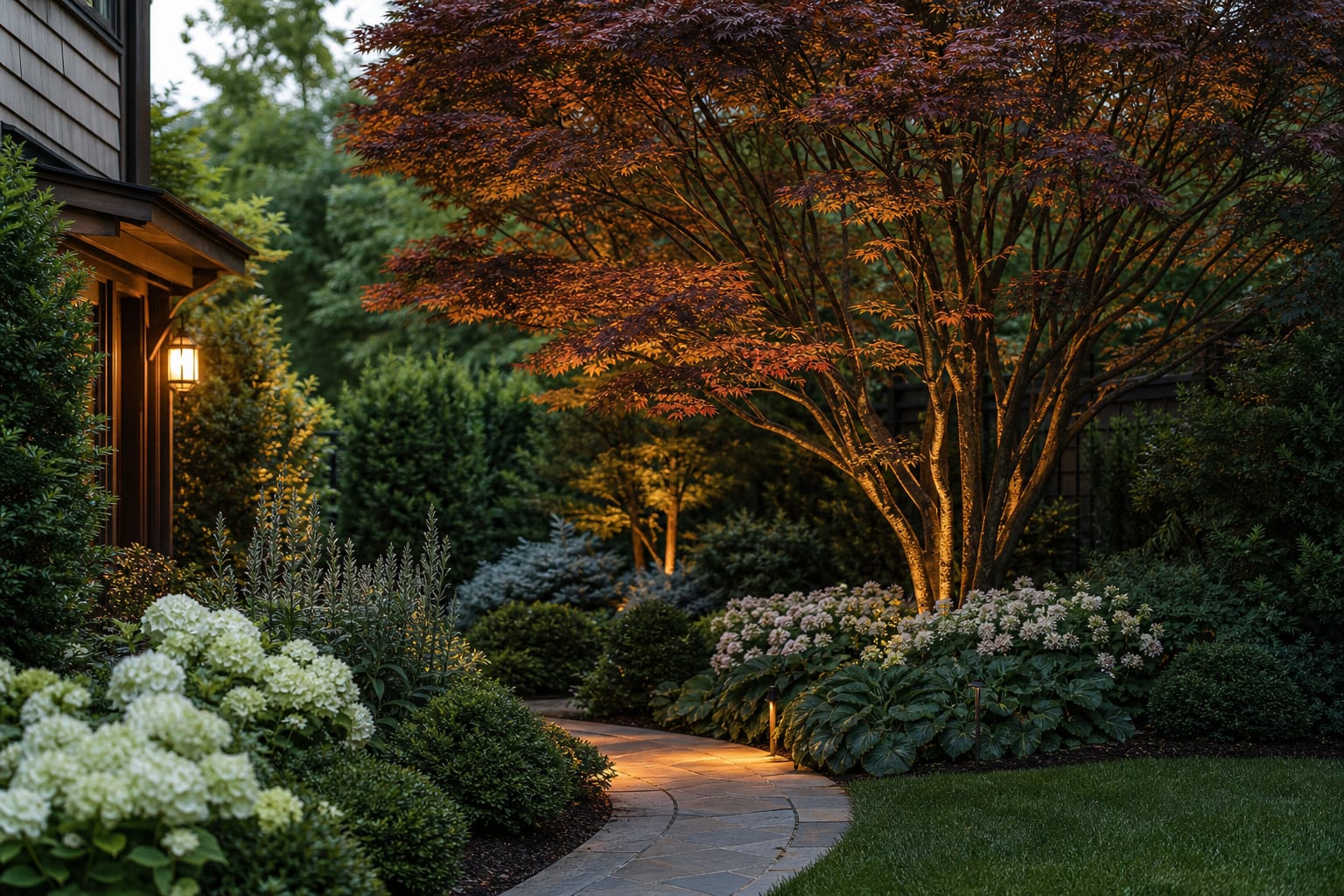
The lead tree should solve the biggest spatial problem, missing shade, weak scale, an exposed view, or a garden that disappears in winter, not just supply the prettiest blossom. Blossom lasts weeks; size, branch shape, and root behavior live in the garden for decades.
| Tree role | Best garden use | Spec that keeps it realistic |
|---|---|---|
| Multi-stem ornamental tree | Small gardens, patios, entry beds | Mature height 12-25ft for overhead scale without swallowing the yard |
| Canopy shade tree | Larger lawns and seating areas | Keep clear of foundations and roofs for the mature crown, not the young trunk |
| Evergreen tree | Screening, winter structure, windy edges | Avoid blocking all winter sun near vegetable beds or windows |
| Columnar tree | Tight side yards, formal rhythm | Space 4-8ft apart depending on mature width so the row reads intentional |
| Fruit tree | Productive gardens, sunny corners | Give full sun, pruning access, and a harvest path, not shrub cover |
A small garden often needs one excellent tree more than three nervous ones. Options like serviceberry, Japanese maple, crabapple, hawthorn, olive, crepe myrtle, and dogwood can anchor a patio edge, but climate, soil, and disease pressure should guide the final pick. Place the tree where its canopy makes a room: at a path bend, a seating-area corner, or just off-center from a window view.
Keep trees clear of anything you touch daily. Branches over a grill, thorns beside a gate, fruit drop over a dining table, and roots under a narrow path will outlast the satisfaction of planting day.
Test this on your own photo with ReDesign before committing; keep the house edge, horizon line, hardscape, beds, and main path visible so the preview solves the space you actually have.
How should shrubs build the lower layer?
Shrubs build the lower layer through repeatable masses and soft boundaries beneath the trees. One shrub every 6 feet along a fence looks timid; groups and drifts read as one confident decision.
Use height bands: tall shrubs (5-8ft) for privacy and backdrop, mid-height shrubs (3-5ft) to define seating edges, and low shrubs (under 30in) near paths and windows.
- Frame a patio with two medium shrubs at the back corners and leave the front open, keeping at least 36 inches clear from door to chair.
- Repeat one evergreen shrub in 3 or 5 spots instead of buying five unrelated plants; repetition keeps the winter garden organized.
- Use deciduous flowering shrubs (hydrangea, spirea, viburnum, lilac, shrub rose) where seasonal change matters, not where year-round screening is required.
- Stagger shrubs in triangles with a 30-inch offset for informal borders that feel deeper without extra square footage.
- Keep tall shrubs out of the shadow path over productive beds; pair placement with vegetable garden design ideas so shade and roots don't sabotage the harvest.
Group shrubs by water need rather than flower color. In dry, exposed yards, drought-tolerant landscaping ideas can help build a shrub layer that doesn't need constant rescue watering.
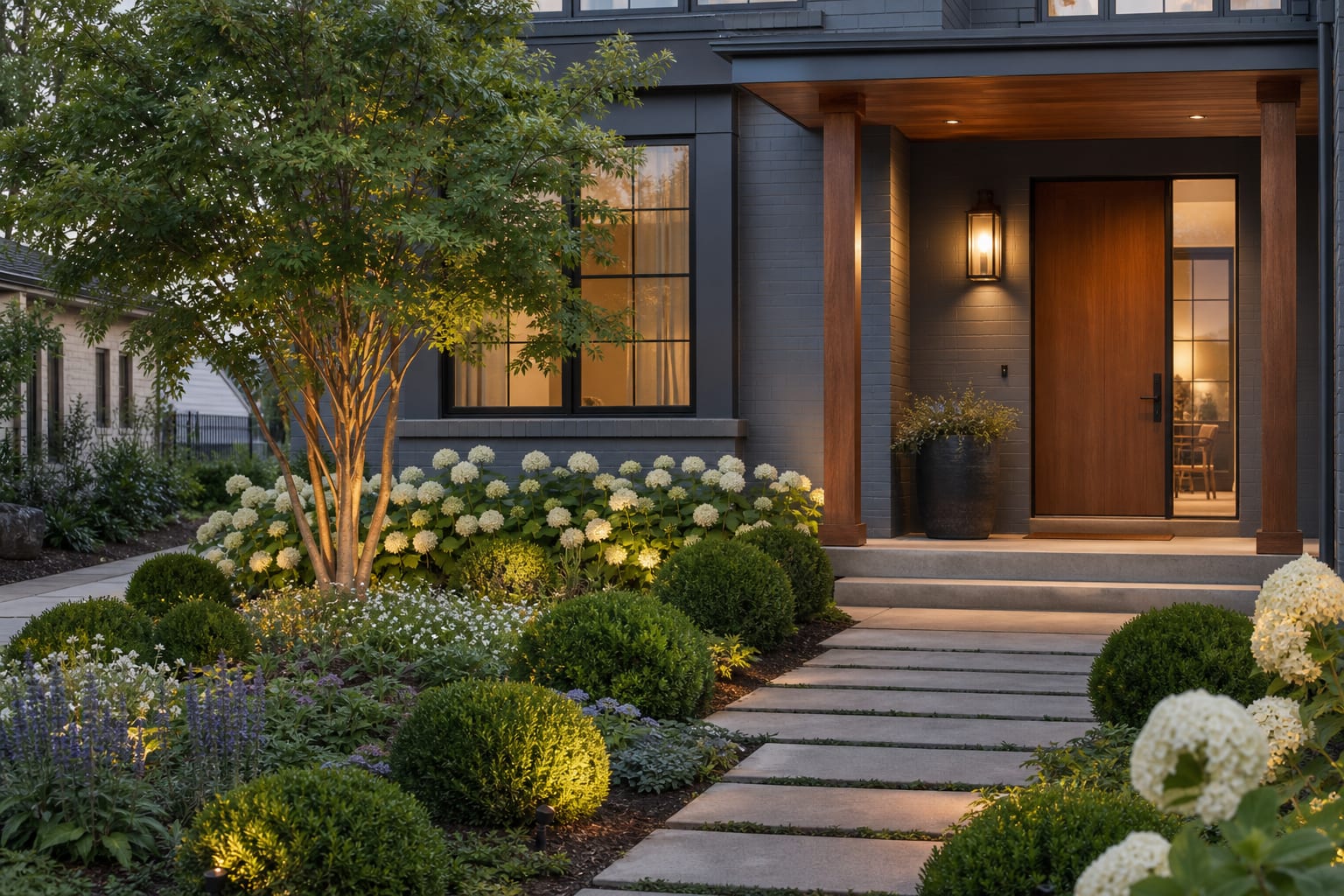
Common tree and shrub placement mistakes
- Planting too close to the house. A shrub set 18 inches from siding may look fine on day one, then block vents, trap moisture, and scrape paint at mature width.
- Ignoring the shade a tree will create. A new canopy can eventually darken a sunny bed; check morning, noon, and afternoon light before planting.
- Using shrubs as a fence substitute. A single row of identical evergreens looks harsh and fails badly if one plant dies; layer heights and species instead.
- Forgetting winter silhouettes. A garden of only summer bloomers goes flat in cold months; add bark, evergreen foliage, or a multi-stem tree with good bare form.
- Filling every open patch. Lawn, gravel, or mulch can be the breathing space that makes a planting composition feel confident instead of stuffed.
Use AI to preview your planting structure before you commit
AI design works well for tree placement because the risky choices are visual: mature scale, canopy position, shrub massing, and whether the garden feels framed or crowded. Upload a straight photo from the patio or main path, then test an ornamental tree, a small canopy tree, and an evergreen screen from the same angle.
Focus the preview on relationships, not exact plant ID. Does the tree shelter the seating area or block the best view? Do the shrubs form a calm edge or scatter like dots along the fence? If the image feels crowded, remove a tree before shrinking every shrub; if it feels thin, repeat one evergreen mass before adding more flower color.
An arborist, nursery, or landscape designer still matters for hardiness, root behavior, and planting technique. The preview just helps you reject the wrong layout while the garden is still easy to change.
Frequently Asked Questions
How close to the house should a large tree be planted?
Keep large trees (30ft+ canopy) at least 15-20ft from the foundation, medium trees (15-25ft canopy) at 10-15ft, and small ornamental trees at 6-10ft, so root systems and canopy spread don't undermine the structure.
How do I choose between deciduous and evergreen trees for a yard?
Evergreens like arborvitae or Leyland cypress give year-round screening, while deciduous trees such as Japanese maple or serviceberry offer spring interest and drop leaves to let winter sun warm south-facing walls. Most yards benefit from mixing both along a boundary.
How far apart should I plant privacy shrubs?
Space shrubs at 60-70% of their mature spread on center, so a Viburnum with a 5ft mature spread goes in at 3-3.5ft centers. That spacing fills into a dense screen within about three growing seasons without gaps.
What is the fastest-growing privacy shrub?
Green Giant arborvitae grows 3-5ft per year in zones 5-8 and reaches 15-20ft with little maintenance. Leyland cypress grows at a similar rate but is prone to Seiridium canker in humid climates.
Can I plant a tree near a fence line?
Keep large trees at least 10ft from the property line and fence panels. A small ornamental tree such as Amelanchier or Cornus can sit as close as 5-6ft if its mature canopy won't overhang the fence.
> Try this: Ready to see this on your own outdoor space? Open ReDesign and run the preview before you buy materials, plant, drill, or move furniture.
Three transformations to try
1. Staggered evergreen screen along fence 2. Ornamental tree anchoring a bed corner 3. Mixed deciduous-evergreen boundary planting