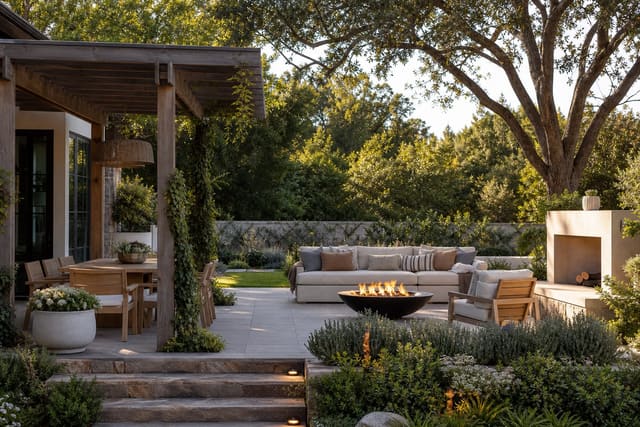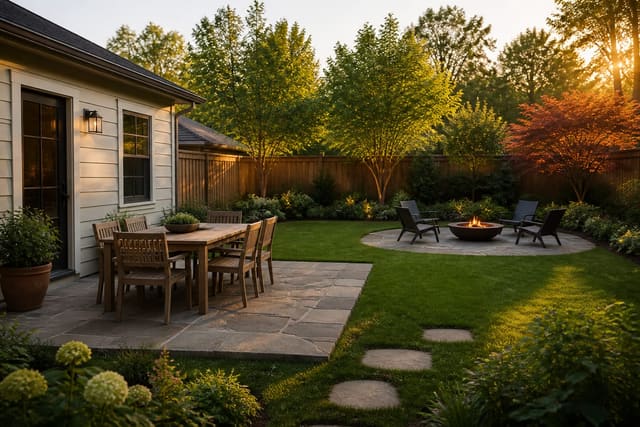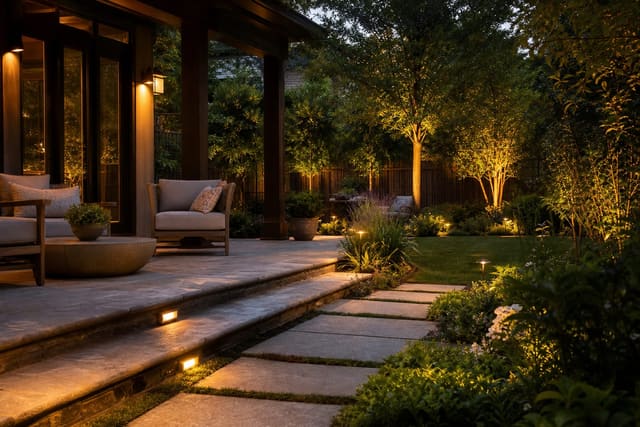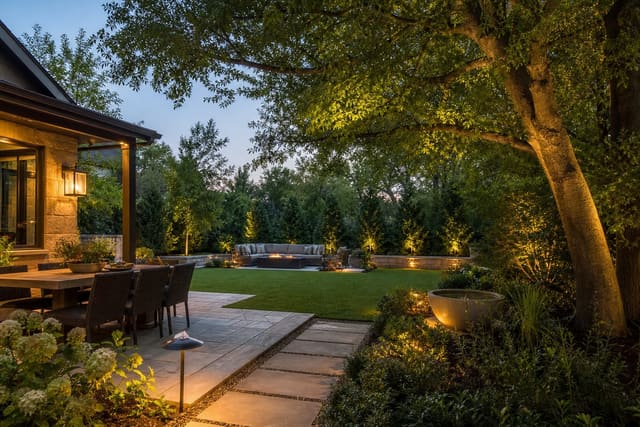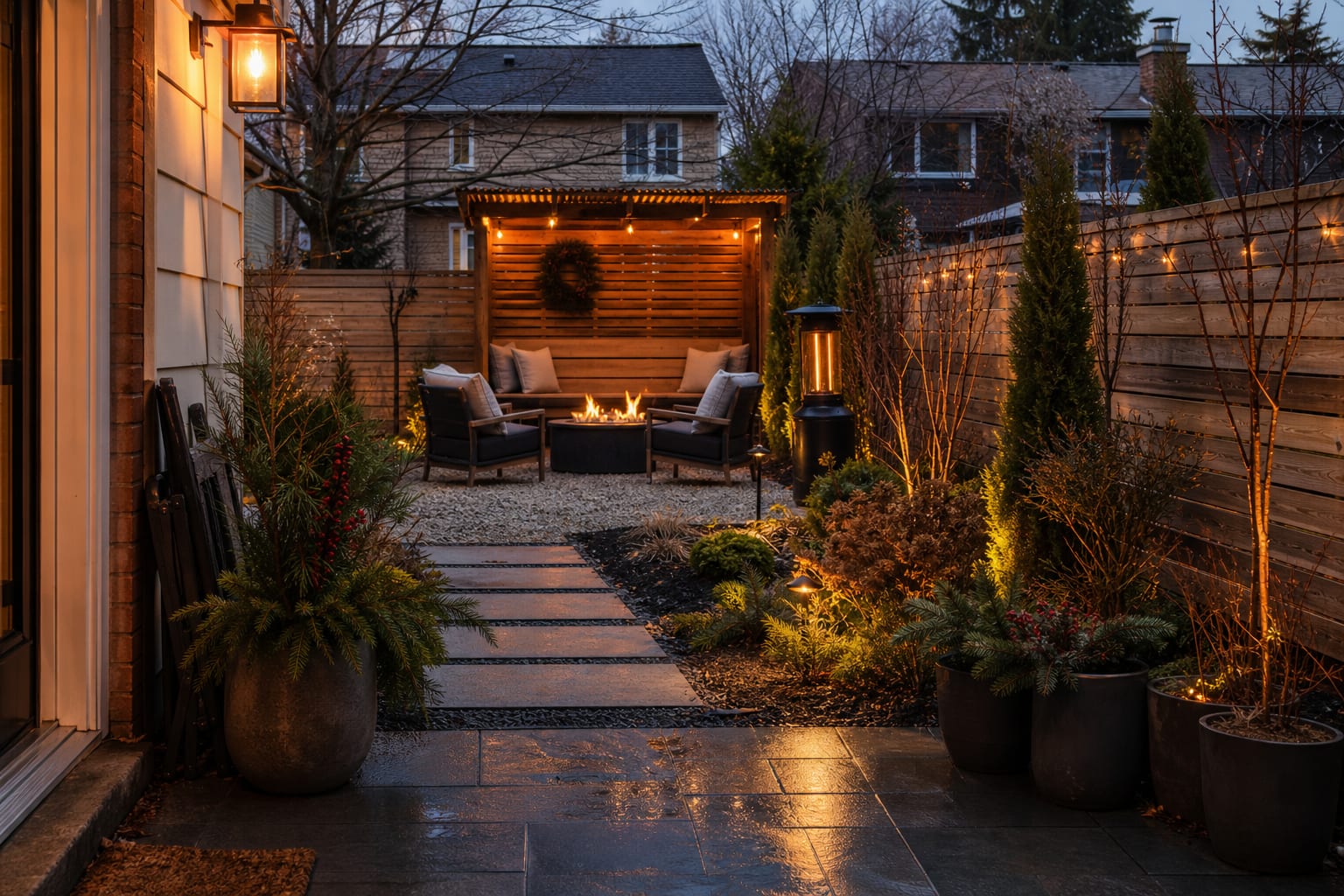
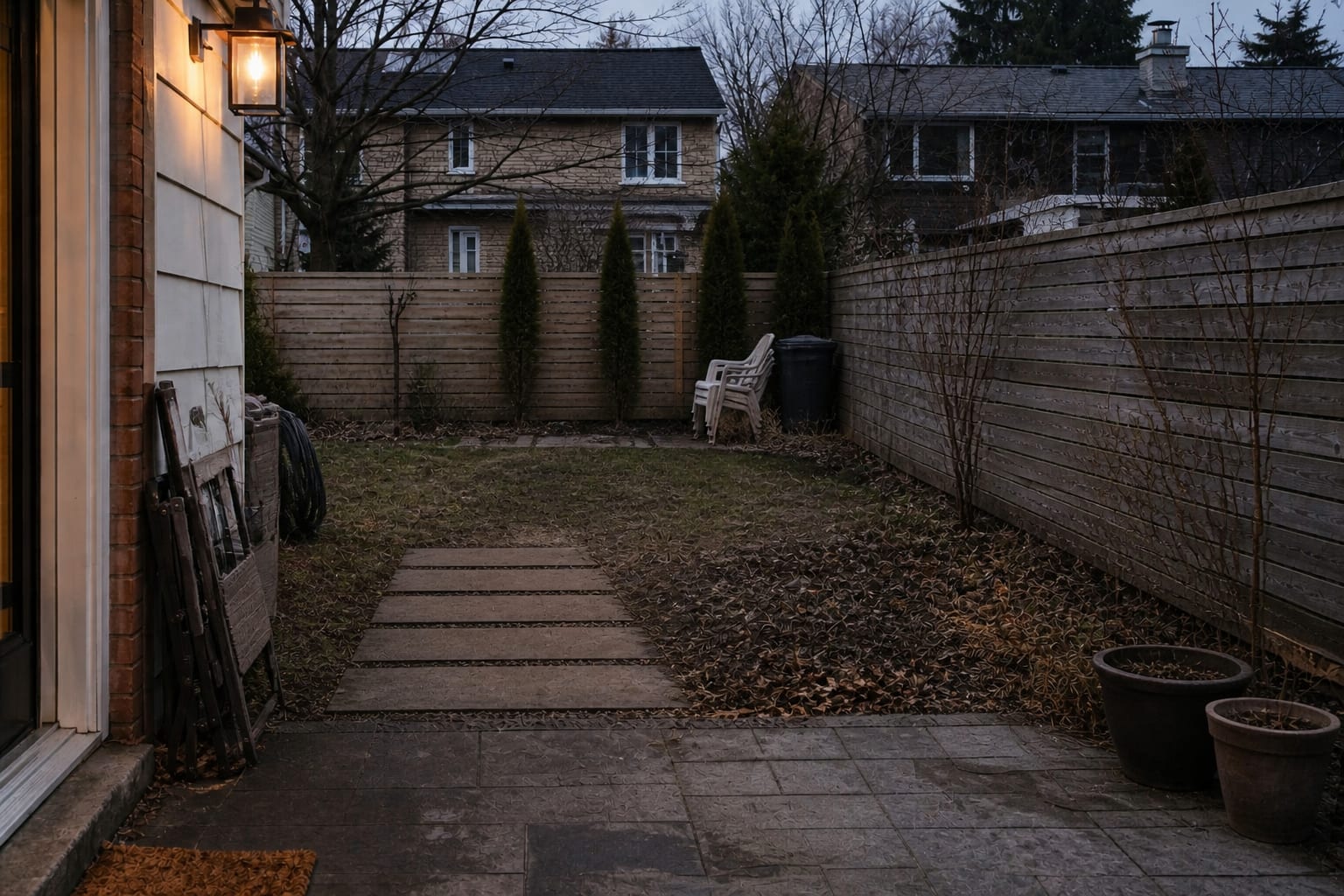
Keep your backyard alive in winter by building one protected seating zone with reliable heat, warm lighting, wind control, evergreen planting, and a path that stays safe after dark. Stop decorating the whole yard and design a single cold-weather room instead. The best winter backyard ideas treat short daylight, bare branches, and wet boots as part of the plan, not a seasonal failure.
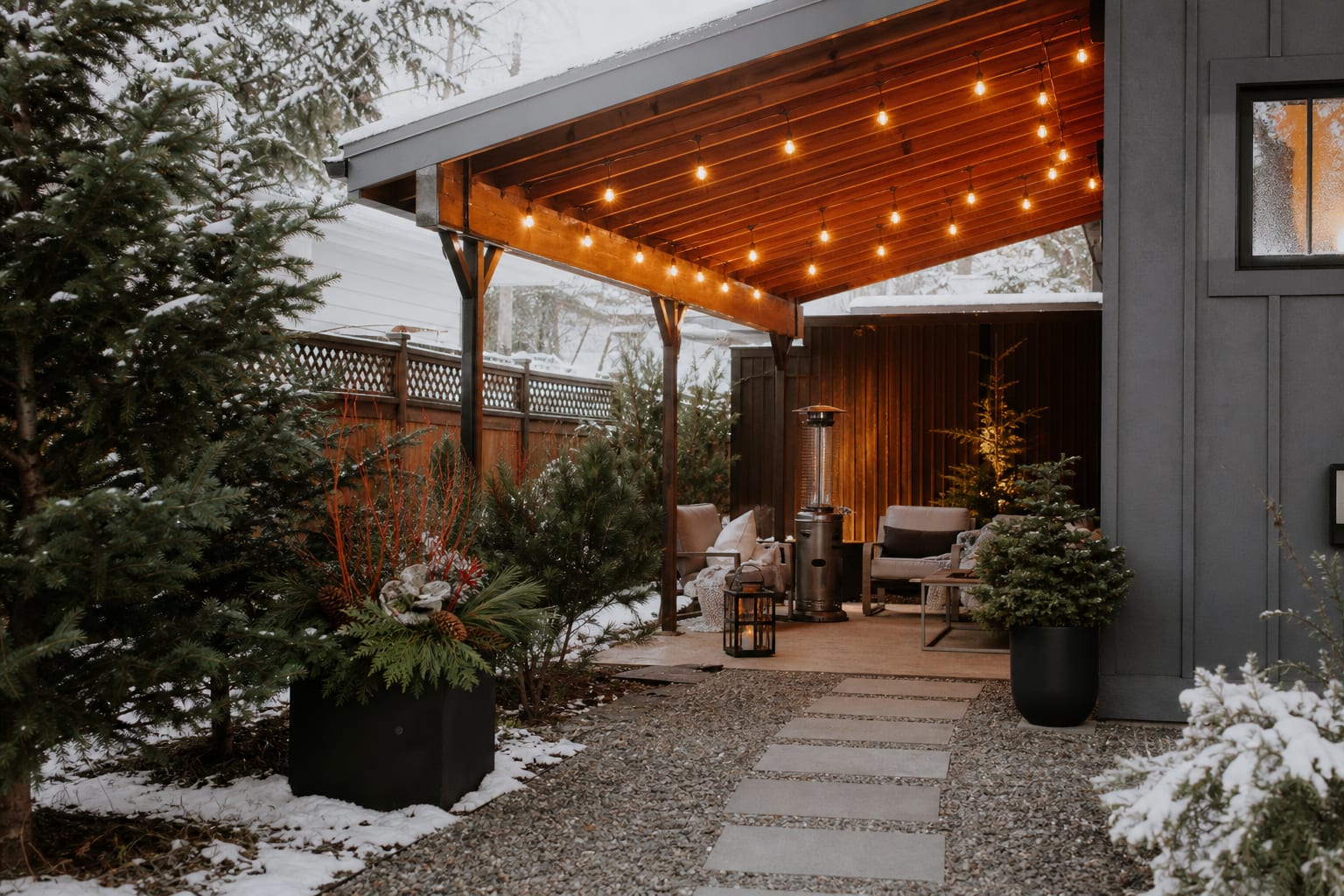
What makes a winter backyard feel usable instead of abandoned?
A winter backyard feels usable when it has a defined destination, a protected edge, reliable footing, and a reason to stay outside for twenty minutes. Trying to make the entire yard cheerful at once backfires. In January the yard needs hierarchy: lit path, warm seating pocket, evergreen view, and a surface that won't turn to mud.
Start close to the house unless the far end has a genuinely better reason to exist. A patio, deck, or gravel pad within 12 to 20 feet of the back door is far easier to use with mugs, blankets, and kids than a fire circle at the property line. If the yard lacks structure, borrow the zoning logic from backyard landscaping ideas for real outdoor rooms: path, edge, focal point, and planting should support each other.
Size the winter seating area a bit smaller than a summer lounge. Two chairs and a small table fit in about 8 by 8 feet; four chairs around a heater or fire bowl want closer to 10 by 12 feet. Leave 30 to 36 inches behind chairs for passage, and keep the heat source out of the walking line to the door.
Which winter zone should lead the design?
Choose the zone based on how you actually go outside: quick coffee, family play, dinner with friends, gardening, or a fire-centered evening. Start with the habit that could realistically survive cold weather, not with a heater catalog.
| Winter backyard zone | Best use | Spec that keeps it practical |
|---|---|---|
| Covered coffee corner | Small patios, decks, townhomes | Two chairs, one 16-20 inch side table, roof or umbrella to keep seats dry |
| Fire seating pocket | Social evenings, larger yards | Follow manufacturer clearances; keep 36 inches of movement behind the group |
| Winter garden walk | Plant lovers, narrow yards | Main route at least 36 inches wide; plant evergreens visible from indoors |
| Kids' cold-weather play strip | Family backyards | Mulch, turf, or firm gravel with good drainage; keep clear of heaters and steps |
| Outdoor dining shelter | Frequent hosts | Roughly 10 by 10 feet for four; add wind protection on the exposed side |
Fire isn't automatically the right answer. With young children, strict smoke rules, or a tiny deck, a covered bench with a plug-in patio heater can be calmer than an open flame. If kids use the yard year-round, coordinate with kid-friendly outdoor space planning so the winter room doesn't take over the only flat play area.
Lighting matters because winter yards get judged through windows as much as from chairs. Use warm exterior light near 2700K, place low fixtures at steps and turns, and keep bright security lights off the main seating view. The goal is permission to step outside, not brightness.
Test this on your own photo with ReDesign before committing to a direction; keep the house edge, horizon line, hardscape, planting beds, and main path visible so the preview reflects the space you actually have.
Five winter backyard ideas worth building around
- Covered two-chair corner off the kitchen or living room: arm chairs, a weatherproof side table, and a small outdoor-rated heater within clearance make a ten-minute drink easy, not just a full party.
- Gravel or paver pad where lawn turns soggy: an 8 by 10 foot pad with steel or brick edging holds two lounge chairs, a planter, and a lantern without paving the whole yard.
- Winter-view planting triangle visible from inside: one tall evergreen, one mid-height shrub, one low grass or groundcover in a 4 to 6 foot cluster adds layers once leaves drop.
- String lights that define a ceiling, not a random zigzag: anchor them above the seating zone on posts or a pergola, and add path lights where feet need guidance.
- Wind-backed bench against a fence, wall, or dense hedge: a 20-24 inch deep bench with quick-dry cushions plus end planters gives real comfort instead of a bus-stop look.
Keep one entertaining route clear from door to seating, since trays, blankets, dogs, and kids all follow the shortest line. Apply the layout thinking from outdoor entertaining area ideas and protect a 36 inch walkway before adding extra stools or decor.
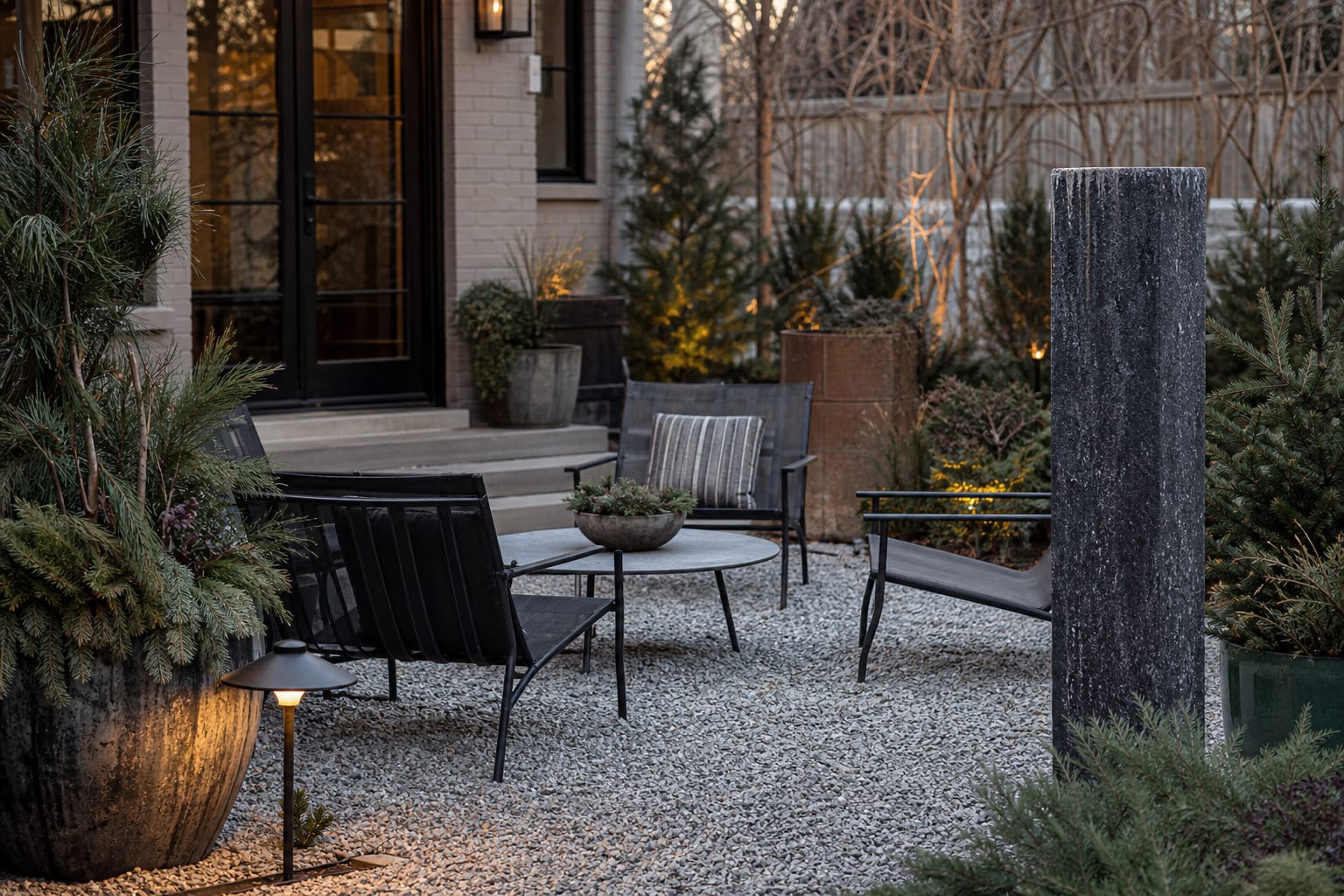
Common winter backyard mistakes to avoid
- Buying a heater before deciding what it heats. Place seating first, check the heater's listed clearances, then pick propane, electric radiant, or a fire feature.
- Using summer furniture with winter expectations. Choose darker performance fabrics, removable cushions, metal or teak frames, and tables heavy enough to resist wind.
- Ignoring drainage. If the winter room sits at the yard's low point, thaw and rain will punish it; raise the surface or choose gravel and textured pavers with traction.
- Relying on plants that vanish. Annual pots and deciduous vines aren't enough; use evergreens, twig dogwood, standing grasses, and containers with dwarf conifers for winter shape.
- Making the setup too fussy to maintain. Add a lidded storage bench, a boot-friendly path, and one simple lighting switch by the door so the space actually gets used.
How AI design helps you test a winter yard before buying heaters
AI design helps because the hard choices are visual: where the warm pocket sits, how much evergreen mass the yard needs, and whether a heater, pergola, or wind screen feels welcoming or crowded. Upload a current cold-season photo, not a summer one, then test one seating zone, one lighting plan, and one planting strategy from the same angle.
Compare scale directly: a covered bench beside the house, a fire seating area on gravel, and an evergreen-framed coffee corner near the best winter sun. If the boldest feature makes the yard feel smaller, simplify before spending money. A rendering won't replace local advice on gas lines, electrical work, drainage, or fire codes, but it shows whether the winter room is believable before you order heaters, planters, screens, and furniture.
Frequently Asked Questions
What plants look good in a backyard in winter?
Evergreen holly (Ilex), winterberry, ornamental grasses like Miscanthus and Panicum, and Hellebores provide reliable winter interest. Leave Echinacea and Rudbeckia seed heads standing for structure and bird feeding.
How do I make my patio usable in winter?
A gas fire table or overhead infrared heater, a 3-sided windbreak of evergreen planting or cedar screening, and a weatherproof rug under the furniture extend most patios to below 30°F comfortably.
Should I cover outdoor furniture in winter?
Cover powder-coated aluminum and teak with breathable polyester covers when not in use. Ipe and HDPE furniture can stay uncovered in most zones, but cushions must go indoors or into a weatherproof deck box.
How do I prevent ice on a stone or concrete patio?
Electric radiant heat mats under pavers eliminate manual deicing. At lower cost, calcium chloride pellets are the least-damaging deicer for concrete and bluestone; avoid rock salt, which destroys sealers.
What backyard lighting works best in winter?
Low-voltage path and step lighting on a dusk-to-dawn photocell compensates for a 4:30pm sunset. Warm 2700K fixtures on evergreen and ornamental grass plantings define structure when the deciduous garden is bare.
> Try this: Ready to see this on your own outdoor space? Open ReDesign and run the preview before you buy materials, plant, drill, or move furniture.
Three transformations to try
1. Gas fire table with evergreen backdrop 2. Ornamental grasses and seed heads in winter light 3. Lit patio with cedar windbreak in snow